与Arbitrum基金会合推动漫链AnimeChain,Azuki发币在即?

Odaily星球日报Publicado a 2024-03-28Actualizado a 2024-03-28

Resumen

当下再布局Azuki是“价值洼地”还是“无底深渊”?

原创 | Odaily星球日报

作者 | Asher

与Arbitrum基金会合推动漫链AnimeChain,Azuki发币在即?

AnimeChain 推出

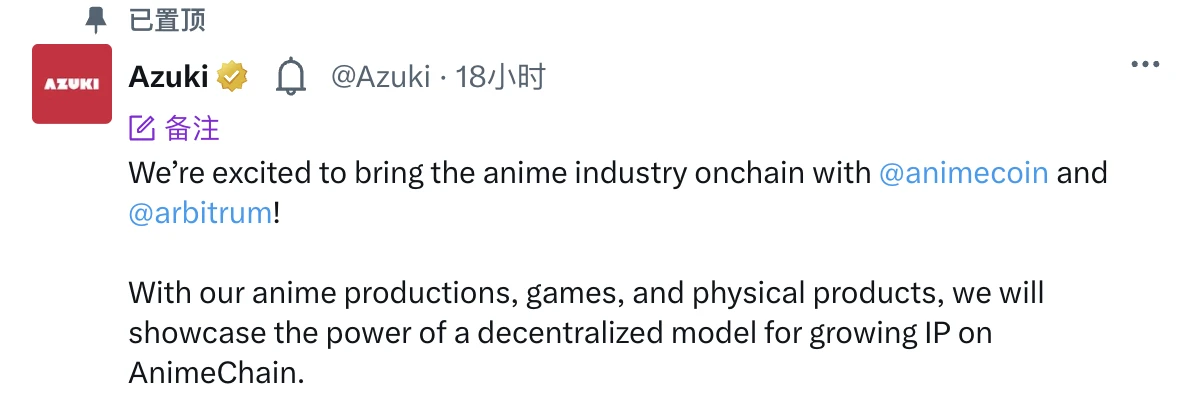
为了进一步扩大生态发展,3 月 27 日晚上,Arbitrum Foundation 宣布将与流行的 NFT 品牌 Azuki 和 Weeb3 Foundation 合作,共同创建一个吸引动漫迷的 Web3 网络 AnimeChain。一时间社区中充斥着“Azuki 发链就是为了日后的发币,持有 NFT 的小伙伴有福了”的 FOMO 情绪。受此消息影响,Azuki 地板价短时突破 6 ETH,最高涨幅近 14%。

与Arbitrum基金会合推动漫链AnimeChain,Azuki发币在即?

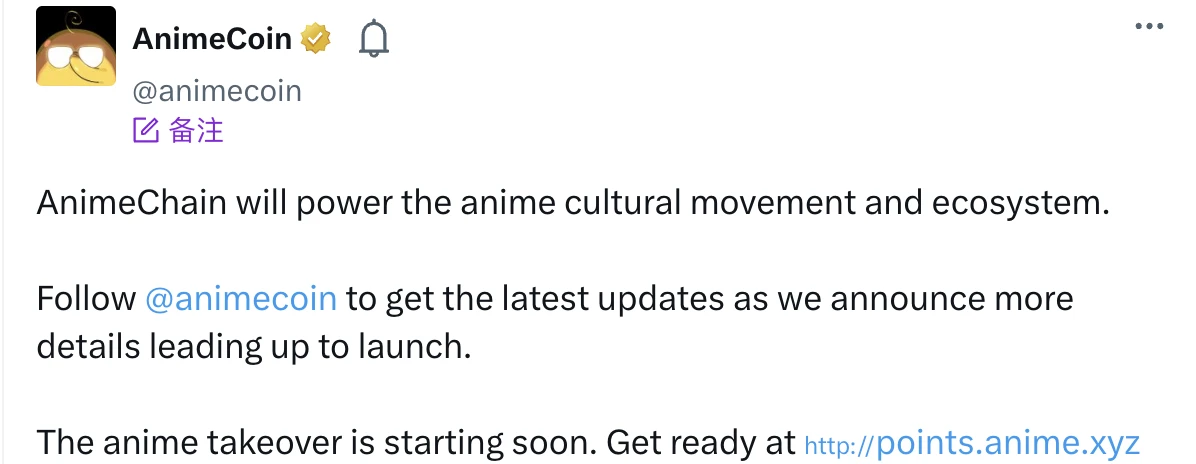
图源:AnimeCoin 推出

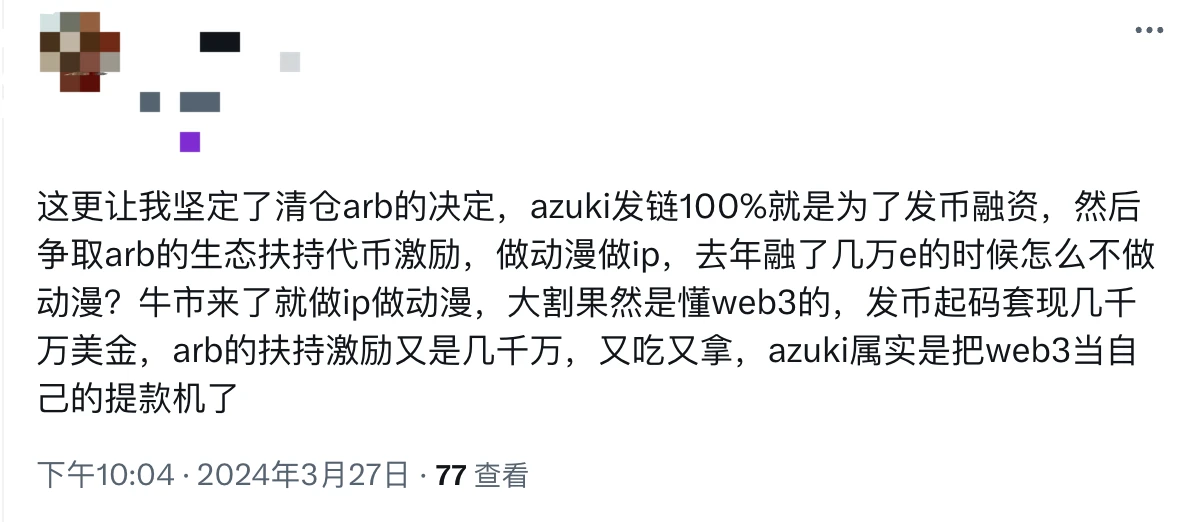
但随后在 X 平台负面言论也扑面而来,认为“目前 Azuki 选择牛市的节点通过发链进行发币就是为了套现”、“Arbitrum 竟帮助 Azuki 项目方收割散户”等,地板价也随之下跌。

与Arbitrum基金会合推动漫链AnimeChain,Azuki发币在即?

二级市场

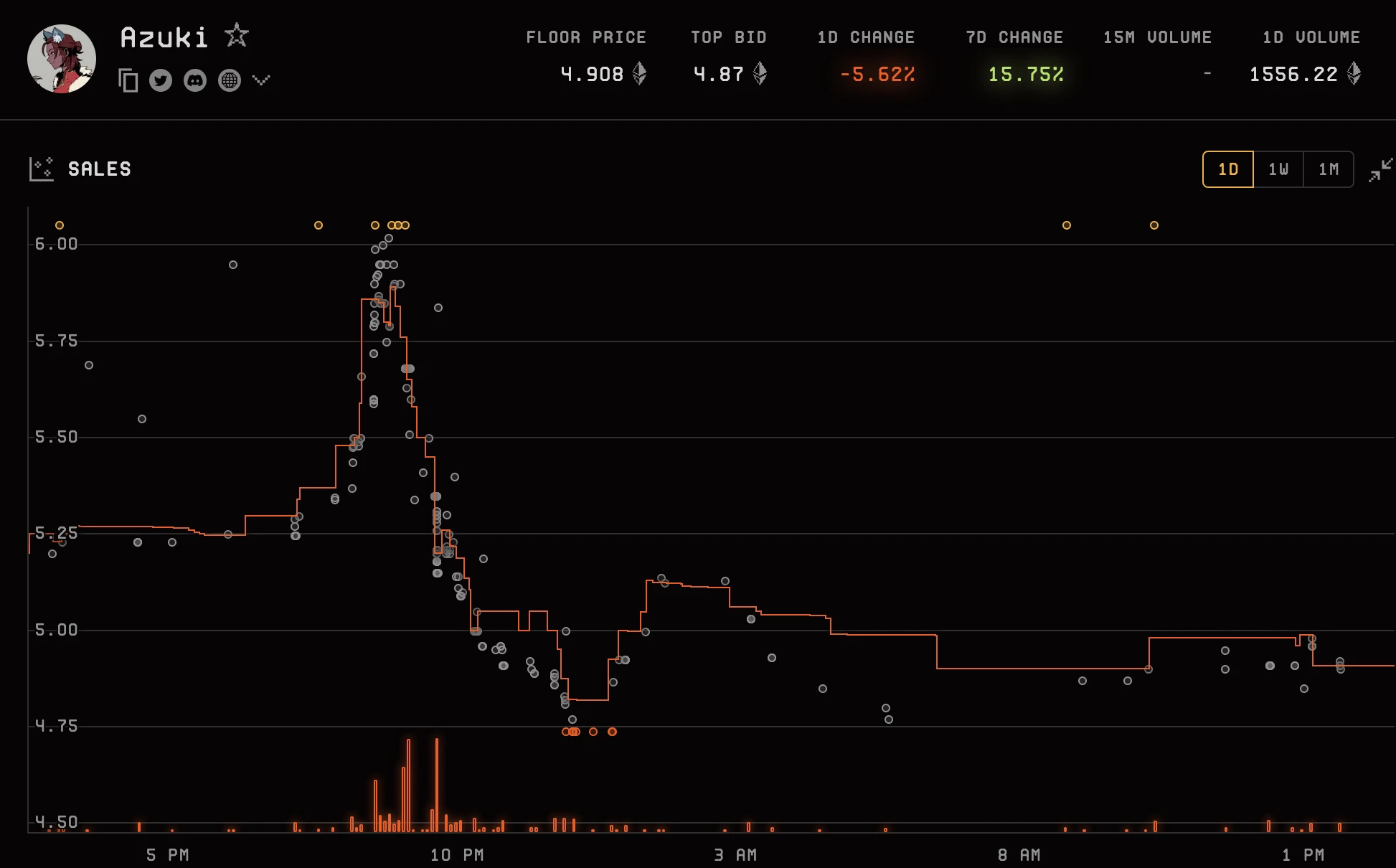
根据 Blur.io 数据,当 Arbitrum 基金会、Azuki 和 Weeb3 基金会将联手推出一个由区块链驱动的动漫网络的消息时,Azuki 的地板价从 5.25 ETH 开始迅速上涨,最高突破 6 ETH,短时最高涨幅近 14%,但随后开始出现砸盘,并且砸盘的力度更大,地板价甚至低于消息发布前,目前地板价维持在 4.91 ETH 附近。

与Arbitrum基金会合推动漫链AnimeChain,Azuki发币在即?

Azuki 地板价 K 线

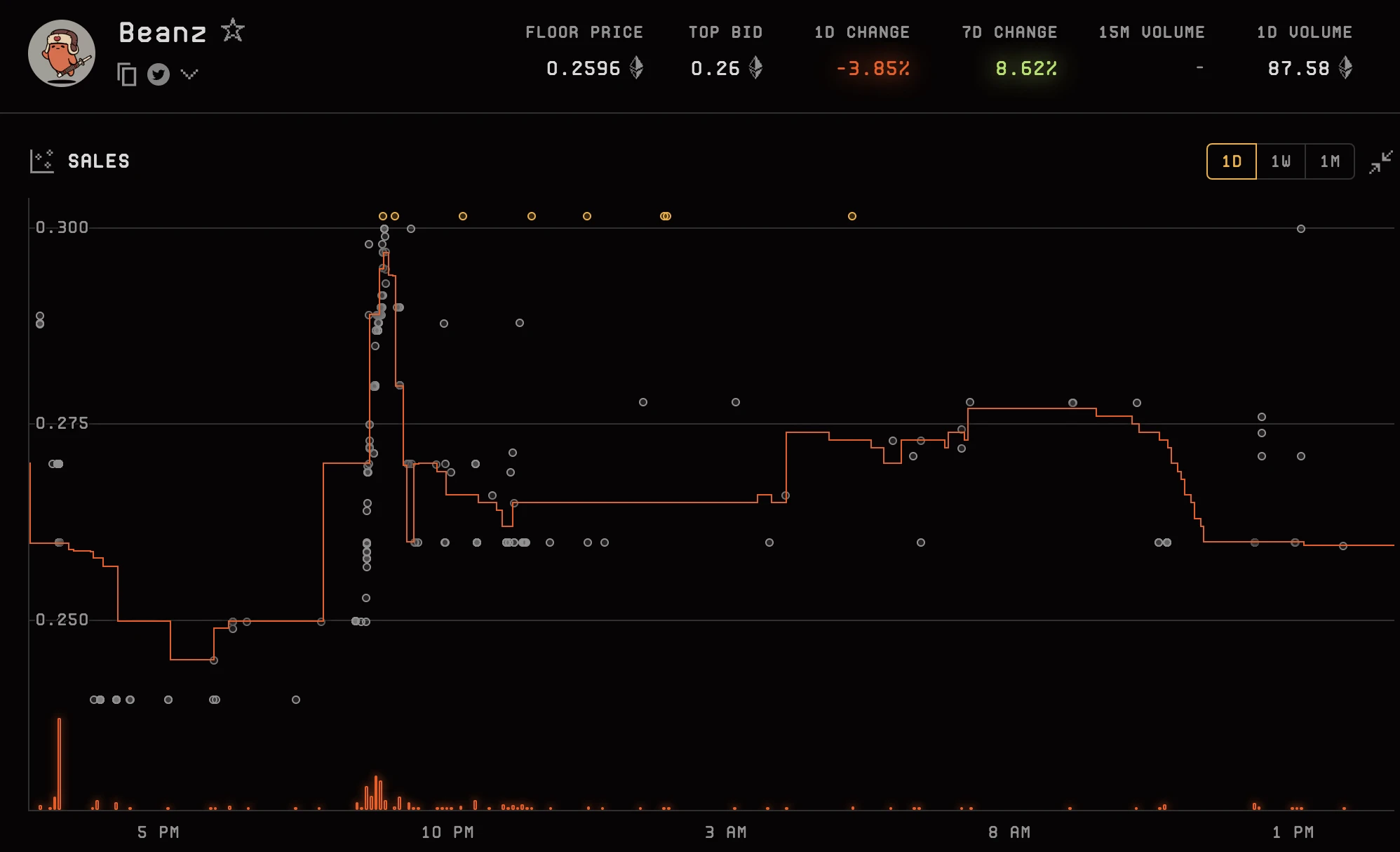
Beanz 短时也出现了一波快速上涨,地板价从 0.25 ETH 涨到 0.30 ETH,短时最高涨幅近 20%,随后出现一定程度的回落,目前地板价格维持在 0.26 ETH,与上涨前的地板价基本持平。

与Arbitrum基金会合推动漫链AnimeChain,Azuki发币在即?

Beanz 地板价 K 线

总的来说,如此重磅的消息虽短时间刺激了对 Azuki 系列 NFT 的购买需求,但随后就被更强有力的抛压盖过,甚至给人一种“什么都没发生”的感觉。

未来发展

根据 Azuki 创始人 Zagabond 表述,目前团队的主要重点仍是将 Azuki 打造成全球动漫 IP、创造数字和实体体验并奖励收藏家。展望未来将 Azuki 角色扩展至 AnimeChain 作为首要启动伙伴,将证明 IP 产品和体验上链是可行的。

值得一提的是,Zagabond 在近日出席的 Azuki 上海活动,其表示自己是中国人,出生于哈尔滨,这是其自疫情后 5 年多来首次回到中国,并希望能更好地连接起东西方社区,或许 AnimeChain 的推广会在国内加大宣传力度。

与Arbitrum基金会合推动漫链AnimeChain,Azuki发币在即?

图源:Azuki 创始人 Zagabond 推文

但截止到目前, AnimeChain 公布的信息少之又少。一方面,从 AnimeChain 官网信息来看,目前仅有连接钱包、绑定推特等功能让用户为项目进行宣传,其他内容暂未公布,处于“敬请期待”状态。

与Arbitrum基金会合推动漫链AnimeChain,Azuki发币在即?

图源:AnimeChain 官网

另一方面,官方推文中,除了强调 AnimeChain 将为动漫文化运动和生态系统提供动力外,并没有看到项目的后续发展甚至路线图。

与Arbitrum基金会合推动漫链AnimeChain,Azuki发币在即?

图源:官推

或许信息披露的不足是 Azuki NFT 系列上涨后快速下跌的另一个原因。

综述

虽然当下整体市场处于牛市,但以太坊链上 NFT 市场依旧冷清。因此,即便是 Azuki 这样的昔日头部 NFT 项目,配上“发链”的消息,也无法带动市场的热情。那么,面对未来潜在的发币机会增大,当下布局 Azuki 系列 NFT 依然存在较大不确定性。

Lecturas Relacionadas

White-Label Stablecoins: More Than Just a Logo Change

"White-Label Stablecoins: Beyond a Logo Change" The article clarifies the often-misunderstood concept of "white-label stablecoins," which refers to businesses leveraging established providers like Circle or Coinbase to offer stablecoin functionality under their own brand. It details four distinct models, emphasizing that this is not a simple branding exercise but involves complex legal and operational responsibilities split across issuance, reserves, custody, and distribution. The four primary models are: 1. **Circle xReserve**: Enables blockchains (L1/L2) to launch their own stablecoin backed 1:1 by USDC locked in a Circle smart contract. The chain deploys and operates the token contract. 2. **Circle Partner Stablecoins**: Connects existing regional stablecoin issuers to Circle's global payment and liquidity network (e.g., StableFX). The local issuer remains responsible for issuance, reserves, and compliance. 3. **Circle Digital Asset Accounts**: Provides businesses with branded digital asset accounts where users hold established stablecoins (like USDC). Circle handles custody, conversion, and compliance; the business manages the front-end user experience. 4. **Coinbase Custom Stablecoins**: The model closest to a true "white-label" stablecoin. Coinbase manages the issuance, reserves, smart contracts, and redemption for a new, custom-branded stablecoin (e.g., Flipcash's USDF), while the partner business handles branding, distribution, and user-facing scenarios. The article stresses that legal and regulatory risks depend heavily on the specific model and the partner's role. Key concerns include clear user disclosure about the issuer and redemption rights, managing consumer perceptions, careful structuring of any revenue-sharing or yield features, and navigating local regulatory frameworks for payments, distribution, and marketing—responsibilities that cannot be outsourced simply by using a "white-label" service.

marsbitHace 11 min(s)

White-Label Stablecoins: More Than Just a Logo Change

marsbitHace 11 min(s)

Farewell to Speculation: The Graham Moment of the Crypto Industry

"Farewell to Speculation: The Graham Moment for the Crypto Industry" The article draws a parallel between today's cryptocurrency market and the speculative, unregulated US stock market of the 1920s. That era lacked mandatory corporate disclosure, enabling rampant manipulation and turning stocks into gambling tools. The 1929 crash led to foundational reforms: the Securities Acts of 1933/34 mandated transparent, audited financial reporting, and Benjamin Graham's "Security Analysis" provided a framework for fundamental valuation. Together, they created modern investing, requiring both reliable data and a methodology to value assets. Similarly, the crypto market is currently driven by narratives and speculation. However, it possesses a key advantage: unlike 1920s corporations, blockchain protocols have inherently transparent, on-chain data for revenue, treasury, and activity. The core obstacle is not transparency, but the lack of legal claim to that value. Due to regulatory uncertainty (primarily the Howey Test), most tokens are deliberately stripped of economic rights like profit-sharing to avoid being classified as securities. This creates a paradox where protocols generate revenue, but token holders have no right to it. The turning point, argues the author, is imminent US legislation. The already-passed GENIUS Act provides a framework for stablecoins. The crucial CLARITY Act, currently in advanced legislative stages, aims to clearly categorize digital assets and define their regulatory treatment (SEC vs. CFTC). This would allow developers to legally design tokens with enforceable economic rights, such as profit distribution. If passed, this would enable a shift from speculation to fundamental investment. Analysis would focus on protocol revenue sustainability, network effects, valuation multiples, and the specific rights encoded in a token's contract—mirroring traditional equity analysis. The article notes significant legislative hurdles and timelines (1-3 years for rulemaking post-passage), but emphasizes the direction is set. A deeper challenge remains: building decentralized, legally enforceable governance and ownership structures to protect token holder rights, akin to corporate law. This will be a core development focus. The transformation applies mainly to revenue-generating protocol tokens, not to assets like Bitcoin (digital gold). The article concludes that the industry's question has evolved from "can tokens create value?" to "who gets to allocate that value?". Solving the latter, as in the 1920s, will mark crypto's transition to a legitimate asset class for fundamental investment.

Foresight NewsHace 33 min(s)

Farewell to Speculation: The Graham Moment of the Crypto Industry

Foresight NewsHace 33 min(s)

Quantum Computing "Manhattan Project" Unveiled: Is the Encryption Industry at a Critical Turning Point?

"Quantum Computing 'Manhattan Project' Launched: Is the Crypto Industry at a Critical Juncture?" On June 22, former U.S. President Donald Trump signed two executive orders. The first mandates all federal agencies upgrade their cryptographic systems to new, quantum-resistant standards by 2030. The second orders the Department of Energy to lead the development of a national quantum computer, signaling a shift from laboratory research to a state-enforced national agenda. This creates a hard deadline. A powerful quantum computer could break current encryption. The threat is compounded by "harvest now, decrypt later" attacks, where encrypted data is stored today for future decryption. Federal agencies must appoint migration officers and complete post-quantum cryptography (PQC) upgrades for key establishment by 2030 and digital signatures by 2031. Procurement rules will also be changed, forcing government contractors to comply. The crypto industry faces a direct threat. Bitcoin's ECDSA signatures are theoretically vulnerable. Research indicates millions of Bitcoin with exposed public keys are at risk if quantum computers advance. While projects like Bitcoin Quantum testnets and efforts by Ethereum, Solana, NEAR, and Zcash are exploring quantum-resistant solutions, achieving consensus in decentralized networks remains a major challenge. The centralized U.S. government has started a 5-year countdown. For decentralized crypto networks, the real test is whether they can complete this anti-quantum upgrade before the theoretical threat becomes a practical reality.

Foresight NewsHace 54 min(s)

Quantum Computing "Manhattan Project" Unveiled: Is the Encryption Industry at a Critical Turning Point?

Foresight NewsHace 54 min(s)

Trading

Spot
Futuros
活动图片