深度研究:从Cyber Connect到UXLink,细看Socialfi的迭代前进之路

Odaily星球日报Publicado a 2024-03-24Actualizado a 2024-03-24

Resumen

Web3中社交赛道一直是争议最大的一个赛道,在一切围绕交易行为基础之上的web3中,链上社交到底是不是一个伪需求。

前言

Web3中社交赛道一直是争议最大的一个赛道,在一切围绕交易行为基础之上的web3中,链上社交到底是不是一个伪需求。

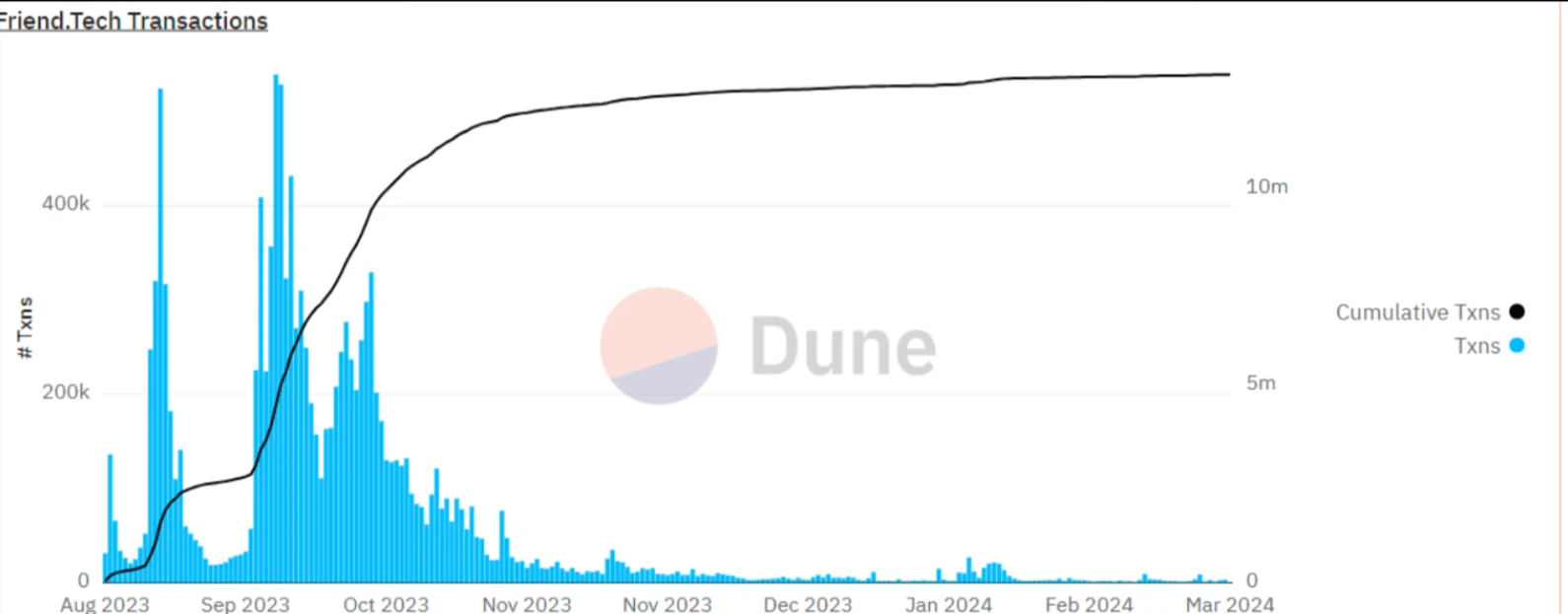
尽管 CyberConnnect, Lens, Farcaster 第一代社交产品旨在完善链上社交基础设施,但是历经弥久,耗费巨大,以失败告终;第二代产品则是以社交网络影响力资产化为核心的 Friend.tech,凭借其高效的价格发现机制获得了成功,但 friend.tech 成也资产化,败也资产化,高点买入 key 的用户承担了巨额亏损,空投计划的拖延、新版本的更新导致用户陆续流失。

如果说第三代将会以什么样的形式进行迭代,或许以 RWS(Real World Social,现实世界社交)的链下熟人社交资产为核心的 SocialFi 产品 UXLink 能给整个 Socialfi 市场一些思路参考。

UXLink 产品层解析

Socialfi 之殇:三代产品的前进之路

在深入 UXLink 产品之前,让我们首先回顾以 Lens Procotol 和 Friend.tech 为代表的前两代的 SocialFi 产品。
第一代 SocialFi 产品叙事过于宏大,Lens Protocol 在设计之初便旨在成为链上社交的基础数据层,但是在产品中并没有很好的融入资产,在 SocialFi 场景没有证实之前,用户无法在协议中产生较强的收益预期,"Fi"的属性差,导致了用户的流失。

相较于第一代,第二代的 Friend.tech 在场景上选择了单对多的网络状社交形态,Bonding Curve 的设计让前期参与者有了足够大的财富效应,但同时也由于过于强调"Fi"的属性,泡沫大,并且系统相对封闭,外部性不足,导致在财富效应减弱后用户迅速流失。

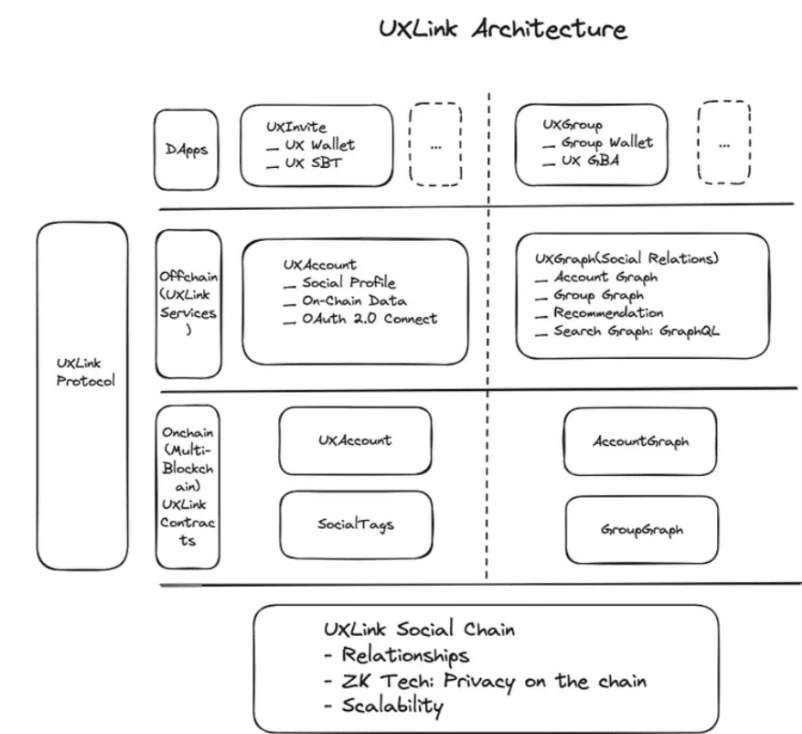
而在最新的第三代,UXLink 在设计之初便瞄准了熟人社交这一细分场景,并在资产端进行了双代币模型的设计。在产品架构的设计上更加复杂,分为基本应用层、协议服务层和基础设施层,相互支持、补充,并且为外部协议的接入留出了足够的接口。在熟人社交场景下,UXLink 实现了包括流量入口、社交资产交易、基础设施为一体的社交生态,下面让我们自顶向下的拆解 UXLink 的产品框架。
深度研究:从Cyber Connect到UXLink,细看Socialfi的迭代前进之路

UXLink 基本应用层

应用层的功能主要为生态应用提供增长裂变、群体功能等基础产品服务。该层利用 MPC-TSS 钱包账户服务和基于组的 EOA 账户服务来减小用户的准入门槛并保护用户资产的安全性。目前主要产品包括以下三个板块

  • UX 钱包&DID:用户通过 Telegram/WhatsApp 便可以创建的基于 MPC 的 AA 增强钱包,可以执行社交恢复和托管,平衡安全性和低准入门槛。在创建钱包的同时,会自动使用 zk 技术给用户创建基于现实世界联系的 SBT,用户可以在保护隐私的同时继承并使用自己的自主身份和链下社交关系;

  • UX Group:群组在 UXlink 中是社交网络的基本单元,通过 AI 来管理团体资源和数据,进行赋能;

  • UX Social Dex:用户可以基于 AA 钱包直接进行加密资产的交易,IDO 平台和借贷平台将在随后推出。

协议服务层与基础服务层:外部性的场景拓展

在协议层中,UXLink 为生态的外部性保留了开放接口,包括开发人员可以通过 API 和 ABI 高效管理用户社交身份和关系数据服务。这种无缝集成确保了动态且相互组合的链上社交应用。

而在基础设施层中,UXLink 采用了混合的可扩展架构(EVM + IPFS + 云),包含以太坊主网、Arbitrum L2 链、BNB 链、Polygon 和 Base Chain 等 EVM 链,集成了去中心化存储和集中式数据索引服务,从基础设施建设之初保留了生态的可拓展性。

对于接口的拓展,如果有对于Web2营销 Saas 平台有所了解,便能知道 UXLink 的野心及其布局的巧妙所在——与用户数量相比,用户数据的价值同样重要。借助于外部接口的应用介入,对于用户价值的衡量不再局限于单个应用的单一维度,每一个应用场景都是一个新的价值维度。

所谓外部性,就是打破社交死亡螺旋的关键所在。

资产层

前车之鉴,后车之师——关于“Fi”的把握

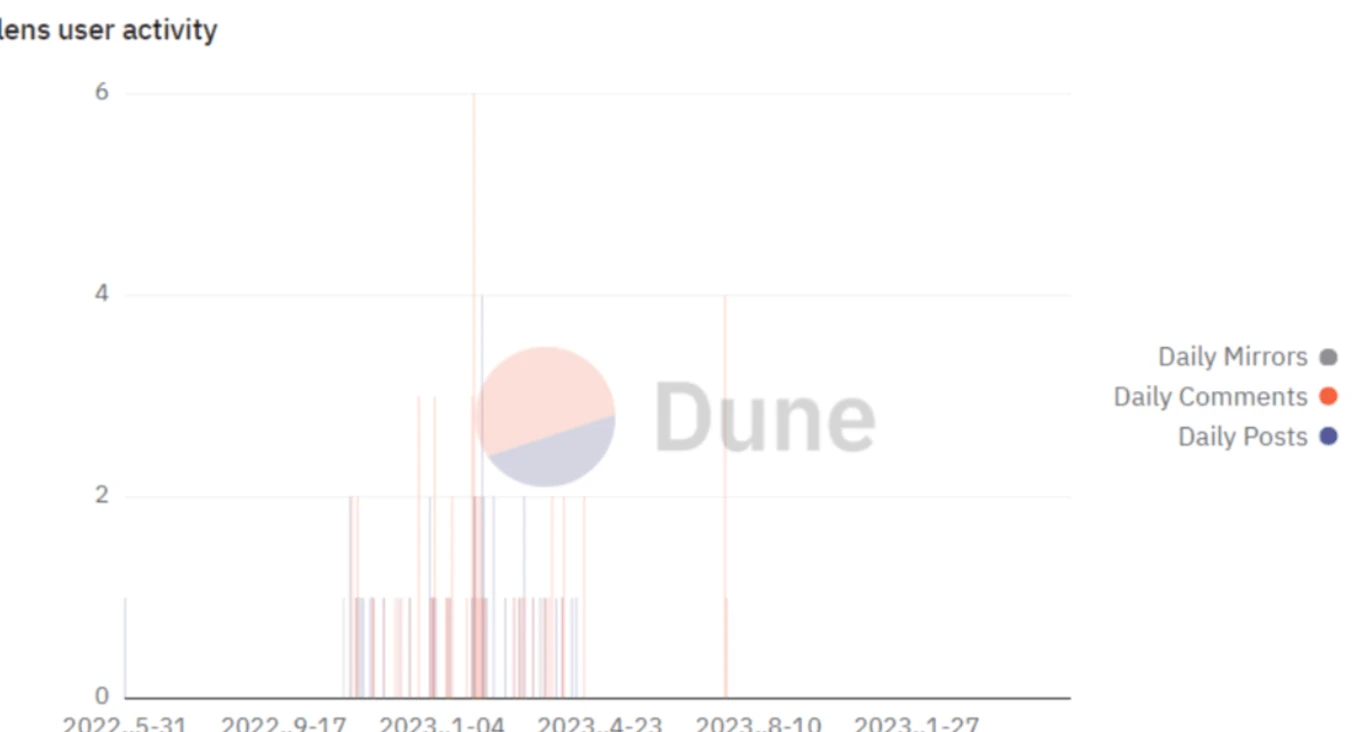
SocialFi=Social+Fi,任何web3产品都离不开资产,前两代 SocialFi 产品也正是对于"Fi"的把握度不够平衡而导致了两个极端的情况。第一代 SocialFi 产品 Lens 过于注重基础设施层,资产端将所有社交行为都 NFT 化,用户的收益空间有限。加之空投预期久久不兑现,用户有限的资金和注意力便流向其他更高收益预期的产品,产品使用数据惨不忍睹。
深度研究:从Cyber Connect到UXLink,细看Socialfi的迭代前进之路

第二代 SocialFi 产品 Friend.tech 则是在"Fi"方面设计过于激进,Bonding Curve 设计虽然在短时间内吸引了大量的资金和用户,但也形成了大量的泡沫,随着前期入场人员获利退出,加上交易磨损,长期用户普遍 ETH 本位亏损,同样随着空投预期的久久不兑现,大多用户选择止损离开。
深度研究:从Cyber Connect到UXLink,细看Socialfi的迭代前进之路

参考前两代王牌产品的经验,UXLink 在资产端的设计采用了一种更加平衡的双代币模型,将治理和效用解耦,分为$UXUY 和$UXLink 两个代币。

效用代币$UXUY

$UXUY 是用来社区和生态发展的激励代币,用户越早创建社交网络来为生态做出贡献,他们收到的 $UXUY 就越多。这种方法确保了社区的公平和激励性增长。

$UXUY 在数量上使用类似于比特币的递减逻辑,采用与比特币挖掘逻辑紧密结合的计算公式。影响代币减少的关键变量包括时间、单个节点的连接数量以及整个 UXLink 网络的总用户数。随着时间的推移和 UXLink 网络的扩展,用户获得的 UXUY 将呈指数下降。因此,较晚进入 UXLink 网络的用户将收到较少的 $UXUY,这强调了早期参与的稀缺性和价值。

$UXUY 可用于支付整个生态内的链上 Gas 费用,涵盖交易、转账和社交网络互动,并收到 UXLink 的代币销毁机制的约束。

UXLink 使用资产数量而不是价格来激励用户进行早期参与,在泡沫的制造上更加平和,虽然没有 Friend.tech 强大的财富效应,但能够保证整个系统健康的可持续发展

治理代币$UXLINK

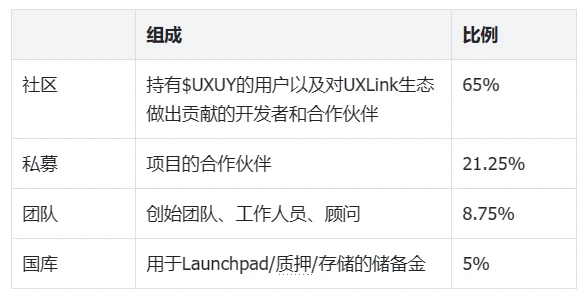
$UXLINK 主要用于项目的治理以及从 UXLink 生态中捕获真实收益分配给社区用户,代币供应和分配如下
深度研究:从Cyber Connect到UXLink,细看Socialfi的迭代前进之路

值得注意的是,在 65% 的社区分配中, 40% 被分配给用户,其他所有生态贡献者和合作伙伴占有 25% 
深度研究:从Cyber Connect到UXLink,细看Socialfi的迭代前进之路

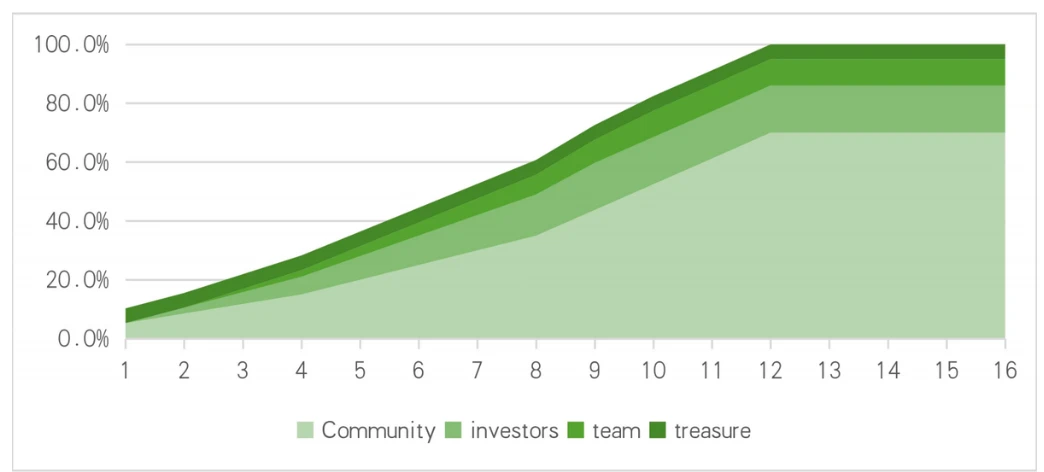
$UXLINK 的释放与社区成员和生态贡献者密切相关,根据$UXUY 的生成公式,用户数达到 30 m 时潜在供应量达到最大,当然,在用户达到 30 m 时该网络不需要再进行激励也可稳定运行。

总结

在产品周期上Web3一天,Web2一年,如果说以 Friend.tech 的发布带来了 SocialFi 赛道的 Twitter 时刻,那么在从熟人社交起步,各方面更加平衡的 UXLink 就是开启微信时刻的第三代 SociaFi 产品。

自产品推出以来,在用户的质量和数量上都实现了优秀的数据增长,数量上目前已经实现了 460 万的总用户, 80, 000+群组,群组总覆盖人数达到 655 万;质量上,在今年二月份推出了web3钱包功能后,一个月期间有超过 97.8 万新的钱包创建并连接到 UXLink,平均每个钱包中持有资产超过 70 美金,新注册/UV 比率达到了惊人的 42% 。

基于链下真实世界社交网络的 SocialFi 产品模式得到了实战的验证,在如此巨大的用户基数和完备的基础设施层和应用层之上,我们可以预期的是 UXLink 生态在牛市中的爆发,掀起新一轮的 SocialFi 浪潮。

Criptos en tendencia

Lecturas Relacionadas

Rented Faith: How Much of the Bitcoin ETF Inflows Is Real Money?

"Rented Conviction: How Much of Bitcoin ETF Flows Is Real Money" The weekly inflows into Bitcoin ETFs are often interpreted as a gauge of institutional belief. However, a significant portion of this activity is driven by a hidden arbitrage trade, not directional conviction. The core mechanism is a cash-and-carry arbitrage: traders buy spot Bitcoin (often via ETFs) while simultaneously shorting CME futures to lock in the price difference, or "basis." This delta-neutral trade is essentially an interest rate play. In weekly data, about half the fluctuation in ETF flows can be explained by new short positions added by leveraged funds (hedge funds), with a correlation of 0.70. Bitcoin's price movement in a given week shows no statistical power in predicting these flows. While this arbitrage trade drives weekly *volatility*, it is not the main component of the cumulative *stock*. Of the total ~$55 billion in net ETF inflows, the current net arbitrage position is only about $1 billion. The remainder is steady, directional buying averaging ~$400 million per week, which constitutes the vast majority of the accumulated "mountain" over two years. Thus, ETF flow data overstates the *volatility* of conviction, not its *level*. This arbitrage trade has been unwinding for nearly two years. Leveraged fund short positions peaked at ~$14 billion in late 2024 and have since declined to ~$4.5 billion. When the basis compresses to unprofitable levels, ETF inflows and short positions retreat together. Recent outflows should not be mistaken for a loss of faith but rather the routine unwinding of this rate trade. For Ethereum ETFs, the pattern is weaker. Accounting for staking yield makes the basis often negative, so neither strong conviction buying nor robust arbitrage supports its flows. To interpret ETF flows correctly, monitor the CME basis versus T-bill rates and leveraged fund net shorts. They reveal how much of the next "demand" headline is real. The real, patient buy-and-hold demand is what constitutes the enduring bulk of ETF assets.

marsbitHace 47 min(s)

Rented Faith: How Much of the Bitcoin ETF Inflows Is Real Money?

marsbitHace 47 min(s)

Soaring Over Tenfold Within the Year: The Frenzy Over SK Hynix Leveraged Products

South China Morning Post The leveraged ETF tracking SK Hynix has surged over tenfold year-to-date, fueled by intense market speculation on the memory chip sector. By June 22, the value of the 'South Korea 2x Long SK Hynix ETF' listed in Hong Kong had skyrocketed by more than 1,061% since the start of the year, while its asset size exploded over twenty times from the end of last year. The rally is driven by AI-driven demand for high-bandwidth memory (HBM), with SK Hynix recently sampling its next-generation HBM4E product. However, industry professionals warn of significant risks. Leveraged ETFs magnify both gains and losses. During a recent market correction, while the underlying SK Hynix stock fell 19.1%, its double-leveraged ETF dropped nearly 38%. Korean regulators noted that such products could theoretically lose 60% in a single day. Additionally, these ETFs face risks like time decay in volatile markets, liquidity spirals during mass redemptions, and extreme price dislocations from market-making failures, as seen in early June when an ETF moved opposite to its underlying stock. The trading is predominantly driven by retail investors, with institutional capital largely absent due to the products' high volatility. Analysts caution that with the semiconductor sector at elevated valuations and facing geopolitical and supply chain uncertainties, leveraged ETFs pose a substantial threat of amplified losses for uninformed investors.

marsbitHace 1 hora(s)

Soaring Over Tenfold Within the Year: The Frenzy Over SK Hynix Leveraged Products

marsbitHace 1 hora(s)

18 Months, Over 50x Surge: KIOXIA's Epic Comeback

KIOXIA, a NAND flash memory giant, staged a dramatic comeback driven by AI demand. After a period of significant losses, a failed merger, and missed HBM opportunities, its 2024 IPO began modestly. However, fueled by explosive demand for AI data storage, its stock price skyrocketed over 50 times within 18 months, making it Japan's most valuable company, surpassing Toyota. Its Q1 FY2026 profit guidance soared 30-fold year-over-year, with 2026 NAND capacity already sold out. Key to its success is its 3D NAND technology, BiCS FLASH. As the inventor of NAND, KIOXIA advanced its technology through generations, reaching over 200 layers by 2023. Key innovations include CBA (CMOS directly Bonded to Array), which separately manufactures control circuits and memory arrays for better performance, and OPS (On Pitch Select Gate) to increase density. The company is now developing high-capacity packages like an 8TB solution stacking 32 dies. Looking beyond NAND, KIOXIA is exploring 3D DRAM with its OCTRAM technology, using oxide semiconductor transistors for ultra-low leakage to reduce power consumption. This fundamental research differs from HBM and represents a long-term bet to extend its 3D expertise from NAND into future DRAM architectures. KIOXIA's story highlights how technological assets and shifting market cycles can rapidly transform a company's fortunes. While questions remain about sustaining growth beyond the current AI boom, its resurgence demonstrates that in semiconductors, being down does not necessarily mean being out.

marsbitHace 1 hora(s)

18 Months, Over 50x Surge: KIOXIA's Epic Comeback

marsbitHace 1 hora(s)

Trading

Spot
Futuros

Artículos destacados

Cómo comprar CYBER

¡Bienvenido a HTX.com! Hemos hecho que comprar CYBER (CYBER) sea simple y conveniente. Sigue nuestra guía paso a paso para iniciar tu viaje de criptos.Paso 1: crea tu cuenta HTXUtiliza tu correo electrónico o número de teléfono para registrarte y obtener una cuenta gratuita en HTX. Experimenta un proceso de registro sin complicaciones y desbloquea todas las funciones.Obtener mi cuentaPaso 2: ve a Comprar cripto y elige tu método de pagoTarjeta de crédito/débito: usa tu Visa o Mastercard para comprar CYBER (CYBER) al instante.Saldo: utiliza fondos del saldo de tu cuenta HTX para tradear sin problemas.Terceros: hemos agregado métodos de pago populares como Google Pay y Apple Pay para mejorar la comodidad.P2P: tradear directamente con otros usuarios en HTX.Over-the-Counter (OTC): ofrecemos servicios personalizados y tipos de cambio competitivos para los traders.Paso 3: guarda tu CYBER (CYBER)Después de comprar tu CYBER (CYBER), guárdalo en tu cuenta HTX. Alternativamente, puedes enviarlo a otro lugar mediante transferencia blockchain o utilizarlo para tradear otras criptomonedas.Paso 4: tradear CYBER (CYBER)Tradear fácilmente con CYBER (CYBER) en HTX's mercado spot. Simplemente accede a tu cuenta, selecciona tu par de trading, ejecuta tus trades y monitorea en tiempo real. Ofrecemos una experiencia fácil de usar tanto para principiantes como para traders experimentados.

181 Vistas totalesPublicado en 2024.12.11Actualizado en 2026.06.02

Cómo comprar CYBER

Discusiones

Bienvenido a la comunidad de HTX. Aquí puedes mantenerte informado sobre los últimos desarrollos de la plataforma y acceder a análisis profesionales del mercado. A continuación se presentan las opiniones de los usuarios sobre el precio de CYBER (CYBER).

活动图片