剖析中本聪早期邮件:背后的「神秘捐助者」有何贡献?

Odaily星球日报Publicado a 2024-03-01Actualizado a 2024-03-01

Resumen

这位「神秘捐赠者」曾在2010年提供了3600美元的资金支持,在早期帮助推动了比特币的发展。

原文作者:Rizzo, Bitcoin Magazine

原文编译:Felix, PANews

上周,由比特币创造者(中本聪)撰写的 100 多封电子邮件获得首次公开。这是有关中本聪信息的最大补充,这其中有许多新的发现。但没有比中本聪背后的「神秘捐赠者」更有趣了,因为关于资助事宜,中本聪第一次明确表示:

  • 给努力为比特币经济建设服务的人提供财务支持

  • 支持早期尝试以美元定价比特币

在这些邮件公布之前,没有任何证据能证明这两点。以下是迄今为止所了解到的信息:

传奇般的捐赠

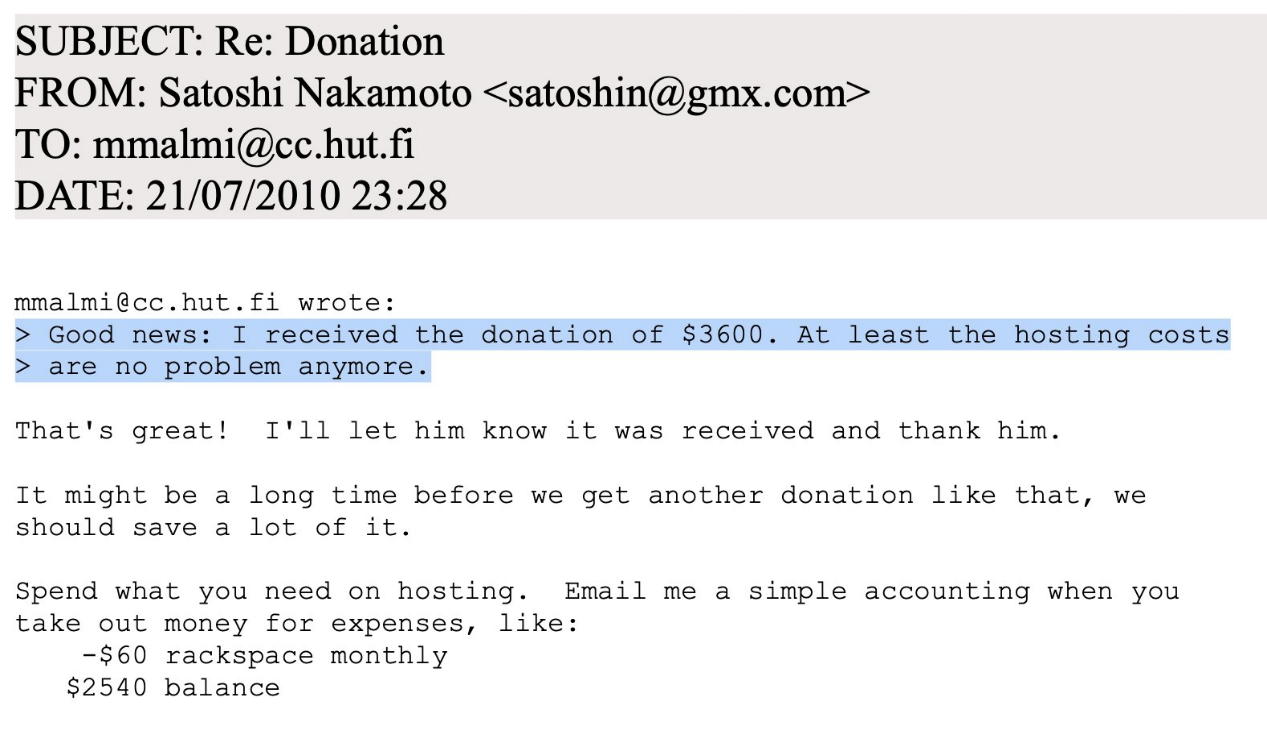
这些电子邮件显示,中本聪认识的一位捐赠者在 2010 年为该项目提供了 3600 美元的资金。

如果按照当时每枚比特币 0.06 美元的价格计算,这些钱本可以按市价购买超 5.8 万枚比特币。这位捐赠者为比特币长远的发展做出了重大牺牲。

关于「捐赠者」的对话发生在 Martti Malmi(早期的比特币开发者)和中本聪之间,但仅持续了一年。

2009 年 7 月:

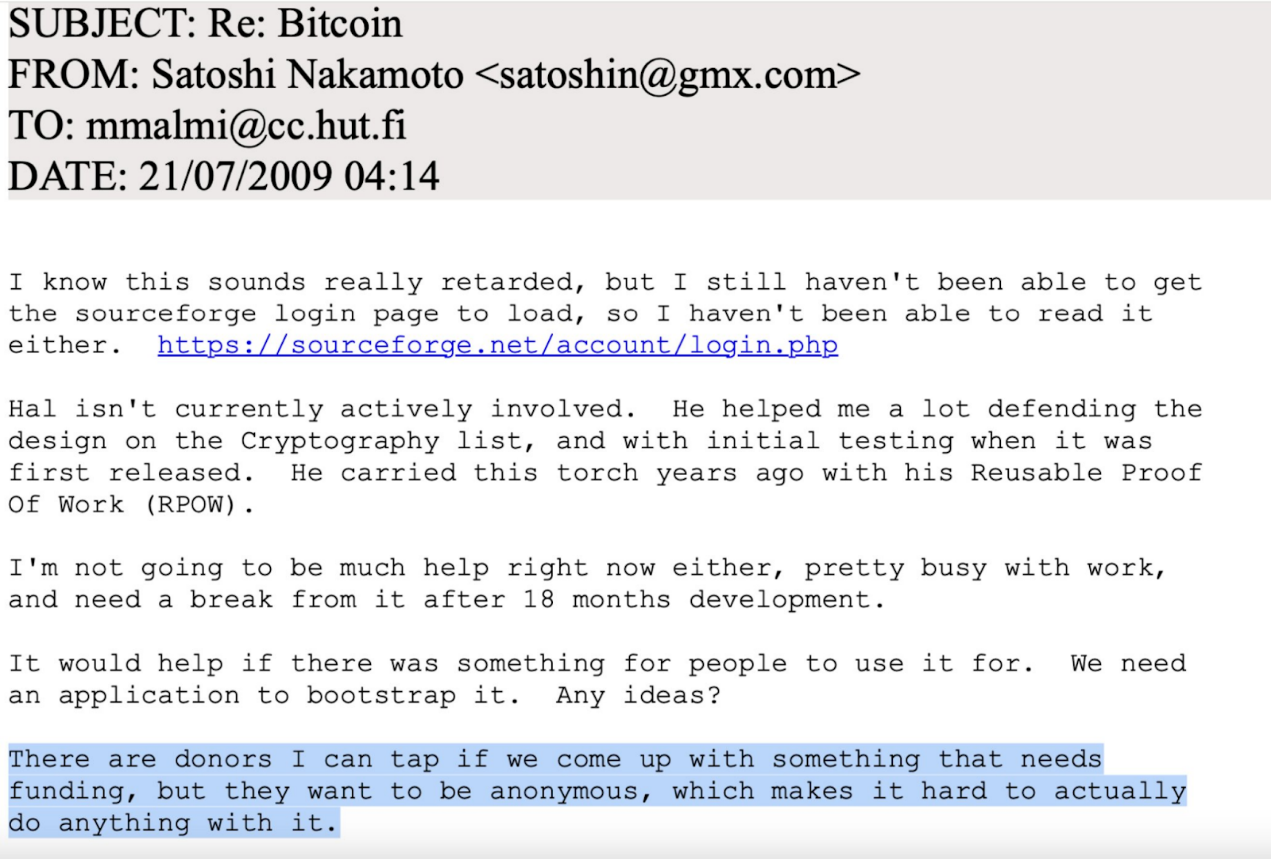
中本聪在对话开始时说:“如果我们有需要资金的项目,我可以找一些捐赠者,但他们希望匿名,这使得我们很难真正用这些资金做什么。”

剖析中本聪早期邮件:背后的「神秘捐助者」有何贡献?

2009 年 8 月:

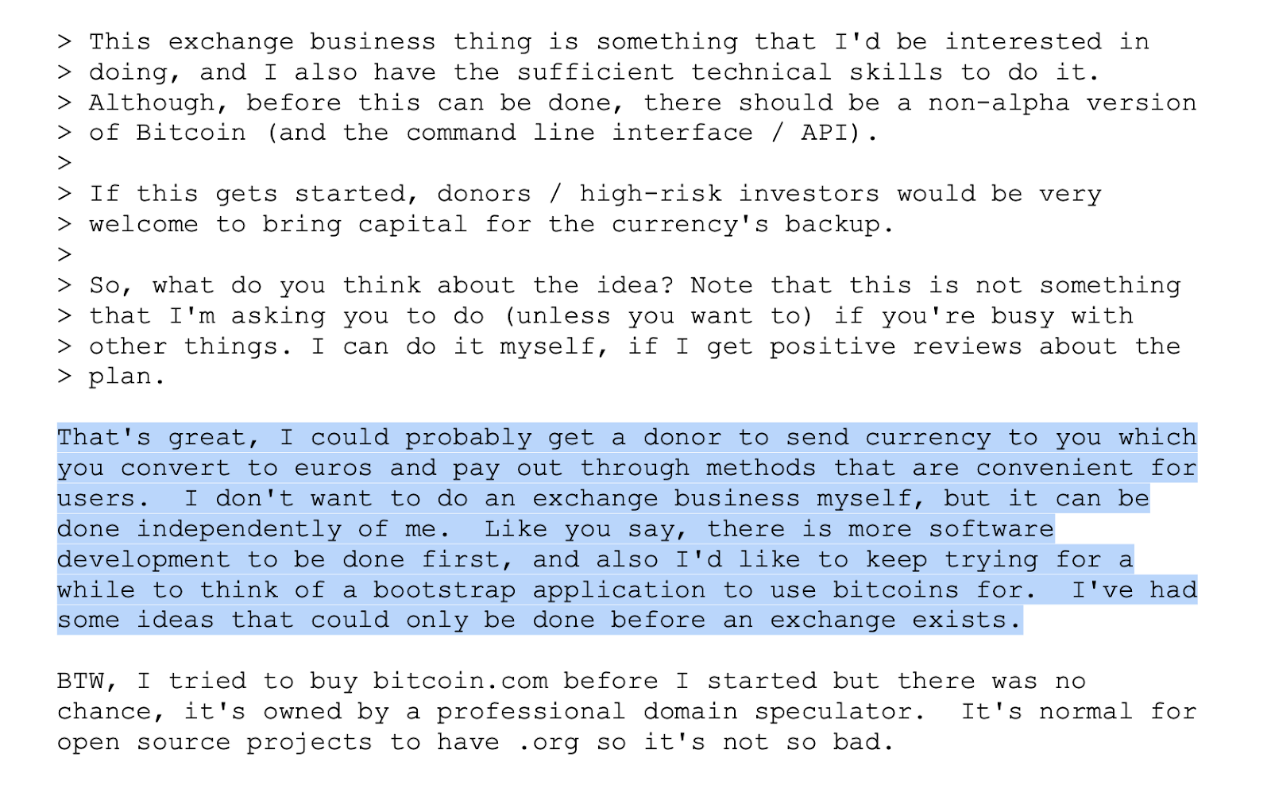
Martti 向中本聪咨询,关于为其新成立的比特币交易平台 Bitcoin Market 筹集资金的事宜。

尽管中本聪指出他希望这件事能“独立”于他的参与而完成,但还是提到了可以为这个想法找“资助者”。

剖析中本聪早期邮件:背后的「神秘捐助者」有何贡献?

2010 年 6 月:

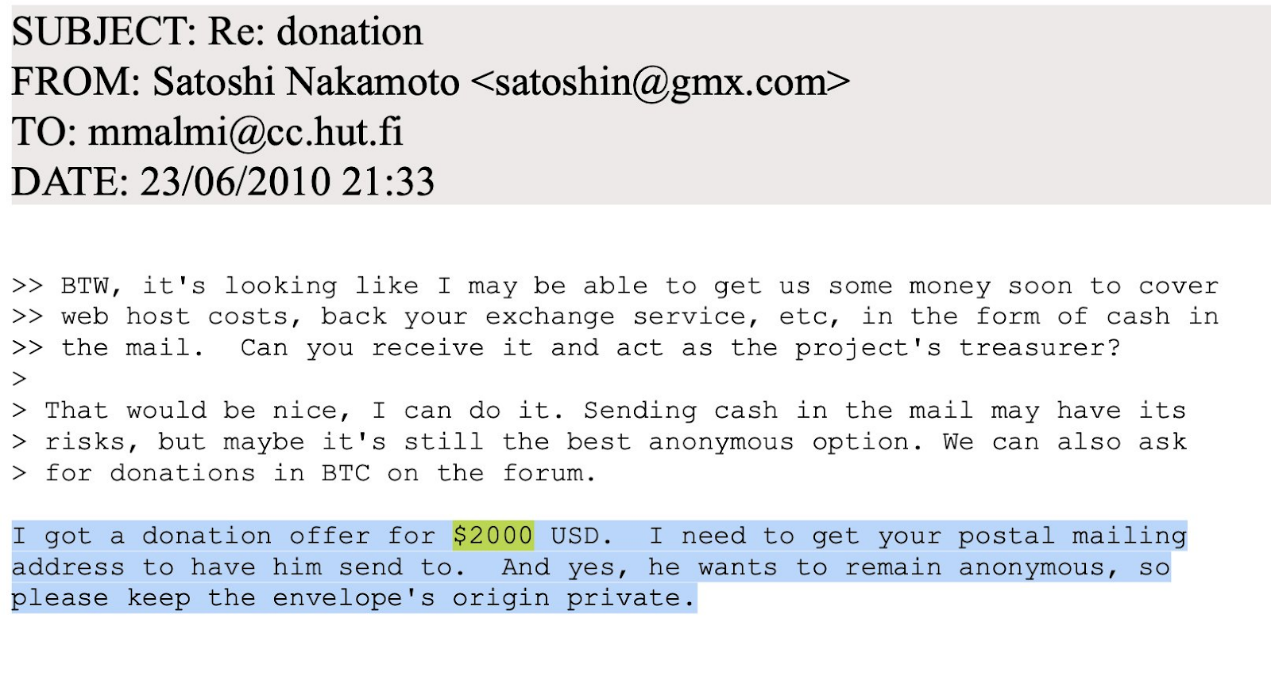
中本聪再次提到,他得到 2000 美元的捐款。

他指出,这笔钱需要转给 Martti,这样他的身份就不会被泄露。

剖析中本聪早期邮件:背后的「神秘捐助者」有何贡献?

2010 年 7 月:

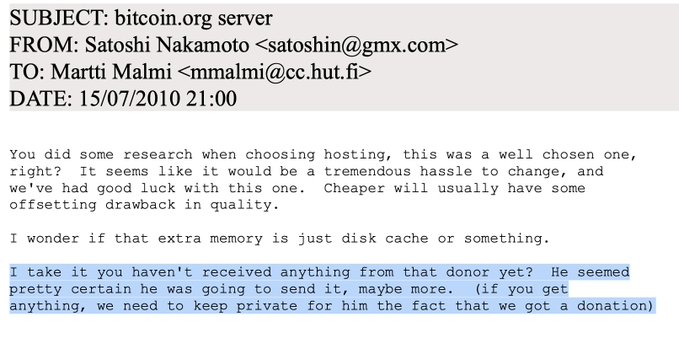
捐赠者仍未向 Martti 寄出任何资金。

剖析中本聪早期邮件:背后的「神秘捐助者」有何贡献?

2010 年 7 月:

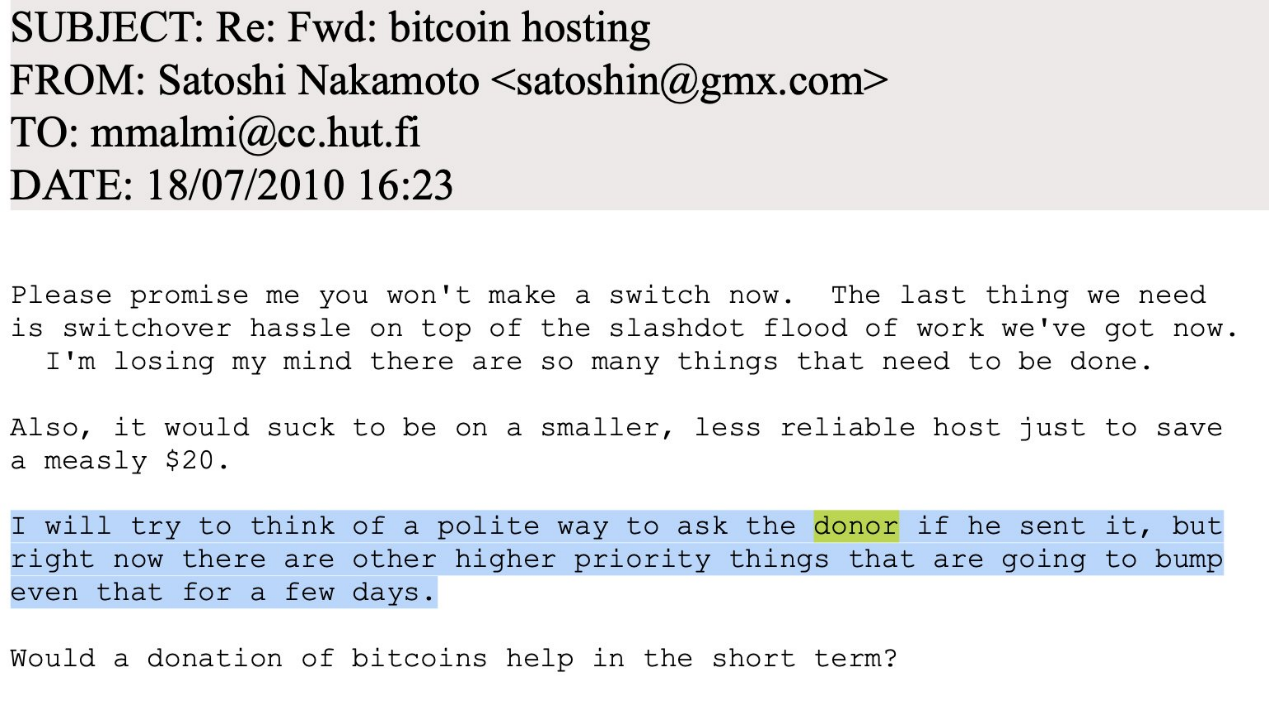
中本聪回应说,他将再次与捐赠者联系,以优先支付这笔款项。

剖析中本聪早期邮件:背后的「神秘捐助者」有何贡献?

2010 年 7 月:

Martti 收到了 3600 美元的捐款,他同意将其用于项目费用,例如网页托管服务。

剖析中本聪早期邮件:背后的「神秘捐助者」有何贡献?

2010 年 7 月:

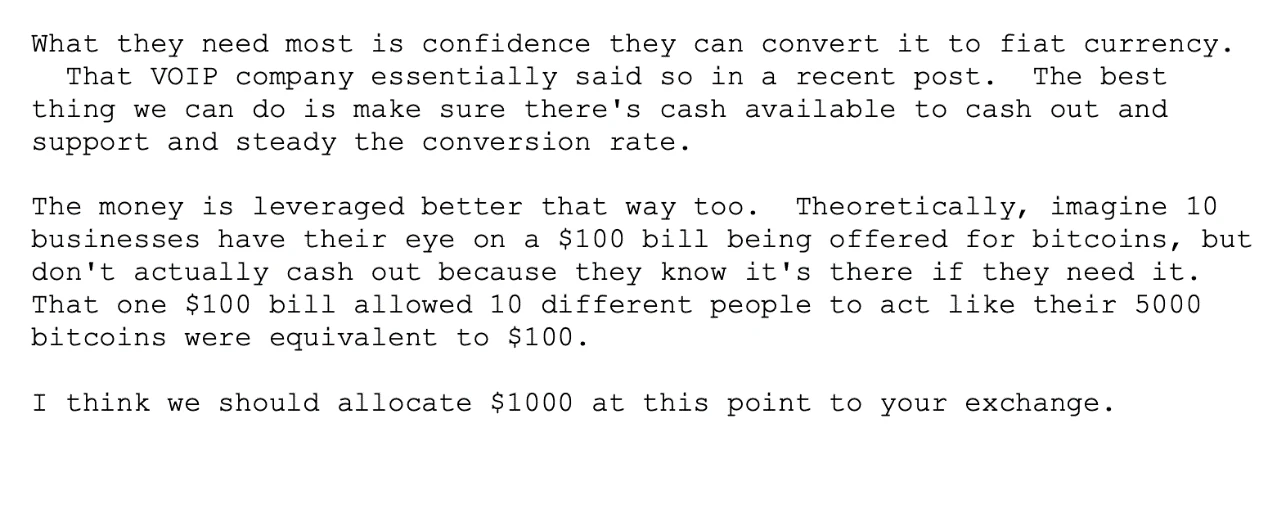
中本聪同意拨出 1000 美元给 Martti 的新交易平台。

值得注意的是,中本聪还认为这笔钱可以借给其他可能接受比特币的企业。

剖析中本聪早期邮件:背后的「神秘捐助者」有何贡献?6 个月后,中本聪消失。

这就是迄今为止关于这位捐赠者的所有信息。如今,其身份仍然成谜。但很明显的是,捐赠者的这种牺牲在早期帮助推动了比特币的成功。无论这个人是谁,比特币都欠其一份人情。

Lecturas Relacionadas

Two Giants' Credit Expansion: Loan Balances of $9.9 Billion vs. $14.6 Billion, Brazil Emerges as the Main Battlefield

Title: Two Giants "Credit" Surge: Loan Balances of 99 Billion vs. 146 Billion USD, Brazil Emerges as Main Battlefield Summary: The article compares the rapid expansion of credit businesses by two major e-commerce and fintech players, Sea (via Monee) and Mercado Libre (via Mercado Pago), in overseas markets like Southeast Asia and Latin America, contrasting with a slowing domestic Chinese credit market. Using Q1 2026 financial data, it highlights their significant growth. Sea's Monee reached a loan balance of $99 billion, up 71% year-over-year (YoY), contributing 17.5% to Sea's total revenue. Mercado Pago's loan balance hit $146 billion, up 87% YoY, contributing 45% to its parent company's revenue. Both maintained stable risk metrics (e.g., Monee's 90+ day NPL at 1.1%) despite rapid scaling. Brazil is identified as a key and accelerating growth market for both. Sea's Brazilian operations saw loan volumes exceed $10 billion, growing 250% YoY, with SPayLater GMV penetration still low (~10%) indicating high potential. Sea also secured a key Brazilian financial credit license (SCFI). Mercado Libre's Brazil segment contributed over half (54%) of total group revenue, with its credit business there generating $11.24 billion in revenue, up 89% YoY and accounting for 12.7% of global revenue. Mercado Pago's credit portfolio, especially credit cards (46% of loans, +105% YoY), is a strategic focus, described as crucial as building logistics was a decade ago. Its net interest margin after loss (NIMAL) remains high at 17.8%. The article concludes that while Brazil presents immense opportunities, the success is largely driven by these integrated "e-commerce + fintech" giants with proprietary transaction data and ecosystems, making it challenging for standalone fintech players to compete effectively.

链捕手Hace 20 min(s)
Two Giants' Credit Expansion: Loan Balances of $9.9 Billion vs. $14.6 Billion, Brazil Emerges as the Main Battlefield

链捕手Hace 20 min(s)

Research Report Analysis: Is Intel Making a Comeback with Apple? Bernstein's Calculations Show the Right Direction, but the Price Is Already Overvalued

Bernstein analyst Stacy A. Rasgon published a report on June 18 regarding Intel, assessing the potential impact of recent political support for a US-based PC chip design and manufacturing collaboration between Apple and Intel. The report views this as a significant signal for the foundry landscape shift but concludes the initial financial contribution would be minimal. Key conclusions: 1) An Apple deal is seen as a small-scale "proof of concept." Even if Intel wins 40% of Apple's premium notebook chip orders (~5 million units/year), Bernstein estimates it would generate only about $500M in annual revenue and ~$0.03 EPS, negligible against Intel's ~$55B revenue. 2) Political encouragement is not equivalent to enforceable mandates. Winning orders ultimately depends on Intel demonstrating competitive technology (like its 18A node), cost, and reliable supply. 3) The path from validation to large-scale production involves significant challenges, capital investment, and time. Due to these uncertainties, Bernstein maintains a Market-Perform (Hold) rating with a $100 price target, implying potential downside from the ~$121.10 price at the report date. The analysis highlights the tension between near-term validation value—serving as a crucial trust signal for Intel's foundry ambitions and US supply chain resilience—and the long-term opportunity to attract larger cloud and AI chip customers. The investment thesis hinges on successful 18A execution and sustained policy support, not on immediate financial gains from Apple.

marsbitHace 44 min(s)

Research Report Analysis: Is Intel Making a Comeback with Apple? Bernstein's Calculations Show the Right Direction, but the Price Is Already Overvalued

marsbitHace 44 min(s)

27-Year Reign Ends: SK Hynix Market Cap Surpasses Samsung for First Time, an AI-Driven Reshuffle of Korean Chip Power

On June 22, 2026, SK Hynix made history by surpassing Samsung Electronics in market capitalization, ending Samsung's 27-year reign as South Korea's most valuable company. This dramatic reversal is powered by the AI boom and SK Hynix's dominant position in High Bandwidth Memory (HBM), a critical component for AI model training. Once a heavily indebted firm on the brink of bankruptcy, SK Hynix bet early on HBM, which has evolved from a niche product to essential AI infrastructure. It now commands a 59% share of the global HBM market. Its financial performance is staggering, with Q1 2026 net profit soaring nearly fourfold year-over-year to KRW 40.35 trillion, translating to over 2 billion RMB in daily net profit. HBM now drives roughly 40% of its revenue with exceptionally high margins. In contrast, Samsung, with its broad portfolio spanning memory chips, smartphones, and foundry services, has lagged in the HBM race while facing headwinds in other divisions. This shift signifies a deeper restructuring of South Korea's economy, moving from consumer electronics to AI-driven growth. However, the future remains competitive. With major capacity expansions planned industry-wide by 2028 and Samsung aiming to catch up in HBM technology, the new market leader cannot afford complacency. This event marks a pivotal moment in the global semiconductor industry's ongoing power realignment.

marsbitHace 55 min(s)

27-Year Reign Ends: SK Hynix Market Cap Surpasses Samsung for First Time, an AI-Driven Reshuffle of Korean Chip Power

marsbitHace 55 min(s)

Trading

Spot
Futuros
活动图片