$195M EdgeX airdrop sparks backlash: What it means for EDGE prices

ambcryptoPublicado a 2026-04-04Actualizado a 2026-04-04

Resumen

EdgeX (EDGE) surged to a new all-time high of $1.19 before retracting to around $1.04, marking a 19% daily gain and entering the top 100 cryptocurrencies by market cap. However, the team faced significant backlash over its $195 million airdrop, with on-chain analysts alleging that $90 million worth of tokens were directed to wallets linked to the team. In response, the team executed a $2 million token buyback and burn. Despite the price increase, market sentiment turned bearish, with sell volume exceeding buy volume and futures traders heavily shorting the token. Due to low token float and prevailing negative sentiment, EDGE may drop below $1, potentially finding support near $0.75, unless further buybacks help sustain its value.

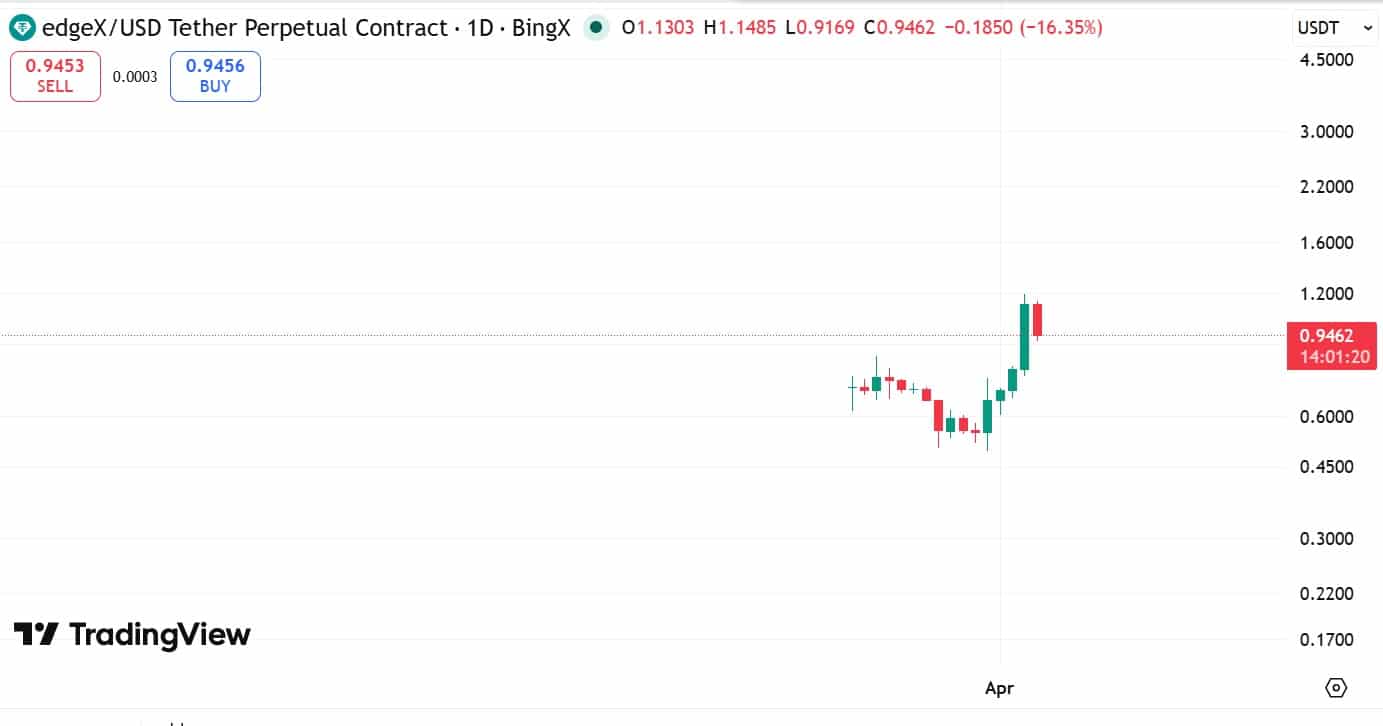
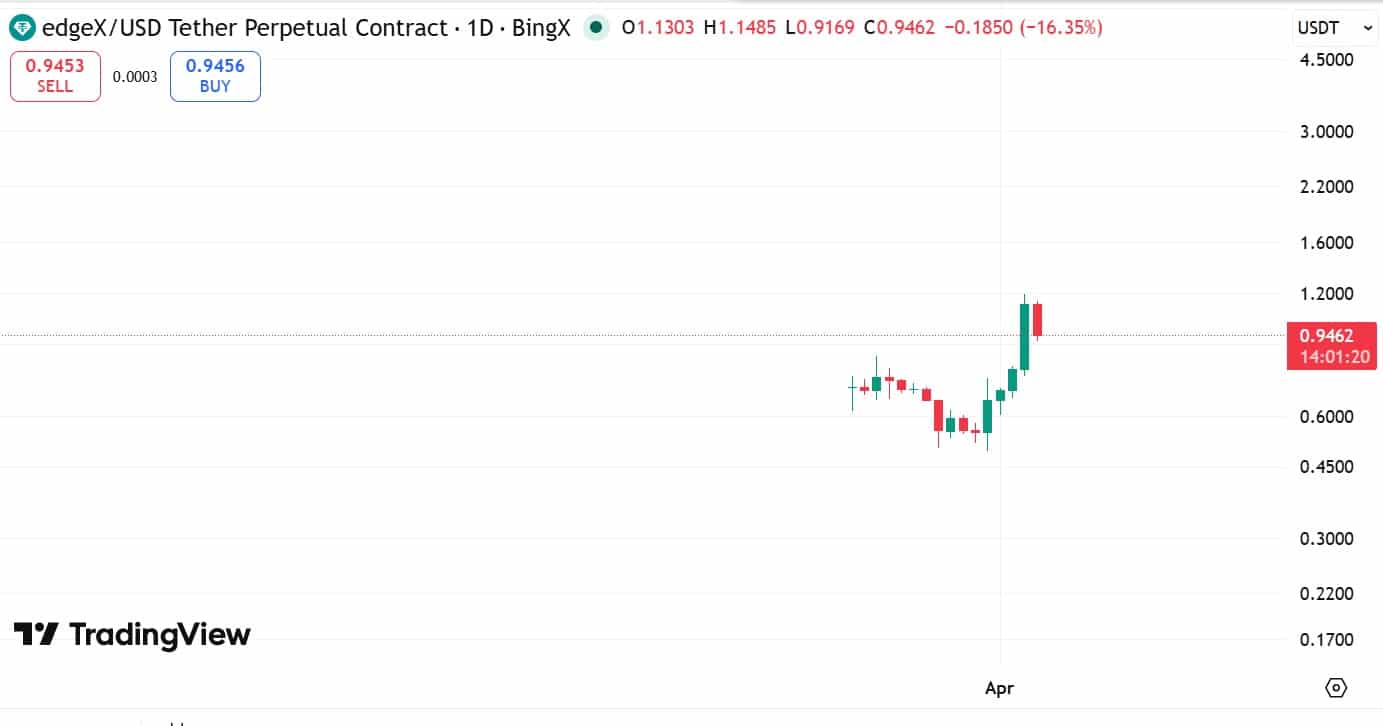
EdgeX [EDGE] continued with its price discovery, extending a five-day-long rally. The altcoin surged to a new all-time high of $1.19, then slightly dropped to $0.97.

At press time, EDGE traded at $1.04, up 19% on the daily charts. Over the same period, its trading volume rose by 280% to $357 million. With the price uptick, it became a top-100 cryptocurrency by market cap, ranking 92nd at $375 million.

EDGE team faces scrutiny over the airdrop

Although EDGE has performed relatively well since launch, the team has faced heavy criticism over its token airdrop. On‐chain monitors reported that the EdgeX team likely retained most of the $195 million from the airdrop for themselves. Notably, Arkham data showed that 14% of the airdrop was directed towards partners and liquidity providers.

According to Onchainschool, the team airdropped to 80+ fresh wallets linked directly to the team. In total, about 180 million tokens were distributed for a sum of over $90 million.
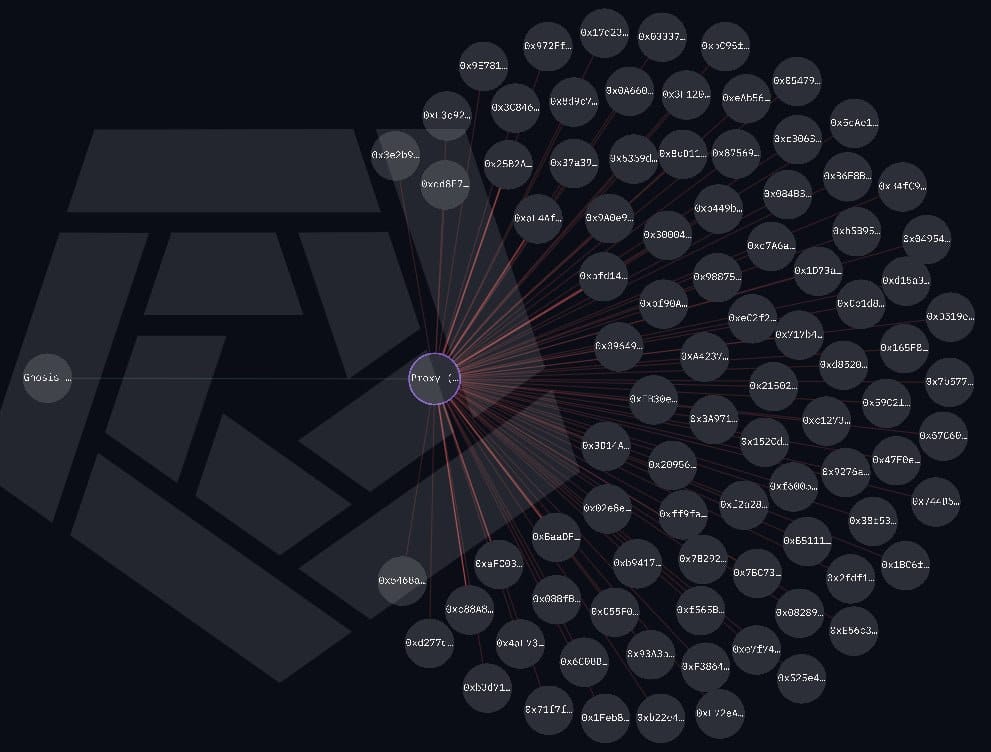
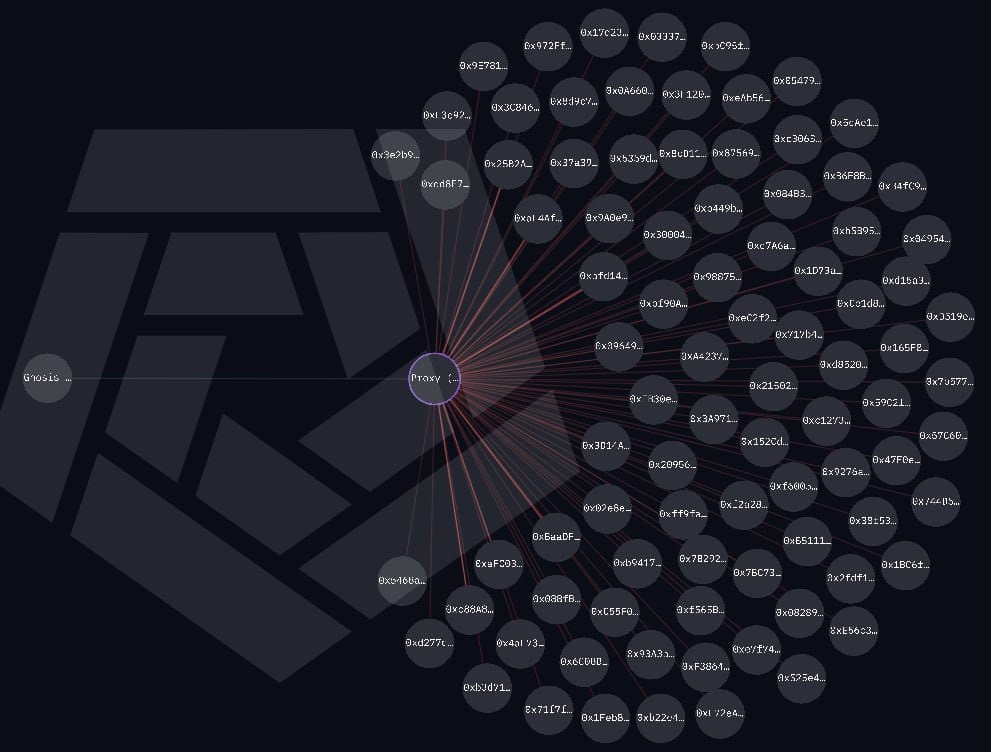
Source: Arkham

After being called out, the team redirected some of these funds toward a token buyback, purchasing and burning over $2 million worth. These actions highlighted a lack of transparency from the team, raising concerns across the wider community.

Market players show strong bearish sentiment

Interestingly, as the market rallied, most early buyers jumped in and cashed out. According to Coinalyze data, the altcoin recorded 67 million in Sell Volume compared to 64 million in Buy Volume as of writing.
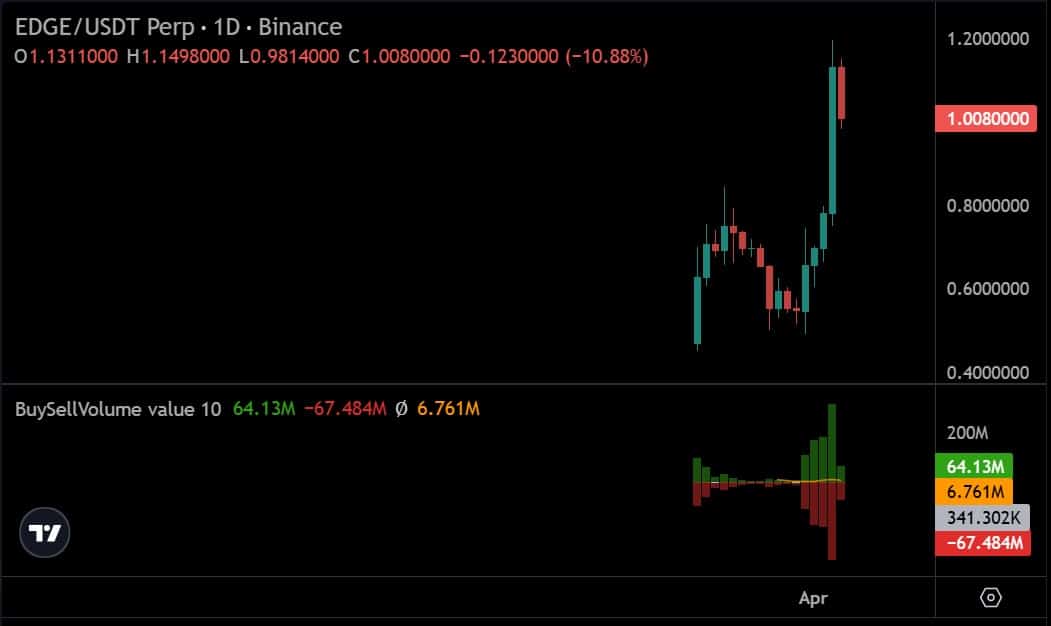
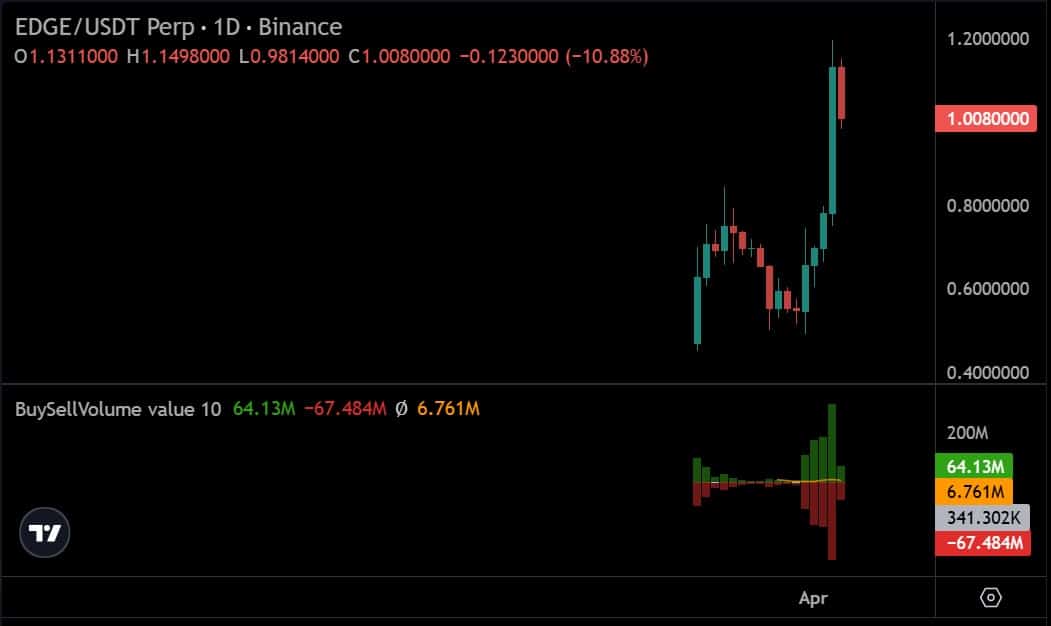
Source: Coinalyze

The token has seen significant sell pressure since its launch, with trading volume exceeding 800 million. This signaled a lack of long-term confidence in the token, and most participants sought easy short-term gains.

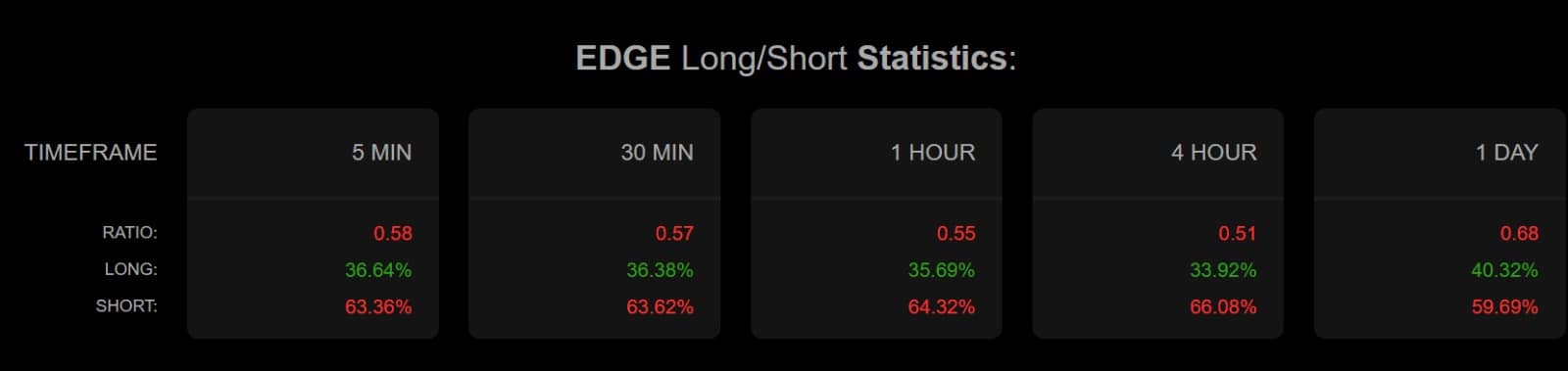
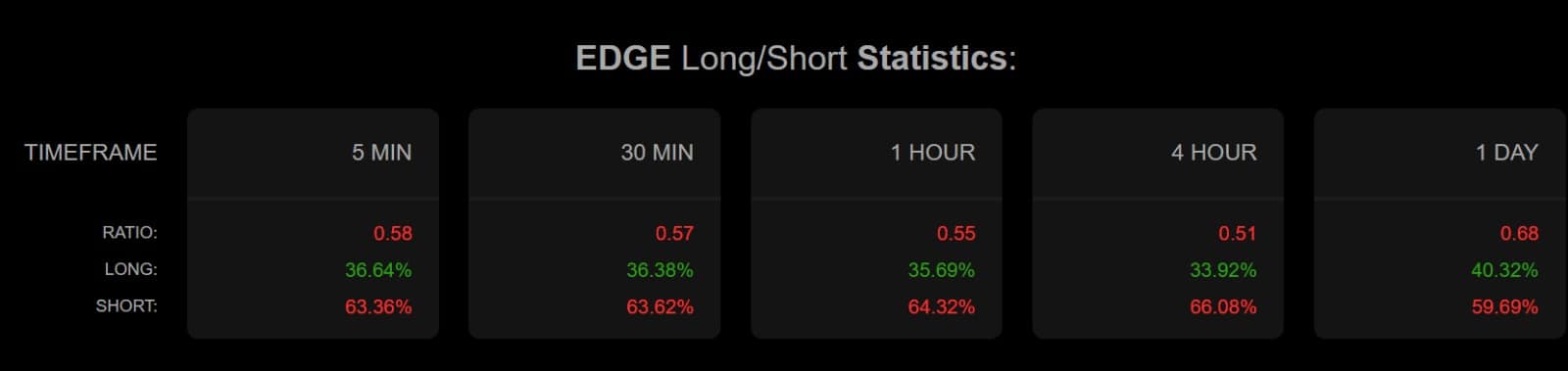
On the Futures side, most traders have been shorting the market. The Long‐Short Ratio fell to 0.68, with 59.6% of Futures positions on the short side.
Source: Coinalyze

When shorts dominate, it suggests that most investors were bearish and expect prices to slide in the near future.

What’s next?

EDGE showed strong upside momentum, primarily driven by low float. Out of 175 million tokens, 140 million tokens are locked, 34 million are held in wallets, and 1.45 million are on exchanges.

The low supply has strengthened the altcoin tokenomics, leading to higher prices. However, market participants have remained bearish across the market.
Source: TradingView

Under the prevailing conditions, EDGE is likely to drop further below $1 and seek support around $0.75. However, if the team continues with buybacks and token burns, the token could hold above $1 and eye $1.2.


Final Summary

  • Edgex [EDGE] experienced massive volatility, rallying to an all-time high of $1.19 before falling to a low of $0.94.
  • The EDGE team faced criticism over airdrops, as they were accused of dropping $90 million for themselves.


Preguntas relacionadas

QWhat was the all-time high price reached by EdgeX (EDGE) and what was its price at press time?

AEdgeX reached an all-time high of $1.19 and was trading at $1.04 at press time.

QWhy has the EdgeX team faced heavy criticism and scrutiny?

AThe team faced criticism because on-chain data suggested they airdropped a significant portion of the tokens (worth about $90 million) to over 80 fresh wallets linked directly to themselves, rather than to the wider community.

QWhat was the Long-Short Ratio for EDGE futures, and what does this indicate about market sentiment?

AThe Long-Short Ratio fell to 0.68, with 59.6% of futures positions being short. This indicates that the majority of traders were bearish and expected the price to decrease.

QWhat are the key factors contributing to EDGE's strong price momentum and its potential future price movement?

AThe strong upside momentum was primarily driven by a low float, with 140 million of the 175 million tokens locked. The future price could drop to seek support around $0.75 or hold above $1 and target $1.2 if the team continues buybacks and token burns.

QHow did the team respond after being called out for the airdrop allocation, and what was the community's concern?

AAfter being called out, the team redirected some of the funds to a token buyback, purchasing and burning over $2 million worth of tokens. The community's main concern was the lack of transparency from the team regarding the airdrop.

Lecturas Relacionadas

Understanding Hash in One Article: The "Browser Miner" on Ethereum

Hash is an Ethereum-based ERC-20 token described as a "browser-minable post-quantum token." Its key features include enabling browser-based GPU mining without specialized hardware, a fixed supply cap of 21 million tokens, immutable and permissionless smart contracts with no team allocation or pre-mining, and an emphasis on post-quantum security using Keccak256 hashing. The mining mechanism is a simplified on-chain proof-of-work where miners solve unique challenges tied to their wallet address. Key design elements prevent answer theft, with epochs resetting every 100 blocks (~20 minutes) and a per-block minting limit. Emission follows a Bitcoin-like halving schedule every 100,000 mints, starting at 100 tokens per mint. Projections suggest all tokens could be mined within approximately 294 days if a target rate of one mint per minute is sustained. Hash emphasizes "post-quantum" security by leveraging hash-based primitives like Keccak256, which are considered more resistant to quantum attacks compared to elliptic-curve cryptography. While not a fully post-quantum asset, it aligns with Ethereum's broader post-quantum research narrative. The project completed its Genesis sale at $0.03 and began trading on Uniswap, with its price reaching around $0.19. The initial circulating supply is small, with 5% sold in Genesis and 5% allocated to liquidity. The majority (47.6% of total supply) is allocated to early-stage mining, leading to a front-loaded emission schedule. This structure, combined with low initial liquidity, makes Hash a high-volatility, high-risk project dependent on sustained miner participation and market demand to absorb new supply.

marsbitJusto ahora

Understanding Hash in One Article: The "Browser Miner" on Ethereum

marsbitJusto ahora

OpenAI's Largest Internal Wealth Creation: 600 People Cash Out a Total of $6.6 Billion, 75 Take Home the Maximum $30 Million Each

A Wall Street Journal report reveals OpenAI's unprecedented pre-IPO wealth creation. In a single employee stock sale last October, over 600 current and former employees sold shares, collectively cashing out approximately $6.6 billion. Due to high investor demand, the company tripled the individual sale cap to $30 million, with about 75 employees selling the maximum amount. This event represents the largest such transaction in tech industry history for a private company. OpenAI's valuation was $500 billion for this tender offer. Employees with over two years of tenure were eligible, allowing many post-ChatGPT hires their first liquidity event. The company's stock has reportedly grown over 100-fold in seven years. Following a restructuring, employees collectively hold about 26% of OpenAI. The scale of executive wealth is also staggering. In court testimony related to Elon Musk's lawsuit, President and co-founder Greg Brockman confirmed his OpenAI stake is worth around $30 billion. Analysis indicates about 165 current and former employees hold a combined ~$164.9 billion in equity, averaging nearly $1 billion per person in paper wealth. OpenAI's per-employee stock-based compensation is estimated to be 34 times the average of major tech firms before their IPOs. OpenAI continues its rapid ascent, closing a $122 billion funding round at an $852 billion valuation in March. With monthly revenue hitting $2 billion, over 900 million weekly ChatGPT users, and plans for a potential trillion-dollar IPO in late 2026, this wealth-creation engine shows no signs of stopping.

链捕手Hace 23 min(s)

OpenAI's Largest Internal Wealth Creation: 600 People Cash Out a Total of $6.6 Billion, 75 Take Home the Maximum $30 Million Each

链捕手Hace 23 min(s)

Understanding CPO (Co-Packaged Optics) in One Article: Why Nvidia Is Willing to Spend $3.2 Billion on a Fiber?

NVIDIA and Corning announced a multi-year strategic partnership on May 6, 2026, with NVIDIA committing up to $3.2 billion to support Corning's U.S. expansion. This investment will triple Corning's manufacturing plants and significantly boost its optical fiber and communications production capacity. The core driver behind this massive investment is the fundamental shift from copper to optical interconnect technology within AI data centers. As GPU clusters scale, copper wires face critical limitations: severe signal attenuation over distance, high energy consumption for signal integrity, and excessive heat generation. Optical fiber, transmitting light instead of electrical signals, solves these issues with minimal loss, near-light speed, and lower power needs. The article outlines a three-stage evolution of data center interconnect: 1. **Traditional Copper Interconnects:** The mainstream solution of the 2010s, now being phased out due to scaling bottlenecks. 2. **Pluggable Optical Modules:** The current mainstream, where modules convert electrical signals to light externally. This process still introduces energy loss and latency. 3. **CPO (Co-Packaged Optics):** The next-generation technology where the optical engine is integrated directly with the GPU chip package. This drastically reduces the electrical signal travel distance to mere millimeters, slashing power consumption and latency while boosting data density. NVIDIA CEO Jensen Huang has identified CPO as an essential core technology for AI infrastructure. NVIDIA's investment signifies a strategic shift from being a buyer to actively controlling its supply chain for critical components. With demand for specialized optical fiber far outstripping supply—evidenced by soaring prices—securing long-term manufacturing capacity has become a competitive necessity. While Corning's expansion may pressure some suppliers, a projected global fiber supply gap of 5-15% over the next few years creates a significant opportunity window, particularly for Chinese manufacturers competitive in optical preforms, chips, and modules. Ultimately, NVIDIA's move is not about chasing a trend but an engineering imperative. The transition to light-based interconnects like CPO is driven by the physical limits of copper, marking a definitive step in the ongoing AI computing revolution.

marsbitHace 48 min(s)

Understanding CPO (Co-Packaged Optics) in One Article: Why Nvidia Is Willing to Spend $3.2 Billion on a Fiber?

marsbitHace 48 min(s)

Trading

Spot
Futuros

Artículos destacados

Cómo comprar EDGE

¡Bienvenido a HTX.com! Hemos hecho que comprar edgeX (EDGE) sea simple y conveniente. Sigue nuestra guía paso a paso para iniciar tu viaje de criptos.Paso 1: crea tu cuenta HTXUtiliza tu correo electrónico o número de teléfono para registrarte y obtener una cuenta gratuita en HTX. Experimenta un proceso de registro sin complicaciones y desbloquea todas las funciones.Obtener mi cuentaPaso 2: ve a Comprar cripto y elige tu método de pagoTarjeta de crédito/débito: usa tu Visa o Mastercard para comprar edgeX (EDGE) al instante.Saldo: utiliza fondos del saldo de tu cuenta HTX para tradear sin problemas.Terceros: hemos agregado métodos de pago populares como Google Pay y Apple Pay para mejorar la comodidad.P2P: tradear directamente con otros usuarios en HTX.Over-the-Counter (OTC): ofrecemos servicios personalizados y tipos de cambio competitivos para los traders.Paso 3: guarda tu edgeX (EDGE)Después de comprar tu edgeX (EDGE), guárdalo en tu cuenta HTX. Alternativamente, puedes enviarlo a otro lugar mediante transferencia blockchain o utilizarlo para tradear otras criptomonedas.Paso 4: tradear edgeX (EDGE)Tradear fácilmente con edgeX (EDGE) en HTX's mercado spot. Simplemente accede a tu cuenta, selecciona tu par de trading, ejecuta tus trades y monitorea en tiempo real. Ofrecemos una experiencia fácil de usar tanto para principiantes como para traders experimentados.

408 Vistas totalesPublicado en 2026.03.31Actualizado en 2026.03.31

Cómo comprar EDGE

Discusiones

Bienvenido a la comunidad de HTX. Aquí puedes mantenerte informado sobre los últimos desarrollos de la plataforma y acceder a análisis profesionales del mercado. A continuación se presentan las opiniones de los usuarios sobre el precio de EDGE (EDGE).

活动图片












