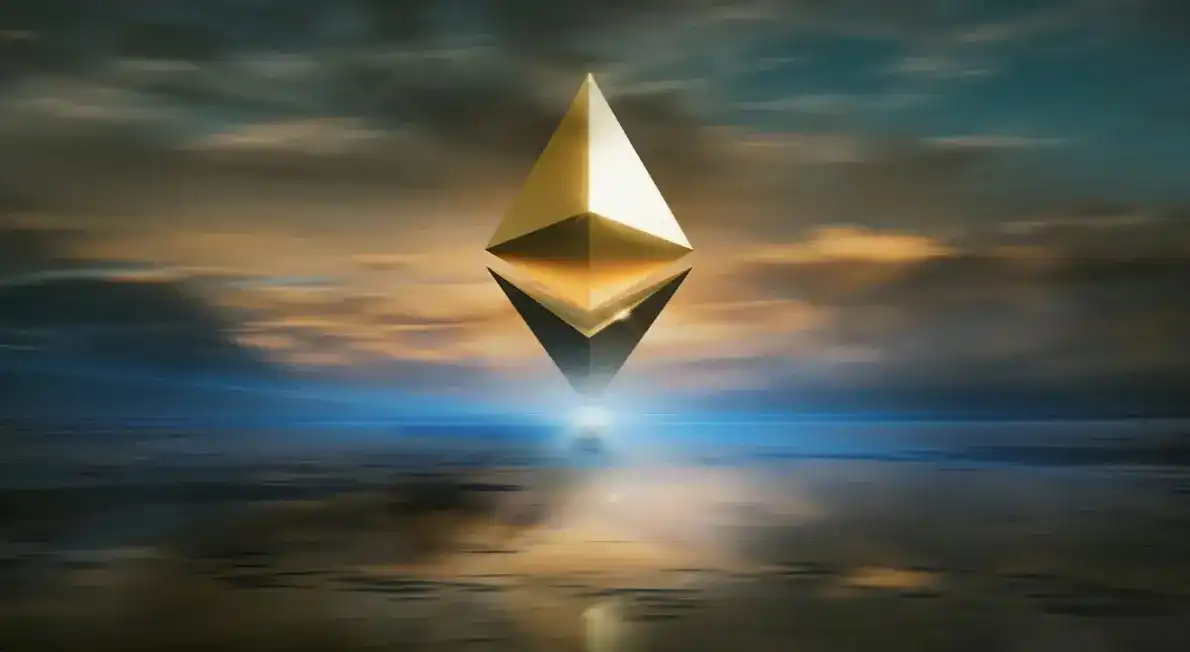
Prometheum, the Only U.S.-Registered Crypto Platform, Picks Ether as Its First Product

CoinDeskPolicyPublicado a 2024-02-06Actualizado a 2024-02-07

Resumen

The much-debated crypto broker says it's poised to start its SEC-compliant custody with ETH, then will soon add other names and begin a trading operation within months.

  • Prometheum is seeking to blaze a new trail as an SEC-compliant crypto firm, beginning with a custody operation that intends to start its business by holding customers' ETH.
  • The company's executives say the firm will follow with a number of other tokens before launching its trading operations, targeting the second quarter of 2024 to open its doors.

Prometheum Inc. – still standing alone as the only U.S.-registered crypto securities platform – has disclosed that the first digital asset it'll handle for clients will be Ethereum's ether (ETH).

The company, which has been a target of industry criticism and debate, hasn't yet taken in any revenue after having only very recently cleared the final regulatory hurdle to open its custody operation. But co-CEOs Aaron and Benjamin Kaplan said they'll take on custody of customers' ETH by the end of next month.

"We want to be able to service the largest market cap and most liquid token," said Aaron Kaplan in an interview with CoinDesk. "Ethereum is first, and there should be many more thereafter."

Advertisement
Advertisement

Prometheum represents a high-stakes test case in U.S. crypto. It's the first firm to attempt to go through all the U.S. Securities and Exchange Commission's compliance hurdles to set itself up as a special-purpose broker-dealer and crypto custodian through the Financial Industry Regulatory Authority. And next quarter, Prometheum's executives said they intend to open the doors of their alternative trading system – a kind of U.S. trading venue that is similar to a full-fledged exchange but with fewer compliance requirements.

At that point, the company will either be proving the claims of its executives that crypto can be handled in the U.S. in a way that appeases the securities watchdog, or proving the naysayers who argue that it's impossible to meet the SEC's expectations. The stakes aren't just high for Prometheum and the rest of the industry, but also for the government agency that has claimed for years that there's a proper way for crypto firms to "come in and register" to do business in the U.S.; Prometheum came in and registered but what happens next is unclear. And while it tests these murky waters, it may also help establish whether the SEC intends to view ETH as a security.

Prometheum's choice of ETH as its opening asset could come with its own complications. Unlike bitcoin (BTC), which the SEC has openly declared isn't a security and is therefore none of the agency's business, the commission has been more coy about whether ETH is among the digital tokens that should be considered securities that fall under its jurisdiction. Its sister agency, the Commodity Futures Trading Commission, hasn't been so shy about declaring that ETH is definitely a commodity.

Advertisement
Advertisement

Prometheum is registered to custody crypto securities and isn't in the commodities business. Ben Kaplan said the firm will go with whatever the SEC's word is on ETH.

"The CFTC is not our regulator," he said. "When the SEC says to us, 'It's not a security,' then we'll be troubled."

The startup, which Aaron Kaplan has said has about 50 employees, is seeing "immense interest" in its service as a so-called "qualified custodian," though it hasn't yet confirmed any institutional names that may do business there. It intends to service asset managers, hedge funds, investment advisers, banks and other financial institutions.

"A lot of people got burned in 2022," he said, referring to the turmoil involving the under-regulated U.S. industry.

Prometheum may get a tremendous shot in the arm if the SEC follows through with a rule it proposed to require registered investment advisers only be allowed to park their customers' crypto assets with qualified custodians. That list typically includes registered broker-dealers and banks, but SEC Chair Gary Gensler has argued it probably doesn't include today's major crypto exchanges. The rule is on the agency's public agenda to be finalized by April, though such agendas often prove overly ambitious.

Advertisement
Advertisement

Whether the SEC finishes the rule or not, Aaron Kaplan contended that traditional financial firms will want to deal with a service that's properly registered and "speaking the same compliance language."

He argued that the company could also benefit from the trend toward asset tokenization, because that practice needs a firm that can trade, clear and settle in one place.

The outcome of Prometheum's business plan and whether the SEC stays silent or attempts to intervene isn't the only uncertainty facing the firm. As with the rest of the sector, its future could be steered by ongoing court cases that promise answers on how crypto securities will be defined.

If courts side with the recent Coinbase arguments in its case with the SEC that cryptocurrencies traded on a secondary market don't carry explicit contracts and aren't securities, such a decision could affect the universe of securities Prometheum can host on its platform.

Edited by Nick Baker.

Lecturas Relacionadas

Rented Faith: How Much of the Bitcoin ETF Inflows Is Real Money?

"Rented Conviction: How Much of Bitcoin ETF Flows Is Real Money" The weekly inflows into Bitcoin ETFs are often interpreted as a gauge of institutional belief. However, a significant portion of this activity is driven by a hidden arbitrage trade, not directional conviction. The core mechanism is a cash-and-carry arbitrage: traders buy spot Bitcoin (often via ETFs) while simultaneously shorting CME futures to lock in the price difference, or "basis." This delta-neutral trade is essentially an interest rate play. In weekly data, about half the fluctuation in ETF flows can be explained by new short positions added by leveraged funds (hedge funds), with a correlation of 0.70. Bitcoin's price movement in a given week shows no statistical power in predicting these flows. While this arbitrage trade drives weekly *volatility*, it is not the main component of the cumulative *stock*. Of the total ~$55 billion in net ETF inflows, the current net arbitrage position is only about $1 billion. The remainder is steady, directional buying averaging ~$400 million per week, which constitutes the vast majority of the accumulated "mountain" over two years. Thus, ETF flow data overstates the *volatility* of conviction, not its *level*. This arbitrage trade has been unwinding for nearly two years. Leveraged fund short positions peaked at ~$14 billion in late 2024 and have since declined to ~$4.5 billion. When the basis compresses to unprofitable levels, ETF inflows and short positions retreat together. Recent outflows should not be mistaken for a loss of faith but rather the routine unwinding of this rate trade. For Ethereum ETFs, the pattern is weaker. Accounting for staking yield makes the basis often negative, so neither strong conviction buying nor robust arbitrage supports its flows. To interpret ETF flows correctly, monitor the CME basis versus T-bill rates and leveraged fund net shorts. They reveal how much of the next "demand" headline is real. The real, patient buy-and-hold demand is what constitutes the enduring bulk of ETF assets.

marsbitHace 3 min(s)

Rented Faith: How Much of the Bitcoin ETF Inflows Is Real Money?

marsbitHace 3 min(s)

Soaring Over Tenfold Within the Year: The Frenzy Over SK Hynix Leveraged Products

South China Morning Post The leveraged ETF tracking SK Hynix has surged over tenfold year-to-date, fueled by intense market speculation on the memory chip sector. By June 22, the value of the 'South Korea 2x Long SK Hynix ETF' listed in Hong Kong had skyrocketed by more than 1,061% since the start of the year, while its asset size exploded over twenty times from the end of last year. The rally is driven by AI-driven demand for high-bandwidth memory (HBM), with SK Hynix recently sampling its next-generation HBM4E product. However, industry professionals warn of significant risks. Leveraged ETFs magnify both gains and losses. During a recent market correction, while the underlying SK Hynix stock fell 19.1%, its double-leveraged ETF dropped nearly 38%. Korean regulators noted that such products could theoretically lose 60% in a single day. Additionally, these ETFs face risks like time decay in volatile markets, liquidity spirals during mass redemptions, and extreme price dislocations from market-making failures, as seen in early June when an ETF moved opposite to its underlying stock. The trading is predominantly driven by retail investors, with institutional capital largely absent due to the products' high volatility. Analysts caution that with the semiconductor sector at elevated valuations and facing geopolitical and supply chain uncertainties, leveraged ETFs pose a substantial threat of amplified losses for uninformed investors.

marsbitHace 1 hora(s)

Soaring Over Tenfold Within the Year: The Frenzy Over SK Hynix Leveraged Products

marsbitHace 1 hora(s)

18 Months, Over 50x Surge: KIOXIA's Epic Comeback

KIOXIA, a NAND flash memory giant, staged a dramatic comeback driven by AI demand. After a period of significant losses, a failed merger, and missed HBM opportunities, its 2024 IPO began modestly. However, fueled by explosive demand for AI data storage, its stock price skyrocketed over 50 times within 18 months, making it Japan's most valuable company, surpassing Toyota. Its Q1 FY2026 profit guidance soared 30-fold year-over-year, with 2026 NAND capacity already sold out. Key to its success is its 3D NAND technology, BiCS FLASH. As the inventor of NAND, KIOXIA advanced its technology through generations, reaching over 200 layers by 2023. Key innovations include CBA (CMOS directly Bonded to Array), which separately manufactures control circuits and memory arrays for better performance, and OPS (On Pitch Select Gate) to increase density. The company is now developing high-capacity packages like an 8TB solution stacking 32 dies. Looking beyond NAND, KIOXIA is exploring 3D DRAM with its OCTRAM technology, using oxide semiconductor transistors for ultra-low leakage to reduce power consumption. This fundamental research differs from HBM and represents a long-term bet to extend its 3D expertise from NAND into future DRAM architectures. KIOXIA's story highlights how technological assets and shifting market cycles can rapidly transform a company's fortunes. While questions remain about sustaining growth beyond the current AI boom, its resurgence demonstrates that in semiconductors, being down does not necessarily mean being out.

marsbitHace 1 hora(s)

18 Months, Over 50x Surge: KIOXIA's Epic Comeback

marsbitHace 1 hora(s)

Market Trends in U.S. Stocks (June 23): Peak at Listing? SpaceX Loses Over $800 Billion in Three Days, Tech Stocks Experience Severe Internal Divergence

Stock Market Trends (June 23): Did SpaceX Peak at IPO? The company loses over $800 billion in market value in three days as a sharp divergence unfolds within the tech sector. SpaceX's post-IPO decline of over 20%, falling below its first-day close, reflects a swift market repricing. The catalyst is a clear shift in narrative from "AI platform potential" to concerns over rising capital costs, as its $8.57 billion IPO and subsequent $20 billion debt offering are earmarked for acquisitions and refinancing existing bridge loans rather than de-leveraging. While high-valuation tech stocks like Google, Meta, Amazon, and Microsoft faced pressure, Micron surged nearly 7% to a record high following a strategic supply deal with Anthropic for HBM and memory, highlighting robust, tangible demand in AI infrastructure. The broader market saw funds rotate into more defensive industrial and financial names. Macro factors included a dip in oil prices to a three-month low on news of a US-Iran framework deal, though logistical hurdles for resuming full Strait of Hormuz shipments remain. Key events ahead include Nvidia's shareholder meeting, Micron's earnings, and the May PCE inflation data. The latter will be crucial in determining whether the sell-off in high-valuation growth stocks, which appears to have just begun, will persist.

marsbitHace 1 hora(s)

Market Trends in U.S. Stocks (June 23): Peak at Listing? SpaceX Loses Over $800 Billion in Three Days, Tech Stocks Experience Severe Internal Divergence

marsbitHace 1 hora(s)

Trading

Spot
Futuros
活动图片