首届 HTX DAO 人民大会成功举办,孙宇晨:HTX DAO 帮助火币 HTX 实现长治久安

Foresight NewsPublicado a 2024-02-01Actualizado a 2024-06-24

Resumen

1 月 25 日,首届 HTX DAO 人民大会成功举办。火币 HTX 全球顾问委员会成员孙宇晨在会上回应了 HTX DAO 生态参与者的诸多问询,并表示希望火币 HTX 能够借助 HTX DAO 实现长治久安。

1 月 25 日,首届 HTX DAO 人民大会成功举办。火币 HTX 全球顾问委员会成员孙宇晨在会上回应了 HTX DAO 生态参与者的诸多问询,并表示希望火币 HTX 能够借助 HTX DAO 实现长治久安。

活动通过火币 HTX 推特 Space 和火币直播同时进行。此前通过社媒活动筛选点赞最多的前 2 名评论用户以及被 HTX DAO 治理委员会选中的 8 名用户作为首届生态参与者亦参与了本次活动。

$HTX 与平台业务双螺旋提升

「如何利用治理币 HTX 构建一个合理的利益分享机制,实现平台币价格和平台业务的双螺旋提升,进而形成更大的势能」是火币 HTX 社区备受关注的问题。

孙宇晨介绍称,$HTX 的发展分为两个阶段。在 $HTX1.0 阶段,主要集中于平台币挖矿、手续费减免、销毁机制等基础功能和赋能。在此基础上,逐步探索 $HTX2.0 阶段,包括投票上币、民主选举、民主论坛、治理决策、资产透明机制等交易所的治理、架构以及未来发展建设。

孙宇晨指出:「理想状态下,$HTX 会分发给交易所的贡献者、使用者,同时联合火币 HTX 各部门负责人定期召开人民大会,让用户感知到自己是交易所的主人,让交易所赢在透明及社区治理上,逐步进入人民交易所 2.0 时代。」

谈及 $HTX 的价格,孙宇晨表示值得期待。

据其透露,已经开启紧锣密鼓地「上所」工作。除 Poloniex 和火币 HTX 之外,HTX DAO 目前正与韩国、巴西、土耳其、印度尼西亚、泰国、菲律宾等国家 / 地区的加密货币交易所接洽,希望能与更多交易所第一时间达成合作,让更多交易所加入到 HTX DAO 的历史性范畴来。

孙宇晨介绍称,$HTX 的另一个着眼点是上线波场 TRON、BitTorrent Chain(BTTC )、以太坊链、币安智能链(BSC)4 条主要区块链,同时增加其在这些区块链上的用例,如与各个区块链上的 CEX、DeFi、NFT 平台合作等,以增加代币流动性。未来也会根据情况部署到更多区块链,如 Solana 等。

灵活可调整的兑换机制

社区中关心的另一个话题是关于 $HT 兑换 $HTX 的锁仓比例和解锁机制。孙宇晨在直播中回应称,当前的兑换规则较为复杂,主要是受到平台资沉、平台交易量两个参数的影响。此外,平台设计了不同的解锁任务,包括交易解锁等。

孙宇晨坦言,兑换 / 解锁机制刚刚推出,并非一成不变,仍在不断迭代中。平台已经接收到很多用户反馈和建议,将合理采纳这些建议并迭代相关机制。接下来会陆续上线空投、交易挖矿等鼓励平台活跃度的活动,用户可以随时保持关注。

此外,对于 $HTX 表现出来的模因属性,孙宇晨表示,$HTX 的发行确实借鉴参考了模因币模型,原因在于模因币证券属性最小而社区共识最强。

确保火币 HTX 长治久安

直播中,「长治久安」多次被提及。

「我们赋予社区更大的治理权,探索一个不断更新迭代的社区化交易所运营结构。无论创始人或负责人做何决定、是否离开,都不会影响交易所自身发展。如此,真正实现长治久安。」

孙宇晨分析认为,区别于传统金融,加密世界讲求社区治理、自治讨论这类民主氛围。看过了 FTX 崩盘、CZ 辞任币安 CEO 等事件后,其更加坚定交易所平台的自身治理和发展要全球化和去中心化。而 HTX DAO 的建立赋予了火币 HTX 第二次生命。这也意味着火币 HTX 中心化的组织结构,并不代表其治理结构和决策体系是中心化的,HTX DAO 能够让火币 HTX 展现出一个民主社区的活力和竞争力。

孙宇晨总结称,火币 HTX 已经走过一个中心化的十年,希望在下一个十年,能够完成去中心化的蜕变,实现长治久安之势——完全民主化的机制、所有人看得到的透明,一个真正的人民交易所。

Criptos en tendencia

Lecturas Relacionadas

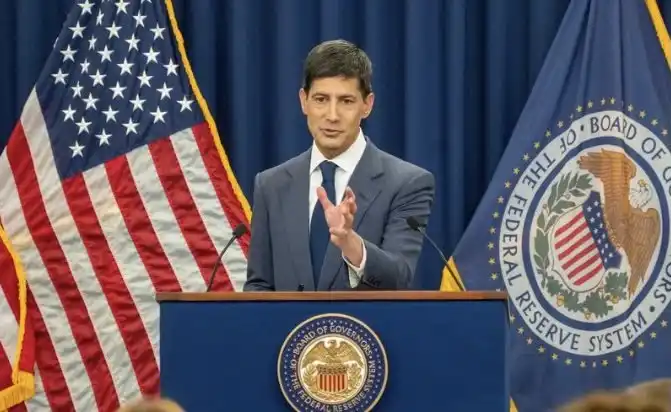
1996 or 1999? Walsh's First Test is 'How to View AI'

"1996 or 1999? Wall's First Big Test Is 'How to View AI'" Federal Reserve Chairman Wall's initial challenge is not whether to raise or cut rates, but a more fundamental judgment: what kind of boom is the current AI boom? This will determine the Fed's policy path and define his legacy. Economics is split between two opposing views, according to reporter Nick Timiraos. One sees imminent productivity gains that will increase supply and cool inflation, allowing the Fed to hold steady. The other argues that while productivity benefits are distant, demand shocks are here now, and waiting for data confirmation risks missing the intervention window, forcing sharper rate hikes later. Wall has signaled a leaning toward the first view, echoing 1996-era Alan Greenspan, who embraced strong, productivity-driven growth without fear of inflation. However, Wall faces a different macro environment than Greenspan did, with tariff pressures, expanding fiscal deficits, and diminishing globalization benefits, which could force more significant inflation pressures even if AI benefits materialize. Wall's logic, expressed before taking office, is that AI-driven productivity gains won't show in official data for years. If the Fed waits for confirmation, it might mistakenly tighten policy and choke off the very growth that could suppress inflation. This argues for using forward-looking narratives over lagging data. Chicago Fed President Austan Goolsbee presents a key counter-argument. He distinguishes between expected and unexpected productivity booms. A widely anticipated boom, like the current AI wave, can cause people to spend future wealth gains in advance, overheating the economy before productivity actually rises, thus requiring preemptive rate hikes. He cites rising costs for AI data centers as evidence of such overheating. Fed Governor Christopher Waller offers a rebuttal to Goolsbee, noting the "expected spending" mechanism only works if people can borrow against future income, which many households cannot do due to borrowing constraints. Wall also faces a paradox related to his desire to reduce the Fed's use of "forward guidance" (pre-announcing policy moves). This practice was established in 1999 when Greenspan began signaling hikes to avoid market shocks. If the economy follows a less optimistic path, Wall may be forced to choose between using the guidance he wants to abolish or risking market volatility by staying silent. The ultimate question defining Wall's first major test remains: Is this 1996 or 1999?

marsbitHace 22 min(s)

1996 or 1999? Walsh's First Test is 'How to View AI'

marsbitHace 22 min(s)

Ethereum Q1 2026 Report: Fees Decline, Users and Transaction Volume Hit New Highs

Ethereum Q1 2026 Report: Fees Down, Users & Transactions Hit New Highs Token Terminal's Q1 2026 report on Ethereum presents a pivotal development: the network achieved record highs in monthly active users (13.2M, +85.9% YoY), total transactions (200.4M, +81.5% YoY), and throughput (25.78 TPS), while transaction fees on the mainnet plummeted by 47.9% quarter-over-quarter. This shift is attributed to the network's strategic move into a "low fees for scale" phase, exemplified by the Fusaka upgrade which increased data capacity and lowered block space costs, releasing pent-up demand (a manifestation of Jevons's Paradox). The report highlights a core narrative shift for Ethereum: from a DeFi-centric blockchain to a global financial settlement layer. It maintains a dominant position in tokenized assets, holding majority market shares among top chains in stablecoins (61.8%), tokenized funds (73.0%), and tokenized commodities (84.0%). Growth in tokenized funds (+73.1% YoY) and commodities (+325.9% YoY) was particularly strong, driven by institutions like BlackRock and JPMorgan entering the space. Contrasting these usage gains, several USD-denominated value metrics declined in Q1: fully diluted market cap fell 30.3% QoQ, total value locked (TVL) dropped 11.0%, and ecosystem transaction volume decreased 24.0%. The report interprets this as Ethereum prioritizing long-term network expansion and cementing its role as the default settlement layer for finance over short-term fee capture. The commentary from Etherealize argues that, much like the early internet, Ethereum's open, permissionless model is poised to win over closed alternatives as institutional tokenization accelerates.

marsbitHace 2 hora(s)

Ethereum Q1 2026 Report: Fees Decline, Users and Transaction Volume Hit New Highs

marsbitHace 2 hora(s)

He Just Raised 2.7 Billion, and Li Fei-Fei Also Invested

Pete Florence, a former senior research scientist at Google DeepMind and a key contributor to the Vision-Language-Action (VLA) model architecture, is deliberately distancing his startup, Generalist AI, from the trendy "world model" label. He argues that the industry should prioritize concrete goals over buzzwords. His goal is to create robots that can perform a vast range of unseen tasks with high speed and success rates, without needing task-specific training data. Recently, his company raised $400 million (¥2.7 billion) at a $2 billion valuation. Notable investors include NVIDIA's NVentures, Bezos Expeditions, NFDG, as well as Xiaomi co-founder Lin Bin, Zoom founder Eric Yuan, and renowned AI scientist Fei-Fei Li. Florence's approach stems from his academic background at MIT under Professor Russ Tedrake, focusing on understanding the physical world. After joining DeepMind, he developed models like Transporter Network and co-created the VLA framework. He left in 2025 to found Generalist AI. The company has launched two models: GEN-0, which demonstrated that scaling laws apply to physical motion, and GEN-1. GEN-1 was trained on over 500,000 hours of physical interaction data collected via a specialized wearable device. It achieves a 99% success rate on precise mechanical tasks like folding boxes and maintains performance three times faster than its predecessor. Florence believes GEN-1 is reaching a commercial utility threshold similar to the GPT-3 inflection point. The substantial funding round, following GEN-1's release, signifies strong investor confidence in Generalist AI's practical, goal-driven path to creating versatile, useful robots, regardless of the "world model" terminology.

marsbitHace 2 hora(s)

He Just Raised 2.7 Billion, and Li Fei-Fei Also Invested

marsbitHace 2 hora(s)

Two Legends Lost in Three Days: Is Google's AI Talent Dam Cracking?

In three days, Google lost two AI legends. On June 18, Noam Shazeer, co-author of the seminal "Attention is All You Need" paper and Gemini co-lead, left for OpenAI. Just 48 hours later, John Jumper, 2024 Nobel laureate and AlphaFold lead, departed DeepMind for Anthropic. This follows Andrej Karpathy joining Anthropic in May. These moves highlight a structural trend: top AI talent is concentrating at mission-driven, pre-IPO firms like OpenAI and Anthropic, while Google becomes a primary source. The exodus stems from a core mission mismatch. Google's ad-centric model often subordinates AI research to product and revenue goals, creating friction for pioneers like Shazeer, who returned in 2024 only to leave again. In contrast, OpenAI and Anthropic offer singular focus on pushing AI boundaries, whether towards AGI or safety-aligned models, which deeply appeals to top researchers like Jumper. Financial incentives amplify the pull. With both OpenAI and Anthropic nearing IPO, employees stand to gain immensely from equity, an upside Google's mature stock cannot match. Furthermore, the 2023 merger of Google Brain and DeepMind, intended to consolidate strength, has instead created cultural tension and slowed the path from research to product, as evidenced by Gemini's pace. This talent redistribution is reshaping the AI landscape. While Google retains vast data and compute resources, its true crisis is the quiet, continuous loss of the people who define the field's future. The real moat in AI is not infrastructure, but the concentration of brilliant minds—a battle Google is currently losing.

marsbitHace 4 hora(s)

Two Legends Lost in Three Days: Is Google's AI Talent Dam Cracking?

marsbitHace 4 hora(s)

Trading

Spot
Futuros

Artículos destacados

Cómo comprar XCN

¡Bienvenido a HTX.com! Hemos hecho que comprar Onyxcoin (XCN) sea simple y conveniente. Sigue nuestra guía paso a paso para iniciar tu viaje de criptos.Paso 1: crea tu cuenta HTXUtiliza tu correo electrónico o número de teléfono para registrarte y obtener una cuenta gratuita en HTX. Experimenta un proceso de registro sin complicaciones y desbloquea todas las funciones.Obtener mi cuentaPaso 2: ve a Comprar cripto y elige tu método de pagoTarjeta de crédito/débito: usa tu Visa o Mastercard para comprar Onyxcoin (XCN) al instante.Saldo: utiliza fondos del saldo de tu cuenta HTX para tradear sin problemas.Terceros: hemos agregado métodos de pago populares como Google Pay y Apple Pay para mejorar la comodidad.P2P: tradear directamente con otros usuarios en HTX.Over-the-Counter (OTC): ofrecemos servicios personalizados y tipos de cambio competitivos para los traders.Paso 3: guarda tu Onyxcoin (XCN)Después de comprar tu Onyxcoin (XCN), guárdalo en tu cuenta HTX. Alternativamente, puedes enviarlo a otro lugar mediante transferencia blockchain o utilizarlo para tradear otras criptomonedas.Paso 4: tradear Onyxcoin (XCN)Tradear fácilmente con Onyxcoin (XCN) en HTX's mercado spot. Simplemente accede a tu cuenta, selecciona tu par de trading, ejecuta tus trades y monitorea en tiempo real. Ofrecemos una experiencia fácil de usar tanto para principiantes como para traders experimentados.

248 Vistas totalesPublicado en 2024.12.12Actualizado en 2026.06.02

Cómo comprar XCN

Discusiones

Bienvenido a la comunidad de HTX. Aquí puedes mantenerte informado sobre los últimos desarrollos de la plataforma y acceder a análisis profesionales del mercado. A continuación se presentan las opiniones de los usuarios sobre el precio de XCN (XCN).

活动图片