概览区块链版税现状:平均税率约为0.8%,较两年前下降了84%

Odaily星球日报Publicado a 2024-01-26Actualizado a 2024-01-26

Resumen

OpenSea仍在为少数几个项目执行版税,但将于2月29日停止。届时整体版税将降至0.5%附近。

原文作者:NFT 平台Highlight

原文编译:Felix, PANews

要点

  • 以太坊生态 NFT 的版税在过去两年大幅下降。如今平均税率约为 0.8% ,较两年前的 5% 下降了 84% 。

  • 以 2021 年的税率为基准,仅在 2023 年 12 月,艺术家和创作者减少了约 3700 万美元的收入。

  • OpenSea 仍在为少数几个项目执行版税,但将于 2 月 29 日停止。届时整体版税将降至 0.5% 附近。

  • 艺术品的版税明显高于其他类型的项目,这表明收藏家希望建立一个正向积极的生态系统。

版税曾是区块链艺术争论的焦点,但在过去两年争论渐息。2022 年 1 月 LooksRare 推出,随后X2Y2和 Sudoswap 分别于 3 月和 4 月推出,这些平台要么取消了版税强制执行,要么完全取消了版税。Blur 于 2022 年 10 月推出了无版税市场,并于 2023 年 2 月推出了代币。OpenSea 很快也放弃了版税强制执行。每一事件都在显著且持续地降低版税税率。数据显示,如今费率约为 0.8% ,较几年前的 5% 左右下降了 84% 。
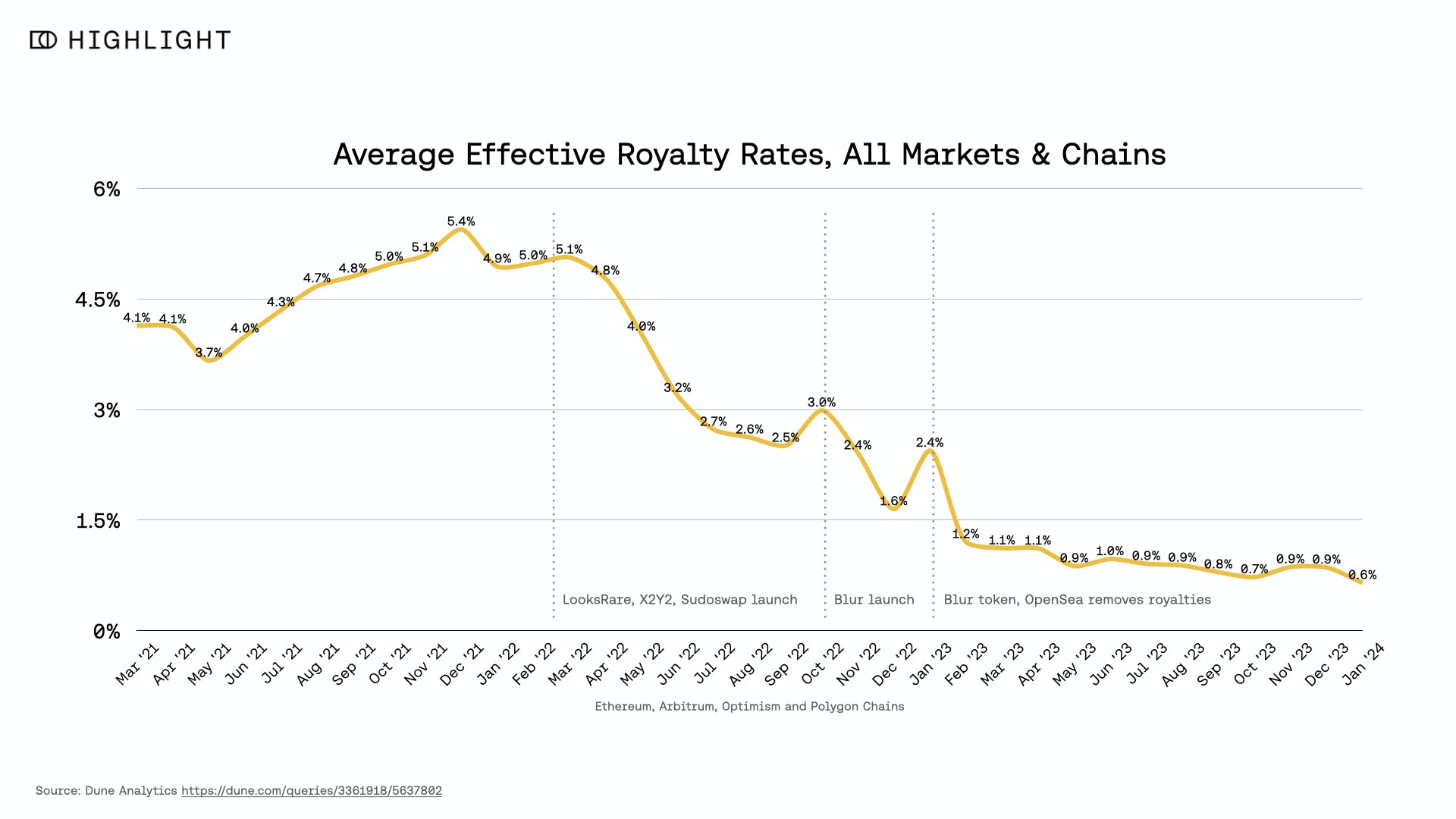
概览区块链版税现状:平均税率约为0.8%,较两年前下降了84%

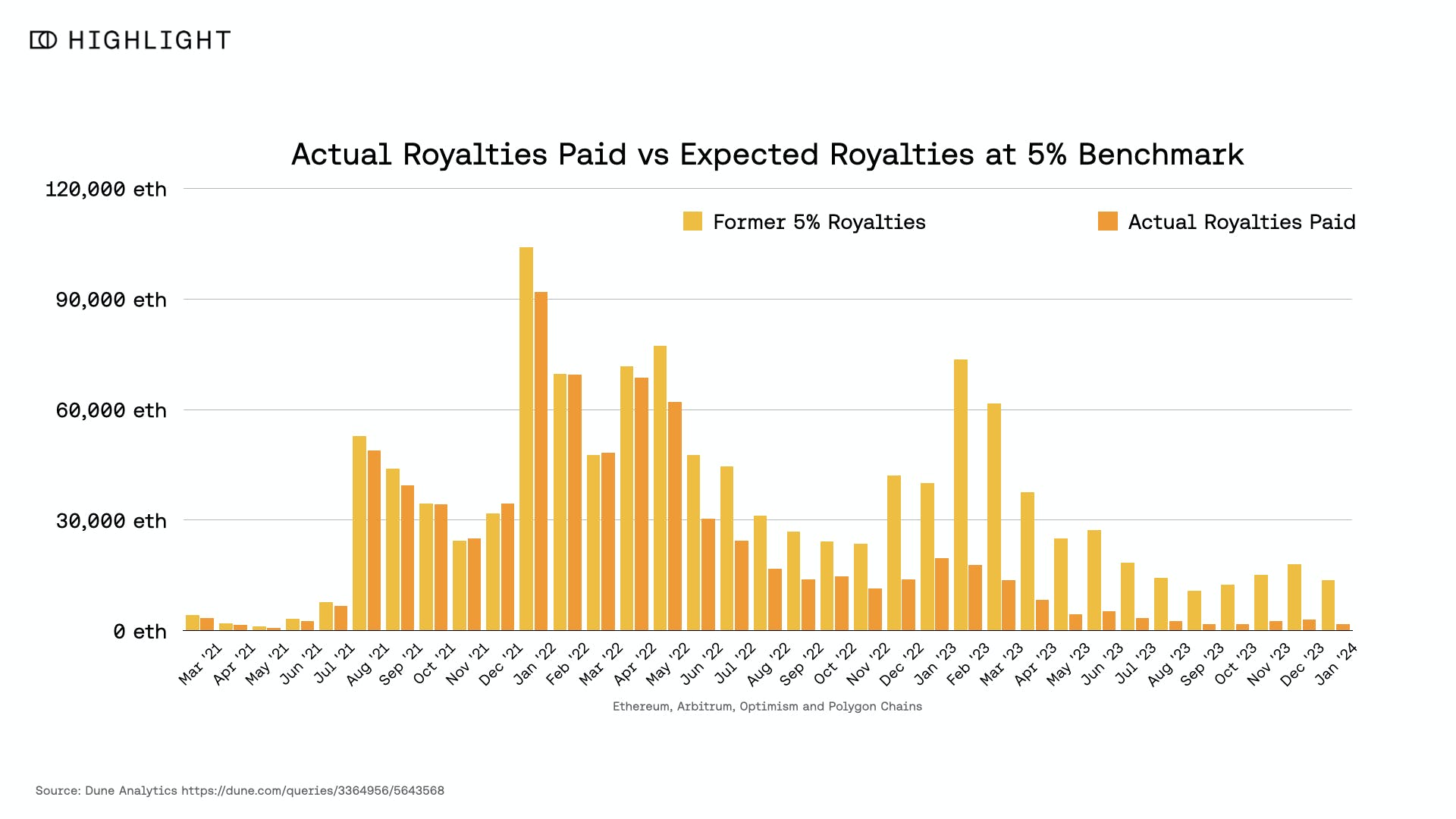
与之前的市场高点相比,整体版税收入大幅下降。2023 年 12 月,向艺术家和创作者支付了大约 3339 枚 ETH(按当前美元汇率计算为 8, 315, 512.38 美元)。与 2022 年 1 月的 91, 982 枚 ETH(按当前美元汇率计算为 229, 418, 744.94 美元)的历史高点相比减少了 96% ,超 2 亿美元。

这些数字令人震惊,但也反映了整体市场趋势。导致这一现象的原因是市场交易量的显著下降,而并非版税降低。即使根据目前的市场条件进行计算,假设 5% 的版税(约是 2021 年的标准),在目前的市场条件下,可以看到创作者和艺术家仅在 2023 年 12 月就减少了约 15, 100 枚 ETH 的收入,相当于 3760 万美元。
概览区块链版税现状:平均税率约为0.8%,较两年前下降了84%

今年 2 月,情况将变得更糟,因为 OpenSea 停止为实施版税强制执行工具(即 Operator Filter)的项目征收版税。

尽管下降趋势明显,但具体情况确实存在一些有趣的变化,主要取决于项目类型。下面将深入研究这些差异,但在深入研究之前,先回顾一下当前的背景。

当下版税市场

虽然 LooksRare、X2Y2和 Sudoswap 等平台在市场变革中发挥了重要作用,导致了版税降低,但如今绝大多数二级市场交易量发生在 OpenSea 和 Blur 上。OpenSea 在 2023 年 2 月取消了版税强制执行,但随后决定对在 2023 年 8 月 31 日之前启用 Operator Filter 或在该日期之前在非以太坊区块链上创建的项目增加强制执行。这意味着,当下一小部分项目保留了 OpenSea 的版税执行。但 OpenSea 将于 2024 年 2 月 29 日停止对所有项目征收版税。在用户体验方面,OpenSea 默认创作者在 UI 中可设置版税。

对于在所有市场上都有版税的 NFT 系列,Blur 将强制执行 0.5% 的最低版税。除此之外,Blur 还允许将版税设置为 0% 。

按项目类型深入探讨

PFPs

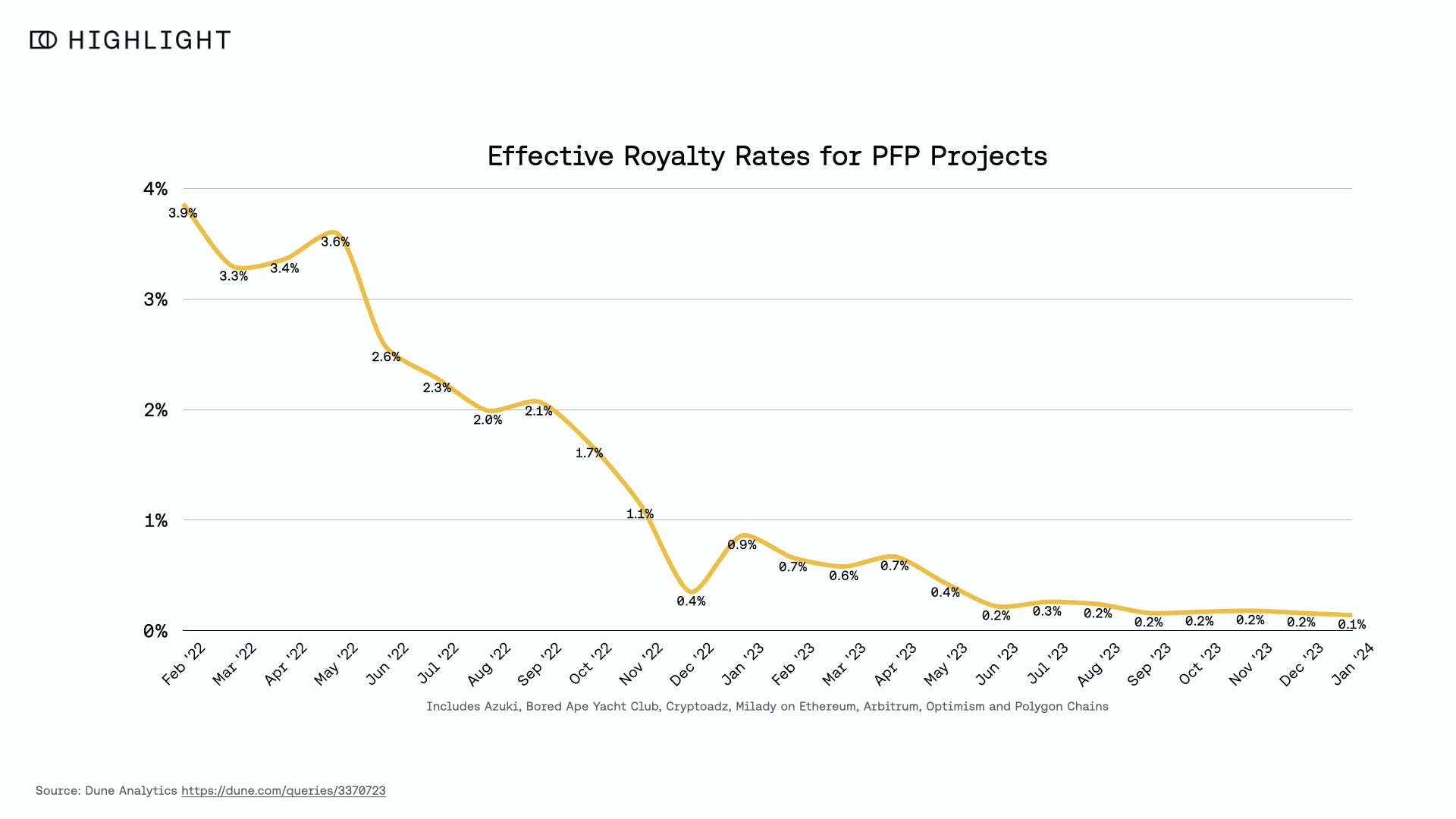
如上所述,版税总体呈下降趋势,但这种变化在 Azuki、Bored Ape Yacht Club、Cryptoadz 和 Milady 等热门 PFP 项目中最为明显。虽然这些项目曾经享有 2.5% -5% 的版税,但现在这些项目的平均版税甚至低于 Blur 的 0.5% 。有几周 Azuki 甚至处于 0.0x%范围内。
概览区块链版税现状:平均税率约为0.8%,较两年前下降了84%

Art

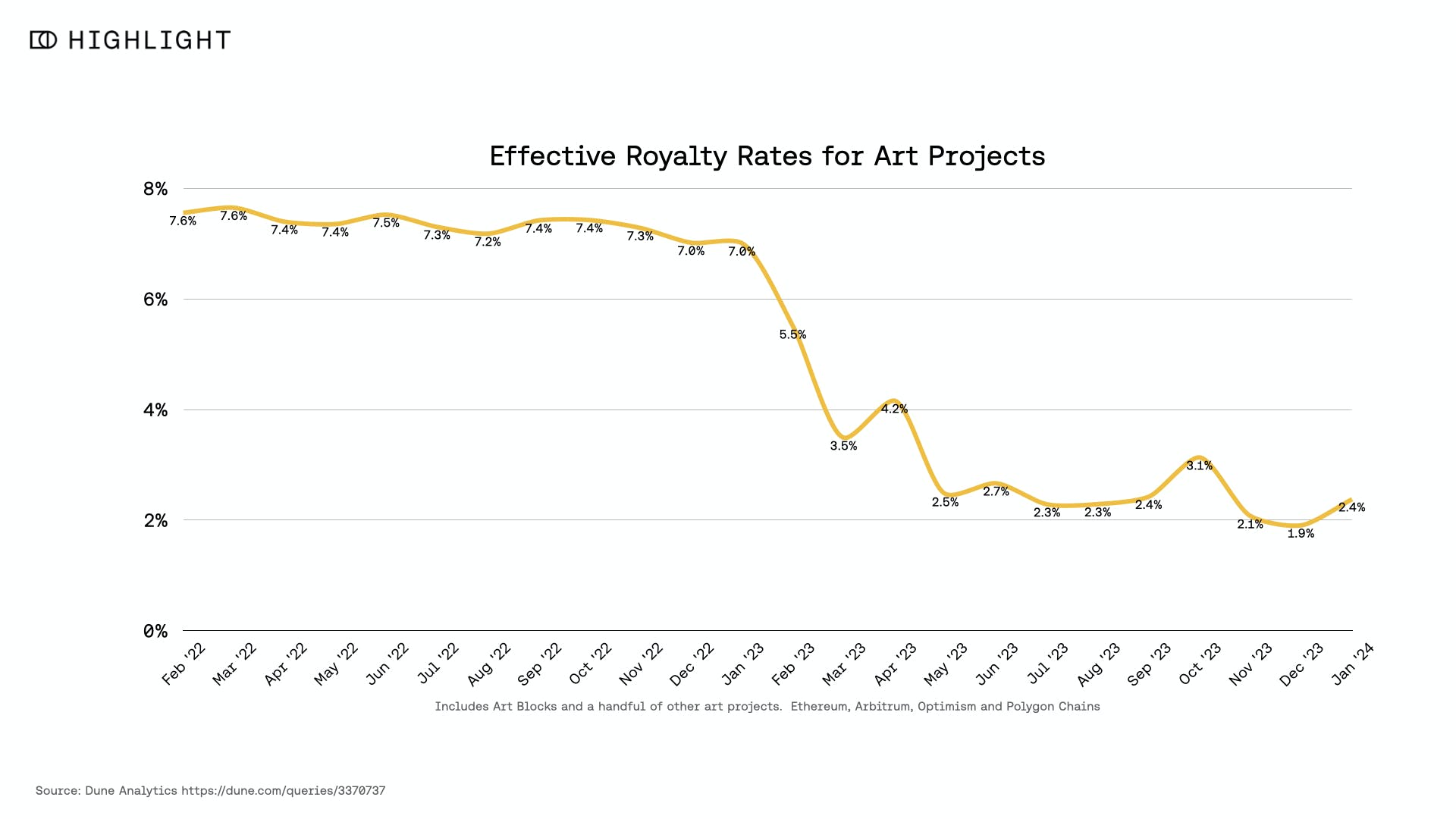
Art 比 PFP 表现得更好。这可能是由于共同的公共规范和代表收藏家支持个别艺术家。可以看到,虽然一些主流 Art 项目(包括几个 Art Blocks 项目)曾经享有比 PFP 更高的版税,但现在徘徊在 1.5% -2.5% 的范围内,有几周甚至更高。
概览区块链版税现状:平均税率约为0.8%,较两年前下降了84%

平台比较

OpenSea 所有项目的版税费率仍然徘徊在 2% 左右。在 Blur 上,这一比率约为 0.4% 。然而,考虑到 2024 年 2 月 OpenSea 将停止为所有项目征收版税,预计这种情况将发生重大变化。

概览区块链版税现状:平均税率约为0.8%,较两年前下降了84%

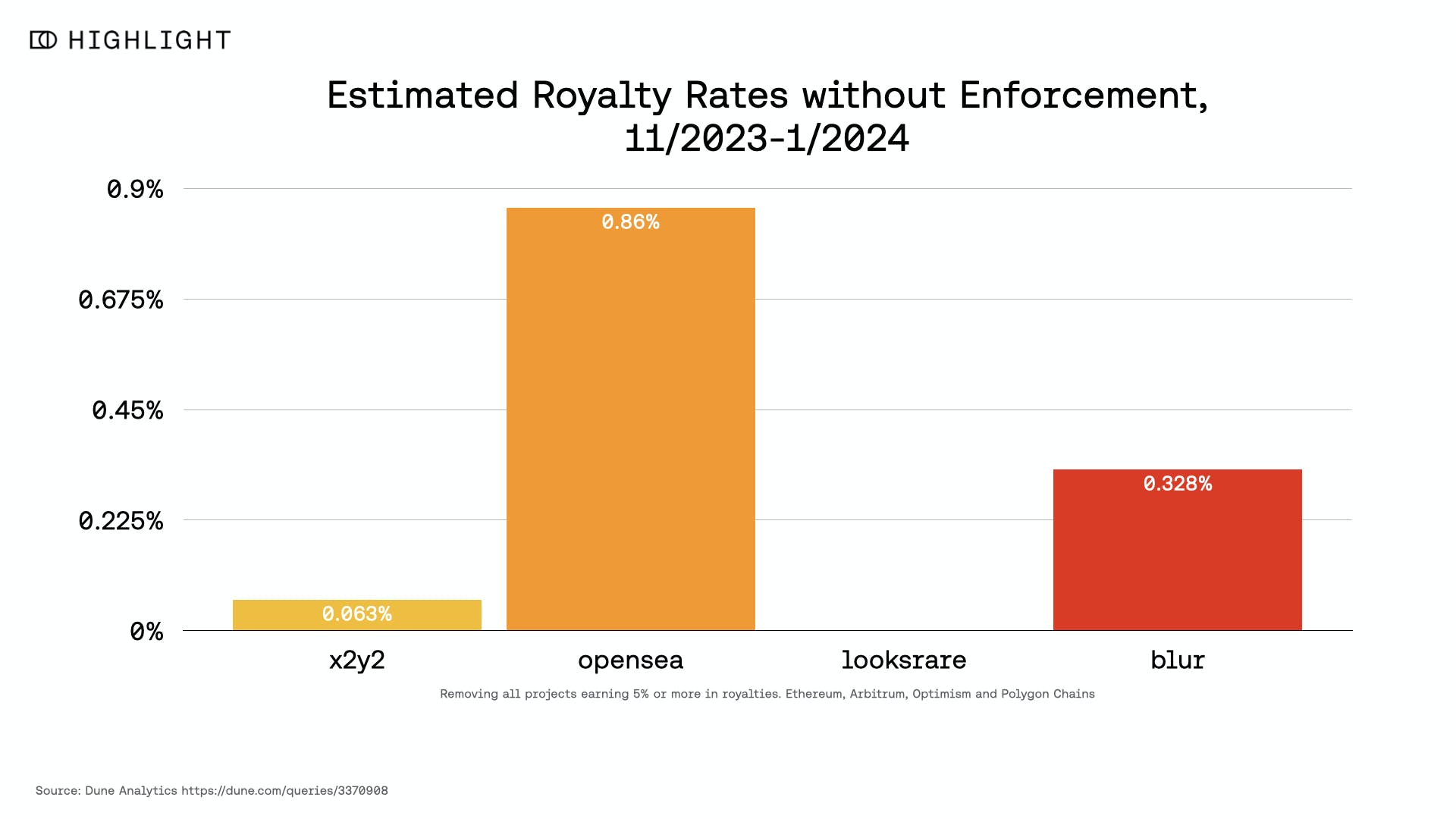
下面的图表显示了不同平台版税费率(不包括超 5% 的项目)。OpenSea 在关闭版税强制执行工具后,平均版税费率下降了一半以上,降至 0.75% 。这有助于了解 OpenSea 在 2 月份取消所有强制执行后的平均版税情况。
概览区块链版税现状:平均税率约为0.8%,较两年前下降了84%

结论

有强烈的迹象表明,收藏家,尤其是艺术收藏家,想要参与到一个积极的生态系统中,并且愿意花费超出创作者要求的钱支持艺术家。NFT 平台 Highlight 认为向艺术家支付的版税提高 2-3 倍是合理的,即提高到 2% 以上。

Lecturas Relacionadas

CPU Makes a Comeback to the Table, A $170 Billion "Power Seizure" Drama Begins

A new era is dawning for the server CPU (Central Processing Unit), driven by the shift from AI model training to large-scale reasoning and the rise of Agentic AI. This article explores how the CPU is reclaiming a central role in the AI data center. For years, the focus has been on the GPU (Graphics Processing Unit) for AI training. However, as AI moves to the inference and Agent phase—where tasks involve complex, multi-step reasoning, tool calls, and data management—the workload balance is flipping. Studies show CPUs now handle over 70% of the workload in Agentic AI, up from 10-30% in training. This is because Agent tasks generate massive intermediate data (KV Cache) that exceeds GPU memory, forcing it to be offloaded to the CPU's larger, more scalable memory pools. This increased importance is translating into market changes. Major players are taking note: NVIDIA launched its first standalone CPU line, Vera, based on ARM architecture and optimized for Agent performance. AMD doubled its server CPU market forecast to over $1200 billion by 2030. Analyst reports project the total server CPU market could reach $1700 billion by 2030, with AI-driven demand being a primary driver. Furthermore, the classic ratio of CPUs to GPUs in AI servers is rapidly changing, converging from 1:8 toward 1:1 for Agent deployments. This surge in demand has led to a rare industry-wide price increase of 10-15% for server CPUs from Intel and AMD, breaking a decade-long trend of "more performance for the same price." Demand is bifurcating into high-core-count CPUs for in-rack GPU support and moderate-core CPUs for standalone Agent task orchestration. In China, this global trend presents an opportunity for domestic CPU manufacturers like Hygon (海光信息) and Huawei Kunpeng, who are bolstered by both growing AI infrastructure needs and national policies promoting technological self-reliance ("xin chuang"). The maturity of their software ecosystems is also accelerating, evidenced by faster adaptation to new AI models. In conclusion, the narrative is shifting from a GPU-centric view to one where CPU-GPU synergy is critical. The CPU is no longer a peripheral component but a performance-defining bottleneck and a key growth driver in the AI hardware stack, opening a massive new market estimated in the hundreds of billions of dollars.

marsbitHace 9 hora(s)

CPU Makes a Comeback to the Table, A $170 Billion "Power Seizure" Drama Begins

marsbitHace 9 hora(s)

TechFlow Intelligence: AMD AI Director Publicly Criticizes Claude Code for "Becoming Dumber and Lazier", Trump Claims Full Ceasefire in Hormuz But Strait Still Has 80 Unexploded Mines

TechFlow Intelligence Report: This daily digest covers key developments in AI, crypto, hardware, and geopolitics. In AI, SK Telecom faces US export control scrutiny over its partnership with Anthropic, while a Gemini user reports being misled in a scam scenario, sparking safety debates. China's Z.AI launches the GLM-5.2 model, rivaling Claude Opus without NVIDIA chips. In crypto, Bithumb lists ReProtocol, and Upbit delists KernelDAO. On the hardware front, MIT researchers build a custom OS to study chips, ASML denies US claims its advanced lithography machines are in China, and Amazon considers selling its in-house AI chips. Apple's future A21 Pro chip may use TSMC's latest N2P process. Major tech issues include 10,000 GitHub repositories distributing malware and Apple patching a critical eavesdropping flaw in Beats earbuds. US stocks rise, led by semiconductors, with Intel surging 10.6%, while SpaceX falls 3.5%. Geopolitically, despite a US-Iran deal, the Strait of Hormuz remains risky with ~80 uncleared mines, stalling 80M barrels of oil on standby tankers. Iran postpones Switzerland talks, and Trump calls the agreement an "unconditional surrender." The report highlights a contrast: temporary geopolitical calm versus the ongoing, fundamental restructuring of tech supply chains and chip independence.

marsbitHace 9 hora(s)

TechFlow Intelligence: AMD AI Director Publicly Criticizes Claude Code for "Becoming Dumber and Lazier", Trump Claims Full Ceasefire in Hormuz But Strait Still Has 80 Unexploded Mines

marsbitHace 9 hora(s)

Trading

Spot
Futuros
活动图片