
SignalPlus波动率专栏(20231214):BTC再度挑战43000美元,Vol Skew回归

Odaily星球日报Publicado a 2023-12-14Actualizado a 2023-12-14

Resumen

数字货币方面,BTC从41000下方一路上行至43000附近,日内涨幅达4%。期权方面,前端由于FOMC不确定性落地而大幅回落,Vol Curve走陡。

SignalPlus波动率专栏(20231214):BTC再度挑战43000美元,Vol Skew回归

SignalPlus波动率专栏(20231214):BTC再度挑战43000美元,Vol Skew回归

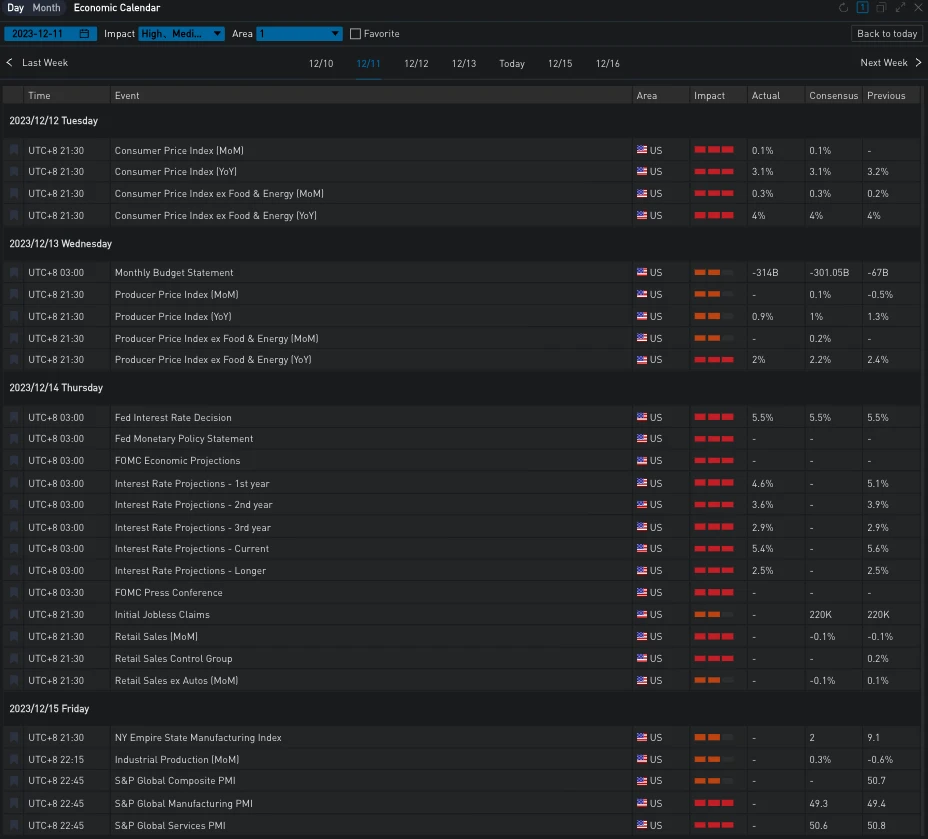
昨日(1 3D ec)美国 11 月 PPI 年率录得 0.9% ,略低于预期的 1% ,为今年 6 月以来新低。随后在凌晨举行的 FOMC 会议上,美联储宣布维持利率不变,并承认经济和通胀有所放缓,鲍威尔发出鸽派言论:我们相信政策利率已经到达,或者接近峰值,降息已开始进入视野。同时点阵图暗示明年可能会有 3 次降息,互换市场定价到 2024 年年底美联储将降息超过 140 个基点。美联储此次明显的鸽派倾向推动了美债收益率全线大幅下挫,作为全球资产定价之锚的 10 年期美债收益率失守 4% 关口,报 3.954% ,两年期收益率更是跌超 30 个基点,现报 4.334% 。美三大股指集体上涨,标普/纳指/道指分别收涨 1.37% /1.38% /1.40% 。
SignalPlus波动率专栏(20231214):BTC再度挑战43000美元,Vol Skew回归

Source: SignalPlus, Economic Calendar

SignalPlus波动率专栏(20231214):BTC再度挑战43000美元,Vol Skew回归

Source: Binance & TradingView

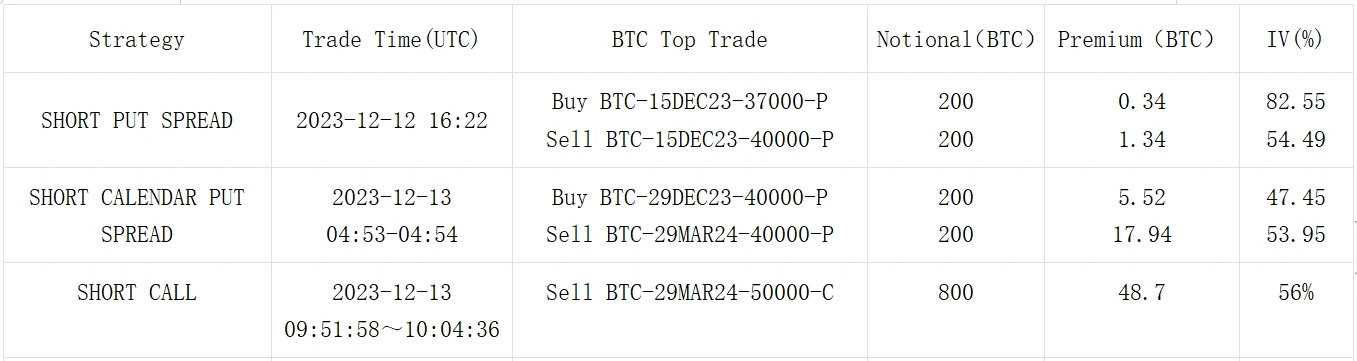
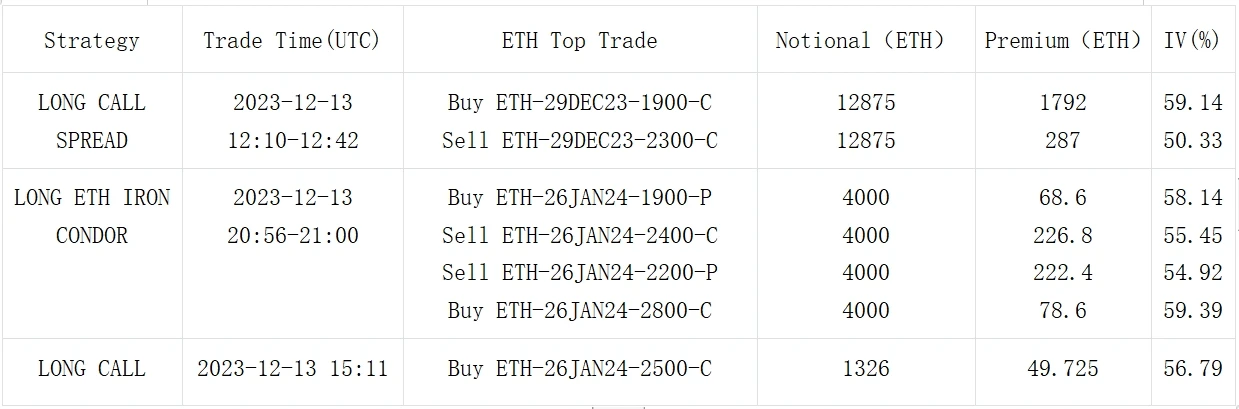
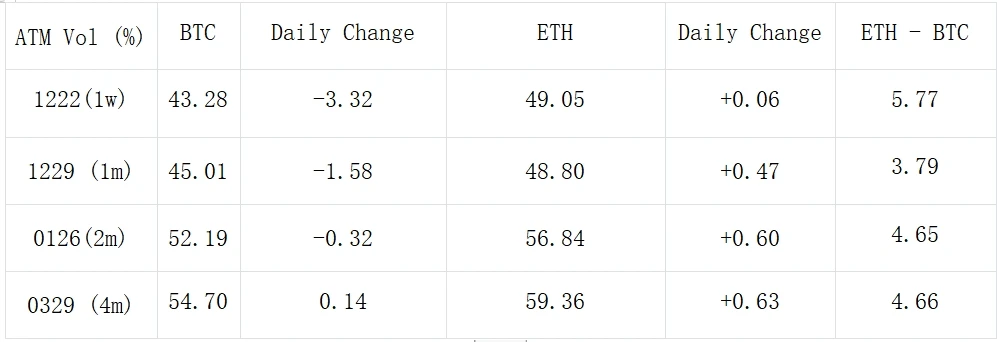
数字货币方面,BTC 从 41000 下方一路上行至 43000 附近,日内涨幅达 4% 。期权方面,前端由于 FOMC 不确定性落地而大幅回落,Vol Curve 走陡;另一方面,价格的反弹成功帮助 Vol Skew 收复失地,BTC 前端重回零值附近,ETH 更是冲高达到 3% ~ 5% ,在交易方面同样能观察到看涨策略的回归,BTC 上的 Dec vs Jan 三角价差成交火热,两种方向的策略买卖总量相对均衡,ETH 在年底出现大量 1900 vs 2300 Long Call Spread,同时在一月 2500/2800 的位置也再度出现买入看涨成交。
SignalPlus波动率专栏(20231214):BTC再度挑战43000美元,Vol Skew回归

Source: Deribit (截至 14 DEC 16: 00 UTC+ 8)

SignalPlus波动率专栏(20231214):BTC再度挑战43000美元,Vol Skew回归

Source: SignalPlus

SignalPlus波动率专栏(20231214):BTC再度挑战43000美元,Vol Skew回归

Source: SignalPlus

SignalPlus波动率专栏(20231214):BTC再度挑战43000美元,Vol Skew回归

Source: Deribit Block Trade

SignalPlus波动率专栏(20231214):BTC再度挑战43000美元,Vol Skew回归

Source: Deribit Block Trade

SignalPlus波动率专栏(20231214):BTC再度挑战43000美元,Vol Skew回归

您可在 ChatGPT 4.0 的 Plugin Store 搜索 SignalPlus ,获取实时加密资讯。如果想即时收到我们的更新,欢迎关注我们的推特账号@SignalPlus_Web3 ,或者加入我们的微信群(添加小助手微信:xdengalin)、Telegram 群以及 Discord 社群,和更多朋友一起交流互动。

SignalPlus Official Website:https://www.signalplus.com

Lecturas Relacionadas

Podcast Notes: Hyperliquid Has Become the Top Interest Point for Traditional Hedge Funds

Empire Podcast hosts Jason Yanowitz and Santiago Santos discuss the surging institutional interest in Hyperliquid, a decentralized perpetual exchange, marking the highest level of engagement from traditional hedge fund managers since Paul Tudor Jones endorsed Bitcoin in 2020. The primary driver is the demand for weekend trading of commodities like oil, especially during geopolitical tensions such as the Iran conflict, as Hyperliquid provides the only active price discovery venue when traditional markets are closed. Trade XYZ, a front-end on Hyperliquid, has seen significant growth, with weekend oil price predictions having a median error of only 50 basis points. Santos predicts commodity trading volume on Hyperliquid will surpass Bitcoin within the year and that its market cap could rise from $25 billion to $100 billion. Other key points include Kraken raising $200 million at a reduced valuation of $13.3 billion, and the SEC clarifying that self-custodied DeFi frontends like MetaMask are not subject to broker-dealer rules, resolving a major regulatory uncertainty. The hosts also note the strong correlation between crypto and macro markets, with the S&P 500 posting one of its best 10-day rallies since 1950. They highlight MicroStrategy's continued Bitcoin acquisitions and the potential of real-world asset (RWA) tokenization as a key trend. The discussion concludes with skepticism towards many L2 projects, predicting a wave of protocols truly going to zero as capital concentrates in proven assets like Bitcoin and Hyperliquid.

marsbitHace 4 hora(s)

Podcast Notes: Hyperliquid Has Become the Top Interest Point for Traditional Hedge Funds

marsbitHace 4 hora(s)

a16z: The Next Frontier of AI, The Triple Flywheel of Robotics, Autonomous Science, and Brain-Computer Interfaces

a16z presents a comprehensive investment thesis for the next frontier of AI: Physical AI, centered on a synergistic flywheel of robotics, autonomous science, and novel human-computer interfaces (HCIs) like brain-computers. While the current AI paradigm scales on language and code, the most disruptive future capabilities will emerge from three adjacent fields leveraging five core technical primitives: 1) learned representations of physical dynamics (via models like VLA, WAM, and native embodied models), 2) embodied action architectures (e.g., dual-system designs, diffusion-based motion generation, and RL fine-tuning like RECAP), 3) simulation and synthetic data as scaling infrastructure, 4) expanded sensory channels (touch, neural signals, silent speech, olfaction), and 5) closed-loop agent systems for long-horizon tasks. These primitives converge to power three key domains: * **Robotics:** The literal embodiment of AI, requiring all primitives for real-world physical interaction and manipulation. * **Autonomous Science:** Self-driving labs that conduct hypothesis-experiment-analysis loops, generating structured, causally-grounded data to improve physical AI models. * **Novel HCIs:** Devices (AR glasses, EMG wearables, BCIs) that expand human-AI bandwidth and act as massive data-collection networks for real-world human experience. These domains form a mutually reinforcing flywheel: Robotics enable autonomous labs, which in turn generate valuable data for robotics and materials science. New interfaces provide rich human-physical interaction data to train better robots and scientists. Together, they represent a new scaling axis for AI, moving beyond the digital realm to interact with and learn from physical reality, promising significant emergent capabilities and value.

marsbitHace 4 hora(s)

a16z: The Next Frontier of AI, The Triple Flywheel of Robotics, Autonomous Science, and Brain-Computer Interfaces

marsbitHace 4 hora(s)

Trading

Spot
Futuros
活动图片