诅咒铭文或将绝版,有哪些值得关注的标的?

Odaily星球日报Publicado a 2023-11-16Actualizado a 2023-11-16

Resumen

诅咒铭或将绝版,稀缺性增加,也带来了炒作空间。

原文作者:0x Bread

原文编译:深潮 TechFlow

最近,被淡忘的诅咒铭文重新回归大众视野。

11 月 14 日,Ordinals 协议创始人在 Twitter 表示,Ordinals 协议官方正在考虑在比特币主网区块高度 820512 进行「禧年 (Jubilee)」,差不多也就是 26 天之后。

这正好呼应了 10 月 Ordinals 的创始人 Casey 在 github 上发起了一个新的提案 The Jubilee #2495 ,称将会在一个月后修复诅咒铭文,也就是说从此 BTC 生态再无新的诅咒铭文,与此同时,这也给诅咒铭文带来了炒作空间。

什么是诅咒铭文?

诅咒铭文 (Cursed Inscriptions) 是由于 Ordinals 协议之前的一个 BUG 引发的,导致部分铭文没有被索引器识别,因此 Ordinals 团队决定将这些被诅咒的铭文赋为负值,从 0 开始倒数,因此又称为负数铭文。

简而言之,诅咒铭文有点类似于错版的纸币,由于印刷错误而流通世间,但又货真价实,因为其稀有性,往往被炒作到远超其自身价值的价格,其逻辑有相似之处。

如果当诅咒铭文绝版,稀缺性必然再次增加,这也导致铭文爱好者纷纷陷入 FOMO,试图寻觅到投资与投机机会。

目前,都有哪些主流的诅咒铭文?

NFT 而言,主要有:

cursed bitcoin punk

总量: 10000 

官网:https://btcmachine.org/

诅咒铭文或将绝版,有哪些值得关注的标的?

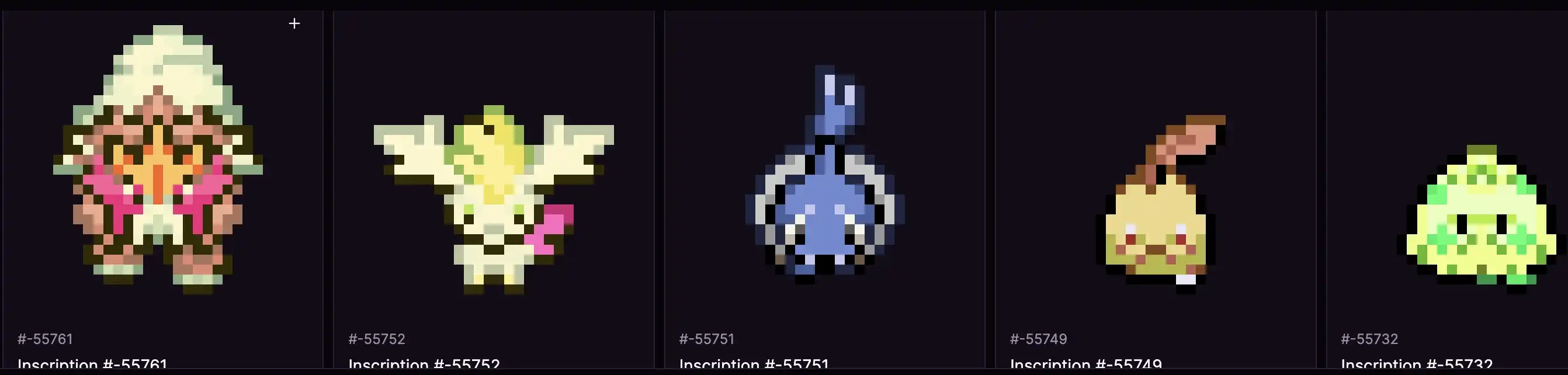
cursed pokemon(宝可梦)

总量: 200 

诅咒铭文或将绝版,有哪些值得关注的标的?

Cursed Satorian Dimension

总量: 379 

官网:https://cursedbitcoinpunks.com/

诅咒铭文或将绝版,有哪些值得关注的标的?

目前,交易诅咒铭文 NFT 的交易平台是 magic eden,甚至有专门的散装诅咒铭文 NFT 专区:

https://magiceden.io/ordinals/marketplace/cursed

就代币的投资标的而言,SeaTalk 主理人 0x Sea 分析认为主要有两个标的:

-Crsd,是第一个总量 2100 万的 token, 5 月 25 号 mint 完成。但是由于 ord 开发团队一直没有完善索引,导致其一直无法交易。

-Tap,总量也是 2100 万, 8 月份打完,现在有一定价格、流通量和社区共识基础,它也是 Tap Protocol (BRC-20 改进协议) 的第一个币。

Tap Protocol 由 Trac 团队在 8 月 7 日推出,也是基于 Ordinals 的改进和增强协议,功能上无缝兼容 BRC-20 。

值得注意的是,Tap 和 -Tap 都是基于 Tap 协议的原生代币。其中 Tap 被官方一次打完锁了起来,无流通;-Tap 则是开放给了社区 mint,总量 21, 000, 000 枚(也就是 21, 000 张)。诅咒版(-Tap)比正数 Tap 更早部署 30 分钟,是真正的第一个原生代币,目前社区讨论的 Tap 实际上就是 -Tap。

Unisat 目前还没有兼容诅咒铭文,也不能交易 Tap 协议上的代币,所以不要去 Unisat 买 $Tap。

原文链接

Lecturas Relacionadas

Huang Xiaoming, Li Bin, Lei Jun, Liang Wenfeng... Who Are the Biggest Winners in the CXMT IPO Feast?

Changxin Technology, a leading Chinese memory chip manufacturer, successfully listed on the Shanghai Stock Exchange's STAR Market (科创板) on July 8, 2026. Its share price surged from the IPO price of 8.66 yuan to close at 49 yuan on the first day, catapulting its market capitalization to 3.28 trillion yuan, making it the most valuable A-share company and triggering a massive wealth creation event. The biggest winners were the company's founder, Zhu Yiming, and its employees. Zhu Yiming's family wealth skyrocketed nearly 300% to approximately $13.9 billion, with his direct stake in Changxin valued at around 80 billion yuan. Additionally, over 6700 employees benefited from stock ownership plans, creating at least 237 new millionaires (in CNY). Zhu also pledged to donate 768 million shares, worth over 37.6 billion yuan, for future employee incentives over a ten-year period. Several prominent investors and corporate clients also reaped significant paper gains from the IPO. Notable figures include: * **Liang Wenfeng**, founder of DeepSeek, whose funds netted a paper profit of approximately 827 million yuan. * **Kong Jianping**, founder of Nano Labs, saw his indirect holdings valued at roughly 940 million yuan. * **Li Bin**, founder of Nio, whose company's strategic investment of 158 million yuan is now worth about 740 million yuan. * **Lei Jun**, founder of Xiaomi, whose subsidiary holds shares currently showing a paper gain of over 736 million yuan. Xiaomi clarified this is a corporate investment, not direct personal wealth. The article notes that while this IPO created immense wealth for insiders and large investors, retail investors who were lucky enough to win an allotment in the lottery typically profited by around 20,000 yuan. The listing solidifies Changxin's position as China's premier domestic memory chipmaker.

marsbitHace 2 min(s)

Huang Xiaoming, Li Bin, Lei Jun, Liang Wenfeng... Who Are the Biggest Winners in the CXMT IPO Feast?

marsbitHace 2 min(s)

IOSG: From Hot Storage to Cold Memory – Decentralized Storage in the AI Era's Storage Boom

This article explores the stark contrast between the booming AI storage sector and the currently undervalued decentralized storage market. It argues their core value propositions differ fundamentally: AI storage is a "hot data efficiency" system designed to maximize computational throughput, GPU utilization, and business monetization by accelerating data flow into processors. In contrast, decentralized storage represents a "cold data trust" system, prioritizing data immutability, censorship resistance, and the preservation of long-term human memory. The analysis details the multi-layered AI storage architecture, from high-bandwidth memory (HBM) and enterprise SSDs for high-performance needs to data lakes for capacity. It highlights how AI has repositioned storage from a cost center to a critical efficiency engine. Decentralized storage, exemplified by Filecoin and Arweave, is examined for its distinct philosophies and current challenges, including product-market fit, retrieval latency, and enterprise adoption hurdles. Despite its current quiet phase, the article posits that decentralized storage holds unique future value for AI data provenance, public dataset archiving, compliance, and safeguarding civilizational records against censorship. The conclusion suggests that while the market currently rewards efficiency, the need for trusted, permanent data layers may eventually lead to a revaluation of decentralized storage's role.

marsbitHace 6 min(s)

IOSG: From Hot Storage to Cold Memory – Decentralized Storage in the AI Era's Storage Boom

marsbitHace 6 min(s)

Exploring ChangXin Technology's Hefei Headquarters: The Rising Campus Ignites Changgang CBD, Grassroots Employees 'Witness' Wealth Creation Myth

"On-the-Ground Visit to CXMT's Hefei Headquarters: Campus Boom Ignites Changgang 'CBD,' While Rank-and-File Employees Watch Wealth Creation Myth from the Sidelines." Following CXMT's (ChangXin Memory Technologies Inc., 688825.SH) explosive stock market debut on July 27, where its share price surged over fivefold, a site visit to its Hefei headquarters reveals a stark contrast. While the company's市值 soared, making it A-share's most valuable firm,基层员工 indicate the wealth creation has largely bypassed them. Employees reveal that股权激励 is restricted to managerial levels (Grade 9科长 and above), with most普通员工 at Grades 11 or 12. Salaries, while considered high for Hefei at around 200,000 RMB annually, fall short of the millions speculated online. Work routines remain demanding, with long hours, phone confiscation in sensitive areas, and strict保密 protocols forbidding unauthorized external communication. Simultaneously, CXMT's expansion is visibly transforming the once-rural Changgang area. Ongoing construction includes multiple new phases, with an industrial chain of supporting companies集聚 around the campus. This growth has spurred local development: housing prices initially skyrocketed, and a vibrant commercial district dubbed "Changgang CBD" now thrives, catering to the潮汐效应 of shift workers. The area has evolved from construction sites to a bustling hub, though the company's stringent安保, including high-voltage perimeter fencing, underscores its sensitive nature. The report concludes that while CXMT's rise fuels regional economic activity, the immediate financial rewards of its上市 are not shared by its frontline workforce.

marsbitHace 7 min(s)

Exploring ChangXin Technology's Hefei Headquarters: The Rising Campus Ignites Changgang CBD, Grassroots Employees 'Witness' Wealth Creation Myth

marsbitHace 7 min(s)

Huang Xiaoming, Li Bin, Lei Jun, Liang Wenfeng... Changxin IPO Feast, Who's the Biggest Winner?

Changxin Technology's IPO on the Shanghai STAR Market created significant wealth for its stakeholders. Founder Zhu Yiming and his family saw their wealth surge nearly 300%, with his stake in Changxin alone valued at approximately 80 billion RMB. Over 6700 employees benefited, creating at least 237 new millionaires. Several prominent figures also profited. Liang Wenfeng, founder of Deepseek, saw a paper gain of 827 million RMB through his funds' participation. Kong Jianping, founder of Nano Labs, holds an indirect stake worth around 940 million RMB, representing a roughly 44x return on his 2020 investment. Former Midea executive Huang Xiaoming gained approximately 503 million RMB. Strategic investors included industry partners. Nio, represented by founder William Li, pledged 158 million RMB for shares now showing a paper gain of about 740 million RMB. Similarly, a Xiaomi subsidiary acquired shares resulting in an over 736 million RMB gain, though the company clarified this is a corporate investment, not directly attributable to founder Lei Jun's personal wealth. Founder Zhu Yiming further plans to donate shares worth over 37.6 billion RMB for future employee incentives. The IPO solidified Changxin's position as a leading domestic memory chip maker, triggering a widespread wealth creation event for its network of founders, employees, and investors.

Odaily星球日报Hace 22 min(s)

Huang Xiaoming, Li Bin, Lei Jun, Liang Wenfeng... Changxin IPO Feast, Who's the Biggest Winner?

Odaily星球日报Hace 22 min(s)

Aave's Stable Vault

This article explores Aave's recently launched "Stable Vaults," a product designed to bridge the gap between traditional finance users and DeFi yield. It argues that while DeFi offers transparency and potentially higher returns, its complexity and volatility are major barriers for mainstream adoption. The core problem is that users pay for convenience and simplicity, often accepting lower returns to avoid decision-making and technical hurdles. Stable Vaults allow fintech apps, neobanks, or payment platforms (operators) to integrate with Aave's lending markets once and offer their users a "savings account" with a fixed, predictable yield (e.g., 4%). The operator absorbs the underlying market volatility; if Aave's pool pays 6%, the operator pockets the 2% difference, but if it pays only 2%, the operator covers the shortfall to maintain the promised 4% for users. The piece analyzes this model from three perspectives: 1. **The User:** Gains simplicity, a fixed rate, and familiar app features (customer support, account recovery). However, they lose potential upside, accept a lower fixed yield, and take on new counterparty risks from the operator and its proprietary backend systems. 2. **The Operator (e.g., a neobank):** Can monetize idle user balances easily, generating significant fee income (the spread between the fixed rate and the actual yield) with minimal integration effort, turning a cost center into revenue. 3. **Aave:** Gains "sticky," loyalty-based deposits that are less likely to flee during minor yield fluctuations, securing a stable revenue stream crucial for its tokenomics (like buybacks). It becomes a back-end infrastructure provider for the broader consumer finance ecosystem. The author acknowledges that while sophisticated users can access higher yields directly on Aave, most people prefer convenience and security over optimization. They reference behavioral studies showing that too many choices lead to inaction. Therefore, Stable Vaults represent an acceptance of human nature—prioritizing safety, predictability, and ease—and a strategic move for Aave to capture stable, large-scale deposits from mainstream finance applications. Examples like Rise (payroll) and Kraken are already using similar embedded yield models.

marsbitHace 27 min(s)

Aave's Stable Vault

marsbitHace 27 min(s)

Trading

Spot
活动图片