重启FTX走到了哪步?FTT会一飞冲天吗?

Odaily星球日报Publicado a 2023-11-10Actualizado a 2023-11-10

Resumen

Gary Gensler一句话,FTX资产翻倍。

原创 | Odaily星球日报

作者 | jk

重启FTX走到了哪步?FTT会一飞冲天吗?FTX 交易所重启的可能性引起了业界的广泛关注。这个曾经是全球最大加密货币交易平台之一的 FTX,在去年经历了突如其来的崩溃后,现在正站在新的十字路口。随着多方竞购者的加入和不断变化的市场情况,FTX 的未来充满了不确定性,但同时也孕育着重大的变化。

Gary Gensler 发话后,FTT 短线涨幅 90% 

美国当地时间 11 月 9 日周四,已经崩溃的交易所 FTX 的代币 FTT 拉升了约 90% ,从最低点的 1.8 美元左右一路上升至高点的 3 美元以上,随后逐渐回落至 2.7 美元左右。截止发稿,FTT 现报 2.74 USDT, 24 小时涨幅 24% 。24 小时交易量现报 3.93 亿美元,涨幅为 83.03% 。今天的这一最高点也是 FTT 代币过去 7 个月的最高点。

这一主要的拉升是因为美国 SEC 主席 Gary Gensler 发话说,“如果 Tom(NYSE 前总裁,现执掌一家试图重启 FTX 的主要竞标公司)或者其他人想要进入这个领域,我会说,在法律的框架里做这件事就可以。”

Gary Gensler 还说,“建立投资者对你所做的事情的信任,并确保你进行了适当的披露,同时也没有将所有这些(交易所的)功能混为一谈,不要与你的客户成为交易对手方,或挪用他们的加密资产。”

这一发言是他在华盛顿特区参与金融科技周时公开发布的。Gary Gensler 之前还说过:“我们永远不会让纽约证券交易所开设一家对冲基金,然后成为交易所内客户的对手方。”

Odaily 此前报道,由于最近 FTT 上涨,FTX 债权人可能多获得 3.91 亿美元资金分配。FTX 和 Alameda 地址持有约 2.67 亿枚 FTT(占总供应量的 76% ),他们的 FTT 价值从 3.34 亿美元跃升至 7.26 亿美元。也就是说,Gary Gensler 的发言可能让 FTX 的剩余资产翻倍。

三家竞标方都是谁?

上个月,一位为 FTX 提供拍卖过程咨询的银行家在听证会上表示,该公司收到了 70 多方的兴趣,但最后缩减为三方:Gary Gensler 提到的,由前纽约证券交易所总裁汤姆·法利(Tom Farley)经营的一家加密货币交易所 Bullish,一家金融科技初创企业 Figure Technologies 和加密风险投资公司 Proof Group。据悉,CoinDesk 此前报道了 Proof 的出价;另外两家之前未被报道过。不能保证最终会达成交易,可能还会出现另一个竞购者。

Bullish 是 Block 的一家子公司交易所,注册地在直布罗陀,主要面向机构客户,目前没有对美国用户提供服务。Figure Technologies 用区块链科技提供金融服务,而 Proof Group 则是硅谷的一家投资集团,曾赢得了对于破产的 Celsius 的收购,也是 Aptos 和 Sui 的投资者。

根据 Coindesk 的报道,这些计划将会被送到特拉华州的破产法院审核,在 12 月中旬会做出决定。

为什么会有这次涨幅?

Twitter 上对于这次涨幅的普遍情绪很乐观,部分用户觉得 FTT 会回升到历史高点的级别——“比如 80 美元的级别,所以请拿住”,一位推特用户这么说。大部分的乐观情绪主要来自于对于 FTX 重启后的 FTT 的地位,不少人认为重启后的 FTX 将会更“干净”且更合规,如果其重新采用 FTT,这将对其是一个重大利好。

但是,目前对于 FTX 重启尚未有定论,而且对于重启后的 FTX 是否会采用以前的 FTT 或者甚至是是否会有一个交易所代币都没有一个确定性的说法。

无论结果如何,FTX 的这一转折点无疑将成为加密货币历史上的一个重要时刻。它不仅关系到 FTX 的命运,也将对投资者信心、市场监管和加密货币生态的长期发展产生深远影响。随着收购进展和更多信息的披露,Odaily 将持续追踪报道。

Lecturas Relacionadas

U.S. Government Bans Foreign Nationals from Using Fable 5, Anthropic Issues Rebuttal

U.S. Government Bans Foreign Access to Fable 5, Anthropic Issues Rebuttal On June 12th, the U.S. government ordered AI company Anthropic to immediately suspend all foreign access—including foreign nationals within the U.S. and Anthropic's own foreign employees—to its newly released Fable 5 and Mythos 5 AI models, citing national security concerns. This forced Anthropic to temporarily disable access to both models for all users globally, as it cannot technically differentiate user nationality at scale. The models, released just three days prior, represent Anthropic's highest public capability tier. Fable 5 is the first publicly available model from the advanced "Mythos" family, while Mythos 5 is a less-restricted version for approved cybersecurity and critical infrastructure partners. The government's directive was reportedly triggered by claims from another company that it could "jailbreak" Mythos 5, raising alarm within the Trump administration. Anthropic, in a detailed public statement, strongly challenged this rationale. The company argues the demonstrated "jailbreak" is a narrow, non-generalized technique that merely involves identifying minor, known software vulnerabilities—a capability common to other publicly available models like OpenAI's GPT-5.5 and routinely used by cybersecurity defenders. Anthropic stated it has complied with the order but disagrees with the government's standard, warning that applying it industry-wide would halt all new frontier model deployments. The company criticized the lack of a transparent, fact-based legal process and expressed confidence the situation stems from a misunderstanding. It is working to restore access and will release more technical details within 24 hours. Other Anthropic models remain unaffected.

链捕手Hace 9 min(s)

U.S. Government Bans Foreign Nationals from Using Fable 5, Anthropic Issues Rebuttal

链捕手Hace 9 min(s)

The Revelation from the Raydium Theft Incident: New DeFi Vulnerabilities Lurking in Forgotten Old Contracts

**Raydium Exploit Reveals DeFi's Hidden Risk: Forgotten "Zombie" Contracts** A recent attack on Raydium's deprecated V3 AMM pools resulted in a loss of approximately $1.34 million. The hacker exploited pools that were no longer supported by Raydium's current UI or SDK but remained fully functional and accessible on-chain. This incident highlights a critical, often overlooked category of risk in DeFi: inactive or legacy smart contracts that projects fail to properly decommission. Since March 2025, there have been at least 8 publicly reported attacks targeting such abandoned contracts, with total losses around $10.8 million. Including older pools and deprecated features, the count rises to 10 incidents with roughly $22.5 million in losses. These "zombie contracts" represent a lifecycle management failure rather than a code vulnerability, yet they are typically misclassified under general "code bug" categories in security reports, masking the true scale of the problem. The root cause is that projects often merely document a contract as "deprecated" without taking essential technical steps to secure it: withdrawing remaining assets, disabling external call functions, and implementing ongoing monitoring. These forgotten, under-monitored components become prime targets for attackers. To address this, the industry needs to recognize "zombie contracts" as a distinct risk category and establish standardized decommissioning protocols. Essential steps should include: 1) a formal retirement announcement, 2) removal of all front-end integrations, 3) withdrawal of locked assets, 4) disabling key contract functions, 5) ongoing security monitoring, 6) clear user communication, and 7) a post-mortem analysis. The value of a DeFi project lies not only in its current TVL but also in the security of its historical codebase, which has now become a new attack surface.

Foresight NewsHace 1 hora(s)

The Revelation from the Raydium Theft Incident: New DeFi Vulnerabilities Lurking in Forgotten Old Contracts

Foresight NewsHace 1 hora(s)

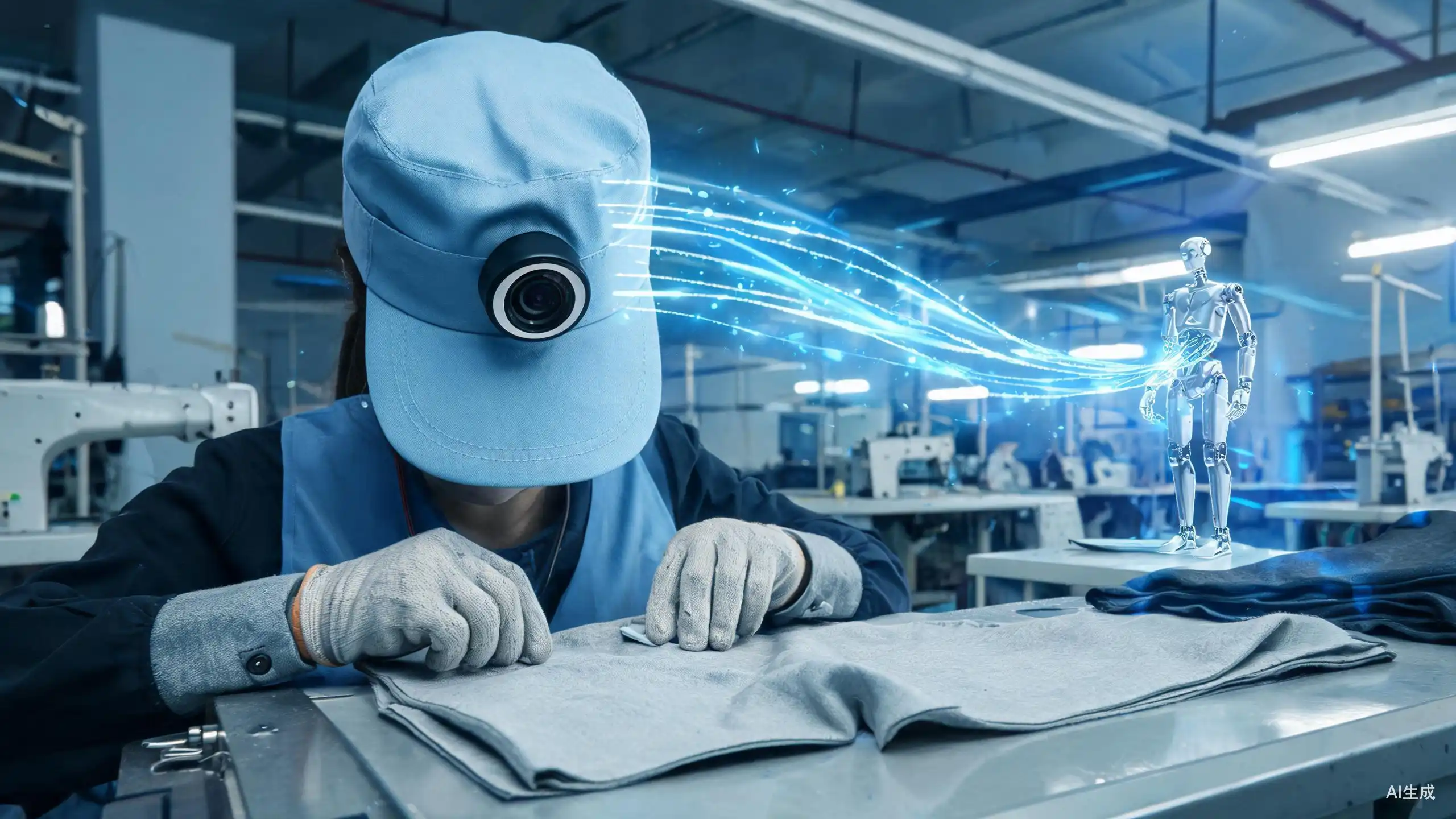
Robots Begin to 'Consume Data': The Hidden Production Chain from Indian Data Factories to Billion-Dollar Humanoid Robots

Robots have started to 'consume data,' driving the formation of a new industrial supply chain focused on producing training data for embodied AI. Unlike large language models, which are trained on vast internet text corpora, embodied AI models face a 'data desert' in the physical world. This has created a massive demand for first-person perspective video data (Ego Data), captured by workers wearing cameras in places like Indian garment factories. Companies like Neocambrian AI are establishing 'data factories' where workers perform standardized tasks (e.g., sorting clothes, kitchen organization) to generate thousands of hours of video. Research, such as NVIDIA's EgoScale, demonstrates that scaling this human demonstration data predictably improves robot performance, particularly for dexterous manipulation. This has validated a training path combining large-scale human data for pre-training with smaller amounts of robot-specific data for fine-tuning. The value of different data types varies significantly, forming a 'data pyramid.' The base consists of low-cost, large-scale internet and Ego Data. Higher layers include more expensive motion-capture data (e.g., from data gloves), simulation/synthetic data, and the most costly and scarce layer: real robot teleoperation data. This demand has spawned a layered ecosystem of data suppliers: low-cost data factories, motion capture and alignment specialists, robot-native teleoperation service providers, simulation data companies, and platforms aiming for data standardization. Robot companies themselves are adopting a 'layered procurement' strategy: outsourcing generic Ego Data while building in-house capabilities for robot-specific adaptation data and the critical deployment/failure data generated in real-world applications. The industry is shifting focus from hardware and basic mobility to the data pipelines required for general-purpose capability. While parallels exist to data labeling companies like Scale AI in the LLM boom, the physical complexity of robot data—involving action success ambiguity and sim-to-real gaps—requires more integrated solutions for data collection, annotation, and a continuous feedback loop. The race is on to build the data engines that will teach robots to operate reliably in the unstructured real world.

marsbitHace 4 hora(s)

Robots Begin to 'Consume Data': The Hidden Production Chain from Indian Data Factories to Billion-Dollar Humanoid Robots

marsbitHace 4 hora(s)

Trading

Spot
Futuros
活动图片