今日币价7月3日:比特币连续三周上涨,山寨币继续上涨,华尔街走平

Tap Chi BitcoinPublicado a 2023-07-03Actualizado a 2023-07-03

Resumen

比特币7 月第一周收于 30,617 美元,创下自 6 月中旬以来连续三周看涨蜡烛图。
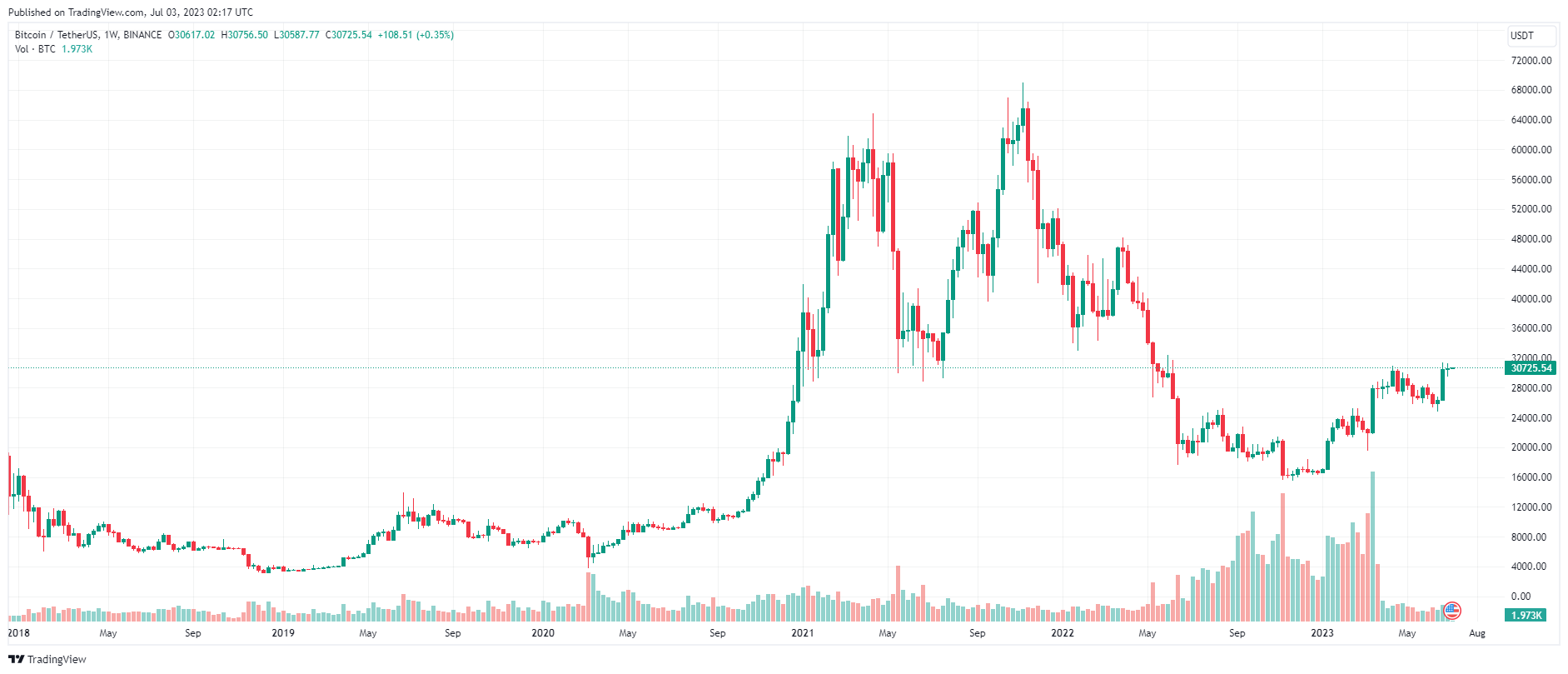
比特币7 月第一周收于 30,617 美元,创下自 6 月中旬以来连续三周看涨蜡烛图。

BTC 价格图表 – 1 周 |来源:TradingView

周日晚间,美国股市期货几乎没有变化,交易者为下半年做好准备,市场以强劲增长结束了 2023 年上半年。

与道琼斯指数相关的期货合约下跌 17 点;标准普尔 500 指数和纳斯达克 100 指数期货基本持平。

特斯拉股价在隔夜交易中几乎没有变化,此前这家电动汽车制造商公布的交付和产量数据超出了分析师的预期。由于恶劣天气导致该航空公司在长假周末航班中断,美联航股价小幅下跌。

股市正在为 2023 年的开局做准备。周五,纳斯达克综合指数收盘,创下 1983 年以来上半年最高涨幅,上涨 31.7%;标准普尔 500 指数上涨 15.9%,标记2019 年以来上半年表现最好的表现。道琼斯指数同期上涨 3.8%。

与此同时,人们对人工智能的热情推动了科技股的上涨。最近的数据显示,尽管利率上升,但美国经济仍具有弹性,这也有助于提振投资者情绪,缓解华尔街对期待已久的经济衰退的一些担忧。

周一,股市开始了短暂的交易周,市场因国庆假期休市。投资者将在周一上午关注最新的 6 月 PMI 数据,然后周五发布关键就业报告。

记者吴说分享的一份报告显示,2023年上半年,比特币价值增长了83.8%,超过了全球其他主要资产。位居第二的是纳斯达克指数,涨幅为31.7%。

在其他能源价格年内也暴跌之后,天然气以 37% 的跌幅排名垫底。

比特币2023年的轨迹清晰且看涨。这种领先的加密货币以强劲的看涨情绪开启了今年,今年第一个月就反弹了 47%,为接下来的几周奠定了基础。

比特币价格自 2022 年 8 月以来首次突破 25,000 美元大关后,于 3 月份跌至 19,569 美元。

许多比特币分析师认为,比特币价格突破 25,000 美元是确认熊市结束的关键举措。尽管随后出现下跌,但大多数比特币支持者认为这是一个整合和积累的机会。这一信念得到了对 2024 年下一次减半事件之前牛市的预测的支持。

3 月中旬,比特币市场又恢复了上涨趋势。这一顶级加密资产在大约 4 周内飙升超过 58%,价格自 2022 年 6 月以来首次突破 30,000 美元大关。

在那次变异之后,比特币进入了另一个吸筹阶段,回到了 25,000 美元的支撑区域。在触及 24.756 美元的局部底部后,上行势头已回到 30,000 美元上方。

TradingView 的数据显示,比特币6 月份收于 30,000 美元区域上方。比特币也刚刚在 7 月第一周以 30,617 美元的绿色价格结束,自 6 月中旬以来连续三周增长。

在比特币引发新一轮牛市的希望之后,山寨币币市场继续蓬勃发展。

领涨的是Compound(COMP),当日强劲增长近30%,使该项目在过去7天内录得的总利润达到76%以上。

The Graph (GRT) 和 Flow (FLOW) 是两个项目,在过去 24 小时内涨幅超过 10%,分别反弹 14% 和 11%。

BitDAO (BIT)、Maker (MKR)、Litecoin (LTC)、 比特币 Cash (BCH)、Filecoin (FIL)、Polkadot (DOT)、Solana (SOL)...也是白天活跃度较高的项目,约利润4-9%。
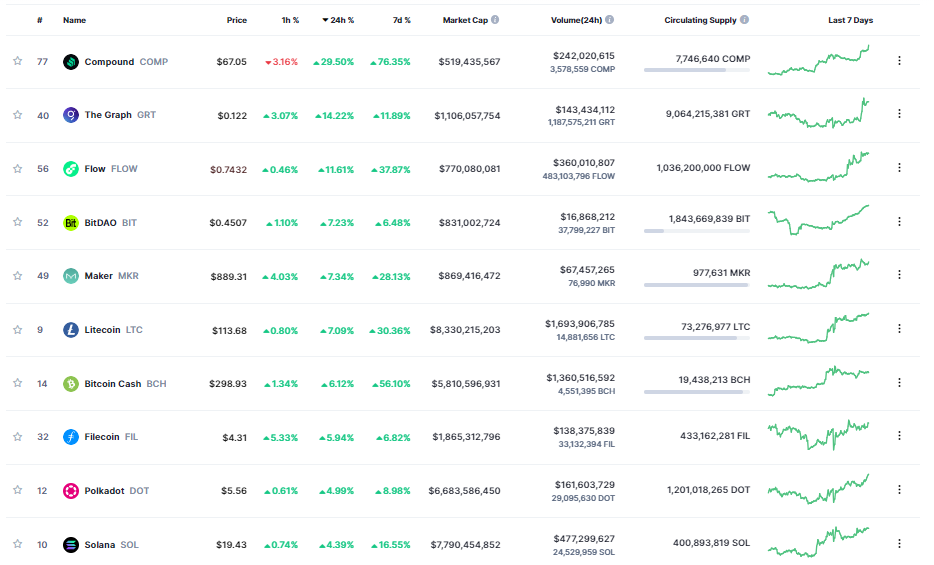
资料来源:Coinmarketcap

以太坊(ETH)白天继续表现强劲。在成功守住 1,900 美元区域上方的价格后,市场上最大的智能合约代币一直试图突破 1,950 美元,试图迈向 6 月初以来的最高点。
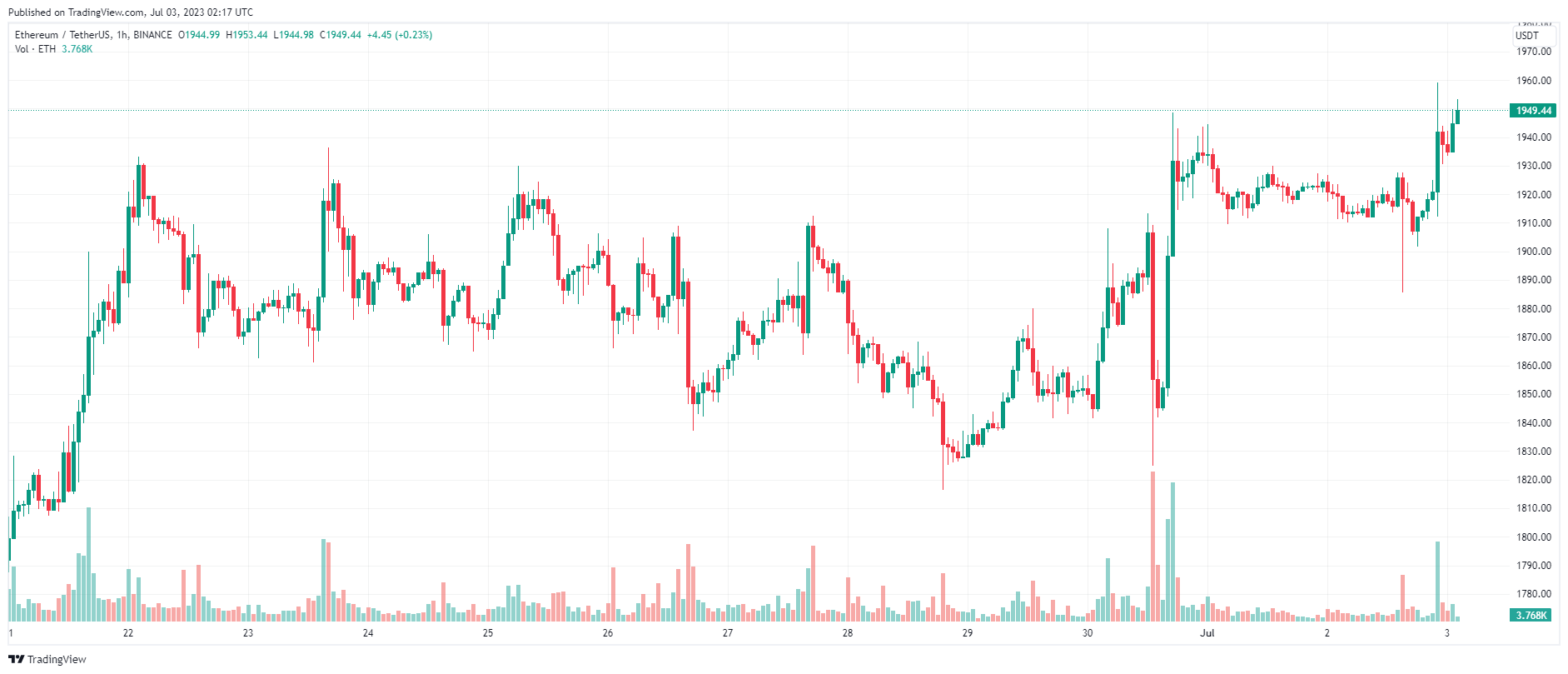
ETH 价格图表 – 1 小时 |来源:TradingView
Lecturas Relacionadas

a16z Deep Dive: Stop Chasing the 'AI Smell', Here's a Practical Guide to Writing with AI

"Don't Obsess Over AI Detection: A Practical Guide to Writing Alongside AI" by Steph Zinn (a16z Crypto) This guide moves beyond the flawed premise that AI-generated text can be easily spotted by a set of "tells" and that these features automatically mean poor quality. Instead, it focuses on how writers and founders can use LLMs effectively by understanding, controlling, and editing the common stylistic tendencies of AI-assisted prose. The article breaks down AI writing "tells" into four key dimensions: **1. Rhetorical Features (Insight-Shaped Writing):** AI often produces semantically empty, "corporate-sounding" filler language—vague profundities, hedging phrases, excessive parallelism, and summary statements. The advice is to ruthlessly edit these out, using prompts to make language more specific and direct. **2. Voice Features (The Alexa Voice):** Default AI writing relies on a narrow, fungible vocabulary of low-friction, abstract words and cliché phrases that lack personality. While this generic voice is acceptable for support docs or mass communications, founders should preserve their unique voice for impactful writing. Use LLMs to identify and replace jargon, aiming for concrete, distinctive word choices. **3. Structural Features (Form Without Function):** AI tends towards over-structured text with excessive subheadings, lists, roadmaps, and the rigid "three-point" framework. While clear structure is good for readability and SEO, it shouldn't force ideas into unnatural containers. Choose a structure that serves the format and purpose, borrowing from effective examples. **4. Punctuation Features (Dash Panic):** The overuse of em dashes and colons has become a hallmark, but writers shouldn't avoid useful punctuation just to seem "human." The key is avoiding repetitive, distracting patterns. Use punctuation that is grammatically correct and supports the flow of your argument. The core argument is that many so-called AI flaws are just amplified versions of existing bad writing habits. The goal isn't to eliminate AI's role but to use it as a tool while maintaining editorial control. The final question shouldn't be "Can this be detected as AI?" but "Does this writing effectively do its job?"

marsbitHace 40 min(s)

a16z Deep Dive: Stop Chasing the 'AI Smell', Here's a Practical Guide to Writing with AI

marsbitHace 40 min(s)

Podcast Notes | Conversation with Tom Lee: Bitmine Acquiring Nearly 5% of Total ETH Supply Is Not the End Goal, ETH Price Target Set at $10,000

In a podcast interview, Tom Lee, Chairman of BitMine Immersion Technologies, discusses the company's strategy to accumulate nearly 5% of the total Ethereum supply within 14 months, using equity financing and avoiding debt. BitMine has consistently purchased ETH for over 60 consecutive weeks, with recent weeks combining buybacks with purchases. The company's substantial ETH holdings generate approximately $300 million in annual staking rewards, covering operational costs like the dividends for its 9.5% perpetual preferred stock (BMNP). Lee positions ETH as a store-of-value asset, likening it to stocks or land, rather than a pure cash-flow instrument. Looking ahead, Lee suggests BitMine may continue buying beyond the 5% target if institutional adoption grows. He outlines a bullish price target for ETH: surpassing $5,000 in a new crypto bull cycle and potentially exceeding $10,000 within 1-2 years, driven by Wall Street tokenization and AI-related demand. The discussion also covers BitMine's evolution into an ecosystem player, funding Ethereum Foundation spin-offs and developing its Maven staking platform. Lee acknowledges his significant financial interests are tied to ETH's price and BitMine's performance. The interview provides a framework for evaluating ETH as a long-term asset, emphasizing staking yield sustainability and future institutional demand, while noting the uncertainties surrounding macro cycles and real-world adoption.

marsbitHace 40 min(s)

Podcast Notes | Conversation with Tom Lee: Bitmine Acquiring Nearly 5% of Total ETH Supply Is Not the End Goal, ETH Price Target Set at $10,000

marsbitHace 40 min(s)

Trading

Spot
活动图片