长推:2023年新环境下币圈的机遇和风险

MarsBitPublicado a 2023-06-13Actualizado a 2023-06-13

Resumen

简单梳理一下未来1-3年两个重要的投资方向

注:本文来自@ethereum_yyds 推特,其是加密KOL,原推文内容由MarsBit整理如下:
2023年新环境下币圈的机遇和风险:
我们经历了痛苦的2022年熊市,FTX、ZB、AEX、美国银行、灰度、市商等不计其数的资本大佬纷纷暴雷退圈,展望2023年,带给我们更多的是希望的一年。从比特币触底反弹一倍到今天,比特币的价格目前围绕在25000附近,山寨币行情却不尽如人意,似乎人们已经厌倦了拥有
资本捆绑色彩的山寨币,如sui,arb,apt等,在资本的运作下横空出世了很多“几十亿”市值的山寨币,极大程度的吸走了场内的有限资金,使得现在的老牌山寨币更是无人问津,老韭菜苦不堪言。当资本以这种方式持续发币吸血后,我们作为“韭菜”似乎也幡然醒悟,于是出现了Pepe,ordi这种靠共识和概念达到
千倍收益的token到来!brc20,ltc20,orc20,大家的共识也越来越强,宁愿去玩pepe这种meme币和各种铭文代币,也不愿意去交易所接盘有资本加持下的主流币。这种行为是韭菜的一次自我革命,不要跟我谈应用,不要跟我谈资本,不要跟我谈前景,拉盘既正义,市梦率第一。
用sec主席的一句话概括:大多数的山寨币都是“证券”,可能市场从来都不需要那么多的山寨币,可能这么多的公链,这么多的概念只是资本牟利的一种手段,买入既高点,永无解套日,这句话也是我对现在的几个后起之秀的主流币种的一种思考。sec主席目前明确定义为商品的代币有BTC、ETH、LTC、ETC等
(如有漏掉请补充),根据以上内容,我简单梳理一下未来1-3年两个重要的投资方向:
1.买新叙事:
拿出一部分博弈资金分别去买不同领域的代币,最好是你和你身边朋友从来没听过的,这种东西成功率很低,但一旦押注成功后,你的收益可能会超出你的想象力,brc20中的ordi是一个例子,
根据以往的经验币圈每一次出新的叙事都会在未来牛市中大放光彩,凭借着新的叙事吸引新的资金和新的用户,如之前的各种公链币matic,atom,sol等,共振币VDS,元宇宙mana,每一个板块的巅峰市值都在百亿以上,不管现在ordi如何,只要比特币开发者不抵触和排斥它,未来的牛市中会大放光彩!
因为这是比特币的第一个叙事,利好比特币,利好矿工,如果在解决拥堵问题,这就是一个完美的投资标的。
2.买合规性
合规性看sec就好了,起码它目前提到的证券代币不能买,据不完全统计分别是
SOL、ADA、MATIC、FIL、ATOM、SAND、 MANA、ALGO、AXS、COTI等,目前已知的达到67种,后面应该还会持续公布。这个事最后如何敲定犹未可知,但我个人觉得清理一下币种也是非常可以的,因为币圈根本不需要那么多的币种和那么多的概念。pow都有哪几个我不就不说了,你们都懂,如果想长期投资但觉得新概念
觉得新概念风险太大的话,那么大资金和长期投资就买pow非证券代币吧。
3.仔细阅读比特币白皮书十遍!
阅读链接:
https://twitter.com/ethereum_yyds/status/1634395144022814720

Lecturas Relacionadas

a16z Deep Dive: Stop Chasing the 'AI Smell', Here's a Practical Guide to Writing with AI

"Don't Obsess Over AI Detection: A Practical Guide to Writing Alongside AI" by Steph Zinn (a16z Crypto) This guide moves beyond the flawed premise that AI-generated text can be easily spotted by a set of "tells" and that these features automatically mean poor quality. Instead, it focuses on how writers and founders can use LLMs effectively by understanding, controlling, and editing the common stylistic tendencies of AI-assisted prose. The article breaks down AI writing "tells" into four key dimensions: **1. Rhetorical Features (Insight-Shaped Writing):** AI often produces semantically empty, "corporate-sounding" filler language—vague profundities, hedging phrases, excessive parallelism, and summary statements. The advice is to ruthlessly edit these out, using prompts to make language more specific and direct. **2. Voice Features (The Alexa Voice):** Default AI writing relies on a narrow, fungible vocabulary of low-friction, abstract words and cliché phrases that lack personality. While this generic voice is acceptable for support docs or mass communications, founders should preserve their unique voice for impactful writing. Use LLMs to identify and replace jargon, aiming for concrete, distinctive word choices. **3. Structural Features (Form Without Function):** AI tends towards over-structured text with excessive subheadings, lists, roadmaps, and the rigid "three-point" framework. While clear structure is good for readability and SEO, it shouldn't force ideas into unnatural containers. Choose a structure that serves the format and purpose, borrowing from effective examples. **4. Punctuation Features (Dash Panic):** The overuse of em dashes and colons has become a hallmark, but writers shouldn't avoid useful punctuation just to seem "human." The key is avoiding repetitive, distracting patterns. Use punctuation that is grammatically correct and supports the flow of your argument. The core argument is that many so-called AI flaws are just amplified versions of existing bad writing habits. The goal isn't to eliminate AI's role but to use it as a tool while maintaining editorial control. The final question shouldn't be "Can this be detected as AI?" but "Does this writing effectively do its job?"

marsbitHace 19 min(s)

a16z Deep Dive: Stop Chasing the 'AI Smell', Here's a Practical Guide to Writing with AI

marsbitHace 19 min(s)

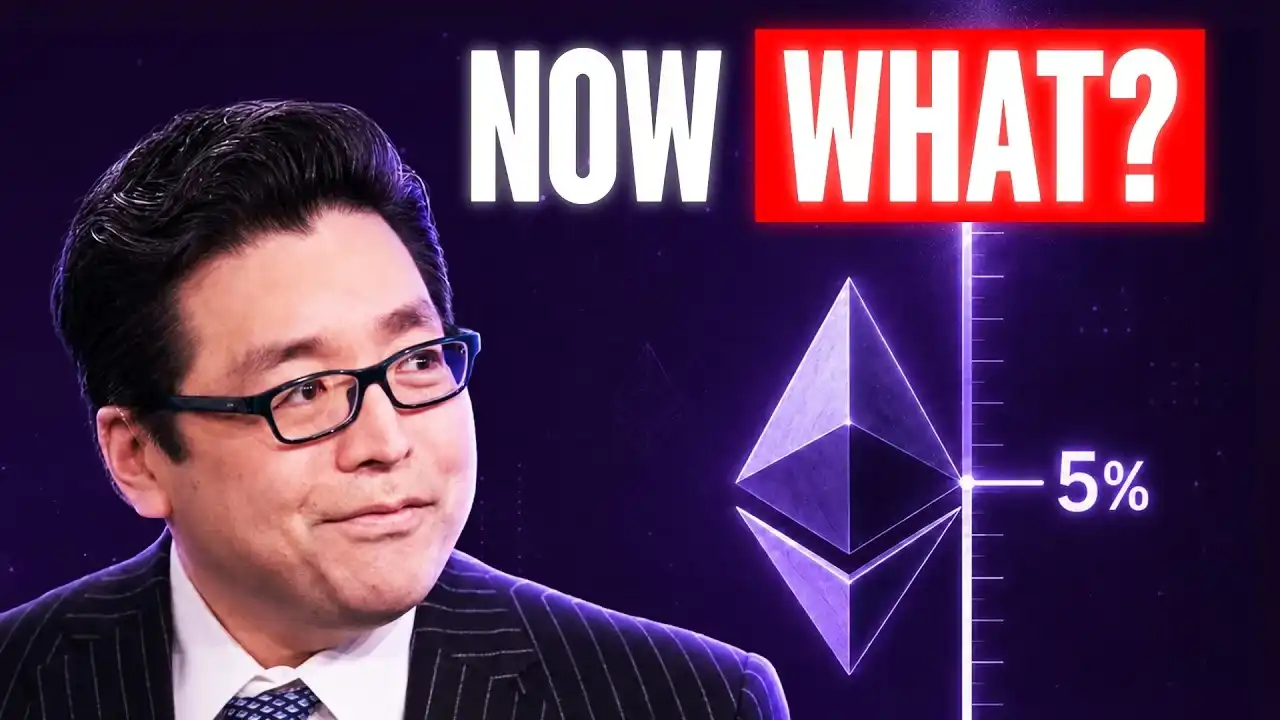
Podcast Notes | Conversation with Tom Lee: Bitmine Acquiring Nearly 5% of Total ETH Supply Is Not the End Goal, ETH Price Target Set at $10,000

In a podcast interview, Tom Lee, Chairman of BitMine Immersion Technologies, discusses the company's strategy to accumulate nearly 5% of the total Ethereum supply within 14 months, using equity financing and avoiding debt. BitMine has consistently purchased ETH for over 60 consecutive weeks, with recent weeks combining buybacks with purchases. The company's substantial ETH holdings generate approximately $300 million in annual staking rewards, covering operational costs like the dividends for its 9.5% perpetual preferred stock (BMNP). Lee positions ETH as a store-of-value asset, likening it to stocks or land, rather than a pure cash-flow instrument. Looking ahead, Lee suggests BitMine may continue buying beyond the 5% target if institutional adoption grows. He outlines a bullish price target for ETH: surpassing $5,000 in a new crypto bull cycle and potentially exceeding $10,000 within 1-2 years, driven by Wall Street tokenization and AI-related demand. The discussion also covers BitMine's evolution into an ecosystem player, funding Ethereum Foundation spin-offs and developing its Maven staking platform. Lee acknowledges his significant financial interests are tied to ETH's price and BitMine's performance. The interview provides a framework for evaluating ETH as a long-term asset, emphasizing staking yield sustainability and future institutional demand, while noting the uncertainties surrounding macro cycles and real-world adoption.

marsbitHace 19 min(s)

Podcast Notes | Conversation with Tom Lee: Bitmine Acquiring Nearly 5% of Total ETH Supply Is Not the End Goal, ETH Price Target Set at $10,000

marsbitHace 19 min(s)

Pricing Risk Assets in 8 Hours: Tonight's PCE to Set the Discount Rate, Nvidia to Test Earnings Tomorrow Morning

"Pricing Risk Assets in 8 Hours: PCE to Set the Discount Rate Tonight, NVIDIA to Test Profits Tomorrow Morning" Risk asset prices hinge on two variables: the numerator (earnings expectations) and the denominator (the discount rate). Both will be recalibrated within eight hours. First, at 20:30 Beijing time, the US Bureau of Economic Analysis releases July PCE inflation data and the second estimate of Q2 GDP. Consensus expects mild core PCE growth, but a surge in key PPI components poses an upside risk. A hotter-than-expected print could push Treasury yields and the dollar higher, threatening the recent rally in Bitcoin (BTC) above $80K, which was fueled by falling yields. A benign reading would support risk assets. Market sentiment is already "greedy" (Fear & Greed Index at 74), making it vulnerable to disappointment. Second, around 04:20, NVIDIA reports its Q2 FY27 earnings. While consensus revenue of ~$91.85B slightly exceeds company guidance, the market has priced in a beat. The key will be the magnitude of the beat and, crucially, the Q3 guidance. As a bellwether for tech and AI narratives, NVIDIA's results will significantly impact overall risk appetite and AI-related crypto tokens. The combination creates four scenarios: 1) Benign PCE & strong NVIDIA guidance confirms the bullish trend. 2) Hot PCE & strong NVIDIA leads to conflicted signals and likely volatility for BTC. 3) Benign PCE & weak NVIDIA guidance pressures tech but offers some macro support for BTC. 4) Hot PCE & weak NVIDIA guidance presents a "double whammy," risking a sharp pullback in BTC toward the $75K-$76K support zone. The outcomes will set the tone for markets ahead of the upcoming Jackson Hole symposium.

marsbitHace 52 min(s)

Pricing Risk Assets in 8 Hours: Tonight's PCE to Set the Discount Rate, Nvidia to Test Earnings Tomorrow Morning

marsbitHace 52 min(s)

Trading

Spot
活动图片