Cryptocurrencies Prepare for Unprecedented Chaos: Impact of Recession

Tap Chi BitcoinPublicado a 2023-05-22Actualizado a 2023-05-22

Resumen

Understanding the dynamics and potential strategies for mitigating risks and seizing opportunities is extremely important. These insights will be key to navigating the impact of the recession on cryptocurrencies and beyond.

With its inherent volatility , the crypto market is bracing for a new challenge: the potential impact of a recession.

The complex interplay between global economic trends, monetary policy, and digital asset markets is seen as a pivotal force in the crypto ecosystem.

The Federal Reserve, the central banking system of the United States, plays an important role in the current economic landscape . Its monetary policies, especially those related to interest rates, have a huge impact on the economy , including the cryptocurrency market.

Before a recession, the Federal Reserve often chooses to lower interest rates to stimulate economic activity by encouraging borrowing and investment. However, the indefinite onset and duration of recessions often pose challenges to such policies.
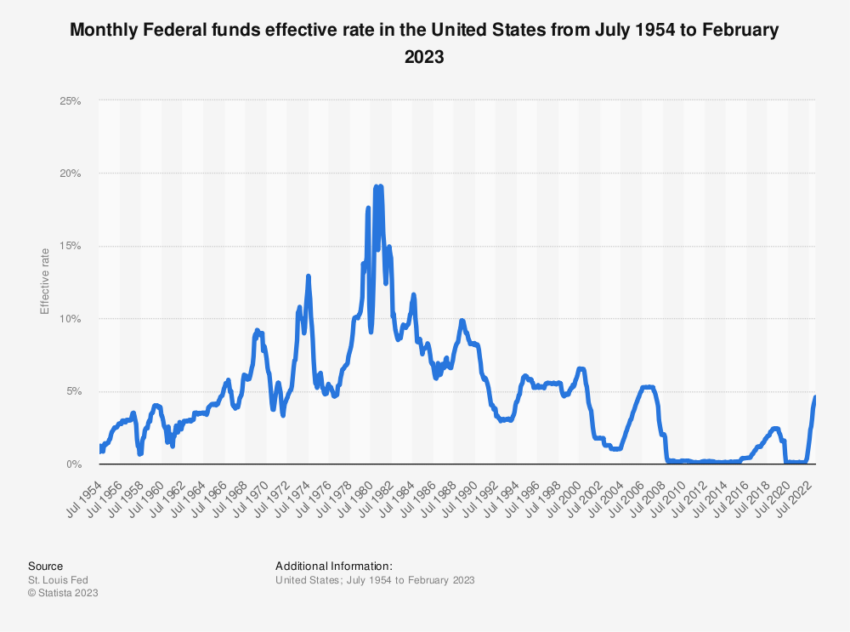
Effective Interest Rate. Source: Statista

During the Great Recession, the mortgage crisis severely affected the US economy. The Federal Reserve took immediate action by lowering interest rates, easing mortgage difficulties and stimulating the economy. Now the question arises: how can such strategies impact the crypto market?

Often PR as “digital gold,” Bitcoin has portrayed itself as a potential “hedge” against the volatility of traditional financial markets. Therefore, the impact of the economic downturn on the crypto market is a topic of intense interest and speculation.

Recessions often lead to a decline in asset prices, as was evident during the Great Recession. However, the cryptocurrency market's response to such a downturn may vary due to its decentralized nature and independence from traditional financial systems.

In contrast to traditional assets, cryptocurrencies like Bitcoin can provide an alternative investment during a downturn. Bitcoin's decentralized, borderless, and non-government nature could make it attractive as a store of value when traditional markets struggle.
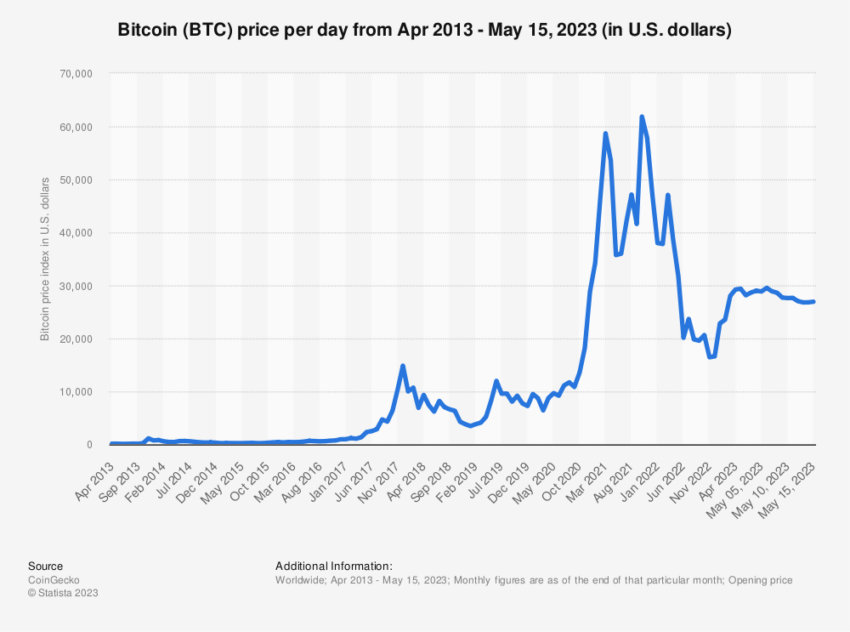
BTC/USD. Source: Statista

Bitcoin, for instance, has previously shown a negative correlation with traditional markets, suggesting that it can provide some degree of diversification during market downturns. However, it is important to note that the safe-haven status of cryptocurrencies remains a controversial topic among experts.

During the early stages of the COVID-19 pandemic, Bitcoin and other cryptocurrencies experienced significant price drops alongside traditional markets. This event raises questions about the reliability of cryptocurrencies as a safe-haven asset in times of crisis.
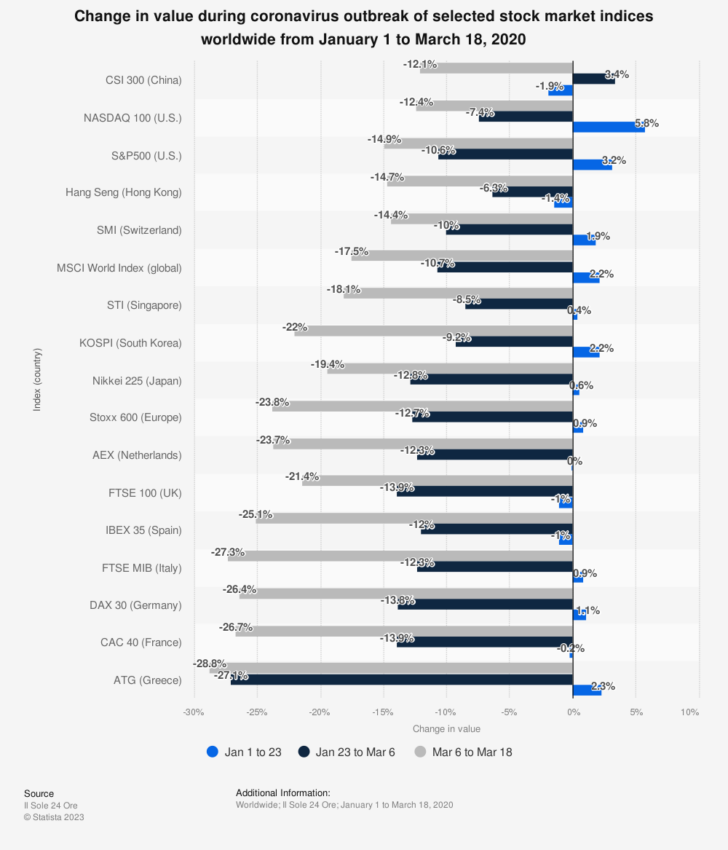
The stock market's response to COVID-19. Source: Statista

Stablecoin, cryptocurrencies pegged to traditional assets like the US dollar, can also play an important role during recessions. These digital assets are designed to maintain a stable value. This can make them an attractive option for investors looking to preserve their capital during uncertain economic times.

For instance, Tether (USDT) and USD Coin (USDC) are two popular Stablecoin backed by the US dollar. These Stablecoin provide a means for investors to escape the volatility of traditional cryptocurrencies while maintaining access to digital asset markets.
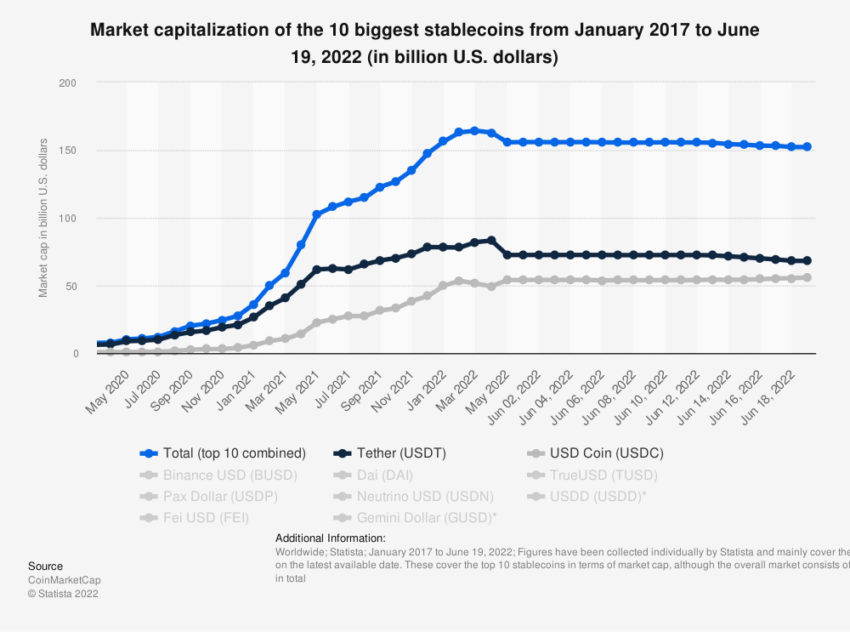
Stablecoin Market Cap. Source: Statista

During a recession, demand for Stablecoin could increase as investors seek to mitigate risk while still wanting to participate in the digital economy.

Interest rates can affect the cryptocurrency market in many ways. Traditional investments like bonds can offer lower yields in low-interest-rate environments, such as during a recession, making riskier assets like cryptocurrencies more attractive.

On the other hand, higher interest rates can increase borrowing costs, potentially leading to reduced Liquidity in the cryptocurrency market. Investors can take less risk when investing in cryptocurrencies when safer, higher-yielding investments are available.
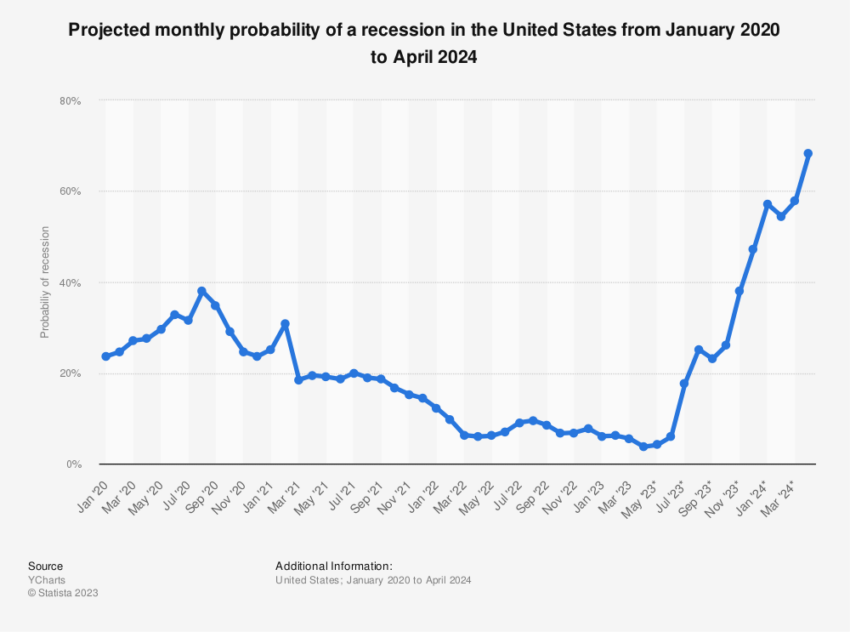
Probability of a recession. Source: Statista

The cryptocurrency market closely follows the Federal Reserve's decisions on interest rates . Together with other factors, these decisions shape the direction of the market.

The inverse relationship between interest rates and investment in risky assets can be seen in the traditional markets and extends to the crypto market. In a low interest rate environment, borrowing costs fall, making it less expensive for investors to finance the purchase of riskier assets like cryptocurrencies.

In contrast, safer assets like bonds become more attractive when interest rates are high. This is mainly due to their guaranteed returns, potentially reducing investment in riskier assets like cryptocurrencies.
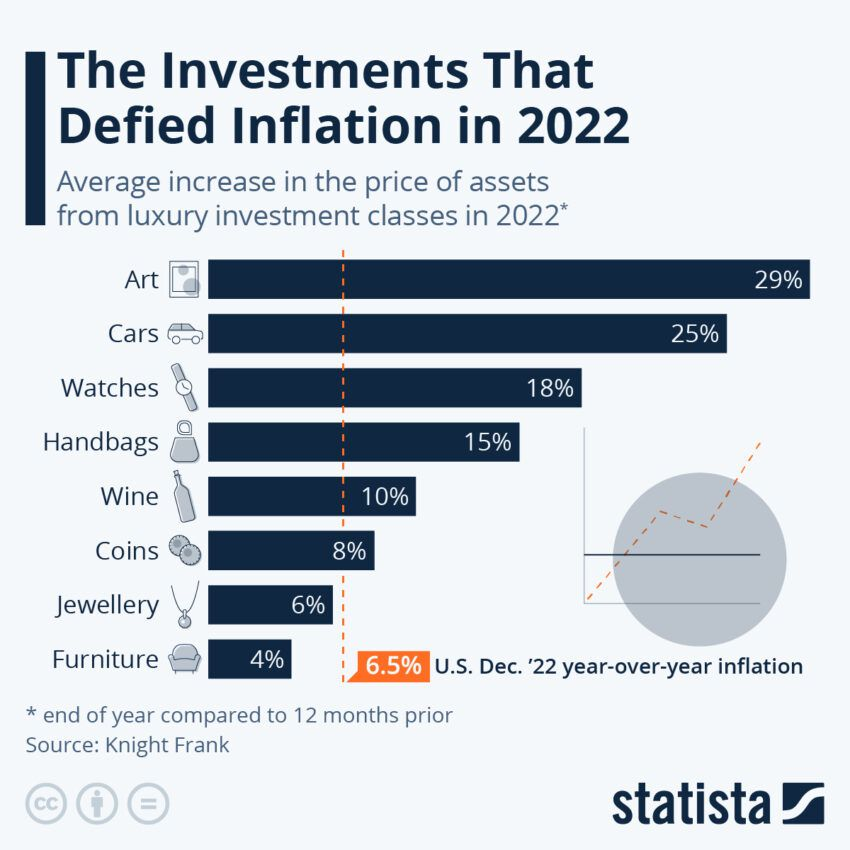
Investments defy inflation . Source: Statista

In the cryptocurrency market, borrowing and lending platforms can also be affected by changes in interest rates. These platforms allow users to profit from their cryptocurrencies or borrow money from this balance.

The interest rates offered on these platforms can become more attractive than traditional investments in a low interest rate environment.

Current economic indicators suggest potential changes in the Federal Reserve's monetary policy. US Treasury Secretary Janet Yellen has warned that time is running out for remedial financial measures ahead of key meetings.

These changes are likely to signal the beginning of a recession, which will have implications for the crypto market.
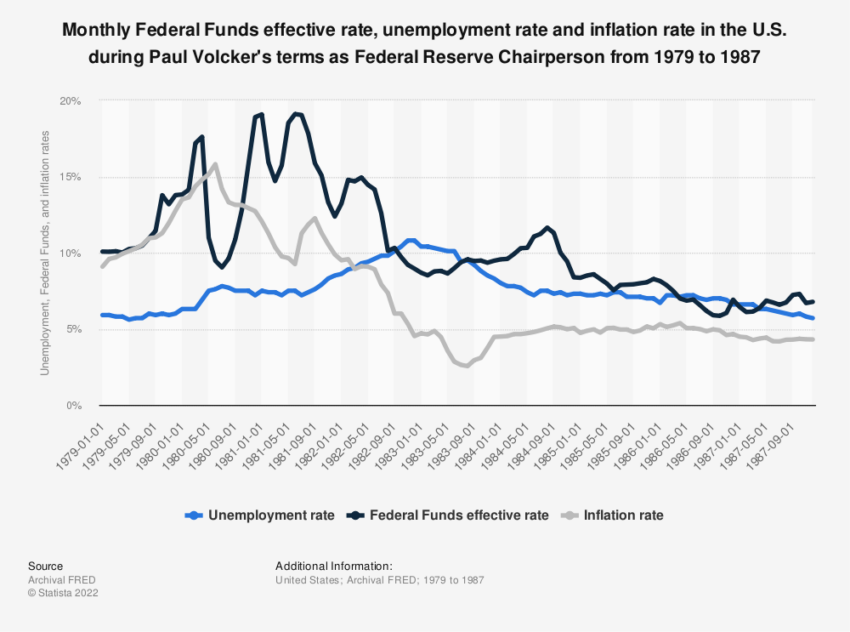
The main economic indicators of the United States. Source: Statista

CME Group's FedWatch tool analyzes the probability of interest rate moves by the Federal Reserve, providing valuable insights for crypto investors.

It helps market participants gauge the likelihood of interest rate changes, which may affect the relative attractiveness of crypto investments.
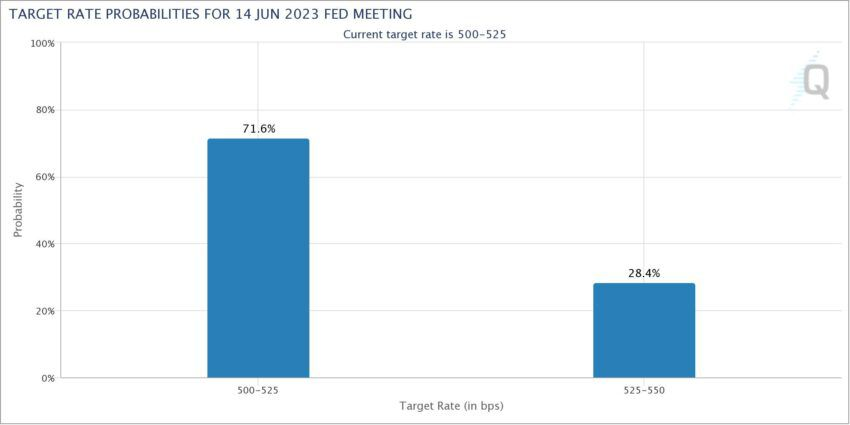
Interest rate probabilities. Source: CME Group

Institutional investors can be crucial in how the crypto market responds to a recession. These investors, including hedge funds, pension funds, and endowments, have shown a growing interest in the cryptocurrency market.

Their participation can help stabilize a downturn, as these investors often have a longer-term investment perspective than retail investors. However, the risk-averse nature of institutional investors can also lead them to retreat from the crypto market during downturns, potentially exacerbating market volatility.

The potential impact of a recession on cryptocurrencies presents a new frontier for investors. Despite the uncertainty surrounding how exactly a recession might affect cryptocurrencies, it is clear that such a period can present both challenges and opportunities.

The resilience of the crypto market will be tested in the face of an economic downturn, as will theories that suggest cryptocurrencies as a hedge against traditional market instability.

Investors, regulators and market participants must keep a close eye on economic indicators and policy decisions to navigate this uncertain landscape. The complex interplay between Federal Reserve policies, the broader economic environment, and the cryptocurrency market is set to shape the future of digital assets in the face of economic uncertainty. economic.

Understanding the dynamics and potential strategies for mitigating risks and seizing opportunities is extremely important. These insights will be key to navigating the impact of the recession on cryptocurrencies and beyond.

Lecturas Relacionadas

STRC 跌破面值,比特币财库实验进入下半场

The price of STRC, Strategy's dividend-paying preferred stock, has fallen below its $100 face value, triggering a re-evaluation of the "bitcoin treasury" corporate model. This highlights a critical tension: the company's asset base consists of high-volatility, non-cash-flow-generating Bitcoin, while its capital structure requires continuous cash payouts for dividends and interest. The decline of STRC signals that market pressure is shifting from asset price volatility to the pricing of the company's financing tools. Strategy's core model involves a three-step conversion: turning equity into Bitcoin exposure, converting Bitcoin holdings into capital market credit, and packaging non-yielding BTC into cash-paying securities like STRC. While Strategy holds a massive 847,363 BTC, the focus is now on cash flow mismatches. The company faces annual preferred stock dividend obligations of approximately $1.7 billion, far exceeding the cash flow from its legacy software business. Its ability to meet these obligations relies on continued access to capital markets. The market is now scrutinizing which of three potential costs becomes untenable first: rising dividend costs to attract investors, dilution costs from issuing more common stock, or the reputational cost of selling BTC—a move contrary to its "hodl" narrative. For the broader crypto market, a constrained Strategy means the potential loss of a predictable, narrative-driven marginal buyer for Bitcoin. The STRC discount serves as a reminder that the longevity of such models depends not just on Bitcoin's price, but also on financing windows, cash reserves, and investor willingness to pay a "trust premium" for the structure.

marsbitHace 5 min(s)

STRC 跌破面值,比特币财库实验进入下半场

marsbitHace 5 min(s)

Standard Chartered Bank’s 50-Fold Fantasy: Predicting AAVE to Reach $3,500

Standard Chartered Bank has issued an optimistic research report predicting that the AAVE token could surge 50-fold to $3,500 by 2030. This forecast is based on the projection that the total value locked (TVL) in DeFi will grow 37x to approximately $2.7 trillion, driven by stablecoin expansion and the tokenization of real-world assets (RWA). The bank's model links Aave's potential valuation directly to its protocol revenue, which is primarily driven by net interest margins. The report highlights Aave's current dominant position, noting it captures over 80% of the net earnings ("protocol retained earnings") in the lending sector while holding only about half of its TVL. It also points to the recent launch of the Aave V4 architecture and a healthy revenue stream of $142 million in 2025 as positive fundamentals. Grayscale's separate analysis, applying traditional valuation metrics like DCF, concluded AAVE is currently undervalued. However, the article notes significant challenges. Aave's peer-to-pool lending model suffers from inherent capital inefficiency, with an estimated $52 million annual "deadweight loss" due to idle funds needed for liquidity buffers. This structural flaw was exposed during the April KelpDAO exploit, which locked a WETH pool at 100% utilization for days. Emerging protocols like Morpho, with more efficient point-to-point models, are cited as growing competitive threats. In summary, while institutional forecasts paint a macro picture of massive growth fueled by RWA adoption, Aave's path forward hinges on addressing its core structural limitations and competitive pressures within the evolving DeFi lending landscape.

链捕手Hace 1 hora(s)

Standard Chartered Bank’s 50-Fold Fantasy: Predicting AAVE to Reach $3,500

链捕手Hace 1 hora(s)

Tidal Investment: We Remain Bullish on the AI Industry Chain, But the Reasons Have Changed

Tidal Investment remains optimistic about the AI industry chain, but the rationale has shifted. The market narrative has changed. While recent large-scale IPOs (e.g., SpaceX) and major fundraising plans by tech giants like Alphabet and Meta have caused some nervousness, this isn't a sign of an AI peak. The focus has moved from the initial question of AI's viability to the sustainability of massive investment cycles. The key players—primarily the major cloud providers—are not slowing down; their capital expenditure (Capex) guidance for 2026 has been increased across the board (e.g., Alphabet to $180B, Amazon to $200B). This investment cycle is proving resilient and difficult to stop. Unlike traditional hardware cycles, current AI Capex is distributed across multiple physical layers—computing, memory, networking, and critically, power infrastructure. Bottlenecks are shifting from chips to elements like electricity, transformers, and cooling systems, which have much longer lead times and cannot be easily pre-built like fiber optics during the dot-com bubble. Supply chain data (e.g., Eaton's 240% YoY data center orders) confirms this broad-based, project-driven expansion. Market concerns are acknowledged but viewed differently. First, while Capex growth currently outpaces revenue growth, raising ROI questions, this mirrors the early scaling phase of cloud computing itself. A change in view would require concrete signals like downward Capex revisions or missed AI product targets, which haven't materialized by mid-2026. Second, comparisons to the 2000 dot-com bust are flawed. That crash was driven by a massive, parallel oversupply of cheap capacity (fiber). The current cycle faces *supply constraints* in critical, capital-intensive physical infrastructure that cannot be overbuilt as easily. In conclusion, the wave of fundraising reflects the next, more complex act of the AI story. Physical bottlenecks and sustained high Capex plans suggest this is not the finale but an ongoing, capital-intensive build-out phase. The script has changed, but the play is far from over.

marsbitHace 2 hora(s)

Tidal Investment: We Remain Bullish on the AI Industry Chain, But the Reasons Have Changed

marsbitHace 2 hora(s)

Tidal Investment: We Remain Bullish on the AI Industry Chain, But for Different Reasons Now

Tidal Investments remains optimistic about the AI industry chain, but the rationale has shifted. The market is concerned about massive concurrent fundraising by tech giants like SpaceX, OpenAI, Alphabet, and Meta, fearing an AI peak. However, the authors argue this signals the next act of AI development, not its end. Capital expenditure (Capex) from major cloud providers (Alphabet, Amazon, Meta, Microsoft, Oracle) continues to surge aggressively into 2026. This investment cycle is more resilient than past hardware cycles due to its scale and complexity. Bottlenecks have shifted from chips to critical physical infrastructure like power grids, transformers, cooling, and data center construction—areas with long lead times and limited capacity for rapid expansion. Supply chain data (e.g., Eaton's orders) confirms substantial, tangible progress. Key market concerns are addressed: 1. **ROI vs. Capex Growth**: While Capex growth outpaces revenue, the authors note cloud giants have historically overcome similar phases through scale. The cycle will only be in danger if Capex guidance is cut, orders are canceled, or AI product demand falters—none of which are currently observed. 2. **Comparison to the 2000 Dot-com Bubble**: Unlike the telecom bubble, where cheap, oversupplied fiber crashed prices, AI infrastructure (especially power) is constrained, customized, and subject to lengthy approvals, making a similar supply glut and crash unlikely. In conclusion, the wave of fundraising reflects the immense, ongoing capital needs for AI's next phase, constrained by slow-moving physical bottlenecks. The AI cycle is not over; the script has simply changed.

链捕手Hace 2 hora(s)

Tidal Investment: We Remain Bullish on the AI Industry Chain, But for Different Reasons Now

链捕手Hace 2 hora(s)

Grayscale: These 15 Profitable Crypto Protocols Are Severely Undervalued

Grayscale Research identifies 15 top-revenue crypto protocols trading at significant valuation discounts, with many at single-digit or even 1x revenue multiples. Protocols like Pump.fun, PancakeSwap, and Meteora have market capitalizations roughly equal to their annual revenue. The report argues these financially-focused protocols (DEXs, lending, staking) are fundamentally undervalued and could benefit from the potential passage of the CLARITY Act, expected as soon as next month. This legislation aims to clarify digital asset regulation, potentially reducing institutional barriers and driving on-chain activity. The analysis breaks down the protocols into three groups: the "1x Club" (market cap ≈ revenue), mid-tier protocols with 3-9x multiples (e.g., Aave, Lido, Jupiter), and high-multiple protocols like Hyperliquid (15x) and Uniswap (37x), where valuation reflects future potential rather than current cash flows. Grayscale applies a traditional DCF model to Aave, suggesting a one-year price target of ~$175, representing ~130% upside from current levels. The report notes a risk-off macro environment since the Iran conflict has further compressed valuations, creating a potential entry window. The conclusion highlights that while the valuation data presents an intriguing opportunity, the investment thesis is contingent on the CLARITY Act's passage and subsequent institutional capital flows. Investors are cautioned to consider Grayscale's inherent conflict of interest as a crypto asset manager with products tied to these assets.

marsbitHace 2 hora(s)

Grayscale: These 15 Profitable Crypto Protocols Are Severely Undervalued

marsbitHace 2 hora(s)

Trading

Spot
Futuros
活动图片