由于投资者权衡疲软的 GDP 和最新的银行业困境,比特币在 2.95 万美元上方盘旋

CoindeskPublicado a 2023-04-28Actualizado a 2023-04-28

Resumen

在加密货币市场经历过山车般的一天后,比特币 ( BTC ) 稳定在 29,500 美元以上,投资者权衡美国经济增长数据低迷和银行业最新的困境。

在加密货币市场经历过山车般的一天后,比特币 ( BTC ) 稳定在 29,500 美元以上,投资者权衡美国经济增长数据低迷和银行业最新的困境。

市值最大的加密货币最近交易价格约为 29,600 美元,在过去 24 小时内上涨约 4%。在美国商务部报告第一季度GDP 温和增长 1.1%之后,BTC周四在美国早盘交易中小幅下跌 – 低于 2% 的年化预期和令人失望的个人消费数据,然后反弹。

市值第二大加密货币以太币 ( ETH ) 也遵循类似模式,在过去 24 小时内上涨近 3%,易手价格约为 1,920 美元。衡量加密货币市场整体表现的 CoinDesk 市场指数 ( CMI ) 当天上涨超过 6%。

去中心化金融(DeFi) 平台 Maverick Protocol 的首席技术官鲍勃·巴克斯利 (Bob Baxley) 表示,比特币最近几天的表现反映出投资者对加密货币即使在动荡事件中也能保值的能力充满信心。

Baxley 在一封电子邮件中告诉 CoinDesk:“比特币和其他加密资产显然一直是许多人希望该技术类别成为的避风港。”

Baxley 指出,在陷入困境的地区银行 First Republic 的股价暴跌近 50% 后几个小时, BTC、 ETH和其他主要数字资产周三上涨。 “我怀疑这在很大程度上与更多人和组织对比特币和 [ether] 等核心价值主张的广泛认识有关,即它们是分散的、抗审查的价值形式,缺乏交易对手风险,”他说。

他说:“在银行看起来像现在这样不稳定的时候,很难不看到这种价值。”他补充说,这种繁荣可能与“对摇摇欲坠的金融机构的更多救助预期的增强——或者加密资产社区中的那些人称之为‘钱去 brrr’场景。”

他预计美联储可能会发生政策转变,因为该央行目前的货币强硬态度“有造成严重损害的风险”。

CME FedWatch 工具目前显示在下周的联邦公开市场委员会 (FOMC) 货币政策会议上加息 25 个基点的可能性为 87%。

股市周四上涨,标准普尔 500 指数最近收盘上涨 1.9%,以科技股为主的纳斯达克综合指数上涨 2.4%。道琼斯工业平均指数 (DJIA) 当天上涨 1.5%。

Lecturas Relacionadas

"Money Is Useless"? Why Musk's 2036 Prediction Could Completely Reshape Bitcoin's Fate

Elon Musk Predicts "Money Will Be Irrelevant" by 2036, Potentially Reshaping Bitcoin's Future In a recent interview with The Economist, billionaire Elon Musk, CEO of SpaceX and Tesla, made a startling prediction: money will become "irrelevant" within a decade as the world transitions to a state of "unbelievable abundance." He argues that if robots and AI can provide goods and services exceeding all human consumption, the purpose of money would vanish. This prediction coincides with a critical juncture for Bitcoin. While the cryptocurrency has been trading sideways and below its all-time highs, it is approaching what some see as a major turning point. Musk's views are closely watched due to his past statements equating "energy" with true currency—a concept that resonates with Bitcoin proponents, as Bitcoin's security model is deeply tied to energy-intensive mining. His companies, SpaceX and Tesla, collectively hold nearly $2 billion worth of Bitcoin. Although Musk's public enthusiasm for crypto has moderated since its peak, he maintains support for Bitcoin and his favored Dogecoin. He has criticized government-issued fiat currencies as "hopeless" and suggested a preference for Bitcoin. His latest prophecy, envisioning a post-scarcity future driven by AI and robotics, refocuses attention on Bitcoin's potential role as a value anchor in a world where traditional money may lose its meaning.

Foresight NewsHace 13 min(s)

"Money Is Useless"? Why Musk's 2036 Prediction Could Completely Reshape Bitcoin's Fate

Foresight NewsHace 13 min(s)

Storj Labs Files for Bankruptcy Protection: Can Token Holders Exchange for Company Equity?

Storj Labs, parent company of decentralized cloud storage platform Storj, filed for Chapter 11 bankruptcy protection on July 26 in the U.S. District Court for the Northern District of West Virginia. The company stated its network will operate normally and token functions will be unaffected. Notably, Storj plans to propose a mechanism in its reorganization plan allowing STORJ token holders a path to equity in the restructured company—an unprecedented offer in the crypto industry. However, its feasibility depends on whether any residual value remains after creditor repayments, as token holders are low in the legal priority hierarchy. Founded in 2014, Storj is an early decentralized infrastructure project. It reported a 7x increase in Annual Recurring Revenue (ARR) to approximately $30 million in 2024. In October 2025, it was acquired by Inveniam Capital Partners. Less than a year later, the merged entity entered bankruptcy proceedings. Storj attributed the filing to historical debts from past operations and acquisitions, stating they were too large to be absorbed by business growth. The company also plans to refocus on its core decentralized storage business, likely divesting Valdi, a GPU computing company acquired in 2024. The proposed token-to-equity conversion faces significant legal hurdles. Under U.S. bankruptcy law, creditors are paid before equity holders, and utility token holders are not automatically recognized as equity members. The details—such as eligibility, allocation ratio, and mechanics—are yet to be determined and require court approval. Another factor is token concentration, with Storj Labs itself holding roughly 30% of the total 425 million STORJ supply. In the broader decentralized storage landscape, Storj is a smaller player compared to giants like Filecoin and Arweave. Its key advantage is faster retrieval speeds for "hot" data. The bankruptcy process introduces risks, including potential client and node operator migration to competitors. STORJ price fell roughly 11.2% following the news. Key points for token holders to watch are the specific terms of the equity conversion plan, court approval progress, the treatment of the company's own token stash, and whether the refocused core business can sustain value post-reorganization.

Foresight NewsHace 17 min(s)
Storj Labs Files for Bankruptcy Protection: Can Token Holders Exchange for Company Equity?

Foresight NewsHace 17 min(s)

Perpetual Futures 'Landing in the US' Hits Roadblock: Why is CME Suing the CFTC in Court?

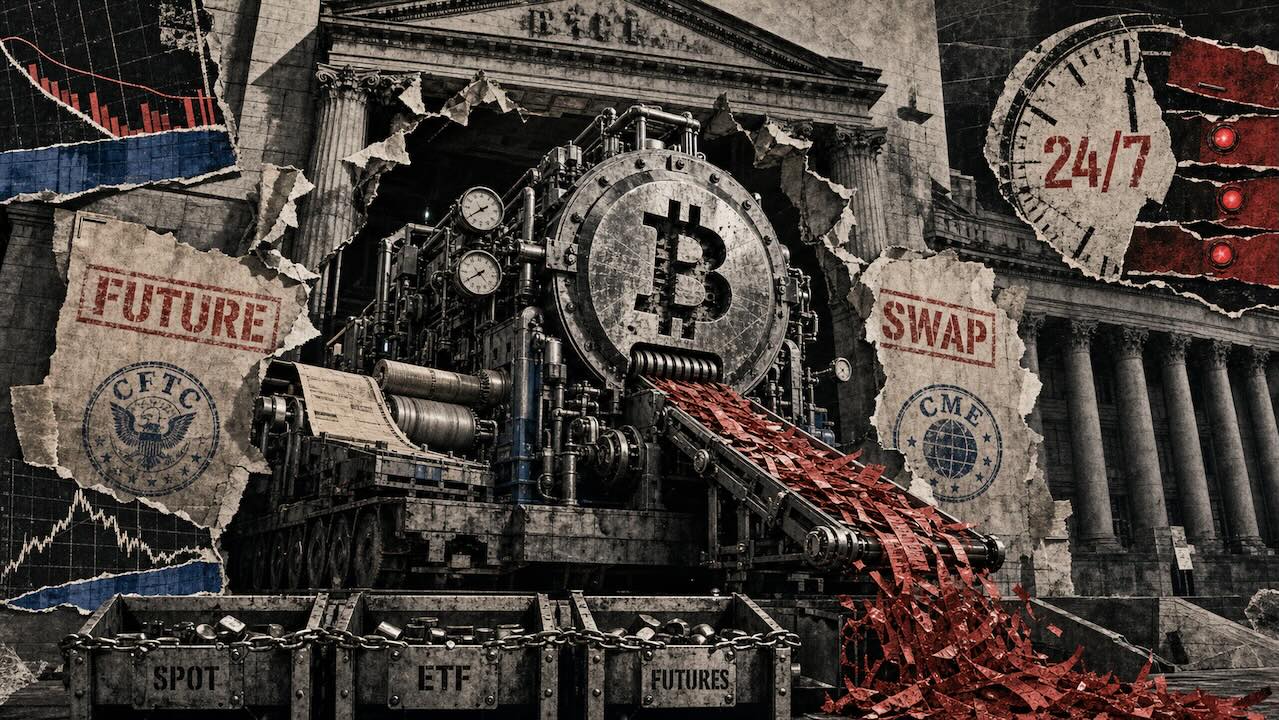
Perpetual crypto futures, which dominate global crypto derivatives trading, are entering the U.S. market. The CFTC approved KalshiEX to launch a true Bitcoin perpetual contract (BTCPERP) and issued rules allowing licensed exchanges to convert expiring crypto futures into perpetual ones. This move was challenged when CME Group sued the CFTC, arguing that perpetuals should be regulated as "swaps" under stricter rules, not as futures. The lawsuit's outcome will significantly impact the legal foundation of the nascent U.S. perpetuals market. Currently, two legal structures exist in the U.S.: true perpetuals (like Kalshi's) and long-dated futures (like Coinbase's) that mimic perpetuals via frequent funding rate settlements. These funding rates, paid between longs and shorts, keep contract prices anchored to spot. The proliferation of U.S. perpetuals creates fragmented liquidity across platforms (Kalshi, Coinbase, CME), with different rules on leverage, margining, and clearing. This fragmentation reduces capital efficiency, as collateral cannot be shared across products. Key competitive battlegrounds will be cross-product margin efficiency and the response of these new markets to extreme volatility. A pending Coinbase proposal to allow USDC stablecoin as futures margin could improve capital efficiency. Ultimately, the market's evolution hinges on two factors: how U.S. perpetuals behave during sharp Bitcoin price moves, and the court's ruling on whether they are futures or swaps.

Foresight NewsHace 18 min(s)

Perpetual Futures 'Landing in the US' Hits Roadblock: Why is CME Suing the CFTC in Court?

Foresight NewsHace 18 min(s)

Trading

Spot
活动图片