FDIC Compensation and USDC Crypto Market Recovery!

HuobiPublicado a 2023-03-21Actualizado a 2023-03-21

Resumen

The recent bankruptcy of Silicon Valley Bank (SVB) has sent ripples through the financial industry and the crypto market. As the second-largest bank failure in American history, it has caused widespread concern among investors and users alike. However, the Federal Deposit Insurance Corporation (FDIC) has stepped in to provide compensation and resolution for SVB, fully protecting its users.

The recent bankruptcy of Silicon Valley Bank (SVB) has sent ripples through the financial industry and the crypto market. As the second-largest bank failure in American history, it has caused widespread concern among investors and users alike. However, the Federal Deposit Insurance Corporation (FDIC) has stepped in to provide compensation and resolution for SVB, fully protecting its users. This intervention has helped restore confidence in the crypto market and led to a recovery in the prices of popular tokens such as BTC and ETH. This article explores the impact of the FDIC compensation on the crypto market and how it has contributed to its recovery.
Bankruptcy Overview:

“”

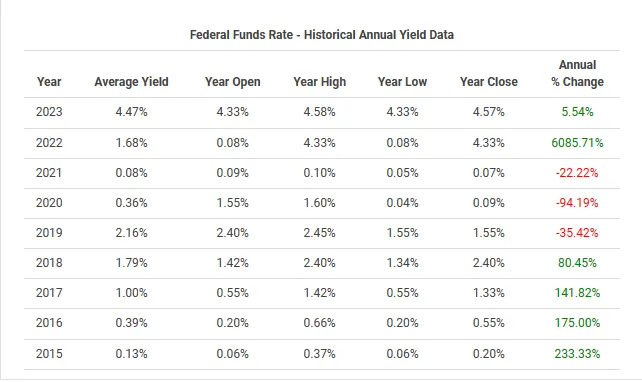
In the last week, two major banks, Silvergate Bank and Silicon Valley Bank (SVB), filed for bankruptcy, marking the second-largest bank failure in American history and the biggest since the 2008 financial crisis. While some people may attribute this to the chaos in the crypto market, the reality is that the main cause is due to the traditional banks’ asset allocation and risk management, coupled with the recent increase in interest rates by the US Federal Reserve. The US Federal Reserve has been gradually increasing rates since 2015. As of March 2023, the federal funds rate stands at 2.25%, compared to 0.25% in 2015.
Crypto Market Impact:

“”

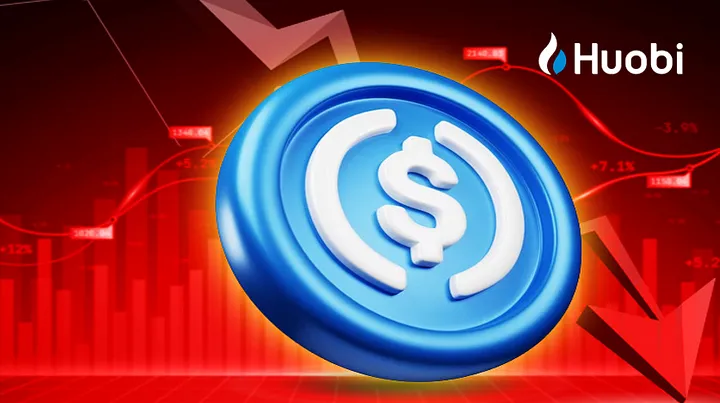
The bankruptcy of SVB has had a significant impact on the crypto market, which started with a popular stablecoin called USDC de-pegging from its $1 USD mark. This popular stablecoin was a significant asset in the crypto ecosystem with a market cap of $39,474,245,476, which ranked this digital asset in the top 5 within Coingecko rankings. The USDC price dropped from $1 to $0.89 as its mother company, Circle, has an investment of $3.3 billion in SVB. BTC also dropped below $20,000, and all popular tokens suffered a significant drop in price.

Solution For Bankruptcy:

“”

The FDIC has recently stepped in to complete the resolution of Silicon Valley Bank, fully protecting its users deposits. Banks usually stand at a cap of $250,000 for each account, meaning that all account above this account level would be in a loss of assets. However, starting March 13, because of FDIC, depositors will have access to all their money even if it’s above the limit of $250,000, which most of the account were above this mark due to the amount of VC’s and big tech business with account in SVC. Next, HSBC offered to acquire Silicon Valley Bank UK for £1. This offer was accepted and has allowed accounts even more security in knowing that funds are safe with this new bank owner. Additionally, a Canadian banking regulator has taken temporary control of Silicon Valley Bank’s unit in the country.

“”

Crypto Market Recovery:

“”

With the FDIC and US Federal Reserve stepping in to cover the losses of SVB, users realize that the bankruptcy was not caused by the crypto market and regained confidence in the cryptocurrency industry. Also, Circle who is the company which owns and executes the USDC stablecoin was assured that all funds in SVB bank would be accessible to the company. The USDC has almost regained it’s dollar peg to bring the market of USDC back almost in line to what it was before SVB had issues within it’s ecosystem. To add, BTC and ETH both increased by 9%+ as a result.

“”

Conclusion:

“”

The FDIC compensation and resolution of Silicon Valley Bank (SVB) have had a significant impact on the crypto market, with the compensation helping to restore confidence among investors and users alike. Furthermore, news of “interest rates may be halted or decrease due to issues with traditional banks” has also contributed to the market’s recovery. This news has caused many investors to shift their focus to alternative investment options, such as cryptocurrencies. Another factor contributing to the market’s recovery could be the increased mainstream adoption of cryptocurrencies, with more companies and institutions recognizing the potential of this emerging asset class. Overall, the three factors of FDIC compensation, the news of potential interest rate changes, and increased adoption of cryptocurrencies, have all played a role in the recent recovery of the crypto market.


Lecturas Relacionadas

Two AI Giants Devour One-Third of Global New Computing Power, Nearing Half Next Year

Two AI giants, Anthropic and OpenAI, are projected to consume one-third of the world's new computing power this year, a share that could rise to nearly half by next year. By 2028, they may command the majority of the world's effective available AI compute, according to analysis by Dylan Patel of SemiAnalysis. This rapid growth is driven by soaring revenue per megawatt—Anthropic reportedly reaching up to $50 million per MW—which far exceeds the estimated $10-15 million cost. This creates a self-reinforcing cycle: higher earnings enable purchasing more advanced compute, leading to more powerful models and further revenue gains. While about 71% of AI compute is owned by major cloud providers, its usage is increasingly concentrated with these two labs. A significant portion of their compute (around 50%) is dedicated to research and experimentation rather than direct model training or inference. Looking ahead, Dylan suggests an increasing share of compute will be diverted from revenue-generating inference towards AGI research, despite potential investor pressure for returns. The massive capital expenditure—cumulatively around $11 trillion from 2024-2029—risks tightening global credit markets. Furthermore, government regulations, like withholding top-tier model releases or pausing data center tax exemptions, could disrupt the growth cycle by capping revenue-per-MW gains. The conversation highlights a concerning trend toward extreme centralization. As compute efficiency improves and costs drop, the "effective AI labor" controlled by a single leader could theoretically surpass the global human population within years. The core challenge is shifting from a race for AGI itself to a question of who will control it.

marsbitHace 5 min(s)

Two AI Giants Devour One-Third of Global New Computing Power, Nearing Half Next Year

marsbitHace 5 min(s)

QCP Capital: Bitcoin's Rally to $80,000 is Supported by Spot ETFs, Not Leverage

QCP Capital's report "Trial of Trust" analyzes Bitcoin's surge towards $80,000 ahead of the Jackson Hole Symposium, attributing it primarily to spot ETF inflows rather than leverage. The rally coincides with markets assessing the Federal Reserve's balancing act between persistent inflation and broader financial conditions, especially amid new pressure on the long end of the US Treasury yield curve. This pressure followed the US Treasury's August 19 announcement to at least double its buyback operations for 10-30 year bonds starting September 9, which lowered long-term yields and boosted assets like Bitcoin and gold. Meanwhile, inflation remains sticky, with July's core PCE at 3.3% year-on-year, keeping the Fed's September rate decision uncertain. The risk-on environment is also supported by the AI investment cycle, highlighted by Nvidia's strong earnings. However, this capital-intensive cycle contributes to demand for funding, influencing long-term bond yields. Crucially, Bitcoin's price increase from ~$63,5K to ~$80K occurred alongside eight consecutive days of net inflows (~$2.8B) into spot Bitcoin ETFs. Simultaneously, futures open interest declined and funding rates remained subdued, indicating the rally was driven by spot demand and short covering, not new leveraged long positions. The options market is now showing increased demand for calls. Bitcoin is approaching a supply zone of $81K-$86K. The key question is whether the uptrend remains supported by organic spot demand or becomes increasingly reliant on leverage. The market awaits Fed Chair Kevin Warsh's Jackson Hole speech for clues on the Fed's inflation framework and its view on long-term yield dynamics.

cryptonews.ruHace 6 min(s)

QCP Capital: Bitcoin's Rally to $80,000 is Supported by Spot ETFs, Not Leverage

cryptonews.ruHace 6 min(s)

Trading

Spot
活动图片