【龙虎榜】ZIL涉足元宇宙飙升3.5倍,LDO或成ETH2.0最大赢家

火必研究院Publicado a 2022-03-31Actualizado a 2022-04-01

Resumen

BTC近期站上了重要的365日均线以后,同时价格维持在斐波那契38.2%对应的43847美元上方。

1、大盘走势:BTC止步不前,关注获利盘回吐

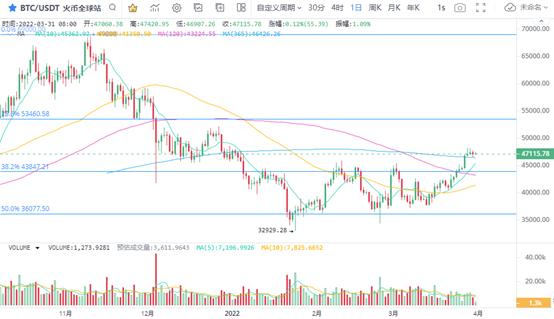
BTC近期站上了重要的365日均线以后,同时价格维持在斐波那契38.2%对应的43847美元上方。这表明,价格以及处获利盘较多的状态。同时,赶猪道近3个交易日的价格表现稳定,横盘整理取代持续反弹走势。交易量方面持续稳中回落迹象,因此需要注意回调表现。支撑方面,可关注斐波那契38.2%对应的43847美元上方的机会。
2、消息面解读:

3月29日报道,俄乌第五轮谈判结束,共持续3小时。俄罗斯代表团团长梅津斯基表示,俄乌会谈是具建设性的。俄罗斯正在采取两项措施缓和乌克兰冲突。

双方谈判将于4月1日以视频方式恢复,一周后两国代表团将制定更加详细的条约草案,同时推动尽快实现俄乌总统会面。因此,俄乌局势没有根本改观的情况下,依然影响市场走向。

美联储本月宣布四年来的首次提高利率,开启了新一轮加息周期,以抗击当前处于40年高位的通胀。但瑞士信贷(Credit Suisse)的研究分析师指出,即使在美联储明年年底前完成所有10至11次25基点的加息计划后,美国通胀仍可能居高不下。

如果分析属实,通胀加剧大宗商品等价格上行,BTC的也将可能在通胀行情里受益,从而持续较大放大的上涨。

3、龙虎榜:

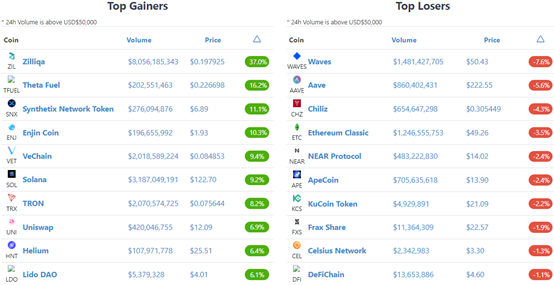
龙虎榜涨幅靠前币种里,ZIL因为元宇宙概念,价格连续爆发,24小时涨幅达到了37%。相关币种里,涨幅靠前的还有ENJ。公链SOL、VET和TRX表现不俗。DeFi概念币中,SNX、UNI等涨幅较大。与ETH2.0质押有关的LDO表现强势。
涨幅榜

涨幅排名靠前的币种里,公链出现的频率较高。SOL、VET、ZIL和TRX表现较好,价格上涨空间在9.2%、9.4%、37.0%和8.2%。ZIL和TFUE领涨

ZIL

ZIL发布元宇宙平台MeTapolis以后,价格持续了强劲上涨。据悉,4月2日,ZIL将在迈阿密举办活动,活动正是为了MeTapolis平台。或许,ZIL行情发展与投资者对其参与元宇宙的良好预期有关。

价格表现上,ZIL在3月26日强劲突破以后,近2个交易日的振幅达到了84%和24%,累计最高涨幅可高达3.5倍。考虑到短期交易量极高,处在非常活跃的交易状态。同时,4小时量价提升抛压还未显著释放,关注其市上涨机会。

TFUEL

Theta 是世界上第一个利用区块链技术解决流媒体和视频点播缺点的去中心化视频网络。Theta Network 为最终用户提供了卓越的流媒体、视频平台更低的成本以及转播者自愿提供带宽的奖励;各方都受益于 Theta 模型。

TFUEL为生态代币之一,是生态中的GAS费用,为链上操作提供动力。从交易热度上看,TFUEL近期活跃度提升,反弹动力明显增强。接下来可关注THETA生态的发展,以及GAS费用的使用情况,确认价格涨幅空间。

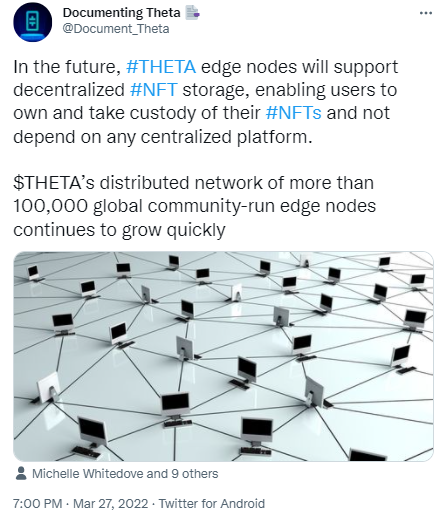
消息面,未来THETA edge节点将支持去中心化的NFT存储,使用户能够拥有和保管他们的NFT,而不依赖任何集中的平台。THETA的分布式网络由超过10万个全球社区运行的边缘节点组成,继续快速增长

受此影响,THETA生态的TFUEL反弹排名达到了第二位。
LDO

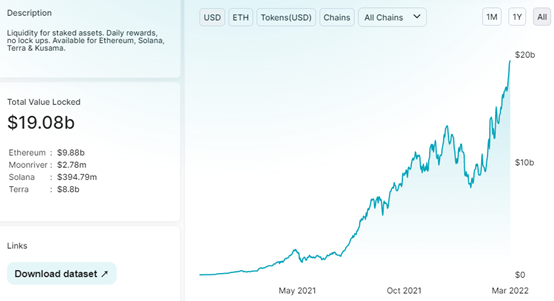
涨幅排名靠前的LDO为以太坊2.0质押流动性解决方案,其TVL增长迅速,数量超过了190.8亿美元。其中,ETH质押规模更是超过了100亿美元。从用途上看,LDO除了应用在以太坊2.0以外,还在Solana生态、波卡生态、Polygon生态以及Terra生态上有应用前景。作为解决质押流动性问题的LDO,其价格涨幅预期值得关注。

Lecturas Relacionadas

The Truth Behind Digital Banking: The Fragile Ecosystem Supporting 1.46 Billion Users

The article "The Truth About Digital Banks: The Fragile Ecosystem Behind 1.46 Billion Users" provides a data-driven analysis of the digital banking sector based on a verified list of 368 active neobanks as of July 2026. While these platforms collectively serve 1.46 billion users, with Asia (817 million users) and institutions like WeBank and Nubank dominating the landscape, the sector faces significant structural vulnerabilities. A key finding is that only 127 of the 368 neobanks hold full banking licenses. The majority operate atop third-party infrastructure providers like Banking-as-a-Service (BaaS) platforms, creating systemic risk where the failure of a single provider, as seen in past cases like Wirecard and Synapse, can jeopardize multiple consumer brands. Furthermore, the industry experiences a steady, quiet stream of failures, mergers, and shutdowns that often go unreported. The analysis also examines the adoption of artificial intelligence (AI), finding only 67 platforms (18%) have deployed AI at scale, with many innovators based in emerging markets like Nigeria and the Philippines. The infrastructure layer is highly concentrated, with 106 providers supporting the entire ecosystem of 368 consumer-facing brands. The article concludes with three predictions: the unlicensed gap will close through acquisitions or exits; an AI credit model is likely to fail in the next economic downturn; and a nascent but significant trend is the emergence of financial services designed for AI agents rather than humans.

marsbitHace 12 min(s)

The Truth Behind Digital Banking: The Fragile Ecosystem Supporting 1.46 Billion Users

marsbitHace 12 min(s)

Digital Asset Trading Platform Uphold Cuts 17% of Global Workforce Amid 'Crypto Winter'

Cryptocurrency trading platform Uphold has laid off approximately 17% of its global workforce, affecting 85 full-time employees and contractors. The cuts are part of a strategic shift to reallocate resources towards its rapidly growing corporate services business, as retail cryptocurrency trading activity has declined amid the ongoing market downturn. CEO Simon McLaughlin stated the company is restructuring after years of significant growth and remains confident in the long-term prospects of digital assets and blockchain technology. Founded in 2015, Uphold offers trading and custody services for cryptocurrencies, fiat, stocks, and precious metals. It has recently expanded to provide infrastructure for banks, fintech firms, and broker-dealers to integrate crypto services. The layoffs occur against a backdrop of a prolonged crypto market slump, with total market capitalization falling to around $2.1 trillion by Q2 2024. Factors include weakened trading volumes, reduced retail participation, interest rate hikes, geopolitical uncertainty, and net outflows from U.S. spot Bitcoin ETFs. Uphold clarified it is not shutting down its UK operations or any international offices. The company highlighted strong growth in its corporate platform and announced plans to evolve its consumer app into a broader blockchain-based financial assistant by 2026, offering U.S. stocks, tokenized securities, lending, credit cards, and DeFi yield opportunities.

cryptonews.ruHace 13 min(s)

Digital Asset Trading Platform Uphold Cuts 17% of Global Workforce Amid 'Crypto Winter'

cryptonews.ruHace 13 min(s)

Has the Crypto Utopia Collapsed? The Industry Reaches an Inflection Point After the Frenzy Subsides

Has the crypto utopia collapsed? The industry is at an inflection point as the hype fades. The prevailing view is that crypto has become an outlet for excess liquidity, with many participants leaving as financial returns have fallen short of past-decade expectations. The 2021 boom has been revealed as an illusion, placing the industry in the "trough of disillusionment" on Gartner's Hype Cycle. This forces a return to first principles: re-evaluating token value, securing DeFi protocols, and finding real-world applications. The core failure is a repetitive cycle of reflexive speculation, driven by the premature liquidity of tokens. The industry's incentives prioritized short-term gains over genuine innovation. While curiosity drives invention, recent DeFi hacks signal a need for engineering and iteration, including token models. The culture is shifting; the industry is no longer in its early stages. Positioned at a turning point on the technology adoption curve, crypto faces the immense challenge of rebuilding finance from scratch, a process of inevitable iteration and failure. Regarding crypto VC, claims of its death are overstated. The exceptional returns of 2016-2021 were an anomaly. The initial crypto-anarchist ethos has largely been co-opted by Wall Street and regulators. The utopian vision is over; the industry is being assimilated into the existing system, becoming a business. Current viable project categories include stablecoins, prediction markets, tokenized assets/RWA, perpetual contracts, and AI/agent integration. Crypto is converging with fintech, far from the envisioned DeFi revolution, and must find killer apps within regulatory boundaries. A reconciliation is possible: cryptocurrency may change value storage and transfer in subtle, imperceptible ways that integrate into existing systems, rather than through revolutionary fanfare. True creativity often emerges from adversity. There remains much to build for those driven by genuine curiosity.

marsbitHace 27 min(s)

Has the Crypto Utopia Collapsed? The Industry Reaches an Inflection Point After the Frenzy Subsides

marsbitHace 27 min(s)

Trading

Spot
活动图片