Bankless:新型稳定币——加密稳定币的草莽时代

MarsBitPublicado a 2023-03-02Actualizado a 2023-03-02

Resumen

一种新的特定于应用程序的稳定币可能正是DeFi所需要的。DeFi协议正在采取行动。

一种新的特定于应用程序的稳定币可能正是DeFi所需要的。

“”

DeFi协议正在采取行动。

“”

随着基于收费的业务模式的佣金下降和链上活动的枯竭,蓝筹DeFi协议正在寻求建立替代收入来源,以实现协议的多样化和强化。

“”

我们已经看到了这种扩张的早期迹象,比如Frax建立了流动性质押和借贷产品,Ribbon开发了期权交易所,Maker使用Spark Protocol进入了借贷领域。

“”

现在,我们有了一种新的多样化形式,即特定于应用程序的稳定币,它指的是由DeFi协议发行的稳定币,作为它们的次要产品,而不是主要产品。

“”

这些稳定币通常以信贷的形式发行,用户可以直接在借贷市场或通过DEX借入他们的资产,以铸造稳定币。协议可以通过各种方式从中赚取收入,例如通过借款利息、发行/赎回新单位、挂钩套利和/或平仓。

“”

正如我们所知,稳定币领域是巨大的。目前,加密生态系统中有1450亿美元的稳定币,未来的潜在市场将达到数万亿美元。
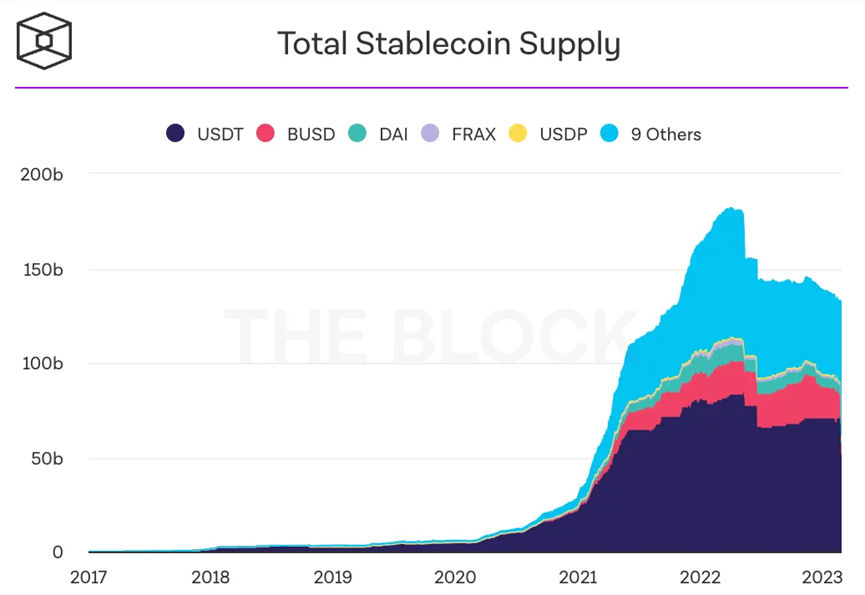
随着监管机构瞄准中心化、以法币担保的稳定币(如BUSD), DeFi协议可能会打开一个窗口,不仅可以使其业务模式多样化,还可能会窃取一部分市场份额。

“”

许多人会指出DAI和FRAX是最有可能从USDC和USDT中分一杯羹的候选人,但一些特定于应用的稳定币会起到破坏作用吗?

“”

这一趋势将对市场和DeFi产生什么影响?让我们一探究竟!

“”

GHO和crvUSD

“”

推出稳定币的两个最著名的协议是Aave和Curve,分别发行GHO和crvUSD。让我们简单了解一下这些稳定币的原理。

“”

GHO

“”

GHO是由Aave发行的去中心化稳定币。GHO是超额抵押,因为它由Aave V3的存款支持,用户可以直接在货币市场上铸造稳定币。

“”

GHO的独特之处在于,它不像Aave中的其他资产那样由算法决定利率,它的借款利率将由治理手动设置。这使得Aave完全控制了铸造/借用GHO的成本,从而使DAO有可能削弱其竞争对手。
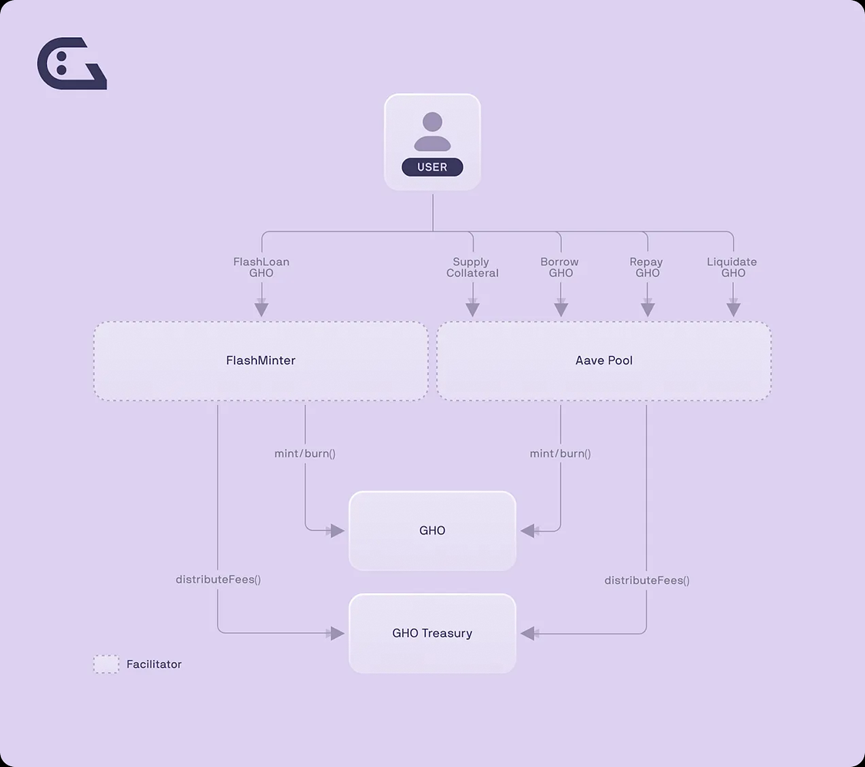
在未来,除了Aave V3之外,GHO还可以通过被称为facilators的白名单实体从其他场所铸造。这些facilators可以基于各种类型的抵押品铸造GHO ,包括delta-中性头寸和现实世界资产。

“”

我们以前见过类似的稳定币设计,比如Frax的借贷AMO和Maker的D3M。但GHO的增长前景非常强劲,这得益于Aave的内置用户基础、品牌、团队的业务开发技能,以及价值1.309亿美元的庞大DAO资金库(尽管其中大部分是AAVE代币)。

“”

GHO目前已在Goerli测试网上上线,并计划于2023年晚些时候推出。

“”

crvUSD

“”

crvUSD是由Curve发行的去中心化稳定币。关于稳定币的许多细节都被保密,但我们知道crvUSD将利用一种被称为借贷清算AMM算法(LLAMA)的新机制。

“”

LLAMA采用了一种“更友善”的清算设计,随着用户抵押品的价值下降,逐渐将其互换为crvUSD,而不是一下子完全清算用户的头寸。
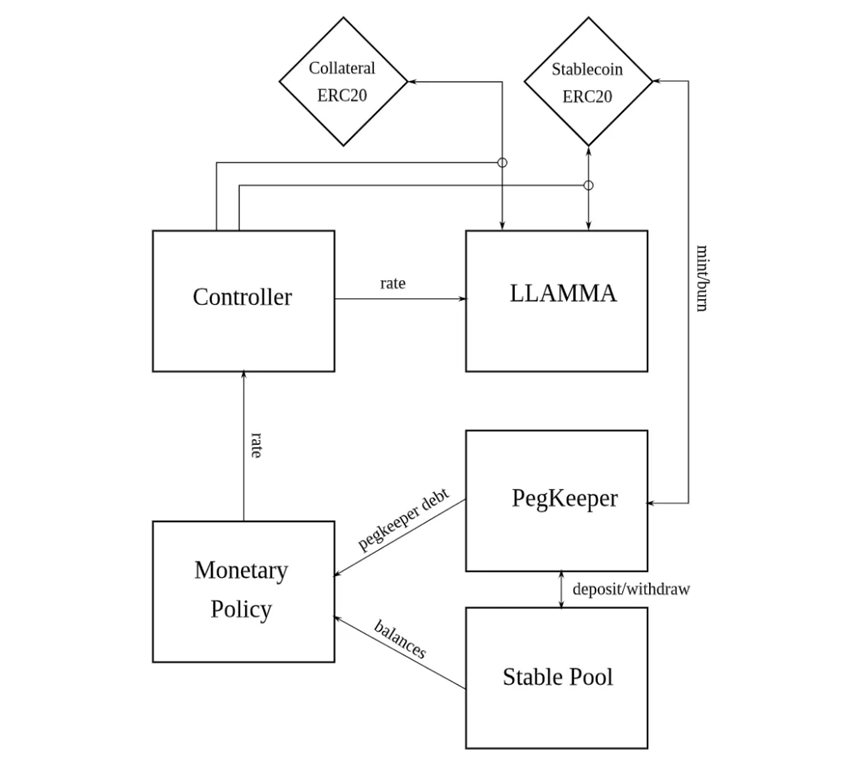
总而言之,LLAMA应该有助于大大降低惩罚性的清算,而这种对借款人的用户体验的改善,可能会增加以crvUSD计价的CDPs的吸引力。

“”

关于支持的抵押品类型和crvUSD在生态系统中的作用的细节很少,但稳定币很可能会由Curve池的LP代币铸造。这将有助于提高在平台上提供流动性的资本效率,因为LP也可以通过将他们的crvUSD部署到DeFi中获利。

“”

crvUSD也应该受益于Curve的计量系统,该系统用于分配CRV释放,并通过这样做来分配DEX的流动性。很有可能这些释放的一部分将被分配到crvUSD池,或者crvUSD将成为其他稳定币基对的一部分,从而帮助它轻松建立深度流动性。

“”

现在我们已经了解了特定于应用程序的稳定币的现状,让我们深入研究这将对市场产生的影响。

“”

发行DAO的(理论上的)收入增加

“”

受特定于应用程序的稳定币影响最直接的一方是发行协议本身。从理论上讲,创建稳定币可以加强发行协议的商业模式,因为它为他们提供了额外的收入来源。

“”

目前,像Curve和Aave这样的协议分别依赖于交易费用和基于利用率的贷款利息。在这次熊市中,这些收入来源的低质量性质已经变得很明显,因为由于竞争加剧,交易和贷款活动减少,费用压缩,导致收入急剧下降。

“”

协议内稳定币的发行改变了这种动态,因为现在协议将能够获得额外的收入来源,以提高其收入。尽管利息收入仍然是周期性的,因为它取决于借款需求,但相对于交易费用或货币市场上的利差,它的产生效率更高(即TVL有更高的回报)。

“”

虽然这种利息收入可能也会受到类似的费用压缩(后面会详细介绍),但从理论上讲,它仍有潜力通过其他手段(如铸造/赎回费用、挂钩套利和清算)使收入组合多样化,并加强底层协议的护城河。

“”

*潜在*代币持有者的价值收益

“”

从特定于应用程序的稳定币热潮中受益的另一方是发行协议的代币持有者。

“”

虽然这取决于每个单独的协议,但任何收入分成都将增加持有或锁定代币的持有者可以获得的收益。

“”

在熊市中,我们已经看到GMX和GNS等收益分享资产表现出色,发行稳定币,然后与持有人分享收入,将使他们的代币更具吸引力,这样做会增加他们跑赢大市的几率。

“”

例如,Curve很可能会与veCRV储物柜分享crvUSD收入,这意味着储物柜将获得交易费用、治理贿赂以及现在基于稳定币的现金流的份额。

“”

考虑到这种方法存在的监管风险,发行协议也有可能以其他方式为其代币增加效用。例如,AAVE的质押者将能够以相对于平台上的其他用户的折扣价借入GHO。

“”

贿赂与流动性碎片化

“”

稳定币成功的最关键因素之一是具有深度流动性。流动性是任何稳定币的命脉——它不仅能够实现低滑点交易,而且还有助于促进整合,因为流动性是贷款平台清算和确保有价值的基础设施(如ChainLink 预言机)所必需的。

“”

特定应用稳定币对流动性的需求可能有助于支撑治理贿赂市场。

“”

在Curve战争推动下,稳定币发行人可以通过贿赂或向代币持有者支付,在Curve和Balancer等去中心化交易所为其代币建立流动性,以确保他们对将释放量定向到选定池的投票。

“”

通过贿赂,发行者能够在需要的基础上租用所需场所的流动性。大量特定于应用程序的稳定币可能会导致更多的DAO玩这个游戏,并贿赂这些代币持有者。

“”

反过来,这应该会增加CRV和BAL以及CVX和AURA的储物柜的收益,他们通过元治理分别控制了Curve和Balancer上的大部分释放,并接受了大部分贿赂。

“”

这种贿赂热潮的另一个受益者是为这些交易提供便利的市场,例如Cartel’s Hidden Hand和Votium。

“”

然而,这种贿赂将以流动性碎片化的形式让终端用户付出代价。在一个几乎没有资金流入迹象的加密货币市场,流动性在各种不同的稳定币之间可能会变得更分散,导致鲸鱼交易员的执行力更差。

“”

信贷繁荣

“”

特定应用稳定币的增长也可能通过导致低借款利率的激增来催化DeFi信贷热潮。

“”

为了与USDC、USDT、DAI和FRAX等现有稳定币竞争,Aave和Curve等稳定币可能不得不以低借款利率提供GHO和crvUSD,以吸引用户制造新单位以增加其流通供应量。

“”

从理论上讲,这种低利率驱动的信贷繁荣可以刺激DeFi和加密市场的广泛发展,收益农民和degens都能够以令人难以置信的低利率举债。它还可能开辟有趣的Crypto TradFi套利机会,因为用户可能能够以远低于美国国债支付的利率借入稳定币。

“”

我们已经看到了Maker等稳定币发行人对这种新范式进行调整的早期迹象,Maker将通过Spark (Maker控制的Aave V3分叉)以1%的DAI储蓄利率(DSR)提供DAI借款。

“”

虽然这种借贷利率的降低可能会损害Aave和Curve等发行协议的底线,但它可能有助于满足一个在2022年CeFi贷款机构崩溃后急需信贷的市场。随着利率大幅高于DSR,以及稳定币(如GHO)可能的借款利率,加密货币将成为世界上最便宜的信贷市场之一。

“”

DeFi的野猫时代

“”

野猫银行(Wildcat banking)是美国历史上各银行发行自己货币的时期。正如我们所说,DeFi正在加速金融的历史,并且有了GHO和crvUSD等稳定币,似乎即将沿着类似的轨迹开始。

“”

虽然他们不太可能超越DAI和FRAX等更有优势的现有公司,但GHO和crvUSD受益于与其发行协议的集成,并可以开拓出一个利基市场。

“”

虽然从理论上讲,这些稳定币将有助于加强发行者的商业模式,并为代币持有者增加价值,但由于“逐底竞争”,它们不太可能这样做,在这种情况下,发行者将在利率上相互削弱,以向借款人提供尽可能便宜的信贷。

“”

因此,这些低利率很可能催化信贷繁荣,以廉价资本刺激链上经济。

“”

在过去一年资金成本急剧上升的世界里,这有可能将DeFi定位为地球上成本最低的资本市场之一,也许会重新点燃人们的兴趣,并导致资金流入这个生态系统。

Lecturas Relacionadas

Ethereum Startup EthSystems Bets on Privacy as Key to Luring Banks to Public Blockchains

EthSystems, a startup spun out of the Ethereum Foundation, posits that privacy, not scalability, is the primary barrier preventing financial institutions from adopting public blockchains. The company builds privacy infrastructure for banks, asset managers, and governments looking to use Ethereum for tokenized assets, stablecoins, and other financial applications. Unlike projects creating new blockchains, EthSystems helps institutions deploy privacy technologies directly on Ethereum, keeping transaction data confidential while settling on the mainnet. Co-founder Mo Jaleel explains that financial institutions require control over who sees transaction data, not necessarily anonymity. While competitors like Canton Network and protocols like Aztec also work on private transactions for enterprises, EthSystems differentiates itself by advising on architecture, building custom infrastructure, and publishing open-source research. It aims to collaborate with existing privacy projects rather than rebuild the entire stack. The decision to become a commercial entity stemmed from institutional demand for production-ready solutions, which the team couldn't fulfill within the non-profit Ethereum Foundation. According to Jaleel, operating as a business facilitates funding and participation in large institutions' procurement processes. He notes a shift in client conversations from experimental innovation teams to core business units now seeking to place real assets and financial flows on-chain. EthSystems argues that the key to bridging public blockchains and institutional needs lies in cryptography and privacy.

cryptonews.ruHace 4 min(s)

Ethereum Startup EthSystems Bets on Privacy as Key to Luring Banks to Public Blockchains

cryptonews.ruHace 4 min(s)

Russia Establishes New Rules for Digital Depository Ahead of Cryptocurrency System Deployment

Russia is creating new rules for digital depositaries ahead of the launch of its cryptocurrency system. The proposals will extend existing securities market regulations—covering trading, custody, record-keeping, and disclosure—to digital assets. Within this framework, regulated "digital depositaries" will be established to register holdings of cryptocurrency and other digital assets. Their capital requirements will range from 50 million rubles ($570,000) to 250 million rubles ($2.8 million), depending on services provided. Settlement depositaries require the highest capital (250 million rubles), with lower thresholds for firms controlling crypto addresses or using foreign depositaries (100 million rubles) and for other digital depositaries (50 million rubles). Assets counted toward capital must be liquid and meet the central bank's credit quality standards. These rules will also apply to operators of electronic platforms trading digital financial assets. The Bank of Russia will maintain registers for these depositaries, crypto exchange operators, and issuers of digital financial assets. The regulations are based on a digital assets bill passed by parliament in July, with the full crypto system expected by September. The proposals are currently open for public feedback. This announcement follows the European Union's latest sanctions package targeting 14 crypto firms.

cryptonews.ruHace 6 min(s)

Russia Establishes New Rules for Digital Depository Ahead of Cryptocurrency System Deployment

cryptonews.ruHace 6 min(s)

The Disappearing Buy Button

"The Vanished 'Buy' Button" In June 2026, major Chinese online brokers Futu and Tiger were barred from allowing mainland Chinese users to purchase or deposit funds for US stocks, following a multi-department regulatory crackdown. This move, part of China's long-standing capital controls, aims to stem the outflow of domestic capital to support the development of local technology sectors, particularly in AI, where China perceives itself to be lagging. The restriction highlights a growing divergence between national economic strategy and individual investor needs. With slowing wage growth and a deflating property market, Chinese retail investors saw US tech stocks—which dominate global indices and capture a quarter of global economic growth—as a crucial avenue for wealth preservation. Domestically, the A-share market has only recently seen its technology sector surpass the long-dominant financial sector in index weight, reflecting a state-directed shift toward "new quality productive forces." The crackdown mirrors past actions against cryptocurrencies and tech deals, prioritizing financial stability and onshore control. It also aims to funnel liquidity and listings to Hong Kong and mainland exchanges to retain economic sovereignty. This regulatory gap creates an opportunity for decentralized finance. The emerging narrative shifts from "banking the unbanked" to "brokering the unbrokered"—using crypto and tokenized real-world assets (RWAs), like stocks, to provide global access to productive assets for those excluded by traditional finance, from Chinese散户 to users in other restricted markets. Simultaneously, the AI era is reshaping global capital flows. US tech giants act as "macro hedge funds," issuing cheap foreign-currency debt to fund expansion, leveraging their superior credit. However, non-US AI supply chain players (e.g., in semiconductors) are also rising. The competition for asset ownership and low-cost financing rights is intensifying, making access to capital a new societal divide as AI devalues routine intellectual labor. Finance remains in the "business of hope," but its gates are being redrawn.

marsbitHace 16 min(s)

The Disappearing Buy Button

marsbitHace 16 min(s)

According to Strategy, MSTR Has Delivered an Annual Return of 42% Since Adopting the 'Bitcoin Standard,' Even Though Its Treasury Is Underwater

According to Strategy (formerly MicroStrategy) Executive Chairman Michael Saylor, the company's stock MSTR has delivered a 42% annualized return since August 10, 2020, when it adopted its "Bitcoin standard" strategy. This performance surpasses that of Bitcoin itself, the "Magnificent Seven" tech stocks, and the S&P 500 over the same period. Saylor frequently highlights this to demonstrate the success of transforming the software firm into a leveraged Bitcoin investment vehicle. Despite this strong long-term stock performance, Strategy's core Bitcoin treasury position is currently at a loss. As of July 29, the company holds 843,775 BTC, purchased for an average of $75,476 per coin, implying an unrealized loss of approximately $11.4 billion. The disparity arises because MSTR stock acts as a leveraged proxy for Bitcoin, allowing for high annualized returns over a multi-year period even when recent purchases are underwater. To address its increasingly complex capital structure, which now includes multiple classes of preferred stock, Strategy introduced a new reporting framework on July 24. Key metrics include "Net BTC per Share," "$BTC Hurdle ARR" (the annual Bitcoin yield needed to cover financing costs), and "$BTC Floor ARR" (the minimum yield to maintain a sustainable leverage ratio). The company continues to accumulate Bitcoin and recently bolstered its dollar reserves by $525 million to strengthen coverage for preferred stock dividends.

cryptonews.ruHace 16 min(s)

According to Strategy, MSTR Has Delivered an Annual Return of 42% Since Adopting the 'Bitcoin Standard,' Even Though Its Treasury Is Underwater

cryptonews.ruHace 16 min(s)

Trading

Spot
活动图片