V神担心的事还是发生了!阿蟹的跨链桥被黑6亿美金,意味着什么?

白话区块链Publicado a 2022-03-30Actualizado a 2022-03-30

Resumen

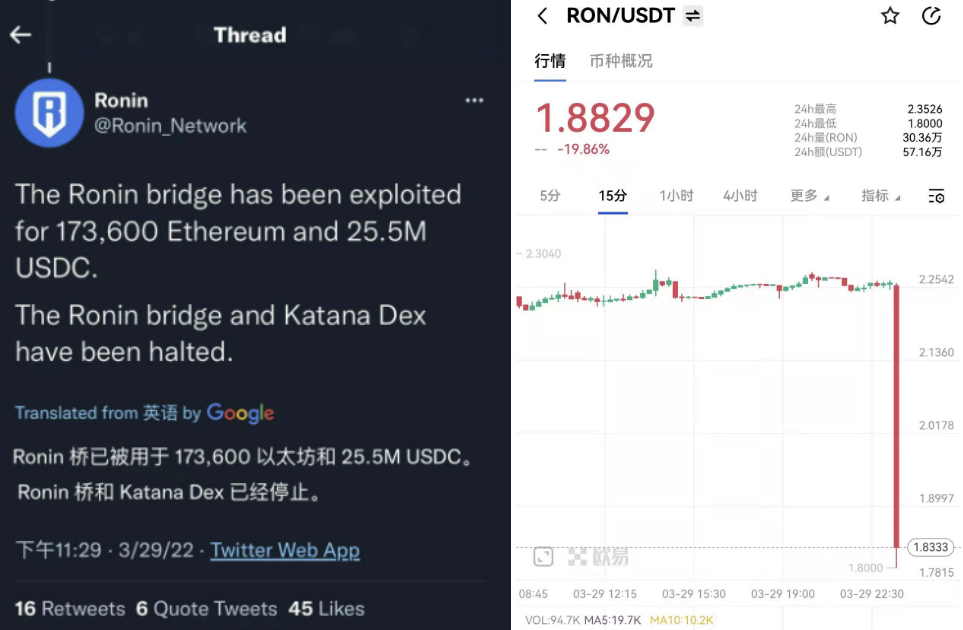
今天一大早,社群又炸锅了,原来是阿蟹的Ronin桥被黑,属于用户的6亿美金已躺在黑客的钱包里了,而且还是6天前被黑现在才被发现。

今天一大早,社群又炸锅了,原来是阿蟹的Ronin桥被黑,属于用户的6亿美金已躺在黑客的钱包里了,而且还是6天前被黑现在才被发现。

“又是桥,又是相似的6.x亿美刀,关键6天前出事,项目方今天被第三方通知了才知道的,看得我脑壳疼…大无语”,加密KOL@神鱼er在微博无奈评论道:“完犊子了,桥6天前被黑了,非原生链上资产等于空气了TheRoninbridgehasbeenexploitedfor173,600Ethereumand25.5MUSDC.”
在Ronin团队进行”抢救”的同时,除了担心资金能不能要回来之外,大部分人或许更关心的是,跨链桥再次出现严重事故意味着什么?我们目前看到的至少有以下几点。

01

以太坊“安全第一”的路线是正确的

众所周知,以太坊扩容的解决方案和升级路线一度因为追求“极致安全性”导致过程过于漫长而饱受诟病,许多人以此为由批评以太坊这么多年来“毫无建树”、进度太慢,以至于被许多竞争“高速”链抢跑。

其实之所以以太坊解决扩容问题的进度慢,除了“船大难掉头”的原因之外,更多是因为以太坊社区遵循的“安全第一”的线路,在安全性上绝不妥协,每次硬分叉重要升级都要反复长期的测试后才能正式上线。

事实上以太坊联合创始人V神不止一次质疑并批评跨链桥潜在的安全性问题。最近一次V神表达对跨链桥方案安全问题的担忧是在今年1月份,他在参加在一档线上采访节目时提到在单链中,您可以方便的恢复链,每个人都可以把资产恢复到初始状态。在多条链的情况下,如果资产出问题了,链的恢复问题就很大。更早些时候,V神推特上转发了一个Reddit帖子链接,其中他讨论了对多链未来的信念,但对跨链生态系统表示怀疑。VitalikButerin认为“跨链桥存在基本安全限制”。
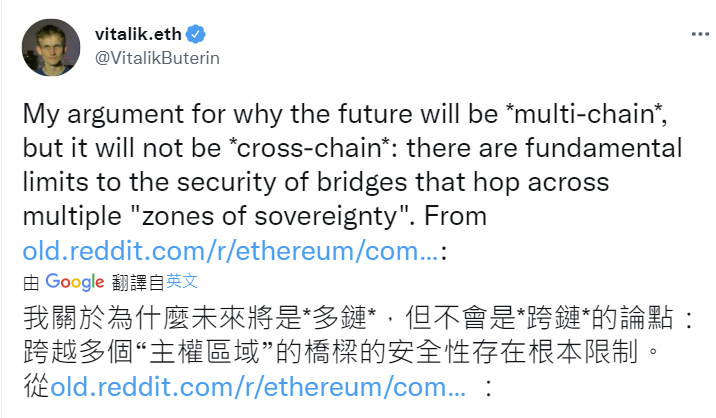
而对于以太坊,V神在文章中表示,在51%攻击的情况下,攻击者不能提出一个带走某人ETH的区块,因为这样的区块会违反共识规则,因此会被网络拒绝。换句话说,他认为,即使99%的算力被用于非法拿走另一个钱包的ETH,节点也会简单地遵循剩余1%的链,因为它是唯一遵循协议规则的区块集,因此“诚实”的区块将始终保持状态的一致性。

02

以太坊Layer2比高速链更有竞争力

在所有智能合约公链中,以太坊最安全一直是一个共识。包括阿蟹的Ronin的POS侧链在内的许多“高速链”发布的理由都是为解决以太坊的“高费低速”问题,但大部分“高速链”为了性能的提升或多或少都在安全性上做出了一定程度的妥协。

去年10月份,以太坊线路图更新为以Rollup构建为中心以后,几个RollupLayer2方案便备受关注。截至目前,以太坊主要Layer2网络总TVL已经超过70亿美金。由于大部分情况下Layer2直接继承了以太坊主网的安全性的同时又能获得媲美高速链的性能。

到目前为止,除了Layer2几个方案进度稍慢一点之外,一些进展比较快的Layer2已经获得良好的表现,高速链应该已经感受到压力了。早前就有不少人提到过,未来以太坊Layer2将会与高速链直接竞争。

另外,同为多签侧链的PolygonPos侧链现在是否已经在瑟瑟发抖了?希望Polygon能尽快升级这个临时方案。
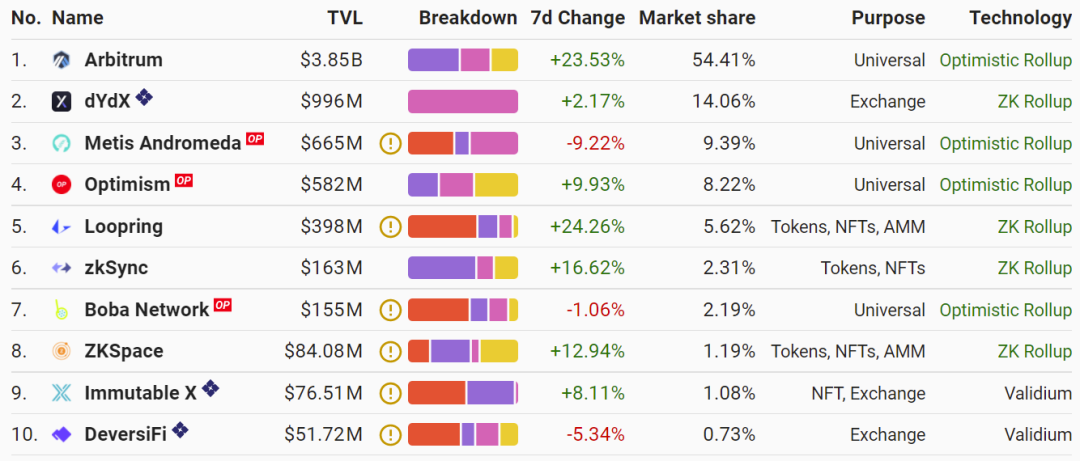
来源:L2beat

03

使用成熟的独立链解决方案会更安全

追溯阿蟹的发展历史,早前是在LoomNetwork这个以太坊侧链上的一个DApp,由于该侧链进展问题,又迫于游戏迅速发展情况下的迫切需求才自行开发的Ronin侧链,或许就在这个时候埋下的“隐患”。

相比项目开发团队自行研发技术解决方案,其实很多时候不如采用成熟的解决方案而不是重复造轮子,比如说通过CosmosSDK现成的方案来开发高速链再桥接到以太坊上,目前已经有诸如主流平台公链、Luna、Aragon、KAVA等均已长期验证了CosmosSDK的安全性。
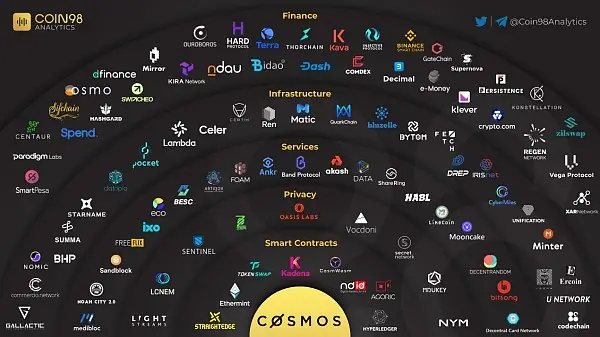
来源:Coin98Analytic

所以,如果Ronin当时不用重复造轮子,而是采用成熟的解决方案,或许安全性会更高的同时,成本更低。

04

侧面解释了为什么大多数

NFT都要以太坊链上

一直以来,有一些人很不解以太坊又慢、手续费又贵,为什么主流的NFT都要发布在以太坊上?现在答案来了,那就是以太坊更安全,并且的同时生态更庞大,开发者和用户数都最多。之前不少团队在高速链上发布了GameFi,又总是都要跨链到以太坊上来的原因就在这里,记得有一个项目方曾经这样说:“资金大的用户,很多都只在以太坊上,只购买以太坊上的NFT。”
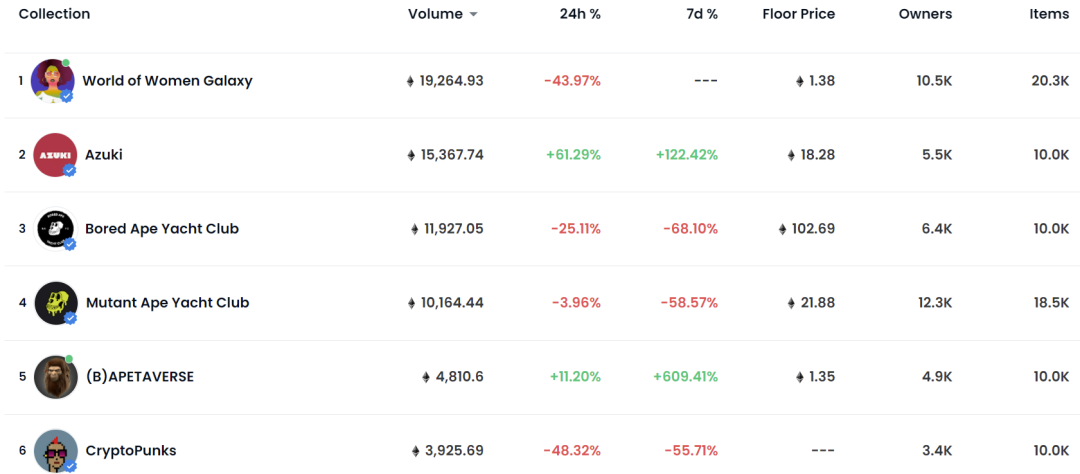
来源:Opensea

这里就要提到加密生态的“正统性”了,也就是V神早前发布文章《正统性是加密生态最稀缺的资源》中所提到的那样,加密资产之所以强大,是因为它使我们能够通过集体经济意愿召集大量资本,而这些资本在一开始就不受任何人的控制。相反,这些资本池是由正统性概念直接控制的。以太坊拥有非常丰富的应用层生态系统,我们在其中拥有更大的灵活性。部分原因是因为不仅有机会可以影响现有项目,还可以塑造将来将要出现的新项目。

05

小结

在过去的数年里,由于以太坊和比特币的性能欠缺,加密世界出现了很多扩容方案想要解决它们的问题,但最后我们得以验证,对于区块链和加密项目来说,安全始终应该是第一位的,要在保证了安全性的前提下再去提升性能。也只有这样才能成为加密世界的“常青树”。

别忘了,加密世界的初心是什么。

参考资料:

VitalkReddit:https://old.reddit.com/r/ethereum/comments/rwojtk/ama_we_are_the_efs_research_team_pt_7_07_january/hrngyk8/

VitalikButerin’swebsite《TheMostImportantScarceResourceisLegitimacy》https://vitalik.ca/general/2021/03/23/legitimacy.html

Lecturas Relacionadas

LeCun Continuously Endorses, New Work VISReg Tackles the Core Challenge of 'Representation Collapse' in JEPA World Models

"VISReg: A New Self-Supervised Learning Method Tackles Representation Collapse in JEPA World Models" Yann LeCun has highlighted the new self-supervised learning (SSL) work VISReg (Variance-Invariance-Sketching Regularization), which addresses the core challenge of "representation collapse" in JEPA-based world models. SSL often collapses, mapping different inputs to similar vectors, losing discriminative power. While methods like VICReg and SIGReg attempted to regularize the representation distribution, they suffered from issues like vanishing gradients during collapse or coupled scale and shape optimization. VISReg overcomes these by decoupling the regularization into independent "scale" and "shape" objectives. It uses a variance term to prevent amplitude collapse (providing constant gradient even during collapse) and a sliced Wasserstein distance (SWD) based sketching target with stop-gradient to align the distribution shape to an isotropic Gaussian, without interfering with scale. This approach, requiring only ~15 lines of PyTorch core code, offers linear computational complexity and scales efficiently across multiple GPUs. Evaluated across 15 datasets (in-domain, out-of-distribution/OOD, dense prediction), VISReg outperforms 7 mainstream SSL methods (MoCoV3, DINO, iBOT, I-JEPA, MAE, data2vec) without relying on heuristic tricks like EMA or stop-gradient. Key results include: superior average OOD accuracy; matching DINOv2's OOD performance using only ~1/10 of the data (ImageNet-22K vs. LVD-142M); better transfer learning fine-tuning results across multiple datasets; and competitive performance in semantic segmentation and generative guidance. VISReg also demonstrates robustness on low-quality data like long-tailed or low-rank datasets where other methods fail. The work provides a more stable, efficient, and generalizable regularization solution for SSL and JEPA models.

marsbitHace 10 min(s)

LeCun Continuously Endorses, New Work VISReg Tackles the Core Challenge of 'Representation Collapse' in JEPA World Models

marsbitHace 10 min(s)

Argentine Banking Groups Quietly Develop Peso-Pegged Stablecoins for the Institutional Market

Argentine banking groups are quietly developing peso-pegged stablecoins for the institutional market. While US dollar-linked stablecoins like USDC and USDT are popular in Argentina, fintech companies are now focusing on local alternatives. Two major initiatives are underway. The BIND Group, through its virtual asset service provider BEN, is developing a peso stablecoin and has partnered with Circle to offer institutional clients payment and treasury use cases. Separately, the Petersen Group is developing a stablecoin called DIPE via a subsidiary, supported by crypto-as-a-service company Lirium. Both projects are being advanced by entities backed by banking conglomerates, not the banks themselves, due to a Central Bank of Argentina ban from May 2022 prohibiting private banks from offering crypto services to clients. The primary target is the institutional sector, which could benefit from the programmable features of a digital peso for treasury management, event-triggered blockchain payments, and collateralized lending management. These initiatives could expand to private banks in the future if the central bank lifts its crypto ban. This development comes as regulators scrutinize existing crypto offerings; in March, the national securities regulator highlighted that the "argt peso" stablecoin was being offered as a security without proper compliance.

cryptonews.ruHace 17 min(s)

Argentine Banking Groups Quietly Develop Peso-Pegged Stablecoins for the Institutional Market

cryptonews.ruHace 17 min(s)

Pi Network Price Forecast: Can a $12 Million Robotics Bet Save PI From a New All-Time Low?

Pi Network (PI) price faces intense pressure, dropping to $0.07286 on July 28th (-5.60%). It is testing key technical support at the lower Bollinger Band ($0.07003), just above its all-time low. A close below this level would signal a likely plunge into uncharted territory with no established historical support underneath. The sell-off is fueled by viral market criticism regarding unclear tokenomics. An analysis by Mahidhar Crypto highlighted unanswered questions about Pi's total supply of 100 billion tokens, with only 16.8% currently minted/mainnet. This lack of clarity on the remaining ~83.2B tokens and the absence of a burn mechanism have created uncertainty, pressuring marginal holders to sell. Amidst the bearish sentiment, Pi Network Ventures participated in a $12M seed round for physical AI robotics startup Axis Robotics. While this signals ecosystem expansion beyond crypto, its direct impact on the PI token price is considered indirect at best against the dominant supply-side concerns. **Price Forecast Scenarios:** * **Bull Case:** PI holds above $0.07003, and the Pi Core Team addresses tokenomics concerns, shifting narrative to ecosystem growth. A recovery toward the Bollinger Band middle line at $0.08614 is possible. * **Bear Case:** PI breaks below $0.07003 support. Continued silence from the core team allows supply fears to persist, accelerating selling into price discovery with no floor below.

cryptonews.ruHace 21 min(s)

Pi Network Price Forecast: Can a $12 Million Robotics Bet Save PI From a New All-Time Low?

cryptonews.ruHace 21 min(s)

Trump's AI Plan Could Replace 50 State AI Laws With One Set of Rules

The Trump administration is reportedly close to establishing a national framework for regulating artificial intelligence. According to The Information, this initiative aims to replace the patchwork of approximately 50 differing state-level AI laws with a single, federal standard. The core proposal, outlined in the White House's National AI Policy Framework, would centralize AI policymaking in Washington, D.C., offering developers more consistent and transparent rules on issues like child safety, AI-generated deepfakes, and the use of regulatory sandboxes. This move addresses growing concerns that the current fragmented regulatory landscape, with states like Colorado, Texas, and California enacting their own rules, creates a compliance burden for AI companies. A unified federal system is intended to streamline regulations, allowing businesses to spend less time adapting to state laws and more time on innovation. The administration's strategy also includes an executive order signed by President Trump in June 2026, which focuses on enhancing cybersecurity for advanced AI systems. A major unresolved question in the proposal, however, is how to regulate open-source AI models. The framework does not clearly define an approach, despite expert warnings that such models pose unique governance challenges due to their free modification and distribution. While the fate of the legislative proposal in Congress remains uncertain, its existence signals Washington's intent to become the primary authority governing AI technology, a move that would have significant global implications given the dominance of U.S. firms in the AI sector.

cryptonews.ruHace 21 min(s)

Trump's AI Plan Could Replace 50 State AI Laws With One Set of Rules

cryptonews.ruHace 21 min(s)

Trading

Spot
活动图片