Ethereum’s future hinges on validators amidst declining interest and market trends

AmbcryptoPublicado a 2023-02-07Actualizado a 2023-02-07

Resumen

Ethereum network’s validator numbers remained steady despite bear market. Decreased whale interest, network growth, velocity, and trader sentiment raised concerns.

Validators on Ethereum [ETH] could play a significant role in the network’s future. New data on 6 February suggested that the number of new validators added to the network remained constant in 2022, even during the bear market.

""

Thus, there was interest amongst stakers, even in a volatile market. The upcoming Shanghai Upgrade was expected to further incentivize new validators to join the network.

""

Recent validator interest could be driven by the positive developments surrounding Ethereum.

""

Looking at the positives

""

A positive indicator for Ethereum was the declining number of addresses in loss, reaching a five-month low according to Glassnode.

""

However, despite this positive news, whale interest decreased over the last month. If large addresses decided to sell their investments, it could negatively impact retail investors.
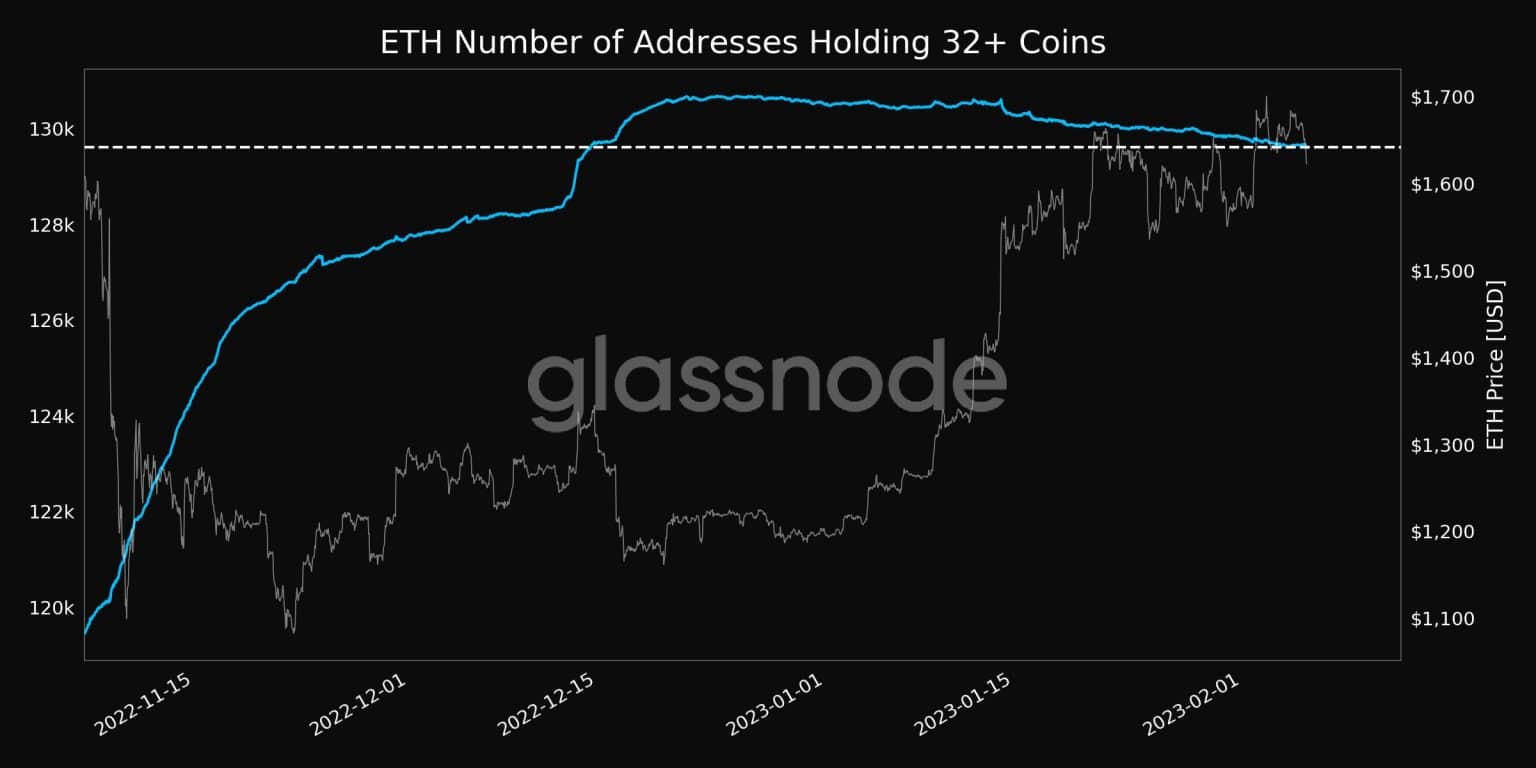
Source: glassnode

""

Having a look at Ethereum, on-chain

""

Ethereum’s declining network growth could be one reason for the decrease in whale interest, as there was a cutback in new addresses transferring ETH for the first time. This suggested that new addresses were not showing interest in the network.
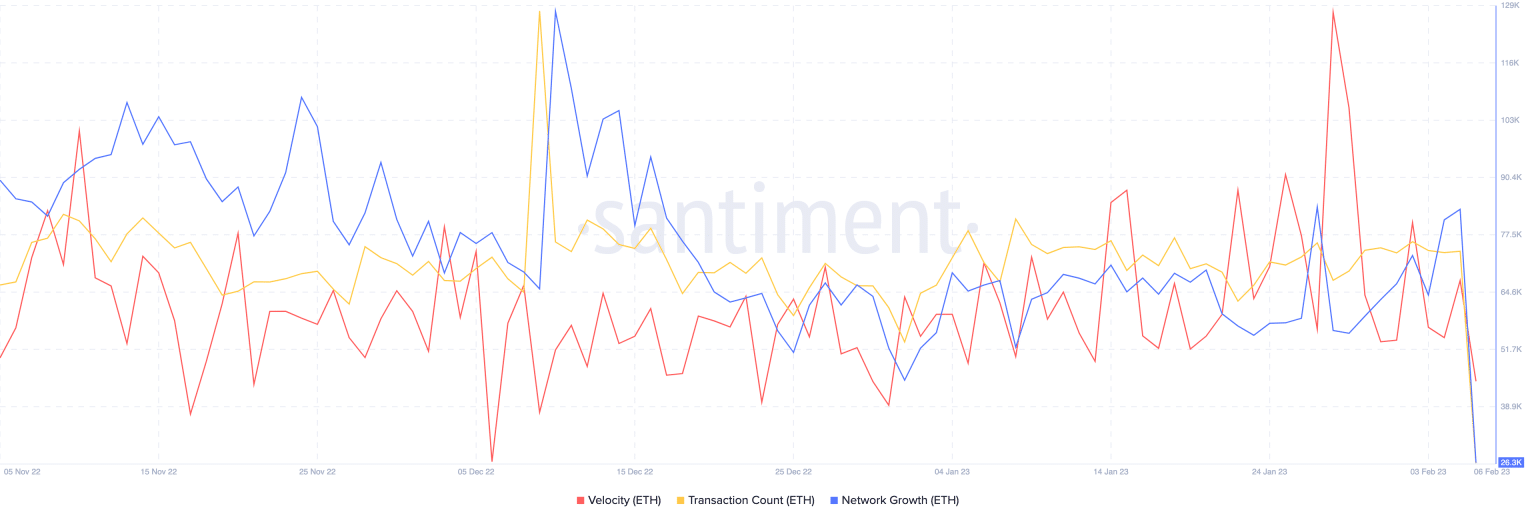
Source: Santiment

""

Another reason for the lack of whale interest could be the decline in Ethereum’s velocity, meaning that the frequency of ETH trades decreased.

""

Additionally, trader sentiment also turned negative during this period. Short positions against Ethereum increased, according to Coinglass. This surge in short positions increased after 1 February. At press time, the percentage of short positions against ETH was 51.57%.
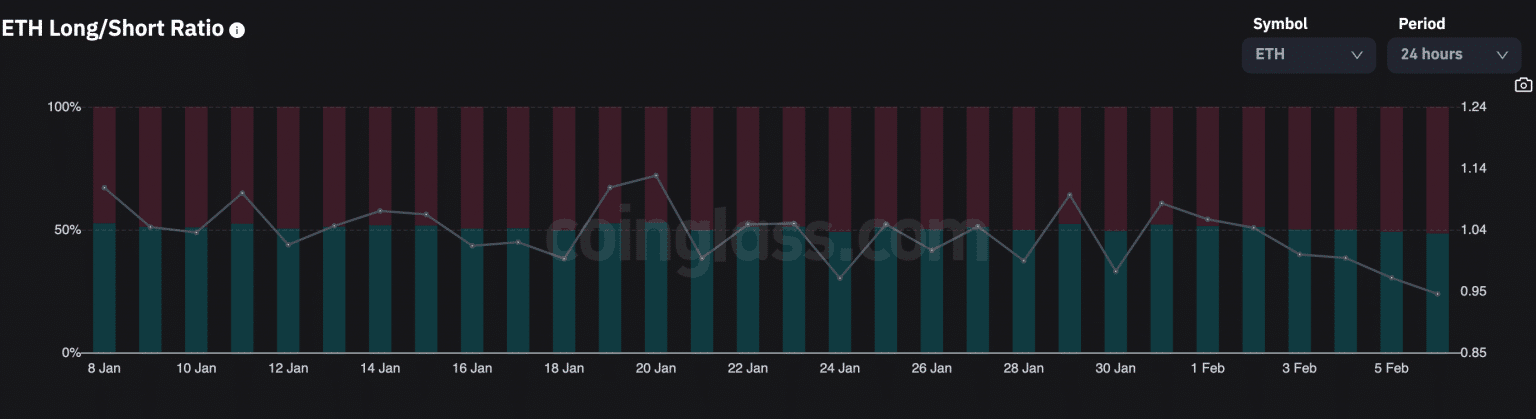
Source: Coinglass

""

Even though traders were pessimistic about Ethereum, a new development with Visa could improve the network’s odds of success. As per a 6 February tweet, Visa was using the Ethereum network to test USDT transactions.

""

The aforementioned partnership could help increase Ethereum adoption and improve sentiment among traders and whales.

""

Overall, the number of validators on the network and their continued growth, despite market volatility, suggested a promising future. The Shanghai Upgrade and Visa’s partnership are key indicators to watch out for, as they have the potential to positively impact the king altcoin’s adoption and its overall future.

Lecturas Relacionadas

The Full Story of How Crypto Unicorn Blockstream Is Mired in Serious Fraud Allegations

This article details serious allegations of fraud against Bitcoin infrastructure company Blockstream, founded by Bitcoin pioneer Adam Back. In June 2024, investigative account NatInfoSec published a report accusing Blockstream's mining note (BMN) program of potentially operating a multi-billion dollar scheme with Ponzi-like characteristics. The core allegations focus on Blockstream Mining Notes (BMNs), which offer investors fixed annual yields up to approximately 20% from Bitcoin mining. NatInfoSec's investigation raises several key issues: 1. **Suspicious Hashrate & Payout Capacity**: The analysis suggests Blockstream would need 20-45 EH/s of mining power to cover its BMN obligations, but its public dashboard shows only around 15 EH/s. Furthermore, no verifiable public evidence (e.g., grid connection records, import data) was found to support the massive mining operation required. 2. **Questionable Payout Source**: The BMN contract allows Blockstream to use Bitcoin from *any source* (Substitute Performance BTC) to fulfill investor payouts, raising concerns that payouts may not come from actual mining revenue. 3. **High-Risk, Fixed Returns**: Offering ~20% fixed yields in the volatile, cyclical Bitcoin mining industry is viewed as highly unusual and requires clear explanation. 4. **Undisclosed Criminal Record of Key Figure**: Christopher William Cook, a key figure in Blockstream's mining operations and CEO of spin-off Exacore, was found to have a federal felony conviction for mail fraud in 2008, a fact not disclosed in BMN offering documents. His background was also allegedly embellished. 5. **Potential Contagion to BSTR SPAC**: Questions were raised about whether these liabilities and Cook's record should have been disclosed in the SEC filings for Bitcoin Standard Treasury Company (BSTR), a separate Adam Back-associated firm planning a SPAC merger. The crypto community is divided. BitMEX Research validated Cook's criminal record and expressed concern over the high yields but found other evidence lacking or misleading, noting the legal separation between BMN, Blockstream, and BSTR. Blockstream defenders, like Samson Mow, argue the mining is real. Critics, however, emphasize the lack of independent, verifiable proof of the mining operation's scale and the true source of investor payouts. The article concludes that BMN remains shrouded in key unanswered questions regarding its actual size, the verifiability of its underlying mining assets and payouts, the source of its high yields, and the full role and disclosure concerning Chris Cook. Blockstream had not issued a comprehensive response at the time of writing.

marsbitHace 5 hora(s)

The Full Story of How Crypto Unicorn Blockstream Is Mired in Serious Fraud Allegations

marsbitHace 5 hora(s)

Trading

Spot
Futuros
活动图片