$100,000 a Month, Trump Starts Selling 'Alpha'

Odaily星球日报Publicado a 2026-07-18Actualizado a 2026-07-18

Resumen

Donald Trump's media company is reportedly planning to sell low-latency access to his Truth Social posts to institutional clients for up to $100,000 per month. This service would allow traders and investment firms to see his posts—often containing major policy announcements—a few seconds before the general public. In fast-moving financial markets, this brief time advantage is considered highly valuable, enabling subscribers to potentially profit from early reactions to market-moving statements. The report compares this "Trump Terminal" to traditional financial data services like Bloomberg Terminal, noting a key difference: while others aggregate and distribute information, Trump's service offers direct, privileged access to the source himself. This move is seen as the latest example of Trump commercializing his political influence and personal brand, following ventures into NFTs, meme coins, and other media products. The underlying premise is that his statements have repeatedly moved markets, making early access to them a tradable asset.

Original | Odaily Planet Daily(@OdailyChina)

Author | Azuma(@azuma_eth)
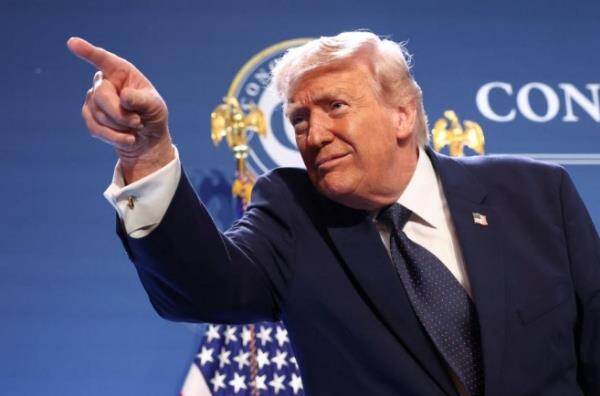
Trump has once again pulled off a "stunt" that defies public perception.

The Financial Times reports that Trump Media & Technology Group (TMTG) is exploring ways to commercialize the real-time news feed on its Truth Social platform, planning to offer low-latency data services to institutional clients for as much as $100,000 per month. Institutions purchasing this service will be able to access Trump's latest posts faster than regular users, to track policy signals, market sentiment, and the potential impact of political events.

The Time Advantage is the Most Valuable Thing in the Market

For investors focused on the U.S. market, Truth Social is not an ordinary social media platform. After the January 6th Capitol riot in 2021, Trump was banned from mainstream platforms like Twitter (now X) and Facebook. Subsequently, TMTG launched Truth Social, and Trump began using it as his primary channel for communication. Although Trump later regained his X account, his major policy statements on tariffs, trade, foreign affairs, regulation, and more are still often published first on Truth Social, gradually making it the primary source for global investors tracking Trump's movements.

Even so, this seems like an almost unbelievable business. After all, Truth Social is itself a public platform, and every post Trump makes becomes visible to everyone within seconds. Since the information is public, why would institutions be willing to pay such a high price for it?

The answer is actually quite simple. In financial markets, the most expensive thing has never been the information itself, but the time advantage of obtaining it earlier than others.

For the average user, seeing a post a few seconds earlier is almost meaningless. But for quantitative funds, high-frequency trading firms, and even some crypto trading teams, those few seconds can determine whether a trade results in profit or loss. When the market has become accustomed to repricing assets based on Trump's every move, whoever gets the information first has the chance to act first.

In other words, what TMTG is really selling is not a post, but a form of "Presidential Alpha."

The 'Trump Terminal' That Surpasses Bloomberg Terminal

In fact, TMTG is not the first to think of this business.

On Wall Street, selling real-time data is an extremely mature business model. Whether it's Bloomberg, Reuters, the New York Stock Exchange, or Nasdaq, they all have long provided paid data services to institutions. From corporate earnings reports and macroeconomic data to stock tick-by-tick trades and order book changes, these institutions can often access information earlier via dedicated lines or data interfaces with lower latency and higher stability.

Notably, what they sell is mostly not "exclusive news" — the vast majority of information is eventually made public to the entire market. What's truly valuable is that institutions can receive this information milliseconds, hundreds of milliseconds, or even seconds faster than others. This time advantage often translates to trading opportunities and can directly determine a strategy's profitability.

TMTG is doing the same thing, even taking it a step further — unlike traditional financial terminals like Bloomberg Terminal, which are merely collectors and distributors of information, Trump himself is the source. No matter how fast a Bloomberg Terminal is, it is essentially aggregating and transmitting market information; what TMTG is selling is exclusive priority access to every update Trump posts on Truth Social.

In other words, no matter how powerful the Bloomberg Terminal is, it's just a second-hand information broker, while the leader's "Trump Terminal" is absolute firsthand intelligence.

This Money, Only Trump Can Make

Theoretically, every U.S. president, as well as leaders of other major nations, possess a similar ability to influence markets.

From key official appointments to fiscal policies, from diplomatic maneuvers to war conflicts, a leader's words and actions can sway the pricing of global capital markets. But Trump is probably the only one to actually package this influence into a business and unabashedly sell it to Wall Street.

The crucial premise here is that Trump's firsthand information is truly valuable enough.

Over the past few years, Trump's Truth Social has become a critical information source for global investors. From tariff policies and trade negotiations to cryptocurrency regulation and Federal Reserve Chair selections, Trump's posts have repeatedly triggered sharp fluctuations in the stock market, the U.S. dollar, gold, and crypto markets. A series of trading strategies formed around expectations of Trump's policies, such as "Trump Trades" and "TACO Trades," further demonstrate that the market has long viewed his pronouncements as a tradable "market factor."

But the more important reason might be Trump himself. If past U.S. presidents largely viewed their political influence as a public resource, Trump is more accustomed to seeing influence as an asset that can be operated, amplified, and commercialized.

Looking back over recent years, from NFTs and meme coins to Truth Social, Truth.Fi, Trump Mobile, and now selling real-time Truth Social data services to institutions, the product forms have constantly changed, but the underlying logic has remained unchanged — continuously transforming the "Trump" IP into a commercial product that can be sold, subscribed to, and invested in.

For many traditional politicians, the presidency signifies power and necessitates maintaining a distance from commercial interests. In Trump's eyes, the two do not seem to have a natural boundary. As long as the market is willing to pay for influence, then influence itself can become a commodity.

In other words, Trump did not create the demand; rather, he realized earlier than anyone else that "presidential influence" itself is an asset that can be priced and sold.


Preguntas relacionadas

QWhat service is Trump Media & Technology Group (TMTG) reportedly exploring, and how much does it cost?

ATMTG is exploring the commercialization of Truth Social's real-time feed by offering low-latency data services to institutional clients, with a reported price of up to $100,000 per month.

QWhy would institutional clients be willing to pay a high fee for access to Trump's posts on Truth Social a few seconds earlier than the public?

ABecause in financial markets, the time advantage of receiving information even a few seconds earlier can be critical for trading decisions. For quant funds, high-frequency trading firms, and crypto trading teams, this head start can determine the profit or loss of a trade, as markets often react to Trump's policy signals.

QHow does the proposed 'Trump Terminal' service differ from traditional financial data terminals like Bloomberg Terminal?

ATraditional terminals like Bloomberg Terminal aggregate and distribute market information from various sources, acting as secondary information distributors. In contrast, the 'Trump Terminal' offers exclusive priority access to Trump's posts directly from the source (Truth Social), making it a primary information channel.

QAccording to the article, what is the underlying logic behind Trump's various business ventures like NFTs, meme coins, and now the data service?

AThe underlying logic is the continuous commercialization of the 'Trump' IP. The article states that Trump consistently transforms his influence and personal brand into sellable, subscribable, and investable commercial products.

QWhat does the article suggest is unique about Trump's approach to presidential influence compared to other politicians?

AThe article suggests that while traditional politicians often view presidential influence as a public resource to be kept separate from business, Trump sees it as a commercially viable asset. He recognizes that 'presidential influence' itself can be priced and sold as a commodity if the market is willing to pay for it.

Lecturas Relacionadas

Within Strategy's Framework, STRC's Dividend Yield Remains at 12% as Share Price Stays Below Par Value

Michael Saylor, Executive Chairman of Strategy (MSTR), confirmed that the dividend rate for its STRC perpetual preferred shares will remain at 12.00% through August 2026. The rate has increased from 9% at its July 2025 launch to the current high via a "ratchet" mechanism, which permanently raises the rate by 0.5% whenever the share price falls below $95. This mechanism is intended to push the price back toward its $100 par value and support Strategy's "at-the-market" (ATM) program for issuing new shares to fund Bitcoin purchases. However, the mechanism has not worked as intended. STRC shares closed at $89.46 on July 31, remaining about 10-11% below par value despite the record-high dividend. Competition from rival Strive's higher-yielding SATA securities has pressured demand. The persistent discount has forced Strategy to suspend new STRC issuances via its ATM program, limiting this funding channel for Bitcoin acquisitions. STRC's struggles reflect Bitcoin's own volatility, as the preferred shares historically move in tandem. Analysts have warned the ratchet structure carries long-term, one-way risk. A law firm is investigating Strategy's ability to maintain dividend payments if Bitcoin's price stays low. Retail investors own roughly 83% of outstanding STRC shares, a group seen as prone to panic selling during downturns. In response, Strategy has established financial reserves, including a liquidity cushion covering about 26 months of dividend/interest obligations, and a $2 billion share buyback program alongside a Bitcoin monetization framework, though the company emphasized it is not obligated to sell any Bitcoin.

cryptonews.ruHace 10 min(s)

Within Strategy's Framework, STRC's Dividend Yield Remains at 12% as Share Price Stays Below Par Value

cryptonews.ruHace 10 min(s)

Analyst: Bitcoin's Price Will Drop to $60k in August, Then Rebound to $70k

Financial analyst Andrey Poroshin has provided a new forecast for Bitcoin's price dynamics in August. Poroshin, an analyst at the Bitbanker exchange, expects the cryptocurrency market to experience a downturn this month, with prices retesting the $60,000 level due to a lack of supportive macroeconomic catalysts. He noted that the recent US Federal Reserve decision to hold interest rates did not significantly impact the market, while inflation remains above the 2% target. Poroshin stated that Bitcoin is ending July under pressure from moderate volatility and a lack of new macroeconomic stimuli, leading to continued market caution. According to his base scenario, Bitcoin will drop to a range of $60,000 to $62,000 before recovering to $70,000. He pointed out that even $70,000 remains below the cost of mining in the US, which has prompted some miners to shift towards AI data center operations. Poroshin cited the winding down of BitMEX's operations as a potential catalyst for a price rebound, suggesting the exit of weaker players often coincides with market reversals and reduced short-term selling pressure. He believes Bitcoin is currently less susceptible to geopolitical shocks, such as the Iran-US conflict, and does not expect significant market changes in August related to the pending CLARITY Act. Looking ahead, Poroshin forecasts that September will bring more active price fluctuations driven by potential Fed rate decisions and possible discussions or approval of the CLARITY Act.

cryptonews.ruHace 10 min(s)

Analyst: Bitcoin's Price Will Drop to $60k in August, Then Rebound to $70k

cryptonews.ruHace 10 min(s)

Trading

Spot
活动图片




