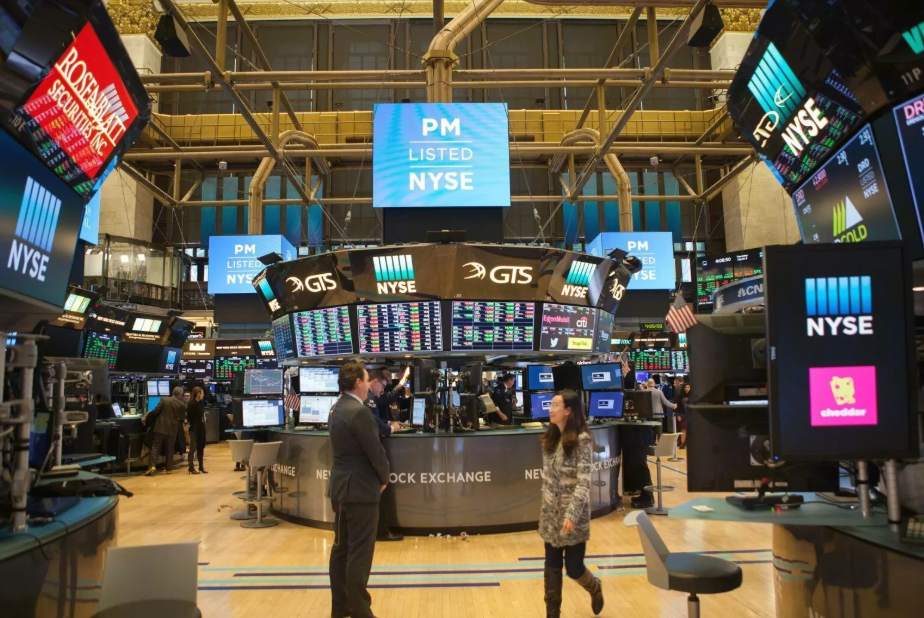
U.S. stock futures tumbled Sunday evening, amplifying fears of a disorderly market open and fueling speculation of a potential “Black Monday”-style selloff as sentiment collapsed across equities and crypto.
S&P 500 futures dropped 5.98% by 10 p.m. ET, while Nasdaq 100 futures slid 6.2%. Dow futures were down 5.5%. The moves followed weeks of mounting trade tensions and macro uncertainty, with investors offloading risk across all asset classes.
Jim Cramer, host of CNBC’s Mad Money, referenced the historical parallel in a post Saturday, writing: “Surprised we can't get a short cover rally in case President Trump realizes that a Black Monday may not burnish a legacy.”
Asian markets reflected the deepening risk-off mood, with Japan’s Nikkei 225 falling as much as 8.9% in early trading. In Taiwan, the Taiex index plunged nearly 10% after a two-day holiday, triggering circuit breakers for major stocks including TSMC and Foxconn.
Authorities have also imposed a temporary ban on short-selling to stabilize the market.
In crypto, liquidations have spiked to roughly $892 million, which includes more than $300 million for Bitcoin long and short positions, CoinGlass data shows.
“Not only has Bitcoin broken below $80,000, but gold has also dropped under $3,000,” Marco Lim, managing director at Solowin Holdings and founding partner of MaiCapital, told Decrypt. “If USD/JPY breaks lower, we’re likely to see further unwinding of carry trades.”
In other words, investors may start pulling capital from higher-yielding assets, accelerating risk-off flows across global markets.
Meanwhile, volatility index futures ($VIX) have spiked above their August 2024 peak.
The Kobeissi Letter, a widely followed macro newsletter, said in a Sunday post on X that market action had “lost its orderly nature” and was now entering a fear-driven phase.
“Even the safe havens are getting dumped,” it wrote, as gold futures briefly fell below US$3,000/oz. The firm said sentiment was nearing levels last seen in March 2020.
Retail investors sold $1.5 billion in equities during a 2.5-hour window Friday—the largest intraday outflow on record.
Institutional capital also continued to rotate out of U.S. equities at pace, with March 2025 marking the sharpest exit in years.
The latest AAII sentiment survey showed 61.9% of investors were bearish, the third highest reading on record. Bullish sentiment stood at just 21.8%.
Crypto followed suit. Bitcoin fell below $80,000 on Sunday night, while Ethereum dropped under $1,800. The global crypto market cap fell 10% to $2.57 trillion, according to CoinGecko.
Kobeissi warned the selloff was likely near “capitulation,” but said any bounce would be tactical, not fundamental.
“Even the worst bear markets see relief rallies,” it noted.
Markets now await Monday’s U.S. open and fresh data on inflation due later in the week for the next directional catalyst.