# Trust Related Articles

HTX News Center provides the latest articles and in-depth analysis on "Trust", covering market trends, project updates, tech developments, and regulatory policies in the crypto industry.

The Crypto World Doesn't Lack Tokens, It Lacks Trust: A New Vision for Ethereum's 'Human Commitment Markets'

The crypto world doesn't lack tokens—it lacks trust. Independent researcher hitesh.eth argues that if open finance keeps leaving ordinary people feeling unsafe, they will trade freedom for predictability, accepting surveillance, gatekeeping, and custodial control—hollowing out the movement's original ideals even as the technology survives and gets absorbed by institutions. Drawing on Timothy C. May's crypto-anarchist vision (where reputation is central), Eric Hughes on privacy as selective self-disclosure, David Chaum's blind credentials, Wei Dai's b-money, and Elinor Ostrom's polycentric governance, the article proposes "Human Commitment Markets" on Ethereum. Instead of starting with tokens, these communities start with real services: escrowed payment, staked collateral, predefined evidence of completion, and agreed dispute-resolution paths. Three pillars—commitment, collaboration, and reputation—must be threaded with privacy throughout. Reputation should be domain-specific and non-transferable (using standards like ERC-5484 and ERC-1155/6909 for service credits), with zero-knowledge proofs verifying claims without exposing personal data, and scoped nullifiers preventing reuse. Stealth addresses (ERC-5564) reduce linkage but don't hide amounts, so full privacy needs extra infrastructure—echoing Vitalik's "Three Transitions." Disputes go to independent evaluators who verify real-world evidence, while contracts enforce escrow payouts. Systems need fallback paths, caps on early exposure, gradual trust-building for newcomers, and immutable, forward-only rule changes with exit rights. Pilots should be small: one community, one settlement asset, no speculative governance token, tested on Sepolia, audited, measured by real outcomes—completed jobs, repeat customers, dispute times, losses—not token prices. AI agents (per draft ERC-8004) could participate with capped accounts and staked collateral. Crypto can't solve coercion or physical-world fraud, but it can reduce reliance on blind trust and build economies worth staying in, not just tokens worth flipping.

marsbit2 days ago 10:41
The Crypto World Doesn't Lack Tokens, It Lacks Trust: A New Vision for Ethereum's 'Human Commitment Markets'

marsbit2 days ago 10:41

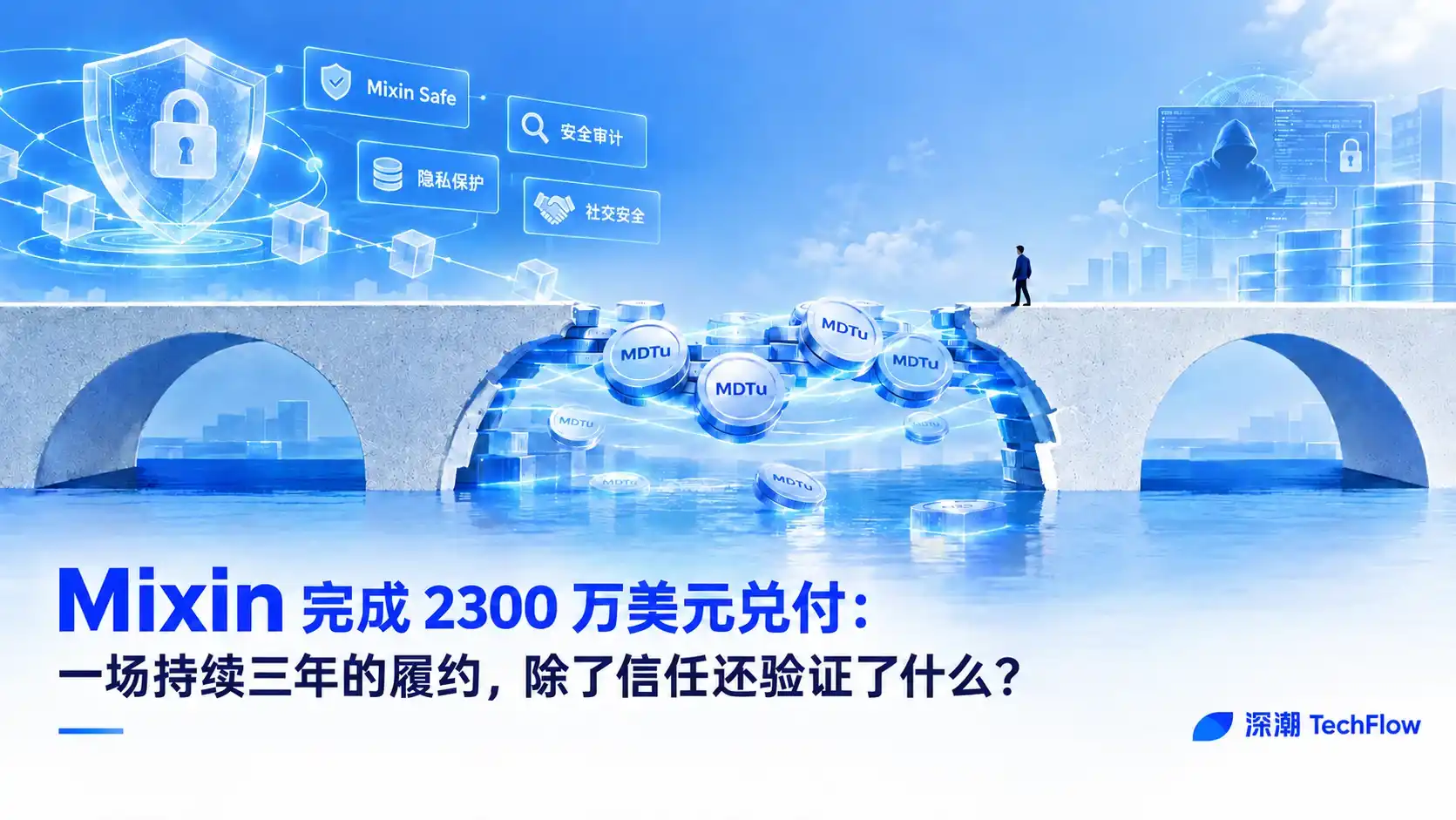
Mixin Completes $23 Million Payout: A Three-Year Fulfillment - What Does It Validate Beyond Trust?

**Mixin Completes $23 Million Repayment After Three Years: More Than Just a Trust Recovery** On September 23, 2026, the Mixin Network announced the full repayment of MDTu tokens, representing $23 million in user assets lost during a major hack in September 2023. This marked the culmination of a three-year commitment to honor its debt. Unlike many crypto projects that falter after security breaches, Mixin adopted a transparent and structured approach. Immediately after the $150 million hack, the project issued MDT tokens (MDTu for USDT, MDTe for ETH, MDTb for BTC) as debt certificates, pledging to use future profits for a gradual buyback. The recent completion of the MDTu repayment validates this promise. The article argues this achievement is significant for several reasons. Firstly, it's rare in an industry where post-hack compensation is often minimal or non-existent. Mixin’s ability to continue operating and generate revenue for three years post-crisis was crucial. This resilience is attributed to its core product strategy: combining encrypted messaging with a multi-chain wallet, fostering a "social + capital" network. This created more durable user relationships beyond mere transactions, helping retain a user base of over 10 million and $1 billion in assets. Secondly, the event highlights a broader security paradigm. While pre-attack technical defenses are critical, a project's "post-incident responsibility" – its capacity and willingness to make users whole – is an equally vital component of trust. Mixin's actions provide a tangible case study for this "ability to cover losses" standard. Finally, the structured process of issuing debt tokens, committing to ongoing operations, and executing a phased, publicly communicated repayment plan offers a replicable model for other projects facing similar crises. In essence, Mixin's three-year journey from a security disaster to fulfilling a $23 million obligation demonstrates that trust, once broken, can be rebuilt through sustained action and financial responsibility, setting a valuable precedent in the crypto space.

marsbit10/13 10:11

Mixin Completes $23 Million Payout: A Three-Year Fulfillment - What Does It Validate Beyond Trust?

marsbit10/13 10:11

Dragonfly Partner Haseeb: Agent Payments a False Proposition? The True Value of Crypto Lies in Protecting Individuals

Dragonfly partner Haseeb Qureshi reflects on his earlier prediction that AI agents would be the primary drivers of crypto adoption for payments. He admits this narrative was wrong, as current agent services primarily use traditional payment rails like credit cards (via sub-cards from Visa, Ramp, etc.), not crypto protocols. The initial "agentic payments" hype has not materialized for mainstream consumer use. Instead, Haseeb argues the real transformative impact of AI agents on crypto lies in two key areas: reliability and privacy. First, agents will make crypto reliable by acting as a protective layer, preventing user errors like sending funds to wrong addresses, falling for phishing scams, or interacting with malicious contracts. This builds trust similar to how banks protect users from mistakes. Second, and more crucially, crypto becomes essential for individual protection in an AI-powered world. AI massively empowers governments and corporations by making surveillance and data aggregation cheap and easy, eliminating the practical friction that historically provided de facto privacy. Crypto is positioned as the necessary counterbalance to this growing "panopticon," returning power to individuals. However, privacy tools often fail due to poor user experience (UX). Haseeb believes AI agents will solve this by seamlessly managing privacy operations for users—automatically choosing privacy-focused protocols like Zcash, securing communications, and managing digital footprints—making strong privacy accessible with zero effort. The complete vision combines private, anonymous AI platforms (built on encrypted rails) with agent-mediated privacy controls. The conclusion is not that agents need crypto, but that individuals will need crypto—powered by their AI agents—to protect themselves in an era of pervasive AI-driven state and corporate power.

marsbit10/08 18:36

Dragonfly Partner Haseeb: Agent Payments a False Proposition? The True Value of Crypto Lies in Protecting Individuals

marsbit10/08 18:36

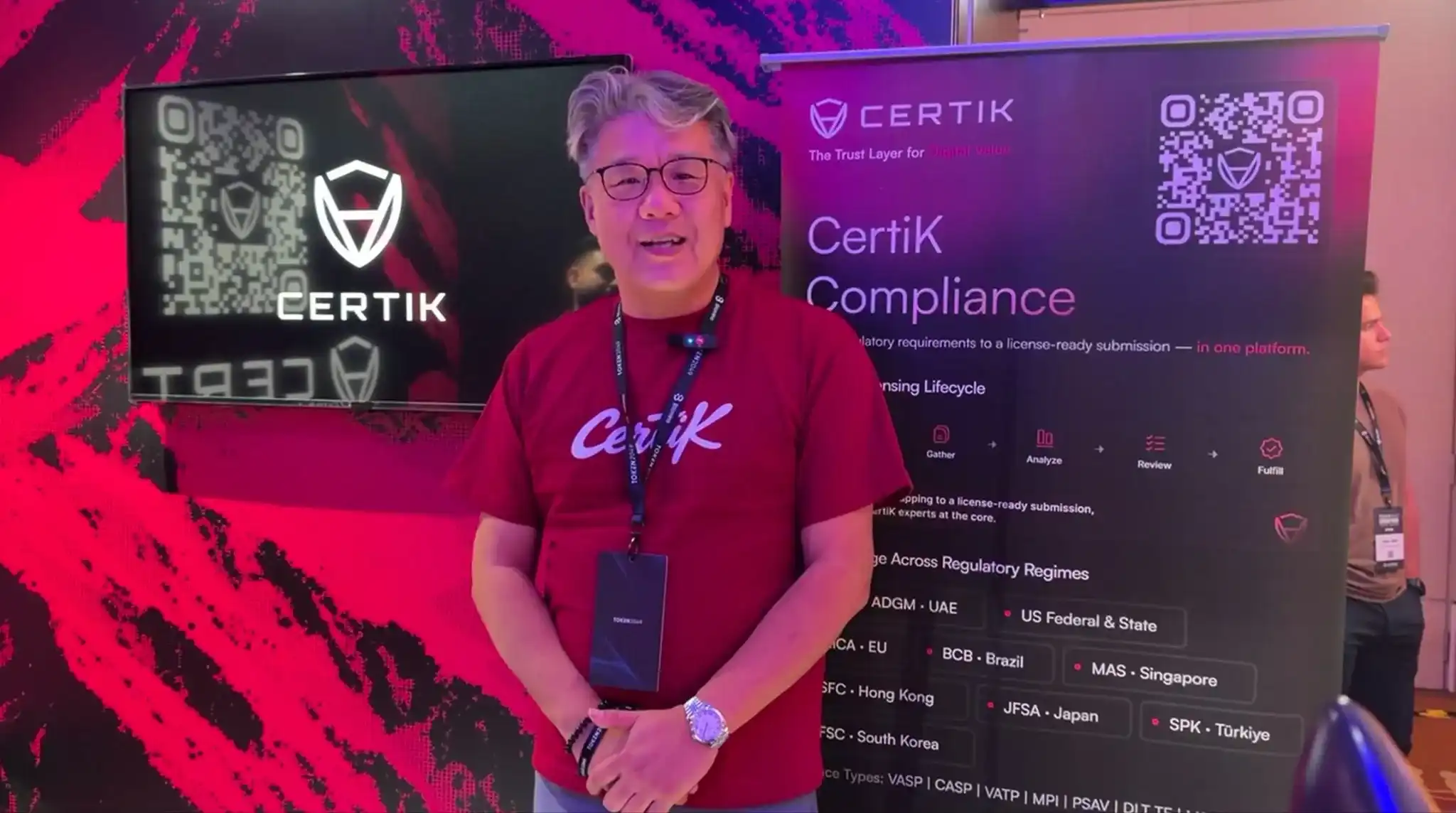
CertiK Announces Brand Upgrade, Committed to Building Trust Infrastructure for the Digital Economy

On October 7th, at the TOKEN2049 Singapore conference, CertiK announced a major brand upgrade, positioning itself as "The Trust Layer for Digital Value." This new direction underscores the company's mission to build trust infrastructure for the digital economy. Originating as a smart contract auditor, CertiK has grown into the world's largest Web3 security company. The rebranding reflects its expansion towards serving financial institutions, regulators, and enterprises within the digital asset ecosystem, focusing on integrated security and risk management solutions. Jason Jiang, Chief Business Officer, stated that as digital assets transform value flow, institutions and regulators require combined security, compliance, and clear risk visibility. CertiK's upgraded vision aims to address these needs as a foundational trust layer. To support this broader mission, CertiK offers a suite of products including Skynet (continuous monitoring), CertiK Compliance, CertiK Supervision, and the AI Auditor. Its services encompass smart contract audits, formal verification, penetration testing, proof of reserves, and node validation. This combination helps clients evaluate system security and monitor digital asset risks continuously. Furthermore, CertiK provides technical support for digital asset policy in key jurisdictions like the U.S., Hong Kong, Singapore, and the UAE. It bridges technical security assessments with the practical requirements of regulated digital asset markets through collaboration with regulators and enterprises. Founded in 2017 by professors from Yale and Columbia University, CertiK leverages formal verification expertise. To date, it has served over 5,500 clients across 150+ regions, identifying more than 119,000 code vulnerabilities and helping to safeguard over $600 billion in digital assets. This brand upgrade clearly charts CertiK's next phase: extending its Web3 security expertise into the broader digital economy. By supporting both builders and regulators of digital asset systems, CertiK continues its mission of establishing foundational trust for the digital economy.

marsbit10/07 22:01

CertiK Announces Brand Upgrade, Committed to Building Trust Infrastructure for the Digital Economy

marsbit10/07 22:01

活动图片