Ripple Opens Wall Street Trading To Hyperliquid With New 24/7 Market Access

bitcoinistPublished on 2026-10-18Last updated on 2026-10-18

Abstract

Ripple is expanding its institutional trading reach through a new offering from Ripple Prime, which will give eligible institutional clients access to perpetual derivatives tied to traditional financial markets such as equities, commodities, and foreign exchange. The service is connected to Hyperliquid infrastructure via Trade.xyz, aiming to provide around-the-clock trading beyond the standard hours of conventional securities and derivatives markets. Ripple Prime is targeting professional counterparties rather than retail crypto traders, and eligibility requirements still apply. For Hyperliquid, the integration links decentralized trading infrastructure with a more established institutional financial business, potentially bringing new traders and collateral arrangements. However, clients do not directly own the stocks or commodities referenced by these derivatives. The move marks another step by Ripple to bridge traditional finance and blockchain-based settlement, with the key long-term question being whether professional investors view continuous trading as worth the added operational and market risks.

TL;DR: Ripple Prime is offering eligible institutional clients exposure to perpetual derivatives referencing traditional assets through infrastructure connected to Hyperliquid. The service extends Ripple’s reach beyond cryptocurrency payments.

Ripple is deepening its involvement in institutional trading through products connected to the Hyperliquid blockchain ecosystem.

The company’s Ripple Prime business has introduced access to derivatives referencing a range of traditional financial markets, including equities, commodities and foreign exchange.

The arrangement involves Trade.xyz, which operates trading infrastructure connected to Hyperliquid.

Traditional Assets, Around-The-Clock Trading

Conventional securities and derivatives markets have defined opening hours. Perpetual contracts, by contrast, can allow traders to respond to price movements outside those sessions.

Ripple Prime is seeking to make that market structure available through its institutional brokerage and clearing relationships.

The service is aimed at professional counterparties rather than unrestricted retail cryptocurrency traders. Participants must still satisfy eligibility requirements, and leveraged derivatives can create substantial losses.

Ripple has spent recent years building services around custody, liquidity and regulated digital-dollar infrastructure in addition to the XRP ecosystem.

Why Hyperliquid Benefits

The integration is notable for Hyperliquid because it connects decentralised trading infrastructure with a more established institutional financial business.

That relationship may bring different types of traders and new collateral arrangements to the platform.

However, access to tokenized or synthetic exposure does not mean clients directly own the stocks or commodities referenced by their derivatives.

For Ripple, the launch is another effort to bridge traditional financial markets and blockchain-based settlement systems.

The longer-term test will be whether professional investors find the convenience of continuous trading worth the additional operational and market risks.

Written by the News Desk and edited by Samuel Rae.

Related Questions

QWhat is Ripple Prime offering to eligible institutional clients?

ARipple Prime is offering eligible institutional clients exposure to perpetual derivatives referencing traditional assets through infrastructure connected to Hyperliquid.

QWhich traditional financial markets are covered by the derivatives introduced through Ripple Prime?

AThe derivatives reference a range of traditional financial markets, including equities, commodities and foreign exchange.

QWhy is the integration notable for Hyperliquid?

AIt is notable because it connects decentralised trading infrastructure with a more established institutional financial business, potentially bringing different types of traders and new collateral arrangements to the platform.

QDoes access to these derivatives mean clients directly own the underlying stocks or commodities?

ANo. Access to tokenized or synthetic exposure does not mean clients directly own the stocks or commodities referenced by their derivatives.

QWhat will be the longer-term test for Ripple's launch?

AThe longer-term test will be whether professional investors find the convenience of continuous trading worth the additional operational and market risks.

Related Reads

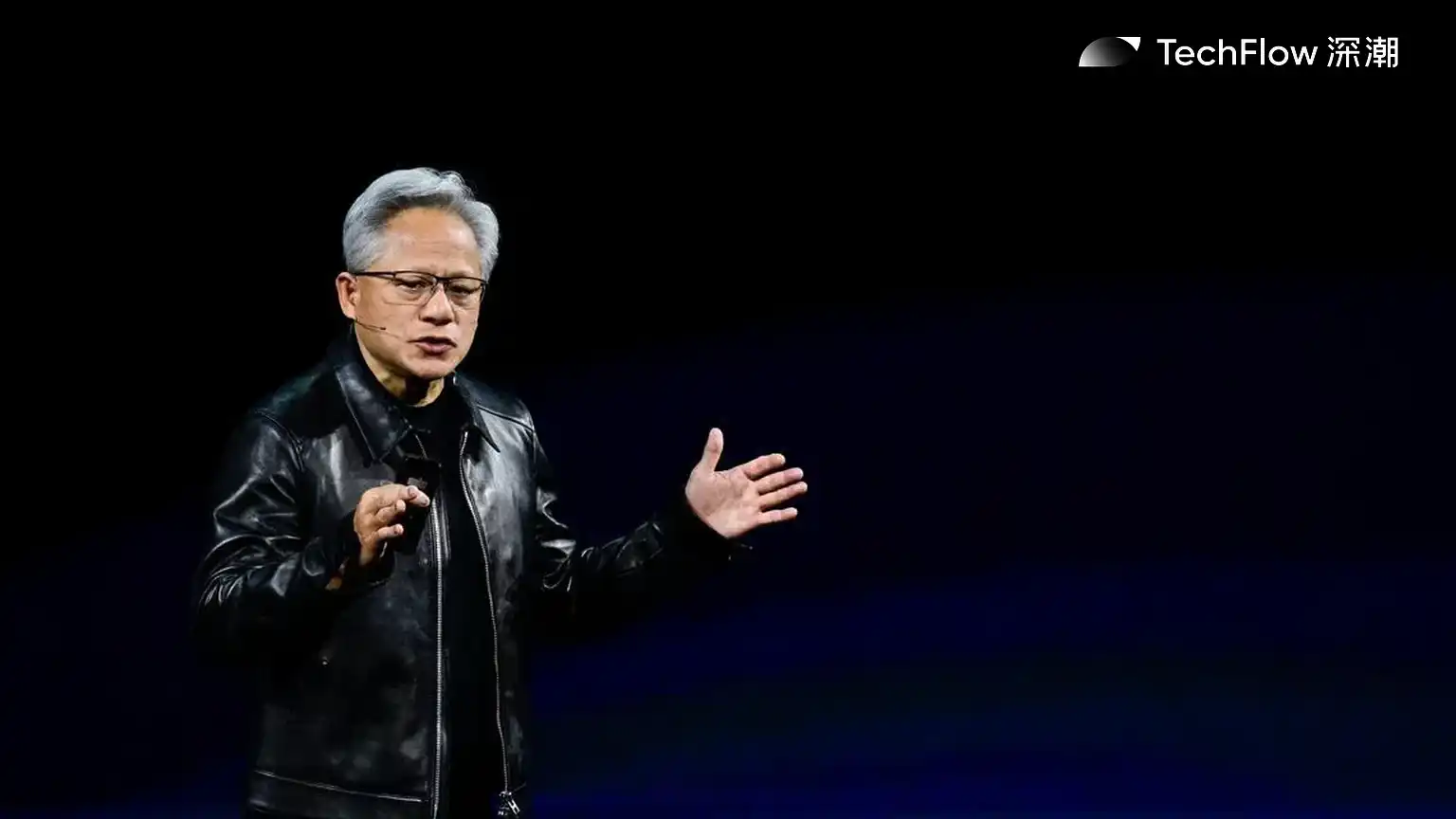
Jensen Huang Resigns, CFO Appointed as NVIDIA Interim CEO — Who Is Kress?

NVIDIA announced on the evening of November 12 that co-founder Jensen Huang has resigned as president, CEO, and board member, effective immediately. The 63-year-old founder, who led the company for 33 years, stepped down after a scandal involving extramarital affairs. The board accepted his resignation on November 11, and Huang also exited the board entirely, giving up all director seats. Huang co-founded NVIDIA in 1993 and built it into a core supplier for the AI boom, with the company's market value once reaching about $4 trillion. He holds roughly 3.6% of NVIDIA shares, making him the fourth-largest shareholder. NVIDIA has appointed CFO Colette Kress as interim CEO until the board selects a permanent successor. Kress will continue as executive vice president and CFO while serving as interim CEO. At the board level, Harvey C. Jones, former Synopsys CEO and a director since 1993, became the company's first board chairman. Previously, NVIDIA had no independent board chair, with Huang holding both CEO and board seats. The board will search for a permanent CEO both internally and externally. Jones said the board has full confidence in Kress and the management team and expects operations, customer commitments, and the product roadmap to be unaffected. Colette Kress, born in 1967 in the U.S. and about 59, is NVIDIA's long-serving EVP and CFO. Her appointment makes her the first female leader in NVIDIA's history. She holds a bachelor's degree in finance from the University of Arizona and an MBA from SMU's Cox School of Business. She began her career at Texas Instruments, working about eight years in various finance roles, then joined Microsoft in 1997 for 13 years, becoming CFO of the Server and Tools Division in 2006. In 2010 she moved to Cisco as senior VP and CFO of its business technology and operations finance organization. In September 2013, recruited personally by Huang, she joined NVIDIA as EVP and CFO, when annual revenue was only about $4.13 billion. During her 13 years, NVIDIA transformed from a gaming graphics maker into a global AI and accelerated computing leader, with revenue soaring from $4.13 billion in fiscal 2014 to $215.9 billion in fiscal 2026, about 52 times growth. In July 2025, thanks to her NVIDIA shares, she became a billionaire with net assets of about $1–1.2 billion. She received the Silicon Valley Business Journal's CFO of the Year award in 2016 and has repeatedly appeared on Forbes and Fortune most powerful women lists. NVIDIA shares fell sharply after the resignation news. After The Wall Street Journal reported the board was preparing to force Huang out, the stock dropped over 9% in after-hours trading; at the U.S. open it continued falling, briefly breaking below $150 to a new low since June 15, before narrowing losses to about $160. Dan Ives of Yorkville Ives said the investigation is a blemish for Huang, could trigger congressional probes, and that he risked being ousted, pressuring the stock. Huang's departure stems from two reports of extramarital affairs. On Sunday, November 8, Huang emailed employees admitting infidelity to his wife and apologizing to employees, the board, and shareholders. The board announced an investigation by a committee of independent directors with outside counsel, saying there was no reason to believe company secrets leaked. On Wednesday, November 11, The New York Times reported Huang had a romantic relationship with Kimberly Powell, NVIDIA's vice president of healthcare, both married, with Powell reporting to Huang; the report said intimate behavior was filmed at a San Jose hotel in March. The Wall Street Journal then reported the board was preparing to force Huang out. CBS cited sources saying the Trump administration was aware. CNBC confirmed the board met that night to discuss whether to remove Huang, with the meeting running into the evening. The next day, NVIDIA announced Huang's resignation.

Odaily星球日报1h ago

Jensen Huang Resigns, CFO Appointed as NVIDIA Interim CEO — Who Is Kress?

Odaily星球日报1h ago

Farewell, Jensen Huang

Nvidia founder and CEO Jensen Huang has resigned from his roles as president, CEO, and board director, effective immediately, following revelations of an extramarital affair with an executive who directly reported to him. The scandal, which began surfacing in late October, escalated rapidly after Huang issued an internal apology letter on November 8 admitting infidelity. Nvidia's stock has plunged, wiping out roughly $450 billion in market value, with analysts warning of potential further losses exceeding $1 trillion if leadership instability persists. Huang's wife may pursue divorce proceedings under California's community property law, potentially resulting in a settlement of $62.6–81.1 billion—possibly the most expensive divorce in history. CFO Colette Kress has been appointed interim CEO while the board searches for a permanent successor, and Harvey C. Jones has been named the company's first board chairman. Huang co-founded Nvidia in 1993 and built it into the world's most valuable chip company, pioneering the CUDA architecture that enabled the AI revolution. His unusually flat management structure—with roughly 60 executives reporting directly to him and no public succession plan—has left the company vulnerable at a critical moment. Given that major tech giants like Google, Microsoft, OpenAI, and Anthropic depend heavily on Nvidia's chips for their AI ambitions, Huang's departure raises urgent questions about whether the AI industry is prepared for an Nvidia without its longtime leader.

marsbit2h ago

Farewell, Jensen Huang

marsbit2h ago

Trading

Spot
活动图片