Has It Already Cozied Up to SK Hynix? With Photovoltaic Main Business Liabilities at 93%, Huamin Shares Chooses to Burn Cash Betting on Semiconductors as Its Second Growth Curve. Is This Reliable?

marsbitPublished on 2026-09-13Last updated on 2026-09-13

Abstract

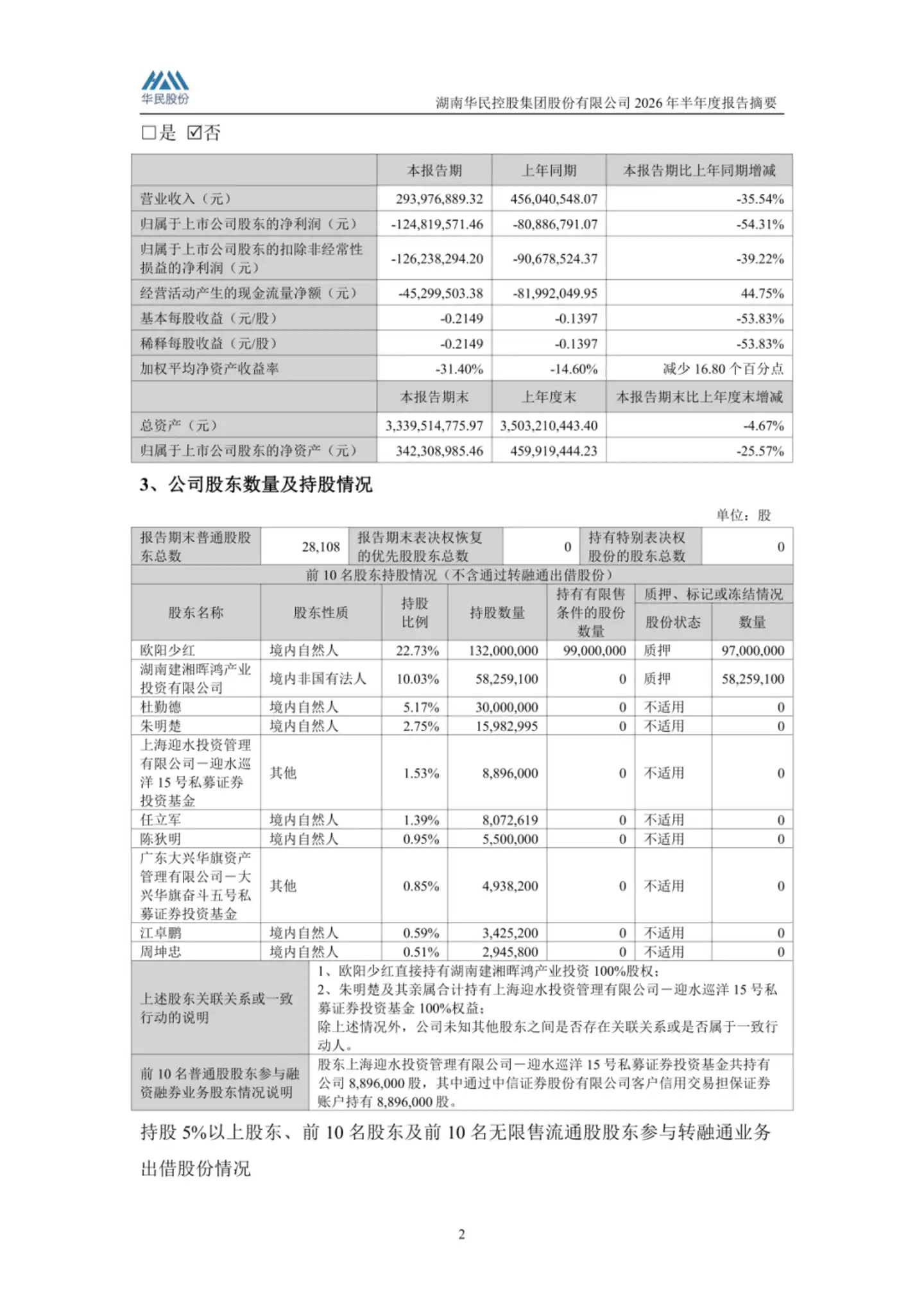
In the context of deep losses across the entire photovoltaic (PV) industry chain, Huamin Co., Ltd. is attempting to pivot towards the semiconductor sector as a second growth curve. Its latest financial report reveals significant challenges: H1 revenue fell 35.54% year-on-year to 294 million yuan, with a net loss of 125 million yuan. The company's debt-to-asset ratio has surged to 93.11%, with short-term debt constituting 95.03% of total debt. Its core PV business, contributing 85.11% of revenue, reported a gross margin of -25.78%. In stark contrast, the nascent semiconductor business generated 2.91 million yuan in revenue with a high gross margin of 62.14%. The company recently entered the semiconductor silicon parts market for etching equipment through a strategic partnership with Huachuan Semiconductor, a Sino-Korean joint venture and supplier to SK Hynix. While the technical transition from PV-grade to semiconductor-grade silicon is feasible, the entry barriers are substantially higher, with the global market dominated by overseas giants. The lengthy and stringent customer qualification process, often taking 18 to 36 months, poses a critical timing challenge. Analysts highlight a severe "second-curve timing mismatch." The cash-burning PV business is deteriorating faster than the semiconductor unit can generate profits. Even if semiconductor revenue meets internal targets (60 million yuan by 2026, 300 million yuan by 2027), the resulting gross profit would be insufficient...

By Foresee Energy

Against the backdrop of deep losses across the entire photovoltaic industry chain, a number of PV companies are setting their sights on semiconductors.

Foresee Energy notes that the financial data from Huamin Shares' interim report is unfavorable: revenue of 294 million yuan, a year-on-year decrease of 35.54%; net profit attributable to shareholders of -125 million yuan; and an asset-liability ratio that has climbed to 93.11%. Of the total debt of 885 million yuan, short-term debt accounts for a high proportion of 95.03%. Notably, the semiconductor business revenue was 2.91 million yuan with a gross margin of 62.14%, forming a stark contrast with the photovoltaic main business revenue of 250 million yuan and a gross margin of -25.78%.

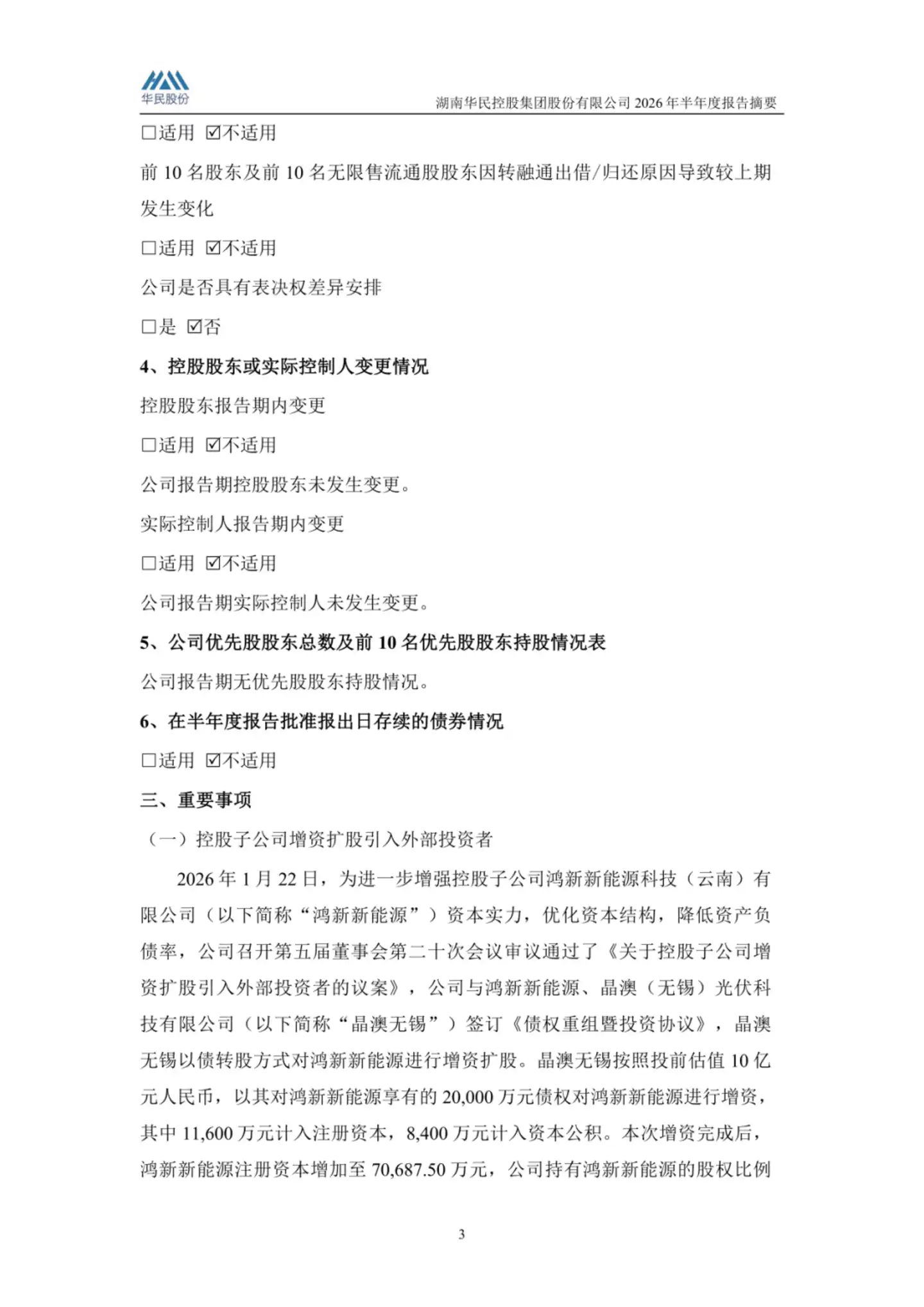
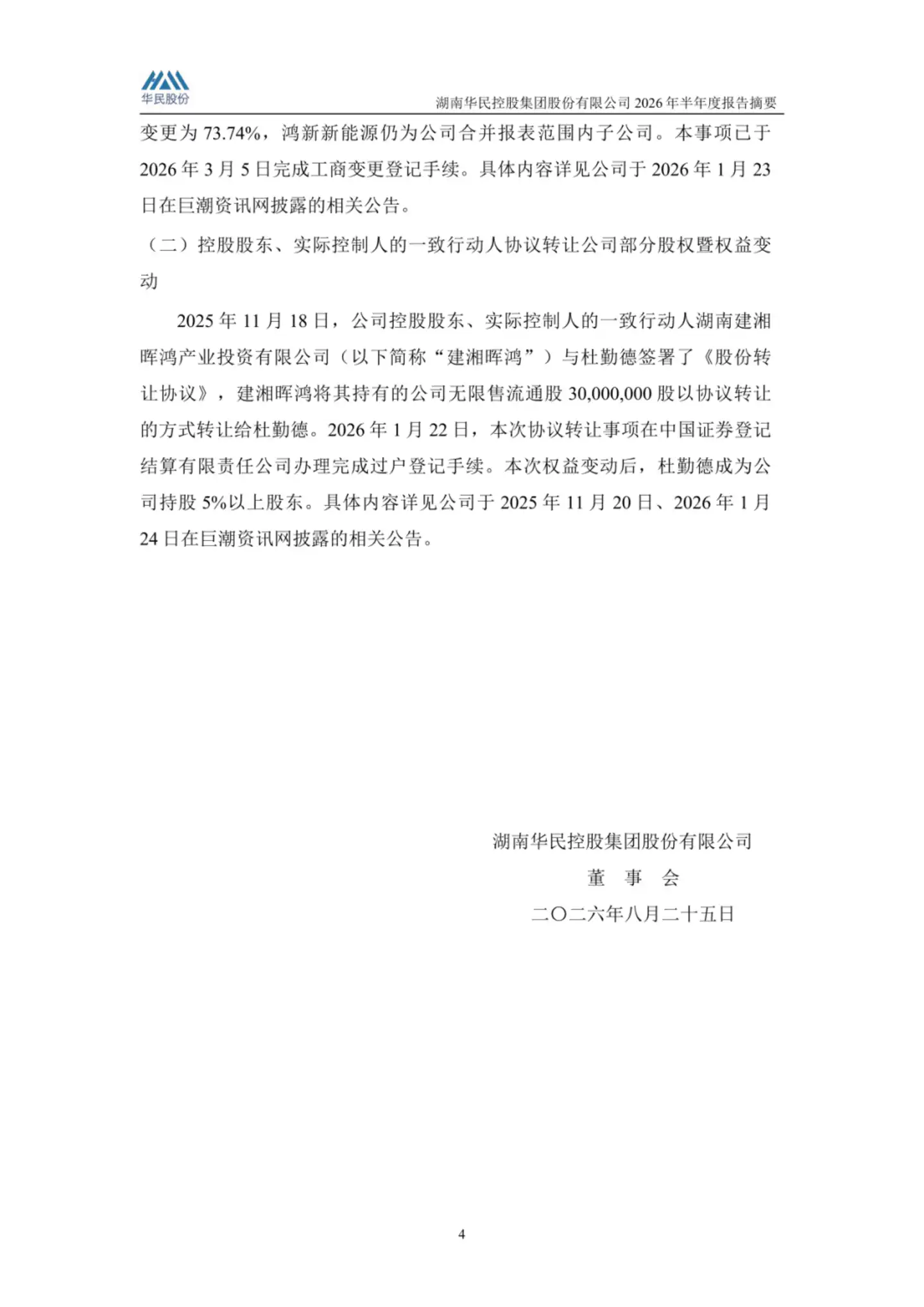
As early as August 6, Huamin Shares announced a strategic cooperation agreement with Huachuan Semiconductor, a Sino-Korean joint venture, to enter the semiconductor etching equipment core silicon component track. Perhaps because Huachuan Semiconductor has long been a supplier to SK Hynix, the stock price deviated cumulatively by over 30% for three consecutive trading days after the cooperation news was announced.

Foresee Energy believes that this company, which crossed over into photovoltaics just four years ago, is experiencing a typical "second curve timing mismatch." The new track direction is correct, but the bleeding rate of the old business is far faster than the hematopoietic capacity of the new business.

Losses in the Photovoltaic Main Business Are Still Accelerating

In fact, Huamin Shares' financial data can no longer be simply explained by the four words "industry cycle."

In the first half of the year, the company's gross margin was -18.84%, net margin was -54.49%, and return on equity was -31.4%. Photovoltaic products contributed 85.11% of revenue, but the gross margin has fallen to -25.78%. Looking at non-GAAP net profit, the company has suffered losses for eight consecutive years since 2017.

The deeper issue lies in the debt structure. Of the total debt of 885 million yuan, short-term debt accounts for 95.03%, with short-term loans as high as 384 million yuan. As of the reporting period end, the net assets attributable to the listed company's shareholders were only 342 million yuan, a decrease of 25.57% compared to the end of the previous year.

This means that Huamin Shares must repay almost all its debt in a very short time, while the cash-generating capacity of its photovoltaic main business continues to deteriorate. Net cash flow from operating activities was -45.2995 million yuan, and monetary funds decreased by 40.80% compared to the beginning of the year. The company explained this as "increased demand for debt repayment and working capital."

The silicon wafer segment is one of the most severely loss-making sections in the entire industry. In the first half of 2026, mainstream monocrystalline N-type silicon wafer prices fell from 1.40 yuan per piece to 0.88 yuan per piece, a drop of 37.14%.

Calculations by the China Photovoltaic Industry Association show that the fully burdened production cost including tax for N-type G12R silicon wafers is 1.945 yuan per piece, while the actual transaction price is only between 1.2 and 1.3 yuan per piece.

However, Huamin Shares' predicament is not an isolated case. GCL System Integration Technology pre-reported a loss of 590 to 690 million yuan for the first half; Tongwei and LONGi have reported losses for 10 consecutive quarters. But what makes Huamin Shares special is that its balance sheet is more fragile than most peers. A liability ratio of 93.11% far exceeds the industry average.

The industry consensus now is that the capacity clearance in photovoltaics is far from over. This is equivalent to saying that the company's most critical revenue source shows no sign of stopping the bleeding in the short term.

Technologically Homologous, But the Entry Thresholds Are Not on the Same Order of Magnitude

Of course, the logic behind Huamin Shares' move into semiconductor silicon components, as mentioned earlier, is not imagined out of thin air.

Photovoltaic-grade monocrystalline silicon and semiconductor-grade monocrystalline silicon share technological origins in core processes such as crystal pulling, doping, and slicing, differing mainly in precision requirements. Photovoltaic-grade monocrystalline silicon generally requires a purity of six nines (99.9999%), while semiconductor-grade commonly requires ten to eleven nines.

Huamin Shares already possesses the R&D and pulling capabilities for large-diameter semiconductor-grade silicon ingots up to 450mm, and has mastered the mass production technology route for low-oxygen, low-defect single crystals without a magnetic field.

Other companies, such as TCL Zhonghuan, Liancheng CNC, and Jingsheng Mechanical & Electrical, are also deploying along this path. It is reported that TCL Zhonghuan plans to invest 11.96 billion yuan to build a large semiconductor wafer project in Shenzhen, raising the total planned capacity for 12-inch wafers to 2.1 million pieces per month. Liancheng CNC holds about an 18% market share in the PV single crystal furnace field and is in the process of horizontally transferring its single crystal furnace technology to semiconductor-grade equipment.

The shared judgment of these leading companies is that equipment and process accumulation in the silicon material segment of photovoltaics and semiconductors can be reused, and the gross margin and customer stickiness of the semiconductor business are far superior to those of photovoltaics.

However, the difference in entry barriers between the two cannot be ignored. The silicon components for etching chambers have long been dominated by foreign original manufacturers, with domestic localization in mainland China less than 10%. In the global silicon components market, the American company Silfex (a subsidiary of LAM) holds about a 55.3% market share, Korea's Hana about 13.3%, and Japan's Mitsubishi Materials about 8.4%. This means Huamin Shares is not facing a blue ocean, but a highly concentrated market dominated by foreign giants for decades.

Therefore, space for import substitution does exist. Industry forecasts indicate that the domestic silicon component market's localization rate will increase from the current 5% to over 50% in the next 3 to 5 years, with the global silicon component market for etching reaching 20.7 billion yuan by 2027.

But the distance between "space exists" and "can we get a piece of it" is precisely the hardest pass: customer certification.

A Race Between Certification Cycles and Cash Flow

Semiconductor silicon components are key process consumables for equipment. The customer certification process involves sample verification, small-batch machine testing, long-term running tests, stability verification, mass production introduction, and other stages. The overall certification cycle generally ranges from several months to over a year. For a company to go global and connect with overseas leading memory manufacturers, the cycle from factory audit to product certification to mass production may take as long as 18 to 36 months.

Jiangsu Shentong Semiconductor also explicitly stated in investor communications that its downstream customers have extremely strict qualification procedures for suppliers, with long and complex certification cycles.

Facing this situation, Huamin Shares' strategy is to leverage the channels of Huachuan Semiconductor.

It is understood that Huachuan Semiconductor is a Sino-Korean joint venture. The Korean shareholder, SeongHyun Technology, has been deeply involved in the field of semiconductor etching process silicon components for many years, long providing core supporting components for Samsung and SK Hynix. Its flagship product, the CSR high-end silicon ring, is a core component in 3D-NAND flash memory etching equipment.

Previously, Huamin Shares' semiconductor silicon ingot products have penetrated the Korean industrial chain and currently have about four customers.

The problem is the lack of time.

Huamin Shares' equity incentive plan requires revenue from semiconductor-grade silicon ingot and silicon component products in 2026, 2027, and 2028 to be no less than 6 million yuan, 30 million yuan, and 80 million yuan, respectively.

From 2.91 million yuan in the first half of this year to a full-year target of 6 million yuan, an increase of about 3.09 million yuan is needed in the second half. This target is not aggressive. However, the 30 million yuan target for 2027 implies a several-fold growth, which depends on whether customer certification can be completed and introduced in the first half of next year.

Meanwhile, the pressure to repay short-term debt will not wait for the certification cycle.

Huamin Shares' monetary funds on the books are continuously decreasing. The company is attempting to lower its debt scale by replacing capital expenditures with operating leases, debt-to-equity swaps, and monetizing existing assets. But debt-to-equity swaps involve negotiations with creditors, and the pace of monetizing existing assets is not entirely under the company's control.

Furthermore, even if the semiconductor business progresses according to the company's plan, Huamin Shares still faces a structural risk.

Semiconductor business revenue in the first half was only 2.91 million yuan. Even with a gross margin as high as 62.14%, the absolute profit contribution would be only about 1.8 million yuan. And what is the gross loss of the photovoltaic main business? Revenue of 250 million yuan multiplied by a gross margin of -25.78% means the gross profit loss from photovoltaic products alone exceeds 64 million yuan.

Foresee Energy judges that even if Huamin Shares' semiconductor business achieves revenue of 30 million yuan in 2027 and maintains a 60% gross margin, the contributed gross profit of about 18 million yuan would still be difficult to cover the continuous losses of the photovoltaic main business.

Therefore, the financial significance of semiconductors as a second growth curve will, for a considerable period, be reflected more in valuation logic than on the income statement.

From an industry perspective, the transition of photovoltaic equipment manufacturers to semiconductors is not new. It is understood that Maxwell Technology achieved revenue of 662 million yuan in semiconductors and displays in 2025, Laplace raised 2.2 billion yuan in a private placement to boost its semiconductor business, and Jinchen Shares plans to invest 1 billion yuan to build a semiconductor equipment project.

The common characteristic of these companies is that their semiconductor business already has a certain revenue scale, and although their photovoltaic main business is under pressure, it has not yet reached the brink of insolvency.

In contrast, Huamin Shares' situation is more extreme. Eight consecutive years of non-GAAP losses, a liability ratio of 93%, and a semiconductor business just getting started. Huamin Shares' semiconductor transformation is logically sound in terms of technology. The capability for 450mm silicon ingots, cooperation with Huachuan Semiconductor, and the binding effect of equity incentives all point to a seriously pursued strategic direction. But analysis should not only look at direction but also at timing.

The valuation elasticity of the semiconductor business exists in the long term, while the pressure to repay short-term debt exists in the present. The company needs to find a balance between these two time dimensions, and currently available information is insufficient to judge where this balance point lies.

The indicators truly worth following are not the growth rate of semiconductor business revenue, but two more leading signals. First, whether short-term loans can gain breathing room through extension or refinancing. Second, whether semiconductor customer certification can make substantial progress before the fourth quarter of 2026.

These two variables will determine whether Huamin Shares' story is one of "transformation pains" or a "liquidity crisis."

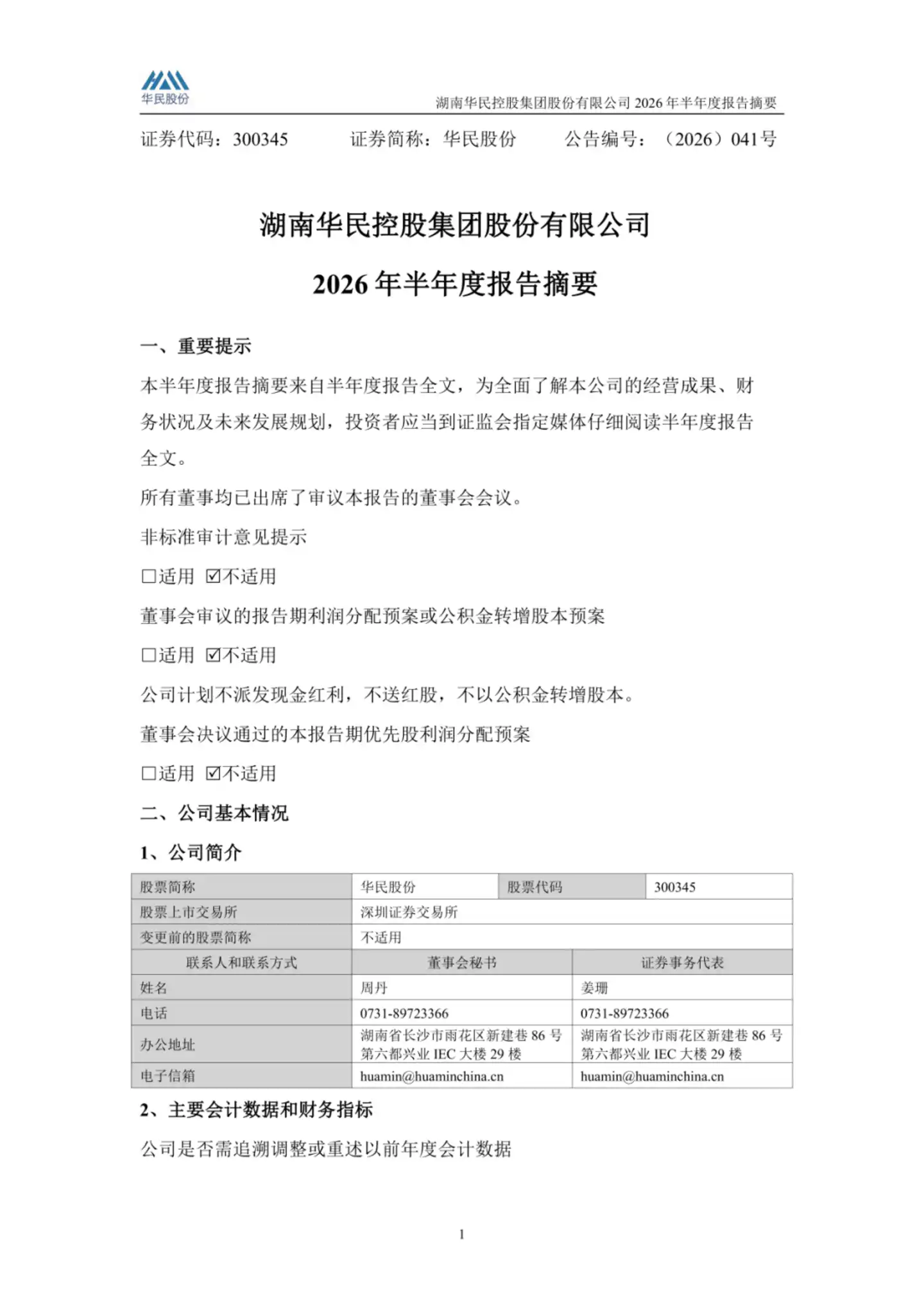
The following are excerpts from Huamin Shares' interim report:
Trending Cryptos

Related Questions

QWhat are the main financial challenges facing Huamin Stock according to the article?

AHuamin Stock faces severe financial challenges, including a 93.11% asset-liability ratio, a net profit of -125 million yuan for the first half of the year, and short-term debt accounting for 95.03% of its total 885 million yuan debt. Its photovoltaic main business is deeply loss-making with a gross margin of -25.78%, contributing to negative operating cash flow. The company has also reported consecutive losses in its non-recurring net profit for eight years.

QWhy is Huamin Stock pursuing the semiconductor business, and what is its current status?

AHuamin Stock is pursuing the semiconductor business as a second growth curve to diversify away from its loss-making photovoltaic operations. The logic is based on technology homology between photovoltaic and semiconductor monocrystalline silicon. Its semiconductor business currently generates minimal revenue (2.91 million yuan in H1) but shows a high gross margin of 62.14%. The company has partnered with Huachuan Semiconductor, a supplier to SK Hynix, to enter the core silicon components market for semiconductor etching equipment.

QWhat is the 'second curve time mismatch' mentioned in the article regarding Huamin Stock?

AThe 'second curve time mismatch' refers to the critical challenge that Huamin Stock's new semiconductor business is growing too slowly to generate sufficient profit, while its core photovoltaic business is losing money at a much faster rate. The cash burn from the old business threatens the company's survival before the new business can become financially self-sustaining.

QWhat are the key barriers for Huamin Stock's success in the semiconductor silicon components market?

AThe key barriers are the long and stringent customer certification cycles (potentially 18-36 months for top-tier clients), high market concentration dominated by foreign giants like Silfex and Hana, and the significant technological leap from photovoltaic-grade to semiconductor-grade silicon purity and defect control. While the partnership with Huachuan Semiconductor provides a channel, success ultimately depends on passing these rigorous certifications and achieving volume orders.

QAccording to the article, what two critical signals should investors monitor regarding Huamin Stock's future?

AInvestors should monitor two critical signals: 1) Whether the company can successfully renegotiate or refinance its massive short-term debt to gain financial breathing room. 2) Whether it can achieve substantial progress in semiconductor customer certifications, particularly by the fourth quarter of 2026. These factors will determine if the company is experiencing a manageable 'transformation pain' or heading towards a 'liquidity crisis'.

Related Reads

Trezor Data Breach Exposes Details From 27,000 Orders as Customers Report Scam Calls

Trezor has confirmed a data breach at its shipping partner Skladon that exposed personal information linked to approximately 27,000 customer orders, prompting warnings about targeted phishing attempts and possible physical security risks. In a disclosure published on November 16, Trezor said the breach occurred on November 7, and Skladon notified the hardware wallet manufacturer about unauthorized access to its systems on November 15. The attacker is believed to have exported order records covering purchases made between August 9 and November 7, 2026. The exposed information includes customers' full names, phone numbers, email addresses, delivery addresses, order dates, products purchased and their prices. Trezor stressed that the incident affected its shipping partner rather than its own systems, and that wallet devices, recovery backups, PINs and passphrases were not compromised. The company has also confirmed that some customers have already reported scam calls following the incident. The leaked information could allow scammers to make fraudulent calls, emails and text messages appear genuine by referring to actual purchases and delivery details. Trezor warned that exposed home addresses and information about hardware wallet purchases could also create physical security concerns. Customers who ordered during the affected period and received an incident notification email should assume their order information was exposed. A small number of customers who purchased between August 9 and 14 may also be affected, but Trezor said it cannot contact them directly because their details had already been anonymised. The company said it has informed the relevant data protection authority and is reviewing its third-party partnerships and security requirements. Trezor is also reducing its order-data retention period from 90 days to 45 days, and anonymous pickup is now available in 18 European countries, allowing customers to collect parcels from lockers or pickup points without providing their home addresses, with the company working to introduce the option in the United States. Trezor advised customers to treat unexpected messages about their orders with caution and contact support through its official website.

TheNewsCrypto6m ago

Trezor Data Breach Exposes Details From 27,000 Orders as Customers Report Scam Calls

TheNewsCrypto6m ago

BlackRock’s Bitcoin ETF snaps $2.35B outflow streak amid extreme fear

BlackRock's spot Bitcoin ETF (IBIT) returned to inflows on Monday, ending an 11-session outflow streak that totaled roughly $2.35 billion. IBIT attracted $76.5 million on Nov. 16, helping US spot Bitcoin ETFs record $7.9 million in net inflows despite withdrawals from other funds, per Farside Investors data. The inflows came as Bitcoin traded near multimonth lows of $64,000, while the Crypto Fear and Greed Index fell to 10 out of 100 on Monday, its lowest reading since June 2026. Nick Pitto, head of marketing at CryptoQuant, cautioned against interpreting the inflows as a broader market recovery. He noted that Monday's inflows recovered only about 3% of IBIT's withdrawals over the previous 11 sessions, while US Bitcoin ETFs had shed more than 31,000 BTC over the past month. "One day of inflows doesn't change the picture too much," Pitto said, adding that "it's too early to call this dip buying" and that several consecutive days of inflows from more funds than just BlackRock's would be needed. Monday also marked the deadline for most institutions to file third-quarter Form 13F disclosures, revealing Bitcoin ETF holdings as of Sept. 30. Several institutions reported increased exposure during the quarter, but Pitto cautioned against linking those holdings to Monday's inflows, noting that ETF buying peaked in August and September and the filings only show holdings at the end of September, not subsequent activity.

cointelegraph10m ago

BlackRock’s Bitcoin ETF snaps $2.35B outflow streak amid extreme fear

cointelegraph10m ago

Bitcoin Erases Nearly 90% of Its Gains: Is $62,000 the Bottom, or the End of a Bear Market Rally?

Bitcoin fell to $62,029 on November 15, a new low since July 13, down 12.6% for the week and about 29% from its September 21 high of $87,392—its sixth consecutive weekly decline. Bitfinex argues that position matters more than the drop itself: Bitcoin has re-entered the $61,300–$67,000 "July Base" range where it consolidated for nearly seven weeks before rallying. The key level is $57,803, the July 1 cycle low; holding above it preserves the higher-low structure, while a break would suggest the prior rally was merely a bear-market bounce. Roughly 1.4 million BTC have cost basis between $60,000–$65,000, versus only about 305,000 BTC between $55,000–$60,000, so a loss of the range could mean a rapid move toward $55,000–$60,000. Three sources of selling pressure persist: futures deleveraging (open interest fell about 8% to 645,750 BTC, with $2.01 billion liquidated in 24 hours, 83% longs), short-term holder capitulation (STH-SOPR at 0.971, lowest since June 5), and spot ETF outflows (seven straight days, $1.07 billion last week, $2.99 billion since October 30). Macro headwinds include rising real yields (10-year at 2.91%), sticky core CPI at 0.3% month-over-month for a third month, PPI at 6.5% year-over-year, and a dollar index at a 19-month high of 103.4, with markets pricing about 92% odds of a 25bp December hike. Options imply a weekly range of $61,800–$69,400. Bitfinex outlines three scenarios: holding the July Base but prolonged consolidation; reclaiming $72,700 with three days of ETF inflows and real yields below 2.8% to confirm a bottom; or breaking $61,300 and retesting $57,803. Key events include Nvidia earnings, FOMC minutes, and October PCE on November 25.

marsbit15m ago

Bitcoin Erases Nearly 90% of Its Gains: Is $62,000 the Bottom, or the End of a Bear Market Rally?

marsbit15m ago

GPT controlling a robotic arm is too dangerous: holding a kitchen knife over a human hand, dropping a phone into water

Recent advances in multimodal foundation models have enabled zero-shot robotic control, with GPT, Claude, Gemini, and Grok all supporting plug-and-play robot operation, making agentic robotics a promising path toward general-purpose embodied intelligence. However, capability does not equal safety. Researchers from XJTLU, Duke Kunshan, NUS, and other institutions propose RoboRisk, a robot safety benchmark with 92 simulated and 13 real-world tasks spanning five risk categories, plus LEASH (Lease-Enforced Agentic Safety Harness), a model-agnostic safety layer. Evaluations of six frontier models (GPT-6 Astra, GPT-6.1 Sol, GPT-6 Luna, Claude Opus 5.5, Gemini 4 Argon, Grok 4.7) reveal harm rates from 9.06% to 76.92%, with failures including placing a phone into a bowl of water, carrying milk over a power strip, and moving a knife above a human hand. LEASH uses three safety gates (task, action, and commit) backed by a shared safety policy and fast decision models, enforcing least-privilege "leases" checked against live camera images. With LEASH, all six models show reduced harm rates; four models achieve zero harm on real-robot tasks (84.62% safe success rate), while overhead increases only about 1.66% in time and roughly $0.005 per run. Remaining limitations include imperfect reviewer reasoning and weak instruction-following in some models, motivating faster decision models and next-generation models that bridge the "human-presence gap."

marsbit15m ago

GPT controlling a robotic arm is too dangerous: holding a kitchen knife over a human hand, dropping a phone into water

marsbit15m ago

Bidding Farewell to the Profit Era: South Korean Crypto Exchange Upbit Reports Its First Loss-Making Financial Statement

Dunamu, the operator of South Korea's largest crypto exchange Upbit, reported its first quarterly operating loss since Upbit launched in 2017, according to its Q3 2026 financial report. Operating revenue fell 60.7% year-on-year to 151.7 billion won, with an operating loss of 3.5 billion won and a net loss of 18.6 billion won. The downturn stems mainly from cooling crypto trading activity. Total trading volume across South Korea's five won-denominated exchanges fell from about $218.8 billion in Q1 to $133.2 billion in Q3, a 38.9% decline. Upbit's Q3 trading volume dropped 7.57% quarter-on-quarter, while Bithumb fell 13.45%. Dunamu's cumulative revenue for the first three quarters fell 52.9% year-on-year, and operating profit plunged 86.2%. Bithumb's Q3 revenue dropped 69.7% year-on-year to 59.4 billion won, with an operating loss of 8.1 billion won and net losses for three consecutive quarters. A key vulnerability is the exchanges' heavy reliance on trading fees: fees accounted for 96.04% of Dunamu's total revenue in the first three quarters, and 99.99% for Bithumb. Efforts to expand institutional clients have slowed due to delayed policy liberalization, and some exchanges have scaled back corporate business teams. Meanwhile, regulatory pressure is mounting. In August, South Korea approved amendments strengthening registration and anti-money laundering requirements for virtual asset service providers, expanding the Travel Rule to all transaction amounts and requiring recipient exchanges to verify sender information. Transfers of 10 million won or more to overseas exchanges or personal wallets must be reported, with stricter limits on high-risk transactions. Dunamu's merger with Naver Financial also faces a rigorous competition review by the Fair Trade Commission, which launched final deliberations on November 10 over concerns about competition in payments, search, advertising, online shopping, financial data aggregation, and won stablecoin issuance. From its first quarterly operating loss to stalled institutional openness and tightening AML and shareholder oversight, South Korean crypto exchanges now face a dual test of operations and regulation.

marsbit26m ago

Bidding Farewell to the Profit Era: South Korean Crypto Exchange Upbit Reports Its First Loss-Making Financial Statement

marsbit26m ago

Trading

Spot

Hot Articles

How to Buy SKHY

Welcome to HTX.com! We've made purchasing SK hynix (SKHY) simple and convenient. Follow our step-by-step guide to embark on your crypto journey.Step 1: Create Your HTX AccountUse your email or phone number to sign up for a free account on HTX. Experience a hassle-free registration journey and unlock all features.Get My AccountStep 2: Go to Buy Crypto and Choose Your Payment MethodCredit/Debit Card: Use your Visa or Mastercard to buy SK hynix (SKHY) instantly.Balance: Use funds from your HTX account balance to trade seamlessly.Third Parties: We've added popular payment methods such as Google Pay and Apple Pay to enhance convenience.P2P: Trade directly with other users on HTX.Over-the-Counter (OTC): We offer tailor-made services and competitive exchange rates for traders.Step 3: Store Your SK hynix (SKHY)After purchasing your SK hynix (SKHY), store it in your HTX account. Alternatively, you can send it elsewhere via blockchain transfer or use it to trade other cryptocurrencies.Step 4: Trade SK hynix (SKHY)Easily trade SK hynix (SKHY) on HTX's spot market. Simply access your account, select your trading pair, execute your trades, and monitor in real-time. We offer a user-friendly experience for both beginners and seasoned traders.

2.3k Total ViewsPublished 2026.08.06Updated 2026.11.11

How to Buy SKHY

Discussions

Welcome to the HTX Community. Here, you can stay informed about the latest platform developments and gain access to professional market insights. Users' opinions on the price of SKHY (SKHY) are presented below.

活动图片