Arbitrum (ARB) Drops 15% as Bearish Pressure Mounts

TheNewsCryptoPublished on 2026-09-07Last updated on 2026-09-07

Abstract

Arbitrum (ARB) price has dropped over 15.5%, trading around $0.1652 amid significant bearish pressure. The 24-hour range is $0.1606 to $0.1961, reflecting high volatility. A large falling wedge pattern near the lows suggests potential compression before a possible reversal; a breakout above the wedge could target $0.30. On the 4-hour chart, momentum is briefly downtrending, with potential support at $0.1611. Increased bearish pressure could form a death cross, pushing prices below $0.1568. Conversely, if bulls regain control, resistance at $0.1693 is the first target, with a golden cross potentially driving the price back above $0.1734. Technical analysis shows the MACD line below its signal line but above zero, indicating short-term consolidation within a broader bullish trend. The daily RSI at 56.01 suggests neutral to slightly bullish sentiment, with room for upward movement before becoming overbought.

Arbitrum (ARB) is currently trading within the $0.1652 range, posting a loss of over 15.5%, with its volume settled at around $501.6 million. Moreover, the 24-hour range sits between $0.1606 and $0.1961, while the 7-day range stretches from $0.08502 to $0.2036. It hints at a wide swing that reflects how volatile the asset has been.

Notably, the bears are firmly in control right now. But the ARB chart is printing a massive falling wedge near the lows, a pattern that typically signals compression before a reversal. A breakout above wedge resistance would shift momentum toward bulls and open the path toward the significant $0.30 threshold.

Zooming in on the four-hour trading chart, Arbitrum momentum is facing a brief downtrend. The price could retrace toward the support at the $0.1611 level. If the potential bears gain more traction, it could trigger the formation of a death cross. Gradually, they would send the price even lower, below $0.1568.

On the flip side, with the bears losing ground over time, bullish sentiment takes place, and the ARB price might immediately climb to the resistance at $0.1693. Continued upside pressure could initiate the emergence of the golden cross, and the bulls would likely drive the asset’s price to its former high above $0.1734.

Arbitrum’s Technical Setup Points to Weak Momentum

Analysing the technical chart shows that the Moving Average Convergence Divergence (MACD) line is below the signal line. Both lines are found above the zero line, indicating the momentum is experiencing short-term consolidation. The overall background trend of Arbitrum remains bullish.

The short-term price averages are higher than long-term averages, establishing that buyers hold the broader market edge. This pattern represents a conflict between long-term strength and short-term weakness. It marks a temporary pullback before the primary uptrend resumes.

Arbitrum’s current market sentiment is in neutral territory with a slight bullish bias, as the daily Relative Strength Index (RSI) stays at 56.01. Buyers currently hold a slight edge over the sellers. Average gains over the recent lookback period are outpacing average losses. The reading is far below the overbought zone.

The asset is not overextended to the upside, and it has enough room to move higher before reaching overbought conditions. If the value is flatlining around 55, traders wait for a clearer price or momentum breakout before taking new trades. Upon falling below 50, the momentum flips back to sellers.

Crypto Market Highlights

Vitalik Buterin Doubles Down on Crypto While Bitcoin’s AI Security Debate Gets Louder

TagsAltcoinARBArbitrumCryptomarket

Trending Cryptos

Related Questions

QAccording to the article, what are the current price and 24-hour trading range of Arbitrum (ARB)?

AAccording to the article, Arbitrum (ARB) is currently trading within the $0.1652 range, with a 24-hour range between $0.1606 and $0.1961.

QWhat technical chart pattern is mentioned as potentially signaling a compression before a reversal for ARB?

AThe article mentions that the ARB chart is printing a massive falling wedge near the lows, a pattern that typically signals compression before a reversal.

QWhat is the significance of a breakout above the wedge resistance, according to the analysis?

AA breakout above the wedge resistance would shift momentum toward bulls and open the path toward the significant $0.30 threshold.

QWhat does the position of the MACD line relative to the signal line indicate about Arbitrum's short-term momentum?

AThe Moving Average Convergence Divergence (MACD) line is below the signal line, indicating the momentum is experiencing short-term consolidation.

QWhat does the daily Relative Strength Index (RSI) reading of 56.01 suggest about Arbitrum's market sentiment?

AThe daily Relative Strength Index (RSI) of 56.01 suggests the market sentiment is in neutral territory with a slight bullish bias, indicating buyers currently hold a slight edge over sellers.

Related Reads

Michael Saylor: Four Centuries of Digital Credit Evolution

Michael Saylor traces the four-century evolution of digital credit, showing how centuries of financial infrastructure paved the way for Bitcoin-based corporate treasuries. The story begins in 1602 with the Dutch East India Company, which separated a company's capital duration from investors' holding periods through transferable shares. Preferred stock followed, exemplified by the Baltimore and Ohio Railroad's 6% perpetual preferred dividend in 1836 and Delaware's 1899 recognition of distinct share classes. Exchanges and tickers—from the 1792 Buttonwood Agreement to the 1867 stock ticker and 1971 Nasdaq—gave ownership a public market. U.S. securities and commodities law (1922–1974) established the distinction between assets a company holds and securities it issues. The 1940 Investment Company Act's "40% test" still shapes how bitcoin treasury companies use common stock, preferred stock, and debt. Tax law dating to 1921–1954 distinguishes return of capital from income, allowing preferred dividends to reduce cost basis before gains are realized. Shelf registration (Rule 415, 1982–1983) and at-the-market programs (1982, 2005) let companies prepare financing in advance and raise capital at market prices. Buybacks, recognized since 1828 with the 1982 Rule 10b-18 safe harbor, let firms manage capital in both directions. Bitcoin, launched in 2008–2009 and classified as a commodity by the CFTC in 2015, provides a new reserve asset, while companies supply capital structure, dollar liquidity, and distribution policy. Digital credit thus combines over 400 years of corporate ownership transfer, roughly 190 years of U.S. preferred stock, more than a century of tax cost-recovery rules, and four decades of modern shelf and ATM regulation into a familiar framework for investors.

marsbit32m ago

Michael Saylor: Four Centuries of Digital Credit Evolution

marsbit32m ago

The Hidden Risks Behind Anthropic's Nearly $1 Trillion Bet

Anthropic's IPO filing reveals a fragile, high-risk financing mechanism behind its AI ambitions. The company has committed to up to $895.4 billion in data center spending through 2045, with profits squeezed by rising compute costs. Rather than paying upfront for hardware, Anthropic relies on supplier-backed financing: Broadcom arranged a $63 billion equipment financing deal under which it absorbs losses if Anthropic defaults—up to roughly $43 billion once equipment is delivered. Google and AMD similarly tie funding to hardware leases or deployments. This shifts risk onto chipmakers' balance sheets, and because custom TPUs serve a narrower ecosystem than Nvidia GPUs, resale risk is higher. Analysts warn that while individual loans appear safer, risk concentration across the system is rising and harder to assess. Anthropic also can issue up to $42 billion in convertible notes to Broadcom to cover rent, with interest rates rising from 9% to 13% and conversion terms worsening if revenue targets are missed. Despite holding $146.6 billion in liquidity as of September 30, its massive forward obligations and tangled partnerships could limit access to investment-grade financing. Key concerns: whether revenue growth can outrun compute costs and cover future commitments, and whether drawing on credit lines signals distress. Anthropic's Direct initiative—separating data center leasing from chip purchases—and IPO proceeds could give it more flexibility, but ultimately debt repayment depends on end-customer revenue.

marsbit10h ago

The Hidden Risks Behind Anthropic's Nearly $1 Trillion Bet

marsbit10h ago

Google Quietly Buys Qualcomm: Mobile Chip Giant Sets Sights on Data Centers, Targets Over $15 Billion in Annual Revenue

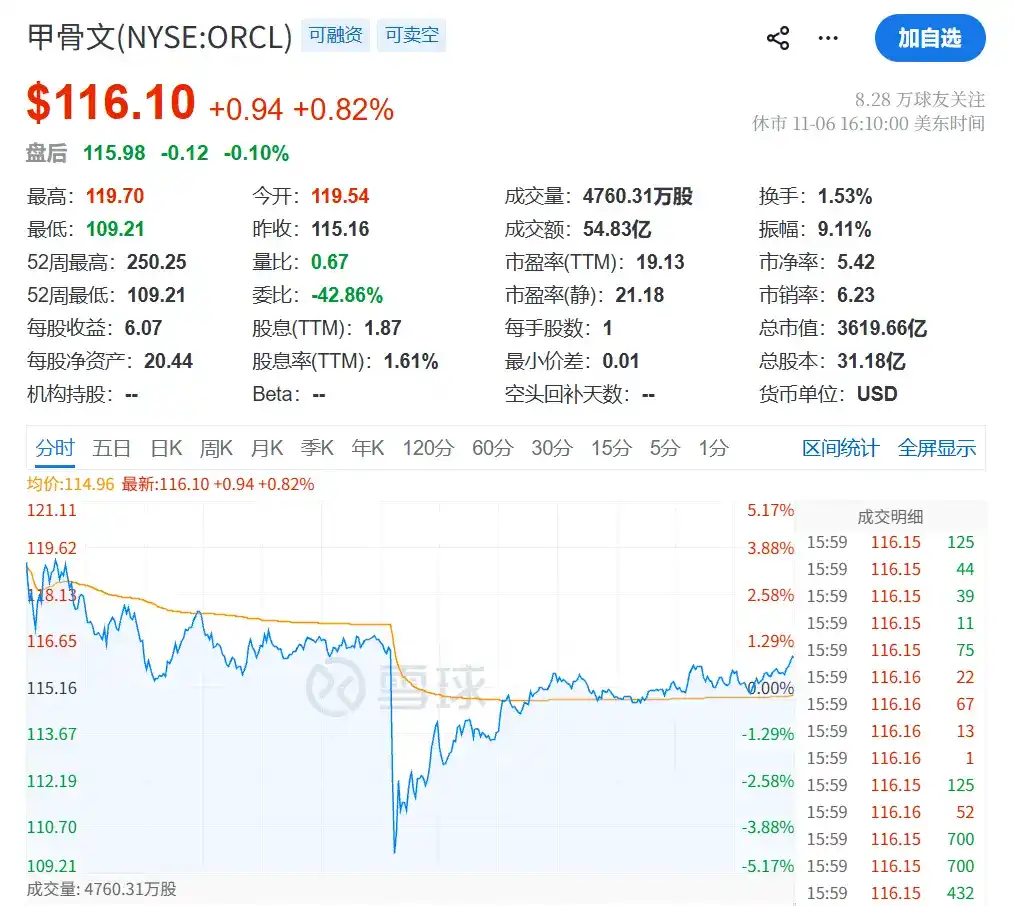
On November 6, Alphabet disclosed a stake of about 2.977 million Qualcomm shares worth roughly $548 million as of the end of Q3 2026, a position absent from its June filing. Qualcomm shares rose over 3% premarket on the news. The investment was quickly linked to Qualcomm's push into data centers as it seeks to reduce reliance on smartphone chips. CEO Cristiano Amon reiterated plans for $5 billion in data center revenue by fiscal 2027 and over $15 billion by fiscal 2029. However, The Information reported the stake may relate to Qualcomm's acquisition of AI software startup Modular, which used Qualcomm stock as consideration; Alphabet's GV had invested in Modular, and two GV funds were listed as selling shareholders holding about 3.196 million shares—a figure that doesn't fully match Alphabet's disclosed 2.977 million. Qualcomm's smartphone business is under pressure: fiscal Q4 2026 handset chip revenue fell about 26% year-over-year to $5.14 billion, amid slowing smartphone growth and Apple's shift to in-house modems. Qualcomm has expanded into automotive, IoT, and PCs, and now sees data centers as a major opportunity. In June 2026 it unveiled its data center roadmap, including the Dragonwing portfolio (C1000 CPU, AI300 inference accelerator, and high-bandwidth compute), targeting over $15 billion in data center revenue and $40 billion in non-handset revenue by fiscal 2029. The Modular acquisition adds software—the Mojo language and MAX inference platform—to ease AI model deployment across hardware. Competition is intense: Nvidia still leads with CUDA and full systems, while AMD, Broadcom (custom ASICs), and Marvell compete, and cloud giants design their own chips—Google TPU, AWS Trainium/Inferentia, Microsoft Maia, Meta MTIA. Qualcomm announced a multi-generation custom chip deal with AWS covering AI inference and optical interconnect, reportedly allowing up to $60 billion in purchases plus warrants for up to 25 million shares; it is also working with Microsoft and Meta. Supply chain constraints remain a challenge. Google both designs TPUs and relies on partners: Broadcom co-designs TPUs under a long-term deal through 2031, and Marvell has a custom chip arrangement with potential share rights up to $12.2 billion. Google also holds Arm shares and uses Nvidia GPUs. Qualcomm's low-power and heterogeneous computing expertise could fit Google's inference needs, but no public evidence shows a data center chip deal. Existing Google-Qualcomm ties center on mobile and automotive, including expanded automotive collaboration in January 2026 and Snapdragon X Elite powering Googlebook. Whether deeper industrial links exist behind the stake remains unclear, but chip-company–tech-giant relationships are shifting as AI compute competition intensifies.

marsbit10h ago

Google Quietly Buys Qualcomm: Mobile Chip Giant Sets Sights on Data Centers, Targets Over $15 Billion in Annual Revenue

marsbit10h ago

Trading

Spot

Hot Articles

How to Buy ARB

Welcome to HTX.com! We've made purchasing Arbitrum (ARB) simple and convenient. Follow our step-by-step guide to embark on your crypto journey.Step 1: Create Your HTX AccountUse your email or phone number to sign up for a free account on HTX. Experience a hassle-free registration journey and unlock all features.Get My AccountStep 2: Go to Buy Crypto and Choose Your Payment MethodCredit/Debit Card: Use your Visa or Mastercard to buy Arbitrum (ARB) instantly.Balance: Use funds from your HTX account balance to trade seamlessly.Third Parties: We've added popular payment methods such as Google Pay and Apple Pay to enhance convenience.P2P: Trade directly with other users on HTX.Over-the-Counter (OTC): We offer tailor-made services and competitive exchange rates for traders.Step 3: Store Your Arbitrum (ARB)After purchasing your Arbitrum (ARB), store it in your HTX account. Alternatively, you can send it elsewhere via blockchain transfer or use it to trade other cryptocurrencies.Step 4: Trade Arbitrum (ARB)Easily trade Arbitrum (ARB) on HTX's spot market. Simply access your account, select your trading pair, execute your trades, and monitor in real-time. We offer a user-friendly experience for both beginners and seasoned traders.

9.5k Total ViewsPublished 2024.03.29Updated 2026.10.30

How to Buy ARB

Discussions

Welcome to the HTX Community. Here, you can stay informed about the latest platform developments and gain access to professional market insights. Users' opinions on the price of ARB (ARB) are presented below.

活动图片