AI Assesses a Bug in XRP Ledger That Auditors Had Overlooked for Almost 10 Years

cryptonews.ruPublished on 2026-10-12Last updated on 2026-10-12

Abstract

The AI system Veria AI has uncovered a critical chain of vulnerabilities in the XRP Ledger that could have allowed for the creation of spendable XRP beyond the defined supply limit. This flaw had existed in the platform's live payment engine code since 2015, and a related bug in the intended protective mechanism had been present since 2017. RippleX engineers confirmed the exploit, prompting the emergency release of network update xrpld 3.4.1. Developers found no evidence of the vulnerability being exploited in public networks. This marks the second instance in 2026 where a critical XRPL bug, hidden for years within long-operational code, has been discovered by an AI tool.

The Veria AI system has discovered a critical chain of errors in the $XRP Ledger that allowed for the creation of spendable $XRP exceeding the established supply. The vulnerability had been present in the live code of the payment engine since 2015, and the protective mechanism that was supposed to prevent such an operation contained a related error dating back to 2017. RippleX engineers confirmed the exploit, after which the network received an emergency update, xrpld 3.4.1. The developers found no evidence of the vulnerability being exploited in public networks.

The editorial team at Happy Coin News had previously covered the vulnerability in the $XRP Ledger. However, Veria reveals a broader issue: this is already the second instance in 2026 where a critical bug in XRPL has been discovered by an artificial intelligence tool, with the latest finding having remained hidden for years within long-running code.

Trending Cryptos

Related Questions

QWhat critical vulnerability did the AI system Veria AI discover in the XRP Ledger?

AVeria AI discovered a critical chain of errors in the XRP Ledger that allowed for the creation of spendable XRP beyond the established supply limit.

QHow long had the vulnerability existed in the XRP Ledger's code before it was discovered?

AThe vulnerability had existed in the live code of the payment engine since 2015, and a related flaw in a protective mechanism had been present since 2017.

QWhat action was taken after RippleX engineers confirmed the exploit?

AAfter RippleX engineers confirmed the exploit, the network received an emergency update to version xrpld 3.4.1.

QWas there any evidence of the vulnerability being exploited in the public networks?

ANo, the developers did not find any traces of the vulnerability being exploited in the public networks.

QAccording to the article, what does the discovery by Veria AI illustrate about a broader problem in 2026?

AIt illustrates that this is the second case in 2026 where a critical error in the XRPL has been discovered by an artificial intelligence tool, with the new find having remained hidden for years in long-running code.

Related Reads

From Harshly Criticizing Stablecoins to Building an L1: Airwallex's Jack Zhang Isn't "Converting" — the Battle for the Settlement Layer Has Begun

In June 2025, Airwallex CEO Jack Zhang publicly questioned stablecoins, arguing that fiat conversion costs outweighed their cross-border payment benefits and that crypto had failed to solve real-world problems for 15 years. Yet just 17 months later, in November 2026, Zhang emerged as co-founder of Alta, a blockchain project that raised $80 million (a $47.5 million Series A led by Index Ventures plus a $32.5 million seed round). Rather than a change of heart, the move reflects commercial necessity: a battle over the stablecoin settlement layer is underway, and payment giants that stay out risk becoming mere interfaces atop someone else's chain. Alta is not a general-purpose public chain but a compliant Layer 1 built for banks and licensed payment institutions. Co-founder Loong Wang, previously of Ren Protocol, says existing chains like Ethereum and Solana cannot simultaneously meet institutional demands for privacy, compliance, integration with local financial systems, and liquidity. Alta uses recursive zero-knowledge proofs to enable on-chain compliance checks without exposing identities or transaction amounts, and builds in programmable compliance modules, native identity authorization, and anti-airdrop protections. Co-founder Catherine Porter previously led Meta's Libra (Diem) partnerships. Airwallex itself is Alta's key advantage: with $287 billion in annualized volume, $1.3 billion in revenue, 200 countries, and 90 currencies, it will channel enterprise clients onto the new chain. Zhang's apparent reversal is consistent: he criticized stablecoins as cheap remittance tools, but now bets on tokenized fiat settlement infrastructure. Competitive pressure comes from Stripe, which acquired Bridge for $1.1 billion, bought Privy, and incubated the Tempo chain (raising $500 million at a $50 billion valuation, with OpenAI, Shopify, Deutsche Bank, and Visa as partners). Circle's Arc, Fireblocks, and Canton Network are also competing. With stablecoin market cap exceeding $320 billion and 2025 on-chain volume surpassing $33 trillion, the real contest is over who controls minting, clearing, and fiat redemption. Success will depend less on technology than on three factors: genuine adoption by traditional financial institutions, compliance adaptation across jurisdictions, and efficient on- and off-ramps to real banking systems. The paradigm has shifted: instead of disrupting banks, fintech giants now aim to build infrastructure that lets traditional finance voluntarily move on-chain. Pragmatism, not ideology, now dominates the race.

marsbit1h ago

From Harshly Criticizing Stablecoins to Building an L1: Airwallex's Jack Zhang Isn't "Converting" — the Battle for the Settlement Layer Has Begun

marsbit1h ago

"Everyone is too conservative with AI!" Head of Claude Code: My approach is more ambitious

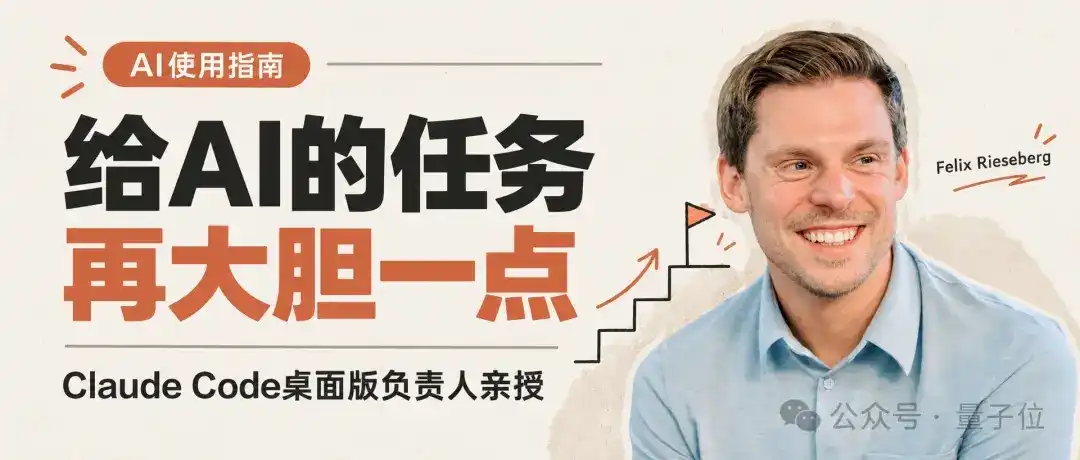
Felix Rieseberg, who leads Claude Code's desktop app, argues that most people use AI too conservatively and should set more ambitious goals. His central trick: set unreasonably aggressive targets and insist they're achievable—for example, instead of cutting website load time from 10 seconds to 5, aim for 0.2 seconds, and when the model protests, keep telling it the problem is solvable and to try again. He organizes ambition into four categories: speed (doing the same work faster), height (raising the abstraction level to focus on desired outcomes rather than individual tasks), depth (working like top experts, using their real tools, data, and methods), and breadth (drawing on ideas from other fields). For height, he suggests asking what you ultimately want to happen and what the goal behind the goal is—e.g., instead of fixing single crashes, require the app to never crash. For a quarterly business review, move from filling in a template to understanding what changed and why, identifying the most urgent decisions, and redesigning the review process itself. For depth, he advises insisting on the tools top professionals actually use (databases and statistical models rather than Markdown tables), setting "unreasonable" targets, challenging your own assumptions against raw data, hunting for new knowledge, and using external validation rather than letting the model grade itself. A useful prompt asks the model what top experts would do that you haven't requested, what raw materials and tools they'd use, and what besides the model and you could prove the result correct. For breadth, he recommends replacing nouns with verbs (not "make a PPT" but "in 30 minutes, convince busy people of an explanation and drive a decision under uncertainty"), assembling cross-disciplinary teams, and using multi-agent setups—while avoiding mere role-play in favor of adopting other fields' actual methods. He closes with self-efficacy research: people given clear, challenging goals outperform those told to do their best, and believing difficult things are possible—as with the four-minute mile—unlocks achievement. In an era of rapid capability gains, updating our beliefs about what's possible matters more than ever.

marsbit1h ago

"Everyone is too conservative with AI!" Head of Claude Code: My approach is more ambitious

marsbit1h ago

The Traditional Santa Rally: Will It Happen in US Stocks This Year?

US stocks have suffered a sharp selloff, but technical and positioning conditions are repairing, with Goldman Sachs, Morgan Stanley and JPMorgan all signaling a potential year-end rally. Goldman strategist Cosimo Codacci-Pisanelli argues that aggressive deleveraging (the most intense in a decade), valuation multiples back near 35-year averages (MSCI world forward P/E at 15.6x), upward EPS revisions, and seasonal factors create conditions for a year-end short squeeze. Morgan Stanley data shows hedge funds are now underweight AI for the first time since 2023, with the longest deleveraging streak in over 15 years; JPMorgan calls poor sentiment a bullish signal. However, the report flags a paradox: when all three banks call the same trade, the contrarian "year-end squeeze" becomes a crowded consensus trade. Worse, inflation pressure is building faster than during the pandemic: global manufacturing import price inflation is running at about 24% annualized, and the share of import categories with annualized gains above 5% has jumped to 25-40% across major economies. Firms are absorbing costs via margin compression, but upstream pressures typically pass through to consumers in 6-12 months, meaning the bill arrives in Q1. January is historically the month with the most price resets, and Goldman has added a third Fed hike to its forecast. A reflexive loop means a rally that loosens financial conditions removes the rationale for central bank caution, effectively borrowing from future returns. Goldman recommends long front-end inflation as a portfolio hedge, and notes the best rule for 2026 is to short every consensus trade.

marsbit2h ago

The Traditional Santa Rally: Will It Happen in US Stocks This Year?

marsbit2h ago

Claude Deciphers Gödel's Cryptic Manuscripts: 80-Year-Old Notes Shake the Mathematics World

In 1978, logician Kurt Gödel left behind thousands of pages of unpublished notes written in Gabelsberger shorthand, a nearly extinct German stenography system understood by only a handful of people. In 2017, Finnish logician Jan von Plato, upon reaching mandatory retirement age, set out to decode 16 workbooks comprising 1,009 pages that Gödel wrote after settling in Princeton in 1940. After years of manually transcribing the shorthand into modern English, his team could barely digest one page per week—until computer scientists suggested using Claude. Fed the transcripts, von Plato's own books, and modern literature, Claude produced a 650-page interpretation within days, later expanding to 1,084 pages. The AI identified 663 theorem-like results, around 440 of which were confirmed as new theorems through formal verification—suggesting Gödel proved nearly one theorem every two days in the early 1940s. Claude also revealed that Gödel came within a hair of proving the independence of the Axiom of Choice two decades before Paul Cohen's 1963 forcing method earned him a Fields Medal; Gödel had constructed an equivalent framework but made an error in a key definition of "finite support," a result later verified in Coq and praised by Gödel expert Akihiro Kanamori. The notes also contain results rediscovered only in the 1970s–80s, 14 unexplored research topics, and physics work including early use of the Lüders rule (proposed in 1951) and serious study of time-travel via his rotating "Gödel universe." Gödel died in 1978 of starvation caused by paranoia.

marsbit2h ago

Claude Deciphers Gödel's Cryptic Manuscripts: 80-Year-Old Notes Shake the Mathematics World

marsbit2h ago

Trading

Spot

Hot Articles

What is XRP 2.0

XRP 2.0: A New Frontier in the Cryptocurrency Landscape Introduction to XRP 2.0 In the ever-evolving realm of cryptocurrency, new projects continuously emerge, vying for attention and adoption. One such promising initiative is XRP 2.0, a novel cryptocurrency project designed to leverage advanced blockchain technology and robust encryption methodologies. While the name draws parallels with Ripple’s XRP, it’s crucial to note that XRP 2.0 operates independently, focusing on enhancing transaction security, privacy, and scalability. As the digital financial landscape increasingly embraces decentralized solutions, XRP 2.0 aims to contribute meaningfully to web3 and the overall expansion of crypto projects. What is XRP 2.0? At its core, XRP 2.0 is a cryptocurrency project that aims to create a secure and decentralized digital currency ecosystem. Its foundational technology integrates sophisticated blockchain principles with cutting-edge encryption techniques. The overarching goal of XRP 2.0 is to establish itself as a reliable and efficient platform enabling swift transaction execution while prioritizing enhanced privacy protections for its users. The project is promoted as a solution to many limitations faced by existing cryptocurrencies, proposing a system that can handle a higher volume of transactions with improved speed and privacy. This versatility positions XRP 2.0 as a significant contender in a marketplace riddled with various digital currencies. Who is the Creator of XRP 2.0? The identity of the creator behind XRP 2.0 has been flagged as ‘Wilbur.’ However, comprehensive details regarding Wilbur or their associated entity remain elusive. The anonymity of many cryptocurrency creators is not an uncommon phenomenon in the industry, often designed to maintain a degree of privacy and security. Who are the Investors of XRP 2.0? As of now, specific information related to the investment foundations or organizations supporting XRP 2.0 is not publicly available. In the cryptocurrency sector, the backing by reputed investors can significantly influence a project's credibility and success, yet the transparency regarding the financial supporters of XRP 2.0 has not been established. How Does XRP 2.0 Work? XRP 2.0 stands out by employing a combination of blockchain technology and advanced encryption algorithms that ensures secure and decentralized transactions. Its innovative structure includes unique features designed to foster user engagement and broaden functionalities beyond conventional cryptocurrency transactions. Among these features, XRP 2.0 incorporates AI-powered capabilities, such as text-to-image and text-to-speech functionalities. These additions are designed to enhance the interactive experience for users, promoting broader applicability across various sectors. By bridging technological advancements with user-centered design, XRP 2.0 aims to capture the attention of a diverse range of individuals and enterprises looking to integrate cryptocurrency solutions into their operational frameworks. Timeline of XRP 2.0 Understanding XRP 2.0 requires examining the milestones that have defined its journey thus far: July 23, 2023: XRP 2.0 is introduced as a novel cryptocurrency project, aiming to revolutionize secure and decentralized transaction capabilities in the blockchain domain. September 8, 2023: The launching of another project, XRP20, occurs, marking the emergence of an ERC-20 token on the Ethereum blockchain that remains unrelated to XRP 2.0. November 13, 2023: The XRP Ledger undergoes a significant update with the release of rippled server software version 2.0.0. It is essential to note that this development is disconnected from the XRP 2.0 cryptocurrency project. Key Points About XRP 2.0 To distill the essence of XRP 2.0, several critical factors emerge: Unique Features: The inclusion of features like AI-powered text-to-image and text-to-speech further diversifies the potential applications of XRP 2.0. Blockchain Technology: The framework utilizes advanced blockchain mechanisms and encryption protocols, ensuring a secure and decentralized environment for transactions. Scalability and Privacy: XRP 2.0 prioritizes enhanced privacy protections in transaction processes and the scalability necessary to accommodate a growing user base. No Affiliation with Ripple: Importantly, despite its name, XRP 2.0 does not have any allegiance or collaboration with Ripple’s XRP, distinguishing its operational framework and objectives within the cryptocurrency ecosystem. Conclusion XRP 2.0 represents an ambitious venture into the cryptocurrency sphere, aiming to offer a combination of security, privacy, and efficiency in digital transactions. By integrating sophisticated technologies and user-friendly features, the project sets out to broaden the horizons of what cryptocurrency can achieve in today's digital economy. While the anonymity of its creator and lack of disclosed investors might raise questions for some, XRP 2.0's focus on advanced functionalities and decentralisation enhances its appeal amidst an increasingly crowded crypto market. As the cryptocurrency landscape continues to evolve, XRP 2.0 may yet emerge as a pivotal player in the expansion of secure and scalable blockchain solutions.

3.6k Total ViewsPublished 2024.04.01Updated 2024.12.03

What is XRP 2.0

Discussions

Welcome to the HTX Community. Here, you can stay informed about the latest platform developments and gain access to professional market insights. Users' opinions on the price of XRP (XRP) are presented below.

活动图片