Bithumb Exchange Announces Addition of This Altcoin to Its Delisting Watchlist! Here's Why

cryptonews.ruPublished on 2026-09-09Last updated on 2026-09-09

Abstract

South Korean cryptocurrency exchange Bithumb has announced the inclusion of the HEMI token on its list of assets subject to delisting. This decision follows the discovery of a security vulnerability in the smart contract used for the token's distribution. According to Bithumb, a vulnerability was found in the smart contract used by the organization responsible for the HEMI ecosystem to distribute initial rewards. This flaw allowed for an unusual withdrawal of tokens from the contract and led to the unauthorized liquidation of assets. The security incident prompted Bithumb to review HEMI's trading status. The exchange has now placed the token under monitoring for potential delisting and will closely follow developments related to the project. This monitoring status does not guarantee final delisting but indicates the token is under review for compliance with Bithumb's listing criteria, and trading may be suspended in the future. Bithumb's future assessments of HEMI will be crucial. The project's response to the vulnerability, its handling of losses, and measures to prevent recurrence will be key factors in the exchange's analysis. Investors are advised to monitor further announcements from Bithumb regarding HEMI.

South Korean cryptocurrency exchange Bithumb has announced the addition of the HEMI token to its list of assets subject to delisting. It is reported that this decision was made after a vulnerability was discovered in the smart contract used for token distribution.

According to Bithumb's statement, a security vulnerability was discovered in the smart contract used by the organization responsible for the HEMI ecosystem's operation for distributing initial rewards. Due to this vulnerability, a portion of the tokens was withdrawn from the contract in an unusual manner, and the assets were liquidated without authorization.

The security incident prompted Bithumb to reconsider the trading status of the HEMI token on its platform. Following the incident, the exchange added the token to its delisting watchlist and announced it would closely monitor developments related to the project and the token.

Inclusion on the delisting watchlist does not mean that HEMI has been definitively delisted from Bithumb. However, this status signifies that the token is under review for compliance with the exchange's listing criteria, and its trading may be discontinued in the future.

Cryptocurrency exchanges may review listing status in situations such as project security issues, discovery of critical vulnerabilities in smart contracts, or threats to the safety of investor assets. Incidents related to smart contract security, in particular, can pose a significant threat to the safety of users' funds.

Bithumb's subsequent assessments regarding HEMI will be crucial for the token's future on the exchange. The project's response to the security vulnerability, the process for settling losses, and the measures taken to prevent similar incidents from recurring will be important during the analysis.

Investors should monitor any new announcements from Bithumb regarding HEMI, which has been added to the delisting watchlist.

*This is not investment advice.

end-content
Related Questions

QWhich cryptocurrency exchange announced the potential delisting of the HEMI token?

AThe South Korean cryptocurrency exchange Bithumb announced that it has added the HEMI token to its watchlist for potential delisting.

QWhat was the primary reason cited by Bithumb for placing HEMI under delisting review?

AThe primary reason was the discovery of a security vulnerability in the smart contract used by the organization responsible for the HEMI ecosystem for distributing initial rewards.

QWhat was a consequence of the smart contract vulnerability mentioned in the article?

ADue to the vulnerability, a portion of the tokens was withdrawn from the contract in an unusual manner, and assets were liquidated without authorization.

QDoes being placed on Bithumb's monitoring list for delisting mean HEMI is definitely delisted?

ANo, it does not mean definite delisting. It means the token is under review for compliance with the exchange's listing criteria, and trading may be suspended in the future.

QWhat factors will be important for Bithumb's final decision regarding HEMI, according to the article?

AKey factors will include the project's response to the security vulnerability, the process for settling losses incurred, and the measures taken to prevent similar incidents from happening again.

Related Reads

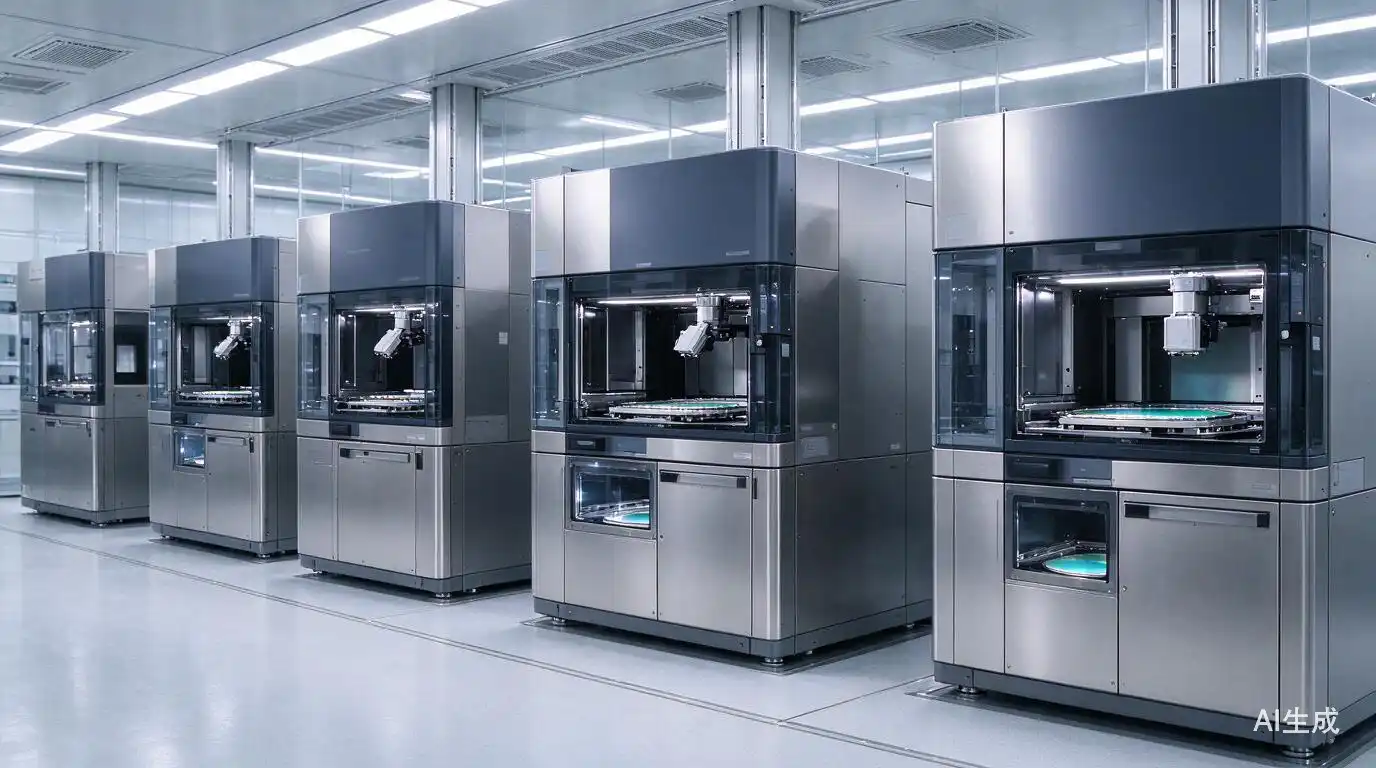
You've Never Heard of These Equipment Companies, and They're Appearing in Batches

A wave of new Chinese semiconductor equipment companies has emerged since 2024—names like Egram, Shenwei Zhichuang, Hengsheng Tianji, and others—most backed by state capital or major industrial players rather than traditional VCs. Registered capital ranges from tens of millions to 5.566 billion yuan, and many are targeting low-domesticated segments such as lithography, metrology, light sources, and advanced etching. Three common traits stand out: state or corporate dominance, a consistent focus on hard-to-localize links, and capital arriving before products. The core challenge in semiconductor equipment is not building a prototype but securing fab validation. Fabs are reluctant to risk yield on unproven tools, creating a vicious cycle: no machine time means no process data, no data means no orders, and no orders means no funding for iteration. This round of change centers on solving that validation bottleneck. A multi-layered validation ecosystem has formed. Public pilot lines for third-generation semiconductors, silicon photonics, MEMS, and specialty processes offer low-cost, high-tolerance machine time—Pinghu Laboratory's 8-inch line, for example, has validated hundreds of domestic tools. New fabs reserve isolated validation slots during planning, as Huarun Micro does for power devices. Risk-sharing mechanisms, such as Xiamen's 50% cost subsidy (up to 5 million yuan per firm) and national first-unit insurance covering up to 80% of premiums, reduce downstream trial costs. Demand has also diversified. AI-driven HBM and server expansion boosted fab capex, while export controls and 12–18 month lead times for foreign tools forced fabs to try domestic alternatives. Many new fab projects—new storage IDMs, specialty process plants, power and compound semiconductor lines, advanced packaging—are independent from established players and motivated to adopt domestic suppliers. Local funds often invest in both fabs and equipment firms, coordinating validation slots internally, though hard metrics like particle control and MTBF remain strict. Talent and capital conditions matured only recently. The 2018–2022 expansion trained a pool of engineers skilled in complete tools, process, vacuum RF, precision motion, and optics. Investors now accept years without revenue, betting on narrow segments—electron-beam metrology, light sources, vacuum subsystems, specialty cleaning, bonding—that avoid direct competition with established leaders and fit the new validation ecosystem. The industry is shifting from isolated breakthroughs by a few leaders to cluster-wide supply chain filling. Yet risks abound: multiple teams crowd the same niche, pilot-line success may not survive mass-production stability tests, over-reliance on affiliated lines can lead to customization traps, and new fab delays can abruptly halt validation.

marsbit13m ago

You've Never Heard of These Equipment Companies, and They're Appearing in Batches

marsbit13m ago

Nomura Research Report Interpretation: US Stock ETFs Absorb $6.9 Billion in a Single Week, Stock-Bond Divergence Continues to Intensify

Nomura's FX Insights report, dated November 16, 2026, notes that although foreign inflows into U.S. equity ETFs and mutual funds rose to $6.9 billion in the week of November 9–13, up from $5.4 billion the prior week, the dip-buying momentum slowed somewhat in the latter half of the week. Nearly 39% of the weekly total (about $2.5 billion) flowed in on November 9 alone, extending the bargain-hunting seen after the previous week's selloff, when $2.1 billion entered on November 6. Daily buying stayed above $1 billion (November 11: $1.6 billion; November 12: $1.4 billion), but Nomura says the overall pace has begun to ease slightly. Divergence between equities and bonds is intensifying. U.S. bond ETFs and mutual funds saw $287 million of net outflows during the week, extending the prior week's $182 million outflow. Emerging-market thematic ETF inflows fell to $1.4 billion from $2.2 billion, with the split again favoring equities: $1.9 billion into stock funds versus $425 million of net outflows from bond funds. Asia-Pacific cross-border flows showed clear signs of braking. Net purchases of U.S. portfolio assets by previously active Korean retail investors plunged to $768 million from $2.6 billion, driven mainly by a sharp contraction in Korean retail buying of U.S. stocks. Taiwanese investors continued selling dollar assets, offloading another $439 million of USD-denominated bonds after net sales of $697 million the prior week.

marsbit1h ago

Nomura Research Report Interpretation: US Stock ETFs Absorb $6.9 Billion in a Single Week, Stock-Bond Divergence Continues to Intensify

marsbit1h ago

Trading

Spot
活动图片