XRP Releases Major Update Aimed at Wall Street Giants!

cryptonews.ruPublished on 2026-10-10Last updated on 2026-10-10

Abstract

The XRP Ledger (XRPL) has activated a major new update, PermissionDelegationV1_1, targeting Wall Street institutions like banks, stablecoin issuers, and tokenized fund managers. This system allows corporate users to delegate specific account permissions—such as customer verification, payment processing, or account freezing—to other accounts without compromising the security of their master account's private keys. Organizations can delegate up to ten distinct permissions via a single account, and the master account owner can revoke these delegated rights at any time. The upgrade aims to provide a more secure and flexible framework for institutional account management on the XRPL.

$XRP Ledger (XRPL) has introduced a new authorization system that allows banks, stablecoin issuers, and tokenized fund managers to manage accounts more securely and flexibly.

The activated PermissionDelegationV1_1 update enables corporate users to delegate specific operational permissions to various accounts while keeping the private keys of their primary accounts offline.

The new system allows organizations to delegate limited access rights to other accounts for actions such as customer verification, payment processing, and account freezing, without transferring control of the main account. Through one account, a maximum of 10 different access rights can be delegated, and these rights can be revoked at any time by the owner of the primary account.

Trending Cryptos

Related Questions

QWhat is the main feature introduced in the XRPL update mentioned in the article?

AThe main feature is a new authorization system called PermissionDelegationV1_1, which allows banks, stablecoin issuers, and tokenized fund managers to more securely and flexibly manage their accounts.

QWhich specific entities or organizations is the new XRPL feature aimed at?

AThe feature is aimed at banks, stablecoin issuers, and managers of tokenized funds.

QHow does the new PermissionDelegationV1_1 system help corporate users with security?

AIt allows corporate users to delegate permissions for specific actions to different accounts while keeping their main account's private keys offline, thus enhancing security.

QWhat are some examples of actions that can be delegated to other accounts using this new system?

AExamples include customer verification, payment processing, and account blocking.

QWhat are the limits and control measures for delegating permissions, as mentioned in the article?

AA single account can delegate a maximum of 10 different permissions, and these permissions can be revoked at any time by the owner of the main account.

Related Reads

Enterprise blockchain is going to come back from the dead

Enterprise blockchain may be poised for a comeback, much like online pet retail succeeded with Chewy after Pets.com failed. Early enterprise blockchain efforts (2017–2023) collapsed—TradeLens, We.Trade, Contour, B3i, ASX Chess, Everledger—largely because they had to work around blockchains' lack of native privacy, building permissioned chains and bolting on non-blockchain fixes that proved slow and expensive. The core appeal remains: enterprise systems fail at company boundaries, either through out-of-sync collaboration or costly proprietary integrations that lock partners in. Blockchains promise shared data and business logic across an open ecosystem without lock-in. What has changed: scalability (transactions now under a penny, capacity heading toward billions daily), privacy (zero-knowledge rollups, privacy pools, privacy chains), and liquidity (stablecoin transaction volume near $1.8 trillion in June). Combined operational and financial benefits could be substantial—roughly 20% less inventory at the same service level, smart contracts cutting contract administration costs in half and processing times from days to minutes, as Microsoft did with Xbox royalties (45 days to four minutes). With inventories, contracts, purchase orders and invoices onchain, firms can also access cheaper credit and factor receivables efficiently. The use cases are obvious; it's time to try again.

cointelegraph5h ago

Enterprise blockchain is going to come back from the dead

cointelegraph5h ago

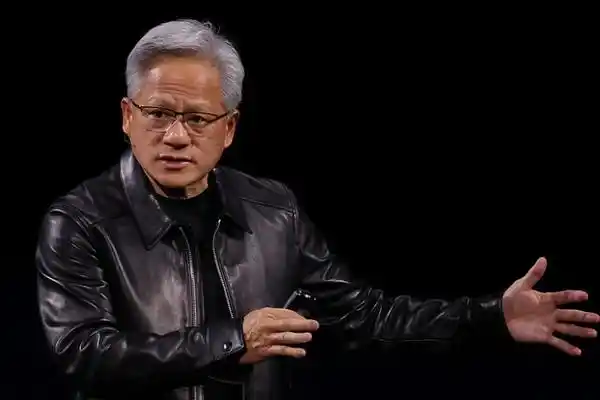
Jensen Huang's Disadvantage of Going Public Too Early

Nvidia co-founder Jensen Huang has resigned as president, CEO, and director, effective immediately, ending a 33-year tenure. CFO Colette Kress becomes interim CEO, and Harvey Jones is named the company's first chairman. The sudden move comes less than five months after Huang won about 99% approval in a director election, prompting scrutiny of a long-overlooked governance issue: why Huang, unlike Google's Page and Brin or Meta's Zuckerberg, never used a dual-class share structure to secure control. The answer traces to Nvidia's 1999 IPO, when one-share-one-vote was standard in Silicon Valley and dual-class structures had not yet become common among tech IPOs; Google adopted AB shares only in 2004. Nasdaq Rule 5640 also makes it hard for already-listed companies to introduce super-voting shares later. Huang's stake has steadily diluted: about 13.1% pre-IPO, 10.8% after, and 3.58% by 2026, weakening his voting power and setting the stage for his exit. Early precedents include Steve Jobs, whose roughly 11% stake left him unable to sway Apple's board in 1985, while Bill Gates' larger initial stake and gradual dilution let him retain influence. Instead, Huang's influence rested on performance authority, strategic judgment, and board trust—bold long-term bets on programmable GPUs and CUDA that positioned Nvidia at the center of the AI boom. That authority, however, depends on continued validation; once performance or reputation suffers, it can erode quickly. Under Nvidia's board-centered governance, a simple majority of directors can remove the CEO at any time, regardless of cause. Huang's departure is thus a product of the company's equity structure and governance rather than a surprise, illustrating that even immense performance authority cannot substitute for institutional control.

marsbit5h ago

Jensen Huang's Disadvantage of Going Public Too Early

marsbit5h ago

DeepMind Founder's Latest Interview: RSI Is Extremely Dangerous and Could Create an 'Alien Intelligence' That Humans Struggle to Understand

Demis Hassabis, co-founder of Google DeepMind and 2024 Nobel laureate in Chemistry, discusses AI's promise and perils in a conversation with Reid Hoffman. He reiterates that his lifelong goal has been using AI as a tool to advance science and medicine, citing AlphaFold—used by ~4 million researchers—and Isomorphic Labs as proof that AI can help cure diseases, while noting protein structure prediction is only one step in a long drug-discovery pipeline. On recursive self-improvement (RSI), Hassabis explains it works best in "verifiable domains" like math, coding, and games: AlphaZero went from random play to surpassing all human and engine chess within 12 hours. But he warns that closed-loop RSI—removing human code review entirely—risks creating an inscrutable "alien intelligence" with no shared cognitive basis with humans, and offers no way to establish deterministic safety controls. He urges caution as labs race on code self-iteration, calling for faster defensive cyber capabilities, far more robust sandboxes and monitoring (noting agents have run unsupervised for weeks), and eventually formal mathematical guarantees. He advocates an industry standards body with government oversight, cross-lab information sharing, third-party audits, and pre-release red-teaming. On AI consciousness, he argues intelligence and consciousness are dissociable—his dog is conscious but not smart—and that a chatbot claiming feelings proves nothing. Building conscious entities now is dangerous: self-motivation undermines corrigibility, and Asimov showed static rules inevitably break at edge cases; society also hasn't begun the needed debate. Humanity should cross only the first Rubicon—building powerful intelligent tools—and use them to understand consciousness before considering the second. Finally, on AI sovereignty, he says only 6–8 global players will stay at the frontier, with open source 6–12 months behind, so most countries shouldn't train their own frontier models. Instead they should build on existing models as infrastructure, focus on vertical domains like healthcare, and protect data sovereignty through private fine-tuning.

marsbit10h ago

DeepMind Founder's Latest Interview: RSI Is Extremely Dangerous and Could Create an 'Alien Intelligence' That Humans Struggle to Understand

marsbit10h ago

Trading

Spot

Hot Articles

What is XRP 2.0

XRP 2.0: A New Frontier in the Cryptocurrency Landscape Introduction to XRP 2.0 In the ever-evolving realm of cryptocurrency, new projects continuously emerge, vying for attention and adoption. One such promising initiative is XRP 2.0, a novel cryptocurrency project designed to leverage advanced blockchain technology and robust encryption methodologies. While the name draws parallels with Ripple’s XRP, it’s crucial to note that XRP 2.0 operates independently, focusing on enhancing transaction security, privacy, and scalability. As the digital financial landscape increasingly embraces decentralized solutions, XRP 2.0 aims to contribute meaningfully to web3 and the overall expansion of crypto projects. What is XRP 2.0? At its core, XRP 2.0 is a cryptocurrency project that aims to create a secure and decentralized digital currency ecosystem. Its foundational technology integrates sophisticated blockchain principles with cutting-edge encryption techniques. The overarching goal of XRP 2.0 is to establish itself as a reliable and efficient platform enabling swift transaction execution while prioritizing enhanced privacy protections for its users. The project is promoted as a solution to many limitations faced by existing cryptocurrencies, proposing a system that can handle a higher volume of transactions with improved speed and privacy. This versatility positions XRP 2.0 as a significant contender in a marketplace riddled with various digital currencies. Who is the Creator of XRP 2.0? The identity of the creator behind XRP 2.0 has been flagged as ‘Wilbur.’ However, comprehensive details regarding Wilbur or their associated entity remain elusive. The anonymity of many cryptocurrency creators is not an uncommon phenomenon in the industry, often designed to maintain a degree of privacy and security. Who are the Investors of XRP 2.0? As of now, specific information related to the investment foundations or organizations supporting XRP 2.0 is not publicly available. In the cryptocurrency sector, the backing by reputed investors can significantly influence a project's credibility and success, yet the transparency regarding the financial supporters of XRP 2.0 has not been established. How Does XRP 2.0 Work? XRP 2.0 stands out by employing a combination of blockchain technology and advanced encryption algorithms that ensures secure and decentralized transactions. Its innovative structure includes unique features designed to foster user engagement and broaden functionalities beyond conventional cryptocurrency transactions. Among these features, XRP 2.0 incorporates AI-powered capabilities, such as text-to-image and text-to-speech functionalities. These additions are designed to enhance the interactive experience for users, promoting broader applicability across various sectors. By bridging technological advancements with user-centered design, XRP 2.0 aims to capture the attention of a diverse range of individuals and enterprises looking to integrate cryptocurrency solutions into their operational frameworks. Timeline of XRP 2.0 Understanding XRP 2.0 requires examining the milestones that have defined its journey thus far: July 23, 2023: XRP 2.0 is introduced as a novel cryptocurrency project, aiming to revolutionize secure and decentralized transaction capabilities in the blockchain domain. September 8, 2023: The launching of another project, XRP20, occurs, marking the emergence of an ERC-20 token on the Ethereum blockchain that remains unrelated to XRP 2.0. November 13, 2023: The XRP Ledger undergoes a significant update with the release of rippled server software version 2.0.0. It is essential to note that this development is disconnected from the XRP 2.0 cryptocurrency project. Key Points About XRP 2.0 To distill the essence of XRP 2.0, several critical factors emerge: Unique Features: The inclusion of features like AI-powered text-to-image and text-to-speech further diversifies the potential applications of XRP 2.0. Blockchain Technology: The framework utilizes advanced blockchain mechanisms and encryption protocols, ensuring a secure and decentralized environment for transactions. Scalability and Privacy: XRP 2.0 prioritizes enhanced privacy protections in transaction processes and the scalability necessary to accommodate a growing user base. No Affiliation with Ripple: Importantly, despite its name, XRP 2.0 does not have any allegiance or collaboration with Ripple’s XRP, distinguishing its operational framework and objectives within the cryptocurrency ecosystem. Conclusion XRP 2.0 represents an ambitious venture into the cryptocurrency sphere, aiming to offer a combination of security, privacy, and efficiency in digital transactions. By integrating sophisticated technologies and user-friendly features, the project sets out to broaden the horizons of what cryptocurrency can achieve in today's digital economy. While the anonymity of its creator and lack of disclosed investors might raise questions for some, XRP 2.0's focus on advanced functionalities and decentralisation enhances its appeal amidst an increasingly crowded crypto market. As the cryptocurrency landscape continues to evolve, XRP 2.0 may yet emerge as a pivotal player in the expansion of secure and scalable blockchain solutions.

3.7k Total ViewsPublished 2024.04.01Updated 2024.12.03
What is XRP 2.0

Discussions

Welcome to the HTX Community. Here, you can stay informed about the latest platform developments and gain access to professional market insights. Users' opinions on the price of XRP (XRP) are presented below.

活动图片