Before Lock-Up Expiration, After Acquisition: Is Huazhijie's 400 Million M&A a Transformation or Market Support?

marsbitPublished on 2026-09-30Last updated on 2026-09-30

Abstract

Hua Zhijie (603400.SH), a company listed for 15 months, announced an acquisition plan for 83.5052% of Gleaming at a valuation of ~405 million CNY. The target operates in the semiconductor chip testing component sector. Superficially, this is a modest deal, with Gleaming's annualized net profit (~27 million CNY) being small relative to Hua Zhijie's (~124 million CNY in 2025). The implied acquisition P/E ratio is around 15x. However, the context suggests motives beyond synergy. Hua Zhijie's net profit fell ~47% YOY in H1 2026, yet its stock price rose ~33.6% in 2026, reaching a high trailing P/E of ~80x. The article posits that maintaining a high valuation is crucial for the company, especially following the June 2026 lift of an 8% share lock-up. A series of concept-driven announcements from July to September preceded the acquisition-related trading halt, with the stock surging over 65% in that period. The deal's share issuance price is 39.08 CNY, nearly double the IPO price. Using highly valued shares to buy a lower-P/E asset is financially favorable. If the stock price falls, the deal could face difficulties. Even post-acquisition, Hua Zhijie's P/E would remain high at ~58x, raising questions about its future stock price support. The timing—lock-up lift, concept hype, then acquisition—appears strategically arranged to bolster the share price.

On the evening of September 29, after a two-week trading halt, Huazhijie (603400.SH) disclosed a restructuring plan, proposing to acquire Zhao Die's 83.5052% stake in Geming by issuing shares and paying cash, and to raise supporting funds. Upon completion of the transaction, Huazhijie will wholly own Geming, entering the semiconductor chip testing support sector. On the surface, this appears to be a modestly priced small-scale M&A—the target's overall valuation is only about 485 million yuan, which is unlikely to materially change Huazhijie's profits or valuation. However, when placed within the timeline of the company's fifteen months since listing, its purpose may not merely be synergistic development, but also the stock price: a company whose profits have nearly halved consecutively, with a rolling P/E ratio as high as 77 times, needs a new story to maintain its high valuation, securing a better pricing window for lock-up share release and reduction, and subsequent refinancing (private placement).

Target Pricing Not High, Scale Not Large

Geming was established in April 2020 with a registered capital of 5 million yuan. It was previously 100% held by Zhao Die and primarily engaged in precision components for chip testing, such as test sockets and test probes. Test sockets are used to secure chips and connect them to testers, while test probes are responsible for extracting electrical signals. These are precision small parts used in chip testing, packaging, and aging verification.

The barrier for such components lies not in manufacturing but in certification. The qualification cycle for suppliers in chip design and packaging/testing companies is long; a test socket must pass customer validation before mass supply. Once in the supply chain, it's difficult to be replaced.

Financial reports show that Geming's revenue in 2024 was 46.71 million yuan with a net profit of 8.41 million yuan; in 2025, revenue was 62.39 million yuan with a net profit of 13.51 million yuan; for the first eight months of 2026, revenue was 59.11 million yuan with a net profit of 18.09 million yuan, a net profit margin reaching 30.6%. Profits grew faster than revenue. Annualized, Geming's net profit is approximately 27 million yuan per year. Compared to Huazhijie's current overall profits, this figure is not large; last year Huazhijie's after-tax profit was 124.4 million yuan.
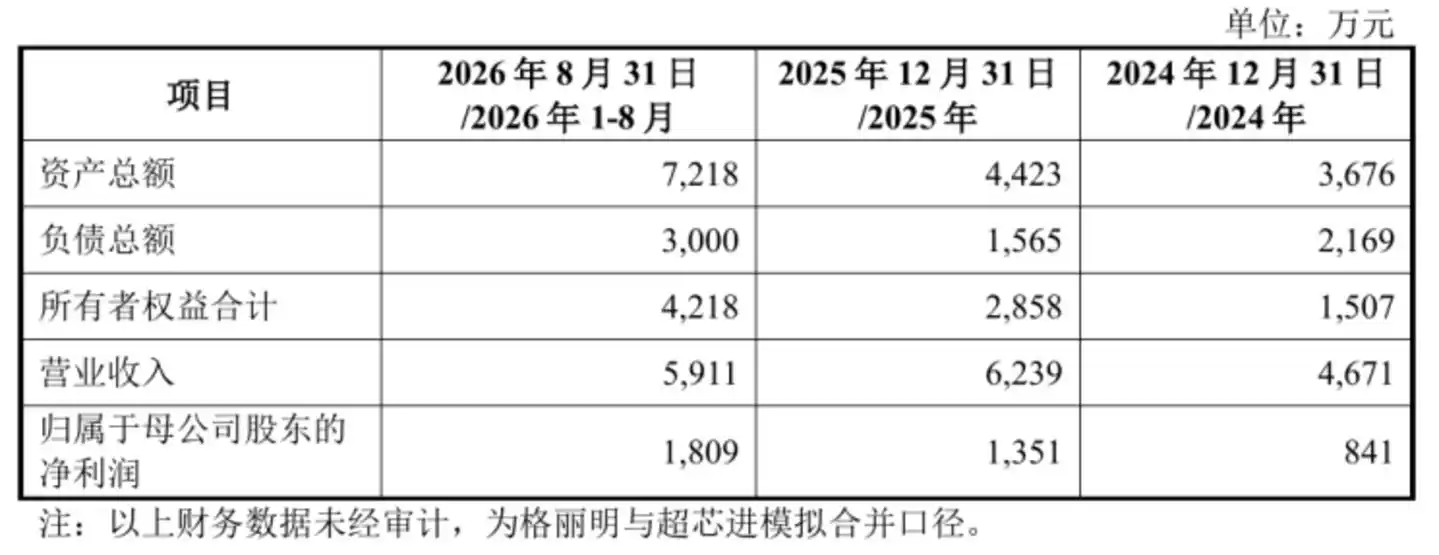
Image source: Company Announcement

Based on the price implied by Huazhijie's previous equity investment, Geming's overall valuation is approximately 485 million yuan. The remaining 83.5052% stake corresponds to about 405 million yuan, relative to an annualized net profit of roughly 27 million yuan, implying an acquisition P/E ratio of about 15 times. This pricing aligns with that of Shandong Weida, which also makes power tool components, at about 16.8 times P/E, a norm in the manufacturing industry.

The equity arrangement proceeds in two steps. According to the agreement signed on September 24, 2026, Huazhijie first acquires existing shares for 45 million yuan, then injects 35 million yuan in capital increase, totaling 80 million yuan to obtain a 16.4948% stake post-capital increase; the remaining 83.5052% stake is to be acquired via share issuance and cash payment. Per this agreement, the registered capital will increase from 5 million yuan to 5,388,889 yuan after the capital increase. As of the plan signing date, the previous equity transfer and capital increase are still undergoing industrial and commercial registration changes.

Profits Nearly Halved, Needing a New Story

Looking at the acquirer. Huazhijie's main business is smart switches, controllers, brushless motors, and precision structural components. It listed on June 20, 2025. Its net profits attributable to shareholders in 2024 and 2025 were 153.50 million yuan and 124.36 million yuan respectively, with 2025 showing an 18.99% year-on-year decline. In the first half of 2026, the net profit attributable to shareholders was 44.2528 million yuan, compared to 83.1518 million yuan in the same period last year, a decrease of 46.78%, nearly halved.
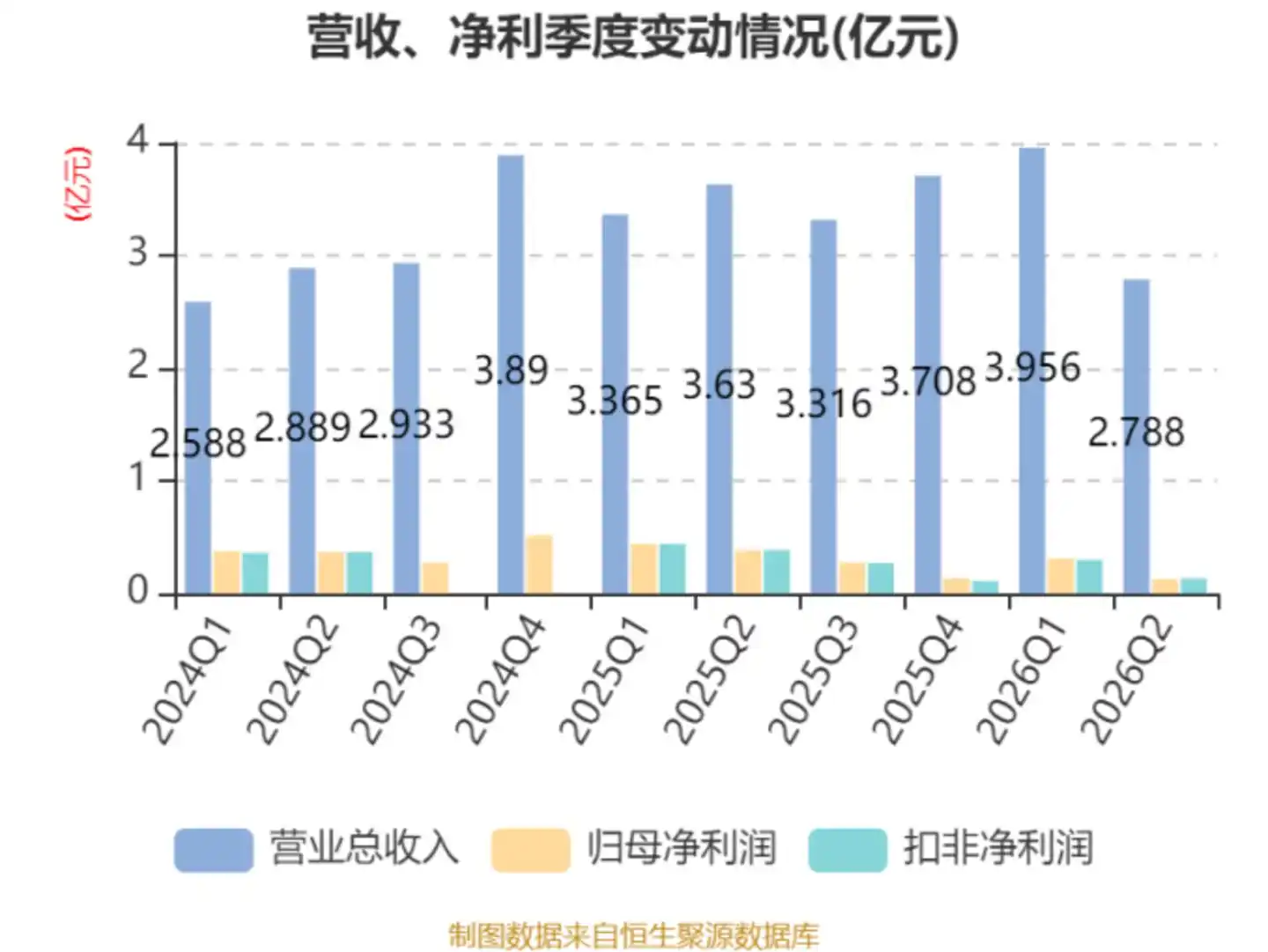
Image source: Reprinted from China Securities Network

The company's interim report disclosed that the profit decline this period was mainly due to exchange rate fluctuations and rising raw material costs, with financial expenses increasing from -4.8359 million yuan in the same period last year to 16.7126 million yuan. During the same period, the company's export sales amounted to 476 million yuan, accounting for 73.16% of main business revenue. With exports exceeding 70%, the impact of exchange rate changes on profits is significantly amplified.

The business structure also amplifies this volatility: revenue from power tool components in the same period was 592.88 million yuan, accounting for 87.92% of operating revenue; revenue from consumer electronic components was 57.1748 million yuan, accounting for 8.48% of operating revenue. The business remains relatively concentrated, making it susceptible to industry cyclical changes affecting overall performance.

However, the secondary market stock price has diverged from its performance. On September 30, the company's closing price was 53 yuan, with a total market capitalization of 6.881 billion yuan. Comparing on a forward-adjusted price basis, the cumulative increase since 2026 is about 33.63%, with the highest intra-year price around 69.09 yuan. Calculating the trailing twelve-month profit by subtracting the first half of 2025's profit from the full-year 2025 profit and adding the first half of 2026's profit results in 85.4596 million yuan, corresponding to a rolling P/E ratio of about 80.52 times.

For an OEM-type company whose profits halved in the first half of the year, maintaining such a valuation leaves only two paths: either profits increase substantially, or it must provide high expectations to secondary market investors.

The company's motivation to maintain a high stock price may have two layers. On June 22, 2026, 8 million restricted shares of the company were unlocked, accounting for 8% of the total share capital. After the unlocking window opened, from July to September 2026, concepts like liquid-cooled servers, robot joint modules, drones, and semiconductor testing were intensively introduced. This was followed by the acquisition-related trading halt starting September 15. On the trading day before the halt, the stock price hit the daily limit-up. Observing the rhythm, it appears even delicate: unlocking first, concepts in the middle, acquisition last—an arrangement that can be called ingenious. All these operations were for the stock price rise. From July 21 to the trading halt on September 15, the company's stock price rose over 65%, far outperforming the index and peer companies.
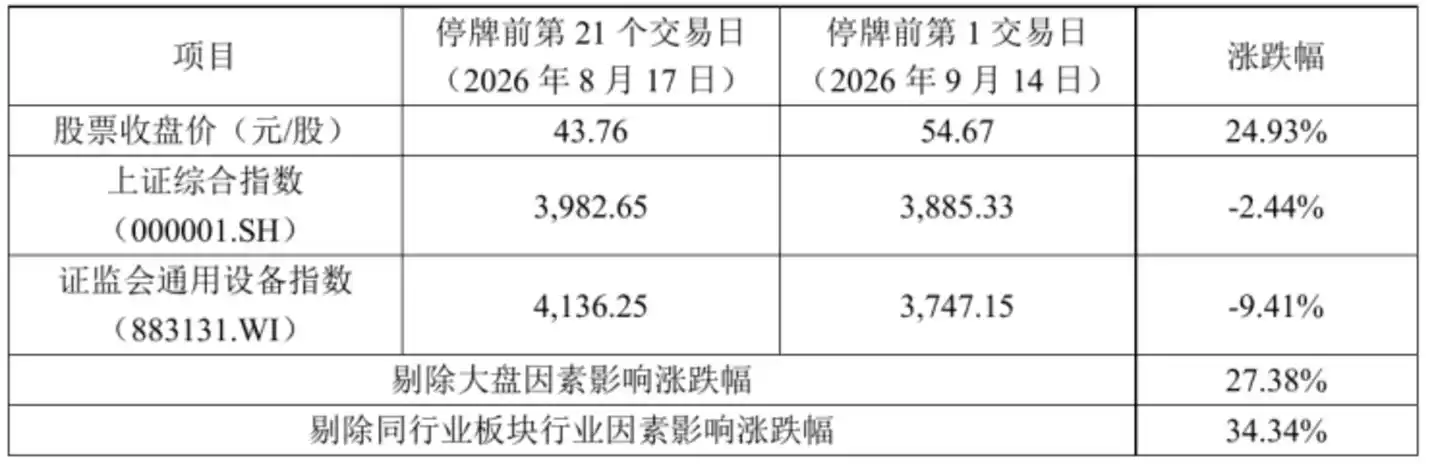
Image source: Company Announcement

A rising stock price is also necessary to guarantee the final payment: the share issuance price for this transaction is set at 39.08 yuan, nearly double the IPO price of 19.88 yuan. Using stock with a 75-times P/E ratio to buy an asset with about a 15-times P/E ratio is the most cost-effective arrangement on paper. If the stock price falls, the same consideration would require issuing more shares, increasing dilution. If it falls to a level unacceptable to the counterparty, the transaction itself may be suspended, terminated, or abandoned.

Even if Huazhijie successfully acquires Geming as desired, its P/E ratio could drop to about 58 times, which is still a high valuation. What the company will rely on to maintain its stock price then remains to be seen. (Author | Chen Xinan)

Trending Cryptos

Related Questions

QWhat is the main purpose of Hua Zhijie's acquisition of Geli Ming, according to the article?

AWhile the acquisition ostensibly allows Hua Zhijie to enter the semiconductor chip testing support field, the article strongly suggests its primary purposes are to support the company's stock price, create a positive narrative for the market to maintain its high valuation, and secure a favorable price window for upcoming restricted share sales and future refinancing.

QWhat are the key financial details of the acquisition target, Geli Ming?

AGeli Ming is valued at approximately 485 million yuan. For 2026, its annualized net profit is around 27 million yuan, implying a purchase P/E ratio of about 15 times. Its net profit margin has risen to about 30.6% for the first eight months of 2026.

QWhy is Hua Zhijie under pressure to maintain its stock price, as described in the article?

AHua Zhijie's financial performance is weakening sharply, with H1 2026 net profit nearly halving year-on-year. Despite this, its stock price has risen significantly, resulting in a very high trailing P/E ratio of over 80. This creates pressure to maintain the high valuation, especially as 8% of its total shares (8 million shares) became unlocked for sale in June 2026, and the company may need favorable market conditions for future capital raises.

QHow does the article characterize the sequence of events surrounding the stock price and the acquisition?

AThe article describes the sequence as strategically timed: share unlock occurred first in June 2026, followed by a series of market concepts (e.g., liquid cooling servers, robotics) being promoted from July to September, leading to a significant stock price rise. The company then announced the acquisition after a pre-announcement trading halt, which was preceded by a涨停 (limit-up) on the last trading day. The article implies this orchestrated sequence aimed to boost the stock price.

QWhat is the significance of the stock issuance price for the acquisition?

AThe stock issuance price for the acquisition is set at 39.08 yuan, nearly double the IPO price of 19.88 yuan. By using its highly-valued stock (with a P/E of ~75) to acquire a lower P/E asset (~15), Hua Zhijie makes the deal appear financially favorable on paper. However, if its stock price falls significantly, it would need to issue more shares for the same deal value, increasing dilution and potentially jeopardizing the transaction.

Related Reads

The Hidden Risks Behind Anthropic's Nearly $1 Trillion Bet

Anthropic's IPO filing reveals a fragile, high-risk financing mechanism behind its AI ambitions. The company has committed to up to $895.4 billion in data center spending through 2045, with profits squeezed by rising compute costs. Rather than paying upfront for hardware, Anthropic relies on supplier-backed financing: Broadcom arranged a $63 billion equipment financing deal under which it absorbs losses if Anthropic defaults—up to roughly $43 billion once equipment is delivered. Google and AMD similarly tie funding to hardware leases or deployments. This shifts risk onto chipmakers' balance sheets, and because custom TPUs serve a narrower ecosystem than Nvidia GPUs, resale risk is higher. Analysts warn that while individual loans appear safer, risk concentration across the system is rising and harder to assess. Anthropic also can issue up to $42 billion in convertible notes to Broadcom to cover rent, with interest rates rising from 9% to 13% and conversion terms worsening if revenue targets are missed. Despite holding $146.6 billion in liquidity as of September 30, its massive forward obligations and tangled partnerships could limit access to investment-grade financing. Key concerns: whether revenue growth can outrun compute costs and cover future commitments, and whether drawing on credit lines signals distress. Anthropic's Direct initiative—separating data center leasing from chip purchases—and IPO proceeds could give it more flexibility, but ultimately debt repayment depends on end-customer revenue.

marsbit6h ago

The Hidden Risks Behind Anthropic's Nearly $1 Trillion Bet

marsbit6h ago

Google Quietly Buys Qualcomm: Mobile Chip Giant Sets Sights on Data Centers, Targets Over $15 Billion in Annual Revenue

On November 6, Alphabet disclosed a stake of about 2.977 million Qualcomm shares worth roughly $548 million as of the end of Q3 2026, a position absent from its June filing. Qualcomm shares rose over 3% premarket on the news. The investment was quickly linked to Qualcomm's push into data centers as it seeks to reduce reliance on smartphone chips. CEO Cristiano Amon reiterated plans for $5 billion in data center revenue by fiscal 2027 and over $15 billion by fiscal 2029. However, The Information reported the stake may relate to Qualcomm's acquisition of AI software startup Modular, which used Qualcomm stock as consideration; Alphabet's GV had invested in Modular, and two GV funds were listed as selling shareholders holding about 3.196 million shares—a figure that doesn't fully match Alphabet's disclosed 2.977 million. Qualcomm's smartphone business is under pressure: fiscal Q4 2026 handset chip revenue fell about 26% year-over-year to $5.14 billion, amid slowing smartphone growth and Apple's shift to in-house modems. Qualcomm has expanded into automotive, IoT, and PCs, and now sees data centers as a major opportunity. In June 2026 it unveiled its data center roadmap, including the Dragonwing portfolio (C1000 CPU, AI300 inference accelerator, and high-bandwidth compute), targeting over $15 billion in data center revenue and $40 billion in non-handset revenue by fiscal 2029. The Modular acquisition adds software—the Mojo language and MAX inference platform—to ease AI model deployment across hardware. Competition is intense: Nvidia still leads with CUDA and full systems, while AMD, Broadcom (custom ASICs), and Marvell compete, and cloud giants design their own chips—Google TPU, AWS Trainium/Inferentia, Microsoft Maia, Meta MTIA. Qualcomm announced a multi-generation custom chip deal with AWS covering AI inference and optical interconnect, reportedly allowing up to $60 billion in purchases plus warrants for up to 25 million shares; it is also working with Microsoft and Meta. Supply chain constraints remain a challenge. Google both designs TPUs and relies on partners: Broadcom co-designs TPUs under a long-term deal through 2031, and Marvell has a custom chip arrangement with potential share rights up to $12.2 billion. Google also holds Arm shares and uses Nvidia GPUs. Qualcomm's low-power and heterogeneous computing expertise could fit Google's inference needs, but no public evidence shows a data center chip deal. Existing Google-Qualcomm ties center on mobile and automotive, including expanded automotive collaboration in January 2026 and Snapdragon X Elite powering Googlebook. Whether deeper industrial links exist behind the stake remains unclear, but chip-company–tech-giant relationships are shifting as AI compute competition intensifies.

marsbit6h ago

Google Quietly Buys Qualcomm: Mobile Chip Giant Sets Sights on Data Centers, Targets Over $15 Billion in Annual Revenue

marsbit6h ago

The AI Bills of the Magnificent Seven: Who Can Still Afford to Pay?

After the U.S. midterm elections, Wall Street's optimism about AI reversed sharply. On November 5, the "Magnificent Seven" lost about $1.04 trillion in market value in a single day, with Nvidia plunging 9.26% and shedding over $440 billion—far worse than its chip buyers Microsoft, Google, and Amazon. The selloff was triggered by fears that the new Congress could tighten AI regulation and slow data center construction. Despite strong fundamentals—Nvidia's revenue doubled year-over-year, and cloud and advertising businesses kept growing—investors worry that massive AI capex has not yet translated into equivalent profits. The four major buyers (Microsoft, Google, Amazon, Meta) are spending more than their operating cash flow can support: a year ago they had a $61.7 billion surplus, but in Q3 this became a $26.4 billion deficit. Companies are increasingly relying on debt, with the five largest cloud providers issuing about $121 billion in dollar bonds in 2025—over four times the previous five-year average. Nvidia is most exposed because over 90% of its revenue depends on data centers, and 40 of 41 local data center-related ballot measures in 10 states leaned toward restricting development, with 27 restrictive proposals passing. Texas alone accounts for nearly 30% of planned 2028 U.S. computing capacity. Analysts note that projects already under construction for 2027 are largely safe, but 2028 plans face real risk. Apple is relatively insulated due to its phone and services profit base, while Tesla fell the most, also hurt by Musk's political spending. The key question remains who will pay the next massive bill—and whether buyers can keep building fast enough to sustain Nvidia's growth.

marsbit8h ago

The AI Bills of the Magnificent Seven: Who Can Still Afford to Pay?

marsbit8h ago

Trading

Spot

Hot Articles

What is DOGE M

Doge Matrix ($doge m): The New Breed of Community-Driven Cryptocurrency Introduction In the ever-evolving landscape of cryptocurrency, new projects constantly emerge, each aiming to capture the interest of investors and enthusiasts alike. One of the latest entrants to this domain is Doge Matrix, represented by the ticker symbol $doge m. This project has attracted attention thanks to its roots in the popular meme culture surrounding Dogecoin, establishing its place within the web3 space. This article aims to provide a comprehensive analysis of Doge Matrix, covering its overview, creator, investors, functionality, timeline, and notable aspects. What is Doge Matrix ($doge m)? Doge Matrix is a community-driven cryptocurrency project that seemingly builds upon the widespread appeal of Dogecoin, a digital currency known for its Shiba Inu mascot and its meme origins. While the overarching objectives of Doge Matrix are not extensively defined, it is characterized by a commitment to harnessing community involvement and support. Unlike traditional cryptocurrencies that often emphasize utility or intrinsic value through underlying technologies, Doge Matrix positions itself within a space that embraces the cultural phenomenon of cryptocurrencies, particularly appealing to those who resonate with the ethos of meme-based assets. Drawing on the strengths of the Dogecoin community, Doge Matrix operates as part of a broader ecosystem, inviting participation and engagement from users who share an interest in cryptocurrency and the digital landscape. Who is the Creator of Doge Matrix ($doge m)? The identity of the creator of Doge Matrix remains unknown. This lack of transparency is not an uncommon occurrence in the cryptocurrency space, where some projects are launched without revealing the identities of their founders. The absence of information regarding the founding team can raise questions among potential investors about the project’s accountability and direction. Who are the Investors of Doge Matrix ($doge m)? As it stands, there is no publicly available information detailing the investors or investment foundations that back Doge Matrix. The project appears to rely primarily on community support rather than institutional investment. This model aligns with the community-driven nature of the initiative, fostering an environment where the direction of the project is shaped by its participants rather than being dictated by a select few financial backers. How Does Doge Matrix ($doge m) Work? The specifics regarding the operational mechanisms of Doge Matrix are somewhat vague, reflecting a broader trend of projects in the meme coin space where innovative functionalities are not always clearly articulated. Nonetheless, Doge Matrix seems designed to tap into the existing cryptocurrency ecosystem by encouraging user participation while tapping into the familiar cultural references associated with Dogecoin. Its potentially unique characteristics derive from community interactions rather than technological advancements, emphasizing shared experiences and collaboration among token holders. While the exact innovations have not been explicitly outlined, the project appears to create a space where community members can engage, share ideas, and propel the project's potential forward. Timeline of Doge Matrix ($doge m) Reflecting on the project’s timeline reveals notable events that have defined its journey thus far: November 25, 2024: Doge Matrix reached its all-time high value, marking a significant milestone in its early history. January 1, 2025: Conversely, Doge Matrix hit its all-time low value, illustrating the volatility often associated with cryptocurrencies, especially in the early stages of a project's lifecycle. Ongoing: The project continues to be actively traded and supported by its community, although specific future milestones or objectives have yet to be disclosed. Key Points About Doge Matrix ($doge m) Community Focus At the heart of Doge Matrix is a commitment to community engagement. The project thrives on the premise of collaboration and shared objectives among its members, emphasizing the importance of collective effort. Unlike centralized projects that often have a defined leadership structure, Doge Matrix at present showcases a more fluid approach to governance, where every community member's voice matters. Volatility The cryptocurrency market is notorious for its volatility, and Doge Matrix is no exception. Its price history reflects significant fluctuations between high and low values, which is typical of many new cryptocurrencies but underscores the risks associated with investment in emerging tokens. Lack of Detailed Information One of the most striking features about Doge Matrix is the scarcity of detailed information regarding its technological underpinnings and operational mechanisms. This ambiguity necessitates that potential investors conduct thorough due diligence before engaging with the project. Conclusion In summary, Doge Matrix ($doge m) illustrates a new wave of cryptocurrency projects that lean heavily on community engagement and cultural relevance. While lacking in certain specifics—such as clear leadership, defined objectives, and detailed functionality—the project has managed to generate interest within the crypto community, leveraging the established appeal of meme culture. As with any investment in the cryptocurrency space, understanding the inherent risks and conducting comprehensive research is essential for potential participants. Doge Matrix stands as a reminder of the dynamic, sometimes unpredictable nature of the crypto industry, marked by constant evolution and enthusiasm for community-driven initiatives.

6.5k Total ViewsPublished 2025.02.03Updated 2025.02.03

What is DOGE M

What is $M

Understanding Mantis ($M): A New Era in Cross-Chain Interoperability In the continually evolving landscape of Web3 and cryptocurrency, new projects strive to offer innovative solutions aimed at enhancing the user experience and expanding functional possibilities within the decentralized financial ecosystem. One such project garnering attention is Mantis ($M), a pioneering protocol founded on the principles of cross-chain interoperability and intent-based settlements. This article delves into the essential aspects of Mantis, including its core functionality, creators, investment backing, innovative features, and critical milestones. What is Mantis ($M)? Mantis is described as a multi-domain intent settlement protocol that simplifies cross-chain interactions, enabling users to execute complex financial transactions across various blockchain platforms seamlessly. The protocol operates through three primary layers: Intent Expression: Users can articulate their transaction goals using natural language facilitated by the DISE LLM, an advanced AI language model. For instance, a user might express a desire to swap Ethereum (ETH) for Solana (SOL) with a specific slippage tolerance of 1%. Execution: This layer employs a network of solvers that compete to fulfill user intents. Transactions are executed using mechanisms such as Coincidence of Wants (CoWs) and Order Flow Auctions (OFAs), which ensure that user demands are met optimally. Settlement: Leveraging the Inter-Blockchain Communication (IBC) protocol, Mantis enables atomic cross-chain transactions, allowing users to operate across various supported chains, including Ethereum, Solana, and Cosmos. Mantis is engineered to introduce native yield generation for idle assets, employing cryptographic proofs to maintain the integrity of transactions throughout the entire process. Creators & Development Team Mantis was conceived by the Composable Foundation, a research-driven organization notable for its emphasis on blockchain interoperability solutions. This foundation collaborates with esteemed academic institutions, including Harvard University and the University of Lisbon, contributing to extensive research and development efforts that inform Mantis's architecture and functionality. The Composable Foundation’s commitment to fostering innovation in the blockchain space positions Mantis as a robust solution for the growing demand for interoperability among multiple blockchain networks. Investors & Backing While specific details about individual investors have not been publicly disclosed, Mantis enjoys substantial backing from various entities, including: Ecosystem grants from IBC-enabled chains, which support the protocol's growth and integration within decentralized finance ecosystems. Strategic partnerships with infrastructure providers that enhance Mantis's network capabilities and deployment strategies. Funding through the Composable Foundation's treasury, ensuring sustained financial support for ongoing development and operational costs. These collaborative efforts reflect a consensus among stakeholders about the importance of enhancing cross-chain functionality and the potential utility of Mantis's infrastructural innovations. Key Innovations Mantis sets itself apart through several pioneering innovations that enhance its functionality and utility: Chain-Agnostic Intents: Users can initiate transactions from any supported chain while settling on another. This flexibility empowers users, driving increased interaction among different platforms. AI-Powered Interface: The integration of DISE LLM allows users to conduct complex DeFi operations using natural language, thereby simplifying interactions and making blockchain technology accessible to a broader audience. Cross-Domain MEV Capture: Mantis creates an internal market for maximal extractable value (MEV) through competitions among solvers. This innovative approach allows for greater efficiency and value extraction in complex transactions. Modular Settlement Layer: The protocol supports various verification methods, including zero-knowledge proofs and optimistic rollups, providing a versatile framework that can adapt to emerging blockchain technologies. Historical Timeline Mantis's development is marked by several critical milestones that chart its trajectory and growth: | Year | Milestone | |————|————————————————————————-| | 2022 | Initial concept development within the Composable Foundation's research division. | | Q3 2024 | Launch of the testnet with bridging capabilities between Solana and Ethereum. | | Q1 2025 | Anticipated Token Generation Event (TGE) alongside the mainnet launch. | | Q2 2025 | Expected integration of DISE LLM and expansion of cross-chain capabilities. | | 2025 H2 | Planned support for over 15 chains through further IBC upgrades. | This timeline outlines Mantis's evolution, from conceptual discussions to active implementation and future growth phases. Ecosystem Growth Strategy Mantis's strategy for ecosystem growth includes several initiatives designed to encourage user participation and developer engagement: Credits System: Users can earn protocol credits by providing liquidity and engaging in referral programs. These credits are redeemable for incentives in the future, fostering a robust user community. Modular Software Development Kit (SDK): This toolkit empowers developers to create applications based on intent-driven models utilizing Mantis's infrastructure, thus promoting innovation within its ecosystem. Governance Model: As the protocol matures, $M token holders will have a voice in protocol governance, allowing them to vote on proposed upgrades and changes, thereby enhancing community engagement and decentralization. Mantis represents a significant advancement in the realm of cross-chain architecture. By seamlessly integrating advanced AI algorithms with a robust settlement framework, Mantis seeks to tackle the problems of fragmentation within multi-chain ecosystems. Its innovative approach prioritizes improved user experiences while adhering to the foundational principles of decentralization and security, setting a new standard for the future interoperability of blockchain technologies. As Mantis continues its journey of growth and implementation, it promises to be a project to watch closely in the competitive landscape of Web3 and decentralized finance. With its focus on crossing boundaries and elevating user engagement, Mantis is poised to be an integral part of the future developments in the cryptocurrency space.

2.7k Total ViewsPublished 2025.03.18Updated 2025.03.18

What is $M

How to Buy M

Welcome to HTX.com! We've made purchasing MemeCore (M) simple and convenient. Follow our step-by-step guide to embark on your crypto journey.Step 1: Create Your HTX AccountUse your email or phone number to sign up for a free account on HTX. Experience a hassle-free registration journey and unlock all features.Get My AccountStep 2: Go to Buy Crypto and Choose Your Payment MethodCredit/Debit Card: Use your Visa or Mastercard to buy MemeCore (M) instantly.Balance: Use funds from your HTX account balance to trade seamlessly.Third Parties: We've added popular payment methods such as Google Pay and Apple Pay to enhance convenience.P2P: Trade directly with other users on HTX.Over-the-Counter (OTC): We offer tailor-made services and competitive exchange rates for traders.Step 3: Store Your MemeCore (M)After purchasing your MemeCore (M), store it in your HTX account. Alternatively, you can send it elsewhere via blockchain transfer or use it to trade other cryptocurrencies.Step 4: Trade MemeCore (M)Easily trade MemeCore (M) on HTX's spot market. Simply access your account, select your trading pair, execute your trades, and monitor in real-time. We offer a user-friendly experience for both beginners and seasoned traders.

13.2k Total ViewsPublished 2025.07.02Updated 2026.06.02

How to Buy M

Discussions

Welcome to the HTX Community. Here, you can stay informed about the latest platform developments and gain access to professional market insights. Users' opinions on the price of M (M) are presented below.

活动图片