Three Chip Segments in Hand, Ingenic H Achieves Dual Listing on A+H Markets

marsbitPublished on 2026-08-25Last updated on 2026-08-25

Abstract

Beijing Junzheng Technology Co., Ltd. (Junzheng) has achieved dual listing on the A-share and Hong Kong stock exchanges, solidifying its position as a platform semiconductor company. The company navigated the 2024 industry downturn, with a strong rebound in Q1 2026. Revenue reached 15.60 billion yuan, up 47.1% year-on-year, while net profit surged over 300% to 3.20 billion yuan, with a net margin of 20.5%. Key growth drivers include Automotive and Industrial storage, demand for AIoT and edge AI, and the robotics market. Junzheng operates three core product lines: Storage (ISSI brand, ~60% of revenue), Computing (Ingenic brand), and Analog (Lumissil brand). It competes globally, ranking 2nd in SRAM and 7th in niche DRAM and NOR Flash (2025 revenue). Its product synergy offers system-level solutions. The company plans to invest a significant portion of its HK$3.13 billion IPO proceeds into R&D and strategic M&A to fuel future growth.

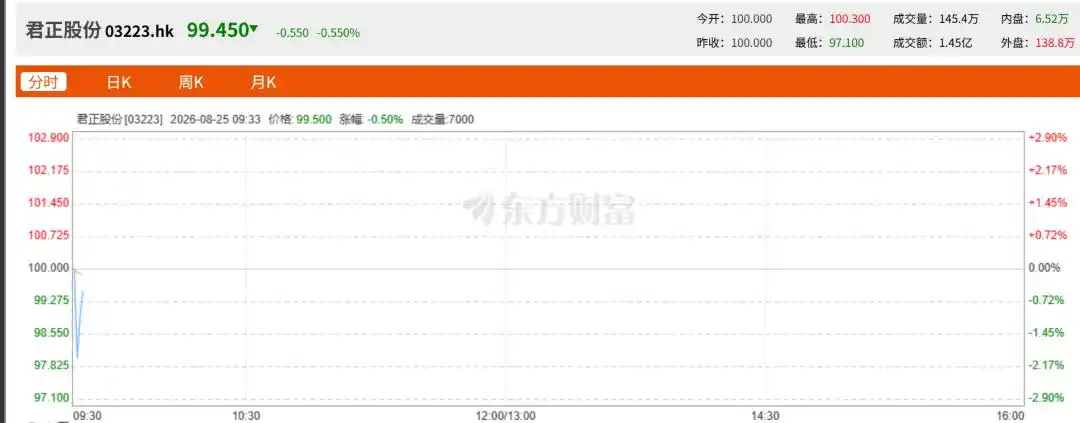
Just now, Ingenic H rang the bell for listing on the Hong Kong Stock Exchange, with an opening price of HK$100 per share and an opening market capitalization of approximately HK$51.5 billion. As early as May 31, 2011, the company was listed on the ChiNext Board of the Shenzhen Stock Exchange, with the stock code "300223". The IPO price was RMB 43.80 per share, with 20 million shares issued, raising RMB 876 million. It was called the "first embedded CPU stock in China." Following this Hong Kong listing, Ingenic H officially joins the ranks of semiconductor companies with dual A+H listings.
Most chip companies emphasize "specialization and focus"—storage companies stick to storage, computing companies delve into computing, and analog companies deepen their analog expertise, each guarding their own turf. However, Ingenic H has charted a different course, simultaneously laying out three major product lines: storage, computing, and analog, building a platform-based chip enterprise.

This platformization capability stems from a major acquisition completed in 2020. That year, Ingenic completed the acquisition of Beijing ISSC and achieved financial consolidation, indirectly controlling the U.S.-based Integrated Silicon Solution, Inc. (ISSI). Consequently, the originally "small but beautiful" company focused on embedded CPUs transformed into a chip platform spanning three segments. Now, as it lists in Hong Kong, we can examine the operational logic behind its journey through the data in its prospectus.

Performance Recovery: Numbers Don't Lie
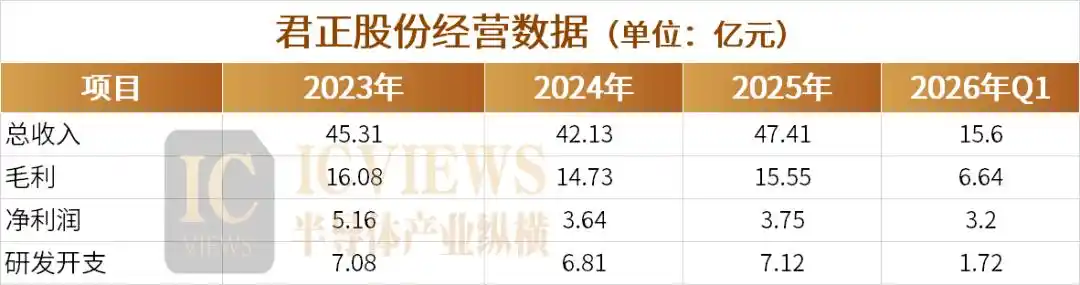
Let's first look at the overall performance. Ingenic's revenue was RMB 4.531 billion in 2023. It dropped to RMB 4.213 billion in 2024 amid industry downturn but rebounded to RMB 4.741 billion in 2025. In the first quarter of 2026, it surged to RMB 1.560 billion, a 47.1% increase from RMB 1.060 billion in the same period last year.

As revenue recovered, profit rebounded even more sharply. Net profit was RMB 516 million in 2023 with a net profit margin of 11.4%; it fell to RMB 364 million in 2024, with the margin dropping to 8.6%; it barely climbed back to RMB 375 million in 2025, but the net margin further compressed to 7.9%. Then, in the first quarter of 2026, net profit soared to RMB 320 million, more than triple the RMB 74 million from the same period last year. The net margin jumped to 20.5%, even higher than during the prosperous period of 2023. The latest financial report shows its net profit for the first half of the year is expected to increase by over 531%, reaching RMB 1.28 billion.

Gross profit margin also recovered. It was 35.5% in 2023, 35.0% in 2024, dropped to 32.8% in 2025, and then suddenly rebounded to 42.6% in the first quarter of 2026. Gross profit rose by 79% from RMB 371 million in Q1 2025 to RMB 664 million.
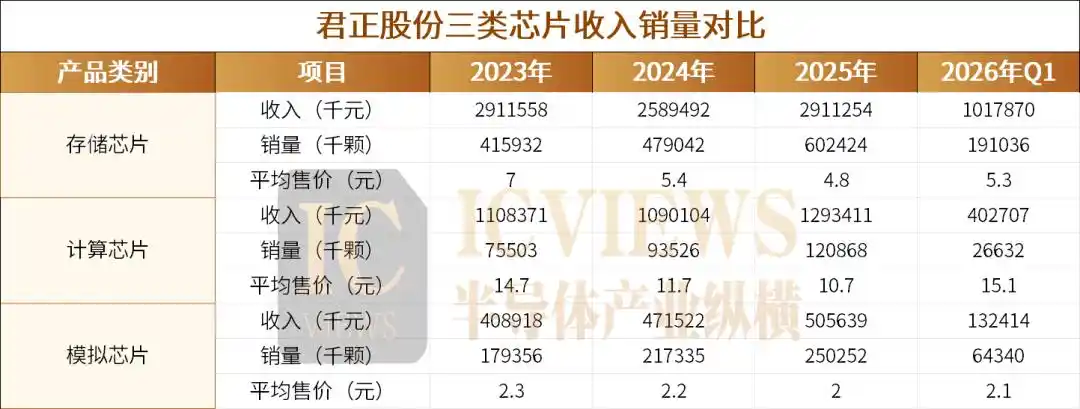
Breaking down the three product lines, memory chips remain the absolute mainstay, accounting for about sixty percent of revenue. From 2023 to 2025, memory chip revenue was RMB 2.912 billion, RMB 2.590 billion, and RMB 2.911 billion, respectively; it was RMB 1.018 billion in Q1 2026. Sales volume has also been continuously expanding, increasing from 416 million units in 2023 to 602 million units in 2025, with another 191 million units sold in Q1 2026. However, prices have experienced a rollercoaster ride: the average selling price (ASP) was RMB 7.0/unit in 2023, RMB 5.4 in 2024, RMB 4.8 in 2025, and finally recovered to RMB 5.3 in Q1 2026.

Revenue from computing chips has seen greater fluctuations. It was RMB 1.108 billion in 2023, dropped to RMB 1.090 billion in 2024, rebounded to RMB 1.293 billion in 2025; and reached RMB 403 million in Q1 2026. Sales volume grew from 75.5 million units in 2023 to 121 million units in 2025. The ASP fell sharply and rebounded strongly: RMB 14.7/unit in 2023, RMB 11.7 in 2024, RMB 10.7 in 2025, and suddenly jumped to RMB 15.1 in Q1 2026.

The analog chip line has been the most stable. Revenue increased from RMB 409 million in 2023 to RMB 472 million in 2024 and RMB 506 million in 2025; it was RMB 132 million in Q1 2026. Sales volume rose from 179 million units to 250 million units. Prices have also been stable: RMB 2.3, RMB 2.2, and RMB 2.0 from 2023 to 2025, respectively, remaining at RMB 2.1 in Q1 2026.

It's noteworthy that Ingenic's customer and supplier concentration has been decreasing. The revenue share of the top five customers dropped from 54.5% in 2023 to 50.3% in Q1 2026, with the largest customer's share decreasing from 21.0% to 15.6%. The procurement share of the top five suppliers decreased from 58.3% to 41.6%, with the largest supplier's share falling from 26.5% to 12.3%. This indicates its business scale is expanding, becoming less reliant on any single major customer or supplier.

In terms of R&D investment, RMB 708 million, RMB 681 million, and RMB 712 million were spent from 2023 to 2025, respectively, with absolute amounts largely unchanged. As a percentage of revenue, it decreased from 15.6% to 15.0%. R&D expenses were RMB 172 million in Q1 2026, accounting for 11.0% of revenue, with the percentage decrease due to rapid revenue growth. As of the end of March 2026, the company had 822 R&D personnel, accounting for 65.7% of total employees.

From "Single Point" to "Platform": A Product Map Pieced Together by Acquisition

The current form of Ingenic took shape after the acquisition of ISSI in 2020. Before the acquisition, it primarily focused on computing chips; afterwards, it added memory and analog chip product lines. Thus, with the three brands—ISSI (Memory), Ingenic (Computing), and Lumissil (Analog)—Ingenic's product portfolio was instantly completed.

Memory Chips (ISSI brand) include DRAM, SRAM, NOR Flash, and NAND Flash, all targeting "tough" applications like automotive electronics and industrial/medical sectors. Based on 2025 revenue, Ingenic ranks seventh globally in niche DRAM and second among mainland Chinese companies; first in SRAM in mainland China and second globally; seventh globally and third in mainland China for NOR Flash. These are not ordinary memory products; they must operate stably in environments from -40°C to 85°C, with requirements for data retention, endurance, and defect rates far exceeding consumer-grade levels. ISSI's over thirty years of accumulation have secured Ingenic's ticket into the automotive-grade supply chain.

Computing Chips (Ingenic brand) are based on CPU cores self-developed by Ingenic. Starting in 2005 with the XBurst series based on MIPS architecture; in 2014, it began betting on RISC-V, launching the Victory series, which is now used in its computing chip product line. Computing chips are divided into three lines: Smart Vision SoCs, Embedded MPUs, and AI-MCUs. Among these, its IP-Camera SoC ranks second globally. This is a type of semiconductor device that integrates ISP, video encoding logic, and other dedicated modules within a single chip, providing integrated computing power for network cameras.

Analog Chips (Lumissil brand) mainly include LED driver chips and Combo chips. LED driver chips are widely used in automotive exterior and interior lighting systems. In non-automotive markets, they are used in high-end gaming devices and home appliances. Combo chips integrate MCU, LED driver, touch sensor, and LIN/CAN bus interfaces into a single chip, specifically serving applications like automotive ambient lighting and touch controls.

How do these three lines interlock? For example, in an automotive electronic system, ISSI memory chips store data and code, Ingenic computing chips handle vision and AI tasks, and Lumissil analog chips manage power and communication. Customers can select storage, computing, and analog devices within the same supplier ecosystem, reducing multi-supplier management costs and achieving better hardware-software synergy. This is the value of platformization.

Niche Memory and Edge AI: Two Visible Growth Lines

Ingenic's memory chips have taken a "avoid the main battlefield" path. Instead of competing with Samsung and SK Hynix in standard DRAM, it specializes in niche types—segments with stringent reliability requirements like automotive-grade, industrial control, and aerospace. These markets have long order cycles and strong customer stickiness; once in the supply chain, replacement is difficult.
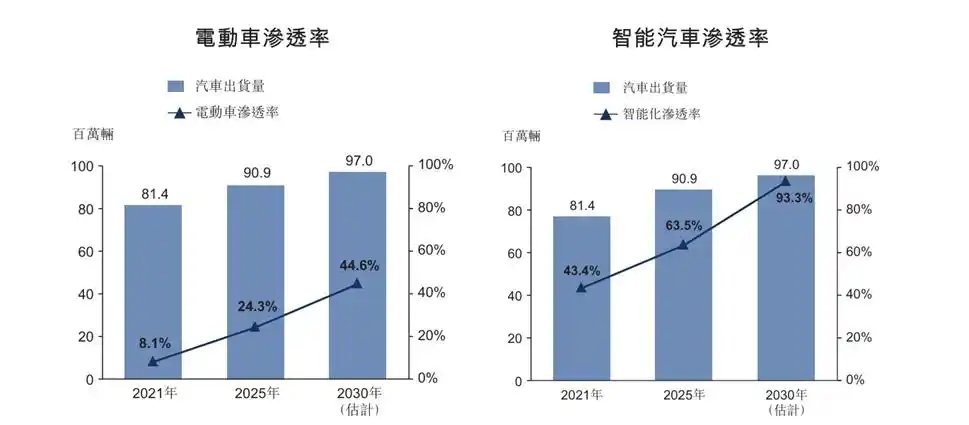
This path coincidentally steps into the trend of automotive intelligence. According to data from Frost & Sullivan, global passenger car shipments are expected to reach 90.9 million units in 2025, with electric vehicle penetration rising from 24.3% in 2025 to 44.6% in 2030; smart vehicle system penetration is expected to increase from 63.5% in 2025 to 93.3% in 2030. As cars become smarter, memory demand changes—L2+ and above autonomous driving models generate over 1TB of data daily, and memory chips must withstand high-intensity read/write operations in extreme environments.

Edge AI represents the growth logic for computing chips. In the prospectus, Frost & Sullivan predicts edge AI device shipments will reach 1.9 billion units by 2030. Ingenic's computing chips happen to catch this wave: computing chip revenue surged 49.1% in Q1 2026, partly due to increasing demand from security, AIoT, and edge AI devices. Additionally, the robotics market is expected to expand at a CAGR of 10.5% from 2025 to 2030. Ingenic's chips are already used in sweeping robots, industrial robots, and service robots. As robots become more intelligent, demand for motor control, power analog, and low-power memory will only grow.

In terms of forward-looking布局, Ingenic is also involved. 1x-nm high-density LPDDR4 products have been sampled, with ramp-up starting in the second half of 2025, and have entered mass production in Q1 2026; LPDDR5 is under planning. 3D DRAM is receiving significant investment, targeting the demand for high-bandwidth, large-capacity memory in AI servers and edge computing. For NAND Flash, it has established serial NAND and parallel NAND product lines in the 2D NAND field, while development of high-bandwidth 8IO serial NAND Flash is underway. In the 3D NAND field, eMMC and UFS product solutions can meet the requirements of automotive cockpit and autonomous driving scenarios.

Hong Kong Listing: Ammunition, Risks, and the Platformization Challenge

For this Hong Kong listing, Ingenic H has set the final offer price at HK$100 per H share and is expected to raise approximately HK$3.13 billion. How will this money be allocated? Half will be invested in R&D to strengthen innovation and product development across the three core product lines; a quarter will be reserved for strategic investments and acquisitions, targeting chip design companies and enterprises along the semiconductor value chain, including upstream and downstream players like IP or EDA suppliers, wafer manufacturers, and packaging and testing service providers; 15% for expanding the sales network; and 10% for working capital and other general corporate purposes.

This allocation ratio reveals two intentions: first, Ingenic does not plan to live off past achievements, with R&D still being a major focus; second, M&A holds significant weight in its strategy. After all, the 2020 acquisition of ISSI completely rewrote the company's fate. Keeping ample ammunition on hand clearly indicates waiting for the next "ISSI" to appear.

Why list in Hong Kong when already listed on the A-share market? Besides gaining an additional financing channel, the higher international profile of the Hong Kong market helps enhance overseas brand recognition for a company like Ingenic, whose products are sold in over 50 countries across Asia, the Americas, and Europe. It also facilitates future cross-border transactions and collaborations.

However, this path is not without risks. The semiconductor industry is cyclical; the drop in memory chip ASPs in 2024 directly dragged down revenue. Ingenic operates a fabless model, limiting its bargaining power when upstream wafer capacity tightens. The consumer market for computing chips is fiercely competitive, with price wars being the norm. Additionally, part of the reason the gross margin surged to 42.6% in Q1 2026 involved an element of "luck"—Ingenic had purchased a batch of inventory at low prices before key raw materials like KGD experienced price hikes, helping control costs temporarily. This inventory红利 is not sustainable. Whether subsequent gross margins can hold steady depends on real product competitiveness and market supply and demand.

But returning to the industrial level, Ingenic's choice logic is sound: rather than being a "lone warrior" in a single segment, it aims to be a "platform player" providing system-level solutions. In today's chip industry with increasingly refined specialization, whether this "counter-consensus" integration path can succeed might be the most intriguing proposition Ingenic's Hong Kong listing leaves for the industry to observe.

This article is from the WeChat public account "Semiconductor Industry Perspective" (ID: ICViews), author: ICVIEWS Editorial Department.
Trending Cryptos

Related Questions

QWhich company has recently completed an A+H listing by going public on the Hong Kong Stock Exchange, and what are its three main semiconductor product lines?

AThe company is Ingenic (君正股份), which recently completed an A+H listing. Its three main semiconductor product lines are storage chips (under the ISSI brand), computing chips (under the Ingenic brand), and analog chips (under the Lumissil brand).

QWhat was a key strategic move that transformed Ingenic from a company focused primarily on computing chips to a platform-type chip enterprise?

AA key strategic move was its 2020 acquisition of Beijing ISSI (and indirect control of U.S.-based ISSI). This acquisition added storage and analog chip product lines to its portfolio, enabling its transformation into a platform player spanning three major chip segments.

QHow did Ingenic's financial performance change from 2025 Q1 to 2026 Q1, particularly regarding revenue, net profit, and gross margin?

AFrom 2025 Q1 to 2026 Q1, Ingenic's revenue increased from 1.06 billion yuan to 1.56 billion yuan (up 47.1%). Net profit soared from 74 million yuan to 320 million yuan. The gross margin also improved significantly, rising from a lower level in 2025 to 42.6% in 2026 Q1.

QAccording to the article, what are the two major growth drivers identified for Ingenic's future business?

AThe two major growth drivers are niche storage chips for automotive/industrial applications and edge-side AI computing chips. The automotive智能化 trend boosts demand for reliable storage, while the proliferation of edge AI devices drives demand for its computing solutions.

QWhat are the stated primary uses for the funds raised from Ingenic's Hong Kong IPO, as mentioned in the article?

AApproximately half of the raised funds will be used for R&D to strengthen its three core product lines. About a quarter is reserved for strategic investments and M&A. The remaining funds are allocated for sales network expansion (15%) and working capital/general corporate purposes (10%).

Related Reads

Bitcoin carry trades could beat Treasury bills in 2027, Sygnum predicts

Bitcoin carry trades could regain their edge over US Treasury bills in 2027 as demand for leverage recovers, according to digital asset bank Sygnum. In its 2027 Sygnal Outlook report, Sygnum forecasts that the annualized premium on three-month Bitcoin futures at the Chicago Mercantile Exchange would average more than 2% above three-month US Treasury bill yields next year. A crypto carry trade involves buying Bitcoin while betting against its price through futures contracts, limiting exposure to price swings while collecting funding payments or futures premiums. Fabian Dori, Sygnum's chief investment officer, said returns could recover as investors become more willing to take risks and fewer hedge funds compete for the same profits. The basis trade had become very crowded, with many hedge funds running it through spot ETFs against short CME futures, but positioning data indicates those funds have now unwound much of their CME short positions. Sygnum cited a 67-day stretch of negative Bitcoin funding rates in 2026, and Talos research shows funding rates and futures premiums that peaked at 20%-40% annualized in early 2024 dropped to just 3%-5% this year, roughly matching the current three-month Treasury bill yield of around 4.25%. Bitcoin carry trades became popular after the launch of US spot Bitcoin ETFs in 2024, but as more investors entered, returns fell. Dori noted a more mature market pays less for the same trade but also attracts additional investors, potentially increasing demand for leverage. Talos found funding rates have started rising again since August, and Coinbase reported Bitcoin funding rates rose from around 4% annualized at the start of October to an average of 8.9% in the last week of the month, though Coinbase questioned whether this reflected meaningful demand given weaker spot buying. Sygnum expects wider institutional adoption, tokenization growth and rising AI demand to support leveraged Bitcoin exposure in 2027. Dori warned that a sharp market downturn, liquidity shortage, or interest rates staying higher for longer could prevent carry trade returns from recovering, and that even hedged positions can face margin calls. Carry can pay steadily for long periods and then turn quickly, he said, and when positioning gets crowded and funding reverses, the unwind is typically fast.

cointelegraph18m ago

Bitcoin carry trades could beat Treasury bills in 2027, Sygnum predicts

cointelegraph18m ago

Bernstein Research Report Interpretation: Fiscal 2028 Revenue to Top $740 Billion, Yet Only a Neutral Rating for Nvidia

Nvidia reported Q3 FY2027 revenue of $115.844 billion, beating consensus of $109.330 billion, with adjusted EPS of $2.68 versus $2.47 expected. Data Center revenue reached $107.610 billion, up 21% QoQ and 110% YoY, driven by the Vera Rubin architecture, which contributed about $20 billion in its first quarter, alongside continued Blackwell Ultra shipments. Hyperscale cloud revenue was $60.136 billion, while AI cloud and enterprise customers reached $47.474 billion, up 195% YoY. Networking contributed about $21 billion, and adjusted gross margin came in at 74.9%. Q4 FY2027 guidance stands at $130 billion, above the $125.1 billion consensus, but Bernstein notes this includes an extra accounting week worth roughly $5-10 billion; excluding it, the normalized outlook is slightly below consensus. Q3 also benefited from about $2.4 billion in Hopper sales to China, which are excluded from Q4 guidance. Q4 gross margin is guided at 71.5%, expected to be the cycle trough before price increases lift margins to 72-73% in FY2028. Management raised FY2028 revenue growth guidance to about 75% from 70%, implying revenue above $740 billion, saying strong global demand offsets new export controls. Supply commitments rose to $390 billion, or $518 billion including cloud, leasing, and equity commitments. Inventory climbed to $39.7 billion. Free cash flow was $43.8 billion, with $22.1 billion in buybacks and a new $150 billion authorization. Bernstein raised its FY2028 revenue forecast to $742.4 billion and EPS to $17.18. Despite strong fundamentals, Bernstein maintains a Market-Perform rating and $200 target price, citing governance and long-term execution risks following management changes. The board has said it does not intend to bring back Jensen Huang and is searching for a new leader, raising questions about supplier negotiations, product roadmap, decision speed, and talent retention, plus potential investigation risks. At around $155.46, the stock trades at just 9.0x FY2028 EPS, or about 10x the $200 target based on average FY2028-29 EPS of $20.59. Bernstein remains on the sidelines pending clarity.

marsbit1h ago

Bernstein Research Report Interpretation: Fiscal 2028 Revenue to Top $740 Billion, Yet Only a Neutral Rating for Nvidia

marsbit1h ago

Bitcoin Volatility Falls to 43%, Below Nearly One-Fifth of S&P 500 Constituents: Is the Crypto Asset Risk Narrative Being Rewritten?

Grayscale Research argues that Bitcoin's risk profile has structurally changed and that investors' framework for assessing crypto risk needs a fundamental reset. Bitcoin's one-year realized volatility has fallen from roughly 64% a decade ago and 81% five years ago to about 43% today, placing it within the normal range of S&P 500 large-cap stocks and below roughly 19% of S&P 500 constituents. This decline reflects deeper institutional market-making, spot ETP launches, and established regulatory boundaries. The report cautions against judging Bitcoin by volatility alone. Its returns exhibit fat tails and momentum clustering, with the bulk of long-term compound gains concentrated in a handful of best trading days; missing the top 10 days would erase most cumulative returns. Downside-only measures such as the Sortino ratio therefore flatter Bitcoin more than the Sharpe ratio does. Although drawdowns exceeding 50% have occurred, risk-parity-adjusted drawdowns look less exceptional versus traditional assets. Crucially, Bitcoin's returns are poorly explained by traditional macro factors, giving it low correlation with equities, bonds, and commodities. Backtests show that adding a 1–5% Bitcoin allocation to a classic 60/40 portfolio improves risk-adjusted returns without proportionally worsening maximum drawdown. Beyond Bitcoin, crypto sub-sectors are structurally decoupling: Bitcoin now explains only about 50% of overall crypto return variance. Smart contract platforms show roughly 58% volatility driven by on-chain fundamentals, while consumer and AI sectors show 76% and 85% respectively, driven by distinct narratives. This rotation creates room for bottom-up alpha. Institutions should adopt a two-layer approach: Bitcoin as a macro diversifier, plus selective exposure to vertical-sector infrastructure, managed through volatility budgeting and disciplined rebalancing.

marsbit2h ago

Bitcoin Volatility Falls to 43%, Below Nearly One-Fifth of S&P 500 Constituents: Is the Crypto Asset Risk Narrative Being Rewritten?

marsbit2h ago

Strategy Removed from MSCI: Will BlackRock's 123,000 Shares Really Hit the Market?

After Nov 30, MSCI will remove Strategy (Michael Saylor's bitcoin-holding company) from several indices, effective Dec 1, under new eligibility rules for "non-operating" companies. Investors expect selling pressure, since index-tracking funds that bought Strategy solely to mirror the index no longer have a reason to hold it. But two BlackRock funds tracking the same MSCI USA Index illustrate why holdings can't simply be summed into one sell order: iShares MSCI USA ETF (MLRG) holds Strategy shares directly (5,227 shares as of Nov 13), while iShares MSCI USA Swap UCITS ETF (MUSD) gets index exposure via total return swaps, so its counterparties may adjust their own positions without disclosure. BlackRock's URTH (29,300 shares) and ACWI (88,500 shares) also hold Strategy, bringing the three identified funds to 123,000 shares worth about $13.74 million — a specific snapshot, not the full universe of affected funds. USXF holds 16,100 shares but its specialized index adjustment is pending. Strategy says index funds collectively hold about 13 million shares, or 3.1% of free float. Crucially, shrinking holdings don't prove selling: ETFs grow and shrink with creations and redemptions, and shares can leave a fund via in-kind redemptions without exchange sales. Index removal may weaken demand for Strategy's stock and complicate its bitcoin-funding model, but it does not require Strategy to sell any bitcoin.

marsbit2h ago

Strategy Removed from MSCI: Will BlackRock's 123,000 Shares Really Hit the Market?

marsbit2h ago

Trading

Spot

Hot Articles

How to Buy CHIP

Welcome to HTX.com! We've made purchasing USD.AI (CHIP) simple and convenient. Follow our step-by-step guide to embark on your crypto journey.Step 1: Create Your HTX AccountUse your email or phone number to sign up for a free account on HTX. Experience a hassle-free registration journey and unlock all features.Get My AccountStep 2: Go to Buy Crypto and Choose Your Payment MethodCredit/Debit Card: Use your Visa or Mastercard to buy USD.AI (CHIP) instantly.Balance: Use funds from your HTX account balance to trade seamlessly.Third Parties: We've added popular payment methods such as Google Pay and Apple Pay to enhance convenience.P2P: Trade directly with other users on HTX.Over-the-Counter (OTC): We offer tailor-made services and competitive exchange rates for traders.Step 3: Store Your USD.AI (CHIP)After purchasing your USD.AI (CHIP), store it in your HTX account. Alternatively, you can send it elsewhere via blockchain transfer or use it to trade other cryptocurrencies.Step 4: Trade USD.AI (CHIP)Easily trade USD.AI (CHIP) on HTX's spot market. Simply access your account, select your trading pair, execute your trades, and monitor in real-time. We offer a user-friendly experience for both beginners and seasoned traders.

9.4k Total ViewsPublished 2026.04.21Updated 2026.06.02

How to Buy CHIP

Discussions

Welcome to the HTX Community. Here, you can stay informed about the latest platform developments and gain access to professional market insights. Users' opinions on the price of CHIP (CHIP) are presented below.

活动图片