Uzbekistan begins government bond-backed stablecoin payment pilot

cointelegraphPublished on 2026-09-08Last updated on 2026-09-08

Abstract

Uzbekistan has launched a pilot program to test a national stablecoin called HUMO, which is pegged 1:1 to the Uzbek som and backed by government securities. The project, approved under a framework established in November 2025, is overseen by the National Agency for Prospective Projects (NAPP) and the central bank. It will examine the issuance, circulation, and redemption of the token over an initial 12-month trial, with a total duration not exceeding three years. More than 20 merchants are ready to accept HUMO for payments. The pilot will involve integrating bank payment systems and blockchain infrastructure, with licensed crypto exchange Asterium as a partner. Regulators will evaluate the project's collateral safeguards, cybersecurity, consumer protection, anti-money laundering controls, and potential risks to financial stability.

Uzbekistan has launched a pilot to test payments with a som-pegged stablecoin backed by government securities.

On Monday, the National Agency for Prospective Projects (NAPP) said it had registered Humo Digital as a participant in a special regime jointly overseen with the central bank. The pilot will test the issuance, circulation and redemption of HUMO, with each token pegged to one Uzbek som.

NAPP said more than 20 merchants are prepared to test HUMO payments for goods and services.

The project will also integrate participating banks’ payment-processing and blockchain infrastructure. Asterium, a licensed crypto exchange, will serve as a project partner.

According to the Central Bank of Uzbekistan, the initial trial will run for 12 months, with the project’s total duration capped at three years. Regulators will assess the adequacy and safeguarding of the token’s collateral, cybersecurity, consumer safeguards, anti-money laundering controls and risks to financial and price stability.

The pilot follows a framework approved in November 2025. At the time, Uzbekistan said it was planning to permit stablecoin payment trials under a sandbox, alongside provisions for tokenized shares and bonds.

Related: Kyrgyzstan introduces state crypto reserve concept in new bill

Related Questions

QWhat is the backing asset for the new Uzbek stablecoin HUMO?

AThe HUMO stablecoin is backed by government securities.

QWhich two regulatory bodies are jointly overseeing the pilot program for HUMO?

AThe National Agency for Prospective Projects (NAPP) and the Central Bank of Uzbekistan are jointly overseeing the pilot.

QHow long is the initial trial phase of the HUMO stablecoin project scheduled to last?

AThe initial trial phase is scheduled to run for 12 months.

QWhat is the designated role of the licensed crypto exchange Asterium in the pilot project?

AAsterium will serve as a project partner in the pilot.

QIn what context did Uzbekistan first announce its plan to permit stablecoin payment trials?

AUzbekistan first announced the plan to permit stablecoin payment trials in a framework approved in November 2025, which included provisions for a regulatory sandbox and tokenized shares and bonds.

Related Reads

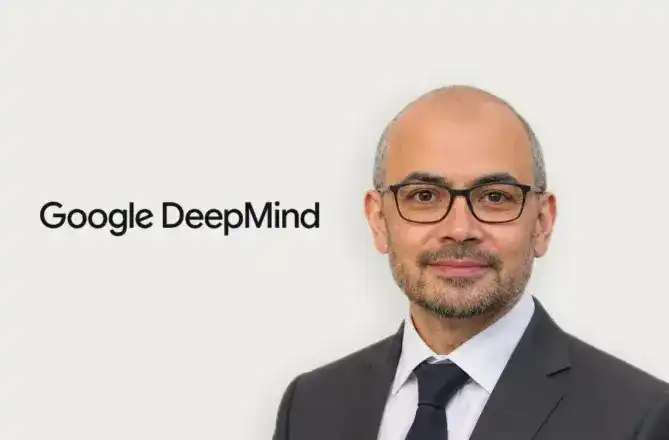
DeepMind Founder's Latest Interview: RSI Is Extremely Dangerous and Could Create an 'Alien Intelligence' That Humans Struggle to Understand

Demis Hassabis, co-founder of Google DeepMind and 2024 Nobel laureate in Chemistry, discusses AI's promise and perils in a conversation with Reid Hoffman. He reiterates that his lifelong goal has been using AI as a tool to advance science and medicine, citing AlphaFold—used by ~4 million researchers—and Isomorphic Labs as proof that AI can help cure diseases, while noting protein structure prediction is only one step in a long drug-discovery pipeline. On recursive self-improvement (RSI), Hassabis explains it works best in "verifiable domains" like math, coding, and games: AlphaZero went from random play to surpassing all human and engine chess within 12 hours. But he warns that closed-loop RSI—removing human code review entirely—risks creating an inscrutable "alien intelligence" with no shared cognitive basis with humans, and offers no way to establish deterministic safety controls. He urges caution as labs race on code self-iteration, calling for faster defensive cyber capabilities, far more robust sandboxes and monitoring (noting agents have run unsupervised for weeks), and eventually formal mathematical guarantees. He advocates an industry standards body with government oversight, cross-lab information sharing, third-party audits, and pre-release red-teaming. On AI consciousness, he argues intelligence and consciousness are dissociable—his dog is conscious but not smart—and that a chatbot claiming feelings proves nothing. Building conscious entities now is dangerous: self-motivation undermines corrigibility, and Asimov showed static rules inevitably break at edge cases; society also hasn't begun the needed debate. Humanity should cross only the first Rubicon—building powerful intelligent tools—and use them to understand consciousness before considering the second. Finally, on AI sovereignty, he says only 6–8 global players will stay at the frontier, with open source 6–12 months behind, so most countries shouldn't train their own frontier models. Instead they should build on existing models as infrastructure, focus on vertical domains like healthcare, and protect data sovereignty through private fine-tuning.

marsbit2h ago

DeepMind Founder's Latest Interview: RSI Is Extremely Dangerous and Could Create an 'Alien Intelligence' That Humans Struggle to Understand

marsbit2h ago

Coinone warns of phishing, identity theft after customer data breach

South Korean crypto exchange Coinone warned customers about potential phishing scams and identity theft after an attacker breached its outsourced customer support provider, MetaM, exposing information shared during customer service interactions. Coinone said the attacker accessed MetaM servers on Thursday and viewed or extracted customer support records, learning of the breach the same day. Potentially exposed data includes names, phone numbers, email addresses, dates of birth, bank account numbers, passwords, national identification numbers, home and wallet addresses, and transaction IDs, varying by customer; those who never contacted the support center were unaffected, and Coinone did not disclose how many customers were impacted. The exchange urged customers who shared passwords during support interactions to change them and warned that fraudsters could impersonate Coinone using details from previous conversations. Coinone said its account, trading, and wallet infrastructure operates separately from MetaM's servers, with no evidence of direct compromise, and it has reported the incident to South Korean authorities. The disclosure comes as South Korea strengthens financial-sector cybersecurity; in October the Financial Services Commission identified security deficiencies at 130 of 555 financial firms reviewed, and on Thursday the regulator said it would allow crypto exchanges to suspend withdrawals when hacking is suspected, alongside calls for round-the-clock monitoring.

cointelegraph3h ago

Coinone warns of phishing, identity theft after customer data breach

cointelegraph3h ago

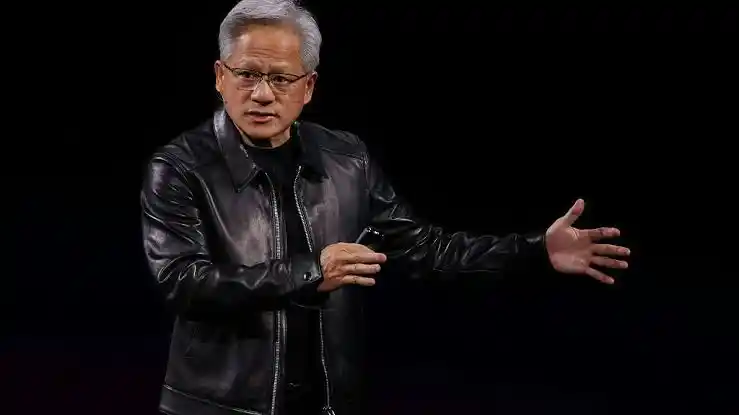
Is There a Hidden Hand Behind Jensen Huang's Departure? Secretary of State Rubio or Anthropic?

The article alleges that Nvidia founder Jensen Huang's departure was the result of a coordinated "hunt" involving two forces: Secretary of State Marco Rubio and AI rival Anthropic. On the policy front, the dispute centers on AI chip export controls—Huang was the most prominent corporate voice opposing built-in tracking and remote kill-switch functions in chips, while three bipartisan chip bills (covering congressional review of export licenses, anti-smuggling measures, and pressure on allies to halt equipment sales) have been folded into the Senate's annual defense authorization bill. The storm began with a highly classified memo leaked to The New York Times; according to The Washington Post, the memo originated with Rubio, who reportedly rewrote a CIA report whose analysts were unconvinced by the underlying intelligence, using "his own more aggressive wording," then sent it to senior officials and briefed the president. David Sacks called the leak a crime and asked why someone would risk prison to bring Huang down. Separately, NYT reporter Tripp Mickle said a mysterious industry contact told him to "drop everything" and investigate Megaspeed, a Singapore-based Nvidia compute rental firm; suspicion points to Anthropic CEO Dario Amodei and a co-founder as the leaker. Anthropic reportedly donated $40 million to Public First Action, which pushes AI safety rules and chip export controls—positions opposite Huang's defense of open-source AI and opposition to backdoors. Nvidia shares fell on the news, and tech leaders including Musk, Garry Tan, and Tim Sweeney are petitioning for Huang's reinstatement, with Sweeney comparing his ouster to Apple firing Steve Jobs.

marsbit6h ago

Is There a Hidden Hand Behind Jensen Huang's Departure? Secretary of State Rubio or Anthropic?

marsbit6h ago

Trading

Spot
活动图片