Your Tokenized Stocks Could Face Trading Suspension for Up to Three Months
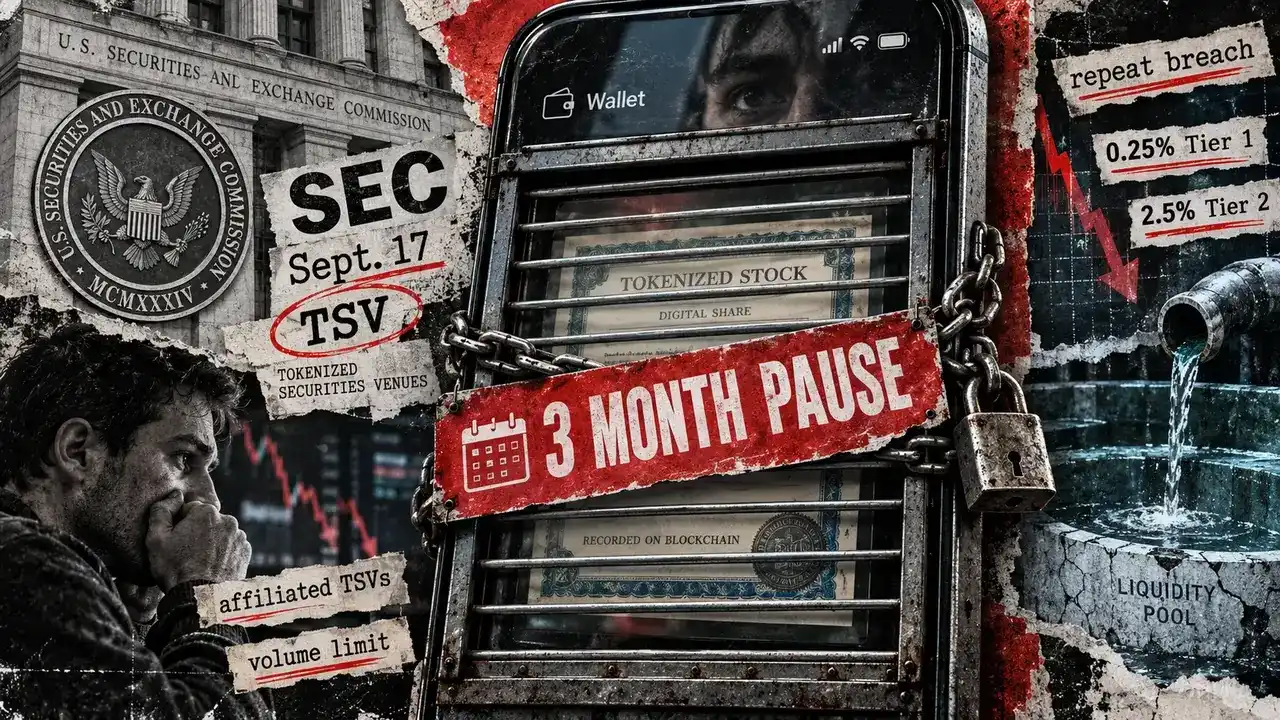
Buying tokenized stocks seems straightforward: choose a company and purchase a token representing its shares. It combines familiar equity investment with crypto convenience and potential 24/7 trading. However, a new U.S. SEC pilot program for Tokenized Securities Venues (TSV) introduces a key limitation: a potential three-month trading pause for specific tokens.
The pilot, launched in September, allows five years of testing automated market makers (AMMs) for certain tokenized securities. Crucially, it restricts the number of stocks and their trading volumes. Volume limits are based on a stock's average daily trading volume in traditional markets, with stricter thresholds for major indices.
If a tokenized stock repeatedly exceeds its volume cap on a specific platform, it triggers a suspension solely on that platform and its affiliates for three months. Other independent platforms listing the same tokenized stock are unaffected. The SEC's goal is to manage systemic risk during the pilot, such as price dislocations between the token pool and the underlying stock, which relies on arbitrageurs to correct.
This rule underscores a critical distinction for investors: tokenization describes the asset's form, not its rights or liquidity. The SEC's pilot requires tokenized stocks to confer the same economic and governance rights (dividends, voting) as traditional shares, excluding synthetic products. However, holding the token doesn't guarantee the ability to sell it anytime. A suspension can freeze liquidity on that platform, and moving tokens to another wallet doesn't solve the issue—access to a compliant trading venue or redemption mechanism is needed.
The "24/7 trading" promise requires reevaluation. While orders can be placed anytime, liquidity may be thin, and large sales at fair prices aren't assured. The three-month pause rule emphasizes foundational investing principles: a reliable exit strategy is essential. Before investing, users must understand the issuer's obligations, the custody structure, redemption options, and the specific procedures if trading is halted. The pilot offers a testing ground for blockchain's potential in finance, but also a reminder to scrutinize liquidity and operational risks.
marsbit09/28 03:05