# Regulation Related Articles

HTX News Center provides the latest articles and in-depth analysis on "Regulation", covering market trends, project updates, tech developments, and regulatory policies in the crypto industry.

Stablecoins at a Crossroads: Clear Regulations Drive Adoption, Systemic Risks Remain

Stablecoins are at a critical juncture, with regulatory clarity driving their rapid evolution from crypto trading tools to mainstream payment and settlement infrastructure. The U.S. GENIUS Act and the EU’s MiCA framework have established federal and regional standards for issuance, reserves, and auditing, accelerating their adoption. Market capitalization has surpassed $300 billion, with USD-pegged stablecoins dominating, though euro and other fiat-backed alternatives are growing. Use cases are expanding significantly, with enterprises adopting stablecoins for cross-border payments, payroll, and treasury management due to their 24/7 availability and low transaction costs. They are increasingly integrated into traditional finance as settlement and custody solutions. However, systemic risks remain. USD-pegged stablecoins face potential de-pegging risks, insufficient reserve transparency, and high centralization, which could trigger liquidity crises. Large holdings of sovereign bonds or fixed-income assets may also impact bond markets and monetary policy. The IMF has warned about financial stability risks and dollarization concerns. For stablecoins to mature into reliable, compliant, and interoperable digital infrastructure—rather than just survive—they require transparent issuance mechanisms, robust regulatory coordination, and effective systemic risk controls.

cointelegraph_中文21h ago

Stablecoins at a Crossroads: Clear Regulations Drive Adoption, Systemic Risks Remain

cointelegraph_中文21h ago

BitPush Daily News Digest: Strategy Increases Bitcoin Holdings by 10,624, Total Reaches 660,624; BitMine Adds 138,452 ETH Last Week, Tom Lee Bullish on Ethereum; US CFTC Approves Ethereum, Bitcoin, and USDC as Collateral in Derivatives Market

Bitpush Daily News Digest: Strategy has purchased an additional 10,624 BTC for approximately $962.7 million, bringing its total holdings to 660,624 BTC with an average cost of $74,696 per coin. BitMine announced it increased its ETH holdings by 138,452 tokens last week. The company now holds a total of $13.2 billion in assets, including 3,864,951 ETH, 193 BTC, equity in Eightco Holdings, and $1 billion in cash. Fundstrat Chairman Tom Lee expressed strong confidence in ETH's price performance in the coming months, citing the recent Fusaka upgrade and key Federal Reserve actions, including the end of quantitative tightening and an expected rate cut. The U.S. CFTC has approved a new pilot program allowing Bitcoin, Ethereum, and USDC to be used as collateral in derivatives markets, building on earlier efforts to expand the use of tokenized collateral. In other financial news, Morgan Stanley analysts predict a bull market for U.S. stocks in 2026, driven by broadening market leadership and improved corporate profits. Ray Dalio commented that the biggest winners in AI will be the users, not giant corporations, and advised investing in companies that leverage AI for efficiency. Former President Donald Trump announced he will issue a "single rule" executive order this week to create a unified national regulatory framework for AI, warning that a state-by-state approval process would "destroy AI in its infancy."

比推8h ago

BitPush Daily News Digest: Strategy Increases Bitcoin Holdings by 10,624, Total Reaches 660,624; BitMine Adds 138,452 ETH Last Week, Tom Lee Bullish on Ethereum; US CFTC Approves Ethereum, Bitcoin, and USDC as Collateral in Derivatives Market

比推8h ago

Crypto Financing and Token Issuance: From Fundraising Recovery to Regulatory Rebalancing

Cryptocurrency financing and token issuance are experiencing a resurgence, driven by clearer regulatory frameworks and increased institutional participation. However, regional regulatory disparities and market deleveraging continue to impact the pace and structure of token launches. Key trends include a shift from speculative, high-risk investments toward longer-term capital deployment in areas like payments, stablecoins, cross-chain infrastructure, and identity verification. Regulatory clarity in the U.S. and parts of Europe has enabled traditional financial entities to engage with compliant crypto products, such as regulated exchanges offering custody-enhanced digital asset products. Despite this progress, regulatory fragmentation remains. Some jurisdictions impose strict requirements on stablecoins and tokenized assets, including asset proof, auditing, and issuance qualifications, while others restrict tokenized financial activities entirely. This inconsistency complicates cross-border issuance strategies. Recent large-scale mergers and acquisitions have boosted industry confidence by integrating resources within token ecosystems. However, this consolidation may marginalize smaller independent projects, increasing their fundraising challenges. Token issuance practices are evolving in two parallel directions: increased compliance efforts (e.g., KYC/AML, transparency in fundraising, market-making arrangements) and more phased, targeted distribution strategies—such as prioritizing institutional investors before public sales—to reduce volatility and avoid the pump-and-dump patterns seen in early ICOs. Risks remain, including high volatility, cross-border regulatory conflicts, and governance vulnerabilities. Transparency—through on-chain asset proof, liquidity disclosures, third-party audits, and verifiable token economic models—is becoming critical for trust. Some exchanges and funds are also exploring compliant issuance services and custody solutions to meet institutional demand. The sector is transitioning from narrative-driven growth to a structured, compliance-oriented, and use-case-focused phase. While continued regulatory maturation may provide a more stable foundation for token offerings, geopolitical tensions or major project failures could lead to renewed market adjustments. Projects are advised to prioritize compliance, transparency, and sustainable business models, while investors should focus on tokens backed by real demand rather than speculative narratives.

cointelegraph_中文6h ago

Crypto Financing and Token Issuance: From Fundraising Recovery to Regulatory Rebalancing

cointelegraph_中文6h ago

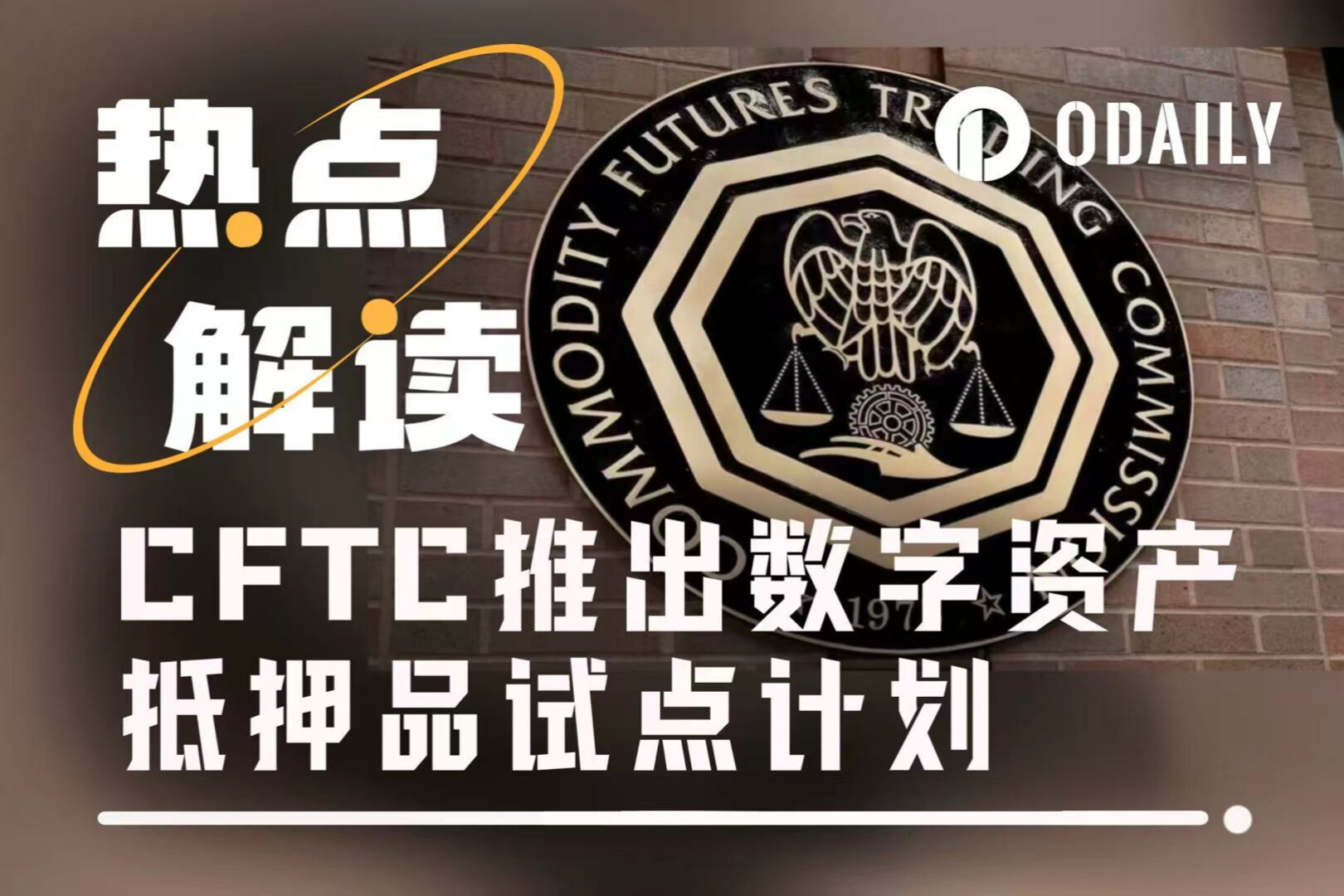
Interpreting the True Turning Point of Crypto Regulation: BTC, ETH, and USDC Gain Access to the U.S. Derivatives Market

The U.S. Commodity Futures Trading Commission (CFTC), under Acting Chair Caroline D. Pham, has launched a Digital Asset Collateral Pilot Program. This initiative allows regulated derivatives market participants to use Bitcoin (BTC), Ethereum (ETH), and the stablecoin USDC as compliant margin. The program is a significant regulatory shift, marking the first time digital assets are formally recognized as collateral in mainstream U.S. finance. Key details of the pilot include: - **Participants:** Licensed Futures Commission Merchants (FCMs) are the eligible entities. - **Assets:** Initially limited to BTC, ETH, and USDC for a three-month period, with strict weekly reporting requirements to the CFTC. - **Safeguards:** Stringent rules are in place, including holding assets in segregated accounts, conservative haircuts to mitigate volatility risk, and immediate reporting of any issues. - **Framework:** The CFTC also issued new guidance for tokenized collateral and provided "No-Action Relief" to give institutions regulatory clarity for operating within the rules. Industry leaders from Coinbase, Crypto.com, Circle, and Ripple hailed the move. They see it as a milestone that unlocks capital efficiency, reduces settlement risk, legitimizes stablecoins for payments, and paves the way for 24/7 trading, ultimately signaling deeper integration between crypto and traditional finance. While the pilot's immediate impact on retail investors is limited, it is a major long-term signal of institutional adoption. It represents a structural shift in U.S. regulatory approach—from restriction to institutionalization—and is a crucial step toward a future where tokenized assets are fundamental to the financial system.

Odaily星球日报5h ago

Interpreting the True Turning Point of Crypto Regulation: BTC, ETH, and USDC Gain Access to the U.S. Derivatives Market

Odaily星球日报5h ago

From 'Criminal Cycle' to Value Return: Four Major Opportunities in the 2026 Crypto Market Outlook

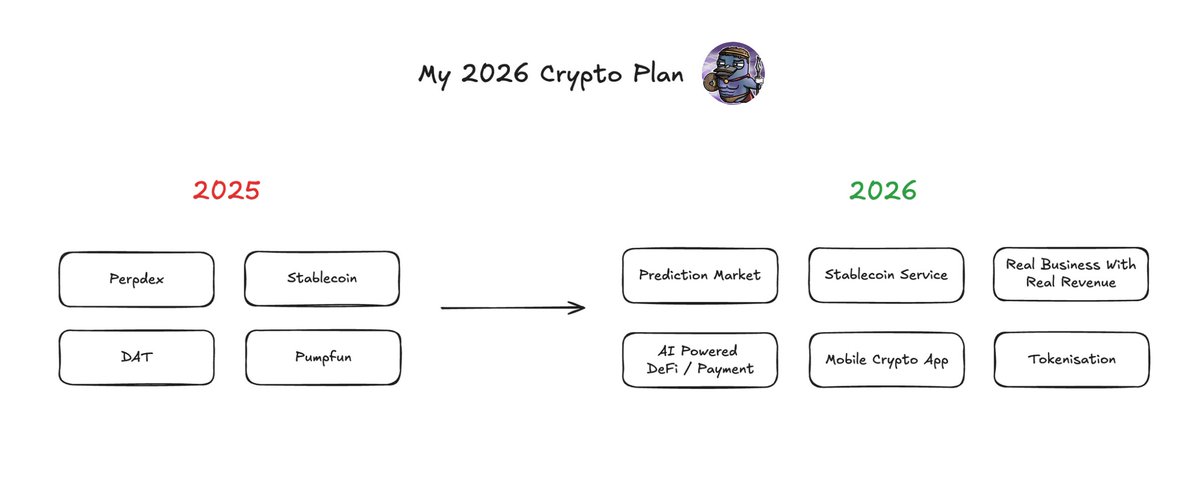
The crypto market is undergoing a necessary "purification" phase, shifting from a "crime cycle" of high-FDV, low-utility projects and pump-and-dump schemes towards value-driven growth. Key 2025 trends included maturation of regulated stablecoins (with over $100B in net growth), the rise of PerpDEXs (reaching $230B open interest), and Digital Asset Trusts (DATs) attracting TradFi interest. However, many DATs and airdrops faltered, highlighting the need for real utility and sustainable tokenomics. Looking ahead to 2026, four major opportunities are identified: 1. **Prediction Markets:** Platforms like Polymarket and Kalshi, backed by institutional interest and mainstream distribution, are set to grow significantly. 2. **Stablecoin Payments:** Supported by clear regulations (e.g., the Genius Act) and adoption by giants like Visa and Stripe, stablecoin transaction volumes are surging. 3. **Mobile dApps:** With improved user onboarding and growing mobile transaction trends, apps like Fomo App are driving accessibility and adoption. 4. **Real Revenue and Value Accrual:** Protocols generating actual income (e.g., via buybacks) and sharing profits with token holders will thrive. The focus shifts from speculation to sustainable business models in trading, yield, and payments. The industry is evolving towards practical applications, genuine revenue, and clearer value propositions, making 2026 a pivotal year for crypto's maturation.

深潮3h ago

From 'Criminal Cycle' to Value Return: Four Major Opportunities in the 2026 Crypto Market Outlook

深潮3h ago

RWA Weekly Report | US CFTC Launches Digital Asset Collateral Pilot Program, Spot Cryptocurrency Now Trading on CFTC-Registered Exchanges (12.3-12.9)

RWA Market Weekly Summary (Dec 3–9, 2025) The RWA market stabilized this week, with total on-chain Distributed Asset Value rising slightly to $18.44 billion. The number of asset holders increased by 6,130 to 561,558. Stablecoin market capitalization grew to $301.92 billion, with holders surging by 2.06 million to 207.75 million. U.S. Treasury tokenization slightly to $88 billion, while private credit rebounded to $22 billion. Key developments include the U.S. CFTC launching a digital asset collateral pilot program, allowing BTC, ETH, and USDC to be used as margin in regulated derivatives markets. The CFTC also approved spot cryptocurrency trading on its registered exchanges. U.S. lawmakers urged regulators to implement stablecoin rules under the GENIUS Act by July 2026. Meanwhile, former PBOC deputy governor Wang Yongli reiterated China's firm opposition to stablecoins, emphasizing the development of the digital yuan. In Europe, a consortium of banks plans to launch a euro stablecoin in 2026. South Korea's ruling party proposed a stablecoin bill requiring commercial banks to hold at least 51% ownership in issuers. The IMF warned that widespread stablecoin adoption could weaken central banks' monetary control. In project news, the SEC closed its investigation into Ondo Finance without action, and MSX (STONKS) reached a record $2 billion in daily trading volume.

Odaily星球日报1h ago

RWA Weekly Report | US CFTC Launches Digital Asset Collateral Pilot Program, Spot Cryptocurrency Now Trading on CFTC-Registered Exchanges (12.3-12.9)

Odaily星球日报1h ago

活动图片