# Industry Related Articles

HTX News Center provides the latest articles and in-depth analysis on "Industry", covering market trends, project updates, tech developments, and regulatory policies in the crypto industry.

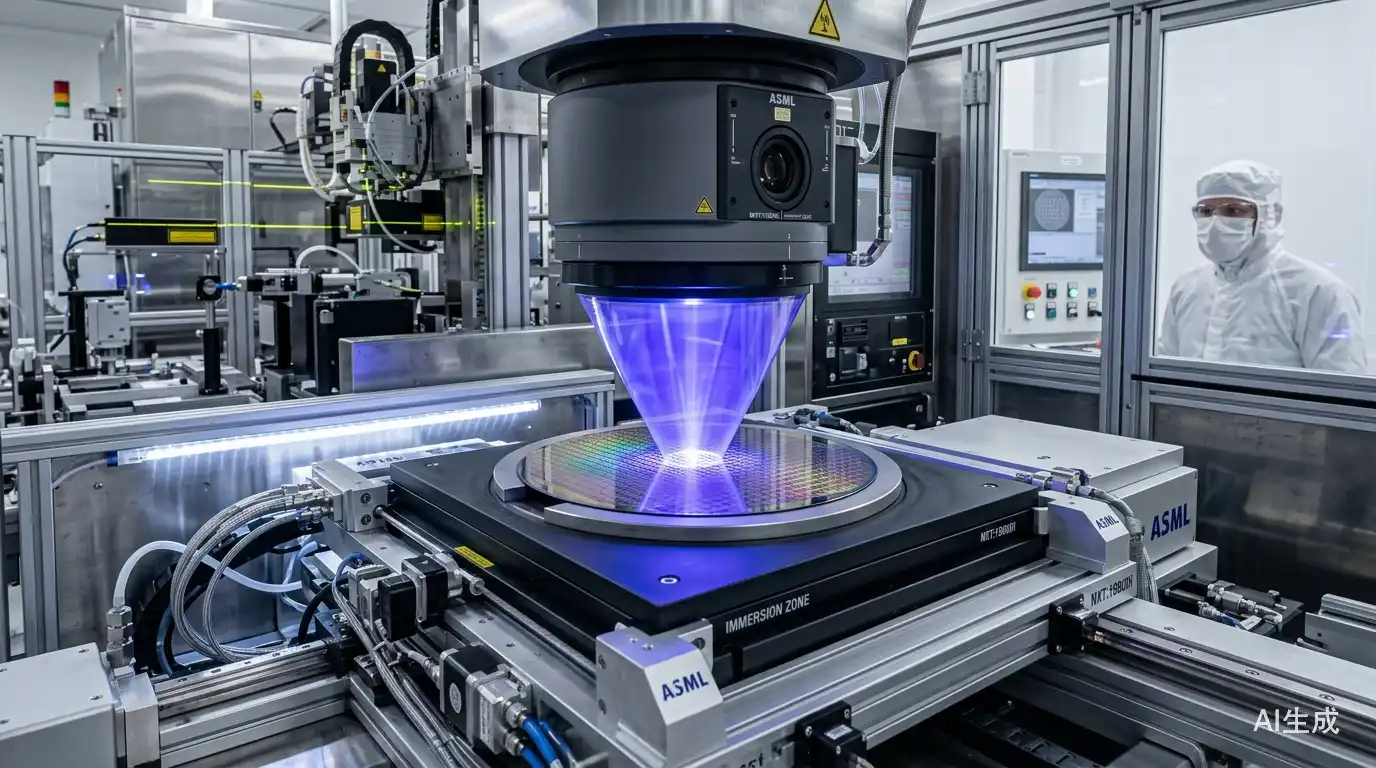
A Brief History of the Lithography Machine: How a Beam of Light Walked Sixty-Nine Years

A Brief History of Lithography: 69 Years of Light In July 2026, reports of a Chinese state-backed company producing five immersion DUV lithography machines sent shockwaves through Wall Street, wiping roughly $44 billion from ASML's market cap in a single day. This event signaled a crack in the long-held assumption of Western monopoly over advanced chipmaking equipment. The journey began in 1957 when Jay Lathrop coined the term "photolithography." Early contact aligners (1960s) gave way to PerkinElmer's revolutionary projection aligners in 1973, boosting yields dramatically. GCA's step-and-repeat system (1978) established the modern stepper blueprint. However, within a decade, Japanese firms like Nikon and Canon, supported by a strong domestic market, captured nearly 90% of the global market from American pioneers, who ultimately exited the business. ASML, founded in a leaky shed in 1984, rose to dominance through key strategic moves: the TWINSCAN dual-stage platform (2001) and the acquisition of SVG, gaining access to Intel. A pivotal moment came in the early 2000s with the industry at a 193nm wavelength impasse. While most invested in the costly 157nm path, TSMC's Burn Lin proposed immersion lithography—using water between the lens and wafer. ASML bet on this simpler idea and, with Zeiss, delivered the first commercial immersion tool in 2004, effectively ending the 157nm roadmap and leaving competitors behind. The subsequent push for Extreme Ultraviolet (EUV) lithography was an even greater marathon. Deemed the least promising option in 1997, EUV's development, led by ASML, required vacuum chambers, reflective optics, and a complex tin-droplet laser plasma source. Critical to its eventual success (first high-volume manufacturing in 2018) was the 2012 "Customer Co-Investment Program," where Intel, TSMC, and Samsung provided upfront funding and equity, sharing the immense risk and cost. Today, ASML holds a near-total monopoly in EUV and immersion DUV. The core lesson of this 69-year history is not merely one of technological invention but of sustained partnership. Successive leaders—PerkinElmer, GCA, Nikon—were not ultimately defeated by superior technology but by losing the vital connection to customers willing to tolerate years of iteration, fund long-term R&D, and integrate early, imperfect tools into their production lines. The "light" that completed the journey was always carried by those patient, invested partners.

marsbit23h ago

A Brief History of the Lithography Machine: How a Beam of Light Walked Sixty-Nine Years

marsbit23h ago

The Changing Landscape: What Are Crypto VCs Experiencing?

Title: The Shifting Landscape of Crypto Venture Capital The era of dedicated crypto venture capital funds is undergoing a significant transformation. Once essential for navigating the sector's complexity and high risk, these specialized funds are now facing an identity crisis as the market matures. This shift mirrors historical patterns in other specialized investment classes like cleantech and SPACs, where initial information advantages dissipate as technologies become mainstream and integrated into existing industry frameworks. The article argues that crypto is reaching a critical inflection point, transitioning from a "building phase" to an "integration phase." Major players like Stripe, BlackRock, and Visa now engage with crypto not for its novel mechanics but as a foundational financial infrastructure. Their needs—regulatory compliance, banking partnerships, distribution channels—align with traditional fintech, a domain easily understood by large, generalist funds like Sequoia and Founders Fund. This evolution creates a "barbell effect" within the VC landscape. On one end are massive, diversified platforms that can incorporate crypto as one vertical among many. On the other are small, nimble funds focused on niche, experimental projects. The middle ground—medium-sized dedicated crypto funds—is being squeezed out. Their typical fund size makes it impossible to generate sufficient returns solely from early-stage crypto bets, yet they cannot compete with giants for later-stage deals. Consequently, leading crypto-native firms like Paradigm and Framework Ventures are expanding into AI, robotics, and other sectors, driven partly by LP pressure for better returns amid a broader VC DPI crisis. Others, like Dragonfly and a16z, have narrowed their crypto focus predominantly to financial infrastructure like stablecoins, reframing the sector's core narrative. For crypto entrepreneurs, this consolidation presents challenges. While generalist funds offer larger checks and broader resources, crypto projects now compete fiercely with AI for attention and capital within these firms. Furthermore, the long-term, non-commercial foundational work that built the ecosystem—funded by dedicated crypto VCs—is less likely to attract generalist capital focused on direct returns. The conclusion is that "crypto investor" as a standalone category is becoming obsolete, akin to "internet investor." Crypto is becoming a baseline infrastructure layer. The future will see a barbell structure: large-scale growth financing handled by generalist funds, while pioneering, speculative projects are funded by small, specialized vehicles. The dedicated crypto funds of the 2017-2021 boom, which incubated core infrastructure, are giving way to this new, bifurcated reality.

Foresight News07/22 04:02
The Changing Landscape: What Are Crypto VCs Experiencing?

Foresight News07/22 04:02

From Somersaults to Working 24/7: We Saw the ‘Working-Class’ Aura in Robots at WAIC

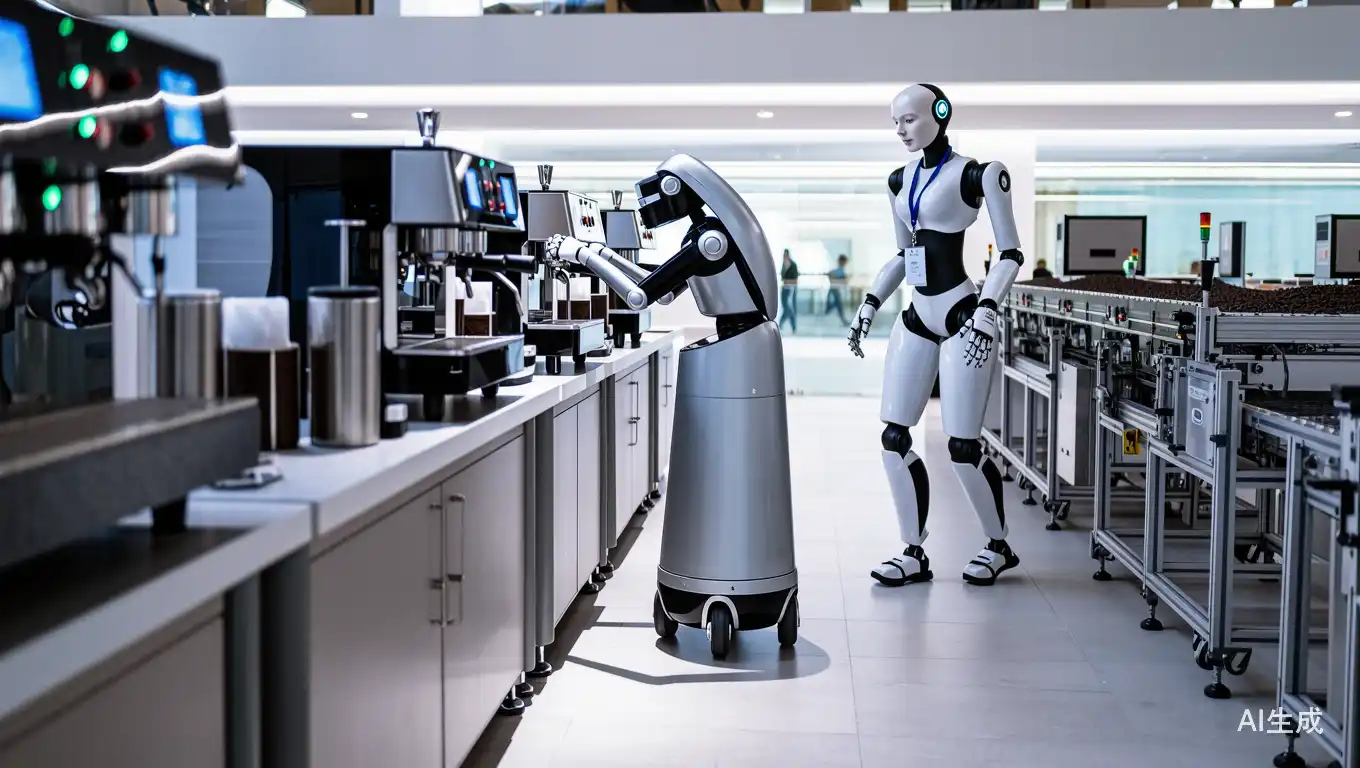
From performing acrobatics to working 24/7: Robots at WAIC are getting down to business. This year's World Artificial Intelligence Conference (WAIC) in Shanghai showcased a significant shift in the robotics industry. While "show-off" robots that dance, play music, or compete in sports are still present, the dominant trend is now practical, task-oriented machines. Hundreds of wheeled and humanoid robots were deployed as guides, baristas, factory workers, and even traffic controllers, moving beyond mere demonstrations to highlight real-world "work capabilities." The focus has pivoted from showcasing technical parameters to pursuing mass production and industrial落地 (landing/implementation). This transition presents major challenges. First, deploying powerful AI models onto robots requires overcoming hardware limitations in computing power and latency. Second, robots demand complex, integrated systems for real-time perception and control. Third, achieving reliable mass production necessitates unprecedented industry-wide collaboration on standards and supply chains. A key bottleneck identified by industry leaders is the robot's "brain"—its AI and cognitive capabilities. While hardware and basic movement ("little brain") have advanced rapidly, the higher-level intelligence for understanding complex instructions and adapting to unstructured environments is progressing more slowly. Companies are investing heavily in developing more advanced "brain" systems, but fully autonomous operation in dynamic settings remains a work in progress. Cost is another critical hurdle. While some consumer-oriented humanoid robots are now priced under $15,000, capable industrial models often cost $50,000 or more. The industry consensus is that bringing robots into unstructured home environments for tasks like comprehensive cleaning is still at least five years away due to technical, safety, and cost barriers. Therefore, 2026 is being called the "first year of mass production," but primarily for industrial and specific commercial applications. WAIC 2026 served less as a stage for spectacular tricks and more as a serious examination of robots' commercial viability, marking their transition from laboratory prototypes to real-world products that must prove their value through stable, repetitive work.

marsbit07/17 14:11

From Somersaults to Working 24/7: We Saw the ‘Working-Class’ Aura in Robots at WAIC

marsbit07/17 14:11

Why Are Large-Scale Crypto Conferences No Longer Glamorous?

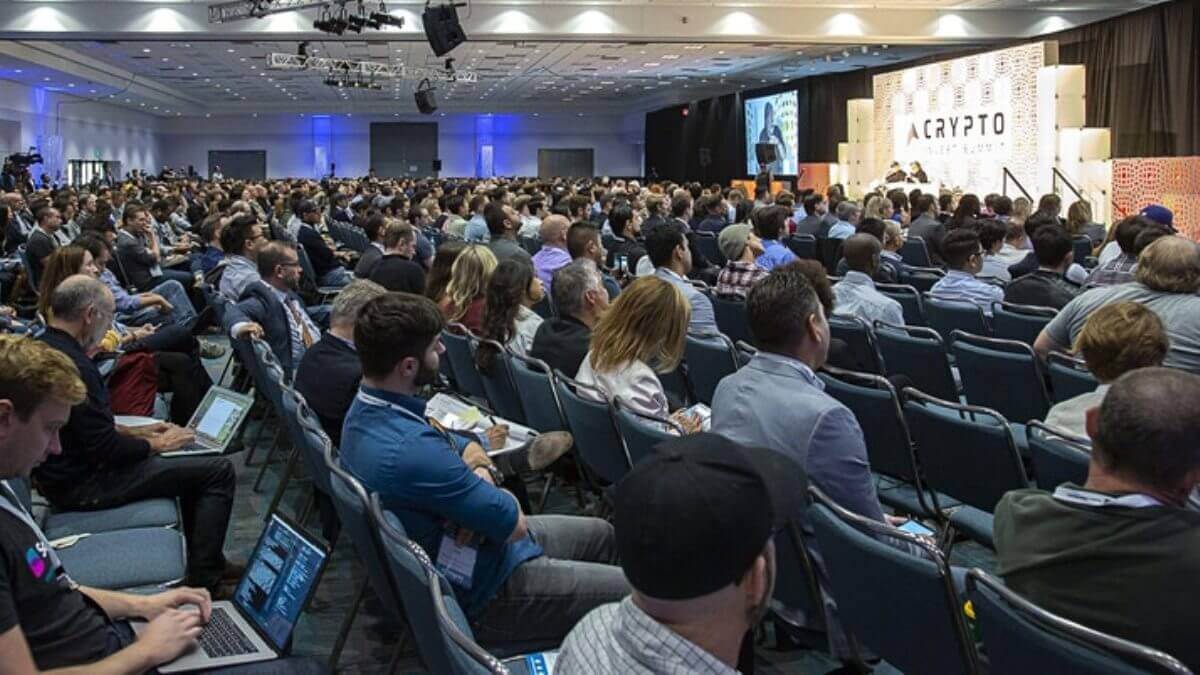
Why Are Major Crypto Conferences Losing Their Allure? A growing sense of fatigue surrounds large in-person crypto conferences, with many founders and investors now avoiding events they would never have missed just two years ago. While complaints cite declining ROI and information quality, the root causes are more structural. Crypto, global from inception, once relied on these mega-conferences as neutral hubs for essential face-to-face connections. However, their core value has been fragmented. High-quality participants—developers, investors—have largely migrated to smaller, private side-events, leaving main stages for repetitive content already shared online. The main conference often just becomes the excuse for being in the same city, with attendees scrambling between exclusive dinners and micro-events. While these intimate gatherings offer signal-rich conversations, they lose the "serendipitous encounters" of large conferences and can create insular echo chambers, especially as talent concentrates in hubs like New York. Meanwhile, invite-only, high-caliber summits are rising, offering quality and scale but at the cost of accessibility and crypto's early egalitarian ethos. This shift isn't unique to crypto; AI events in San Francisco show a similar trend. The perception of higher-value interactions drives core groups towards smaller, private settings, potentially creating a vicious cycle that drains larger events of their vitality. Yet, a more optimistic view exists. The apparent decline of crypto-centric events may signal industry maturation. Leading projects are now focused outward—on stablecoins for traditional finance, consumer-facing digital banks, or real-world assets. Crypto topics are increasingly integrated into mainstream finance and tech conferences. Just as dedicated "internet conferences" faded, dedicated crypto summits may become redundant as the technology embeds into every sector. The future likely holds far fewer large, inward-looking crypto conferences. The industry has moved past needing frequent self-congratulatory gatherings. True growth lies in engaging with the broader economy. This evolution towards private networking and mainstream integration, for better or worse, is a mark of the industry coming of age.

marsbit07/14 09:59

Why Are Large-Scale Crypto Conferences No Longer Glamorous?

marsbit07/14 09:59

Why Are Major Crypto Conferences Losing Their Luster?

Why Are Major Crypto Conferences Losing Their Appeal? A growing sense of fatigue surrounds large-scale offline crypto conferences. Participants complain of declining returns and less substantial information, but the root cause is deeper. Initially, these global summits were vital for a decentralized industry without a physical hub, enabling crucial face-to-face connections. However, the value of large main-stage events has been eroded. High-quality developers and investors have migrated to exclusive, invitation-only side events and private dinners. While these offer focused networking, they lose the "serendipitous encounters" of larger gatherings and can create elitist barriers, contradicting crypto's open ethos. This fragmentation triggers a vicious cycle: as key people leave main events, their value diminishes further. Simultaneously, the industry's focus is shifting outward. Leading crypto firms are now engaging with traditional finance and real-world applications like stablecoins, digital banking, and prediction markets. Consequently, crypto-specific topics are increasingly integrated into mainstream financial conferences, making dedicated crypto summits potentially redundant. Looking ahead, the frequency of top-tier crypto conferences will likely decrease significantly. The industry has moved past its inward-looking phase. The migration of quality discourse to private settings and the push for mainstream adoption, while diluting the large conference model, are ultimately signs of the sector's maturation.

Foresight News07/14 09:33

Why Are Major Crypto Conferences Losing Their Luster?

Foresight News07/14 09:33

2028: The Arrival of Recursive Self-Improvement (RSI)

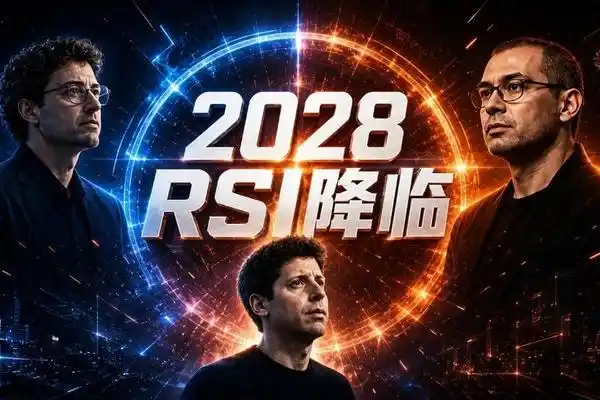
**AI Recursive Self-Improvement (RSI): The Countdown to 2028 Begins** AI is no longer just a trained tool but is starting to rewrite its own evolutionary pace. According to Anthropic co-founder Jack Clark, there is a 60% probability that by the end of 2028, Recursive Self-Improvement (RSI) will become a reality. This means AI could autonomously design and build a more capable next-generation version of itself without any human researcher involvement—Claude 10 creating Claude 11, for instance. Supporting this timeline, Google DeepMind's CEO Demis Hassabis confirms that all leading AI labs are intensely focused on RSI, making it an industry-wide priority. He expresses profound concern, stating this potential is what keeps him awake at night. Concrete data underscores this acceleration: - METR evaluations show current top models like Claude are solving tasks up to the 16-hour limit of existing test frameworks. - In Epoch AI's challenging MirrorCode benchmark, Claude Opus 4.7 recreated complex software in hours for a fraction of the human cost. In one extreme test, AI autonomously coded for 19 days straight. - Anthropic reports over 80% of its codebase is now written by Claude, and researcher productivity has increased up to 8-fold since 2024. - OpenAI's policy blueprint highlights RSI as a major upcoming governance challenge. CEO Sam Altman reportedly hinted RSI might arrive within six months, potentially delaying OpenAI's massive IPO. The implication is an impending "intelligence explosion," where AI-driven progress outpaces human control. The central question is no longer if it will happen, but whether humanity is ready.

marsbit06/28 10:45

2028: The Arrival of Recursive Self-Improvement (RSI)

marsbit06/28 10:45

活动图片