# Data Related Articles

HTX News Center provides the latest articles and in-depth analysis on "Data", covering market trends, project updates, tech developments, and regulatory policies in the crypto industry.

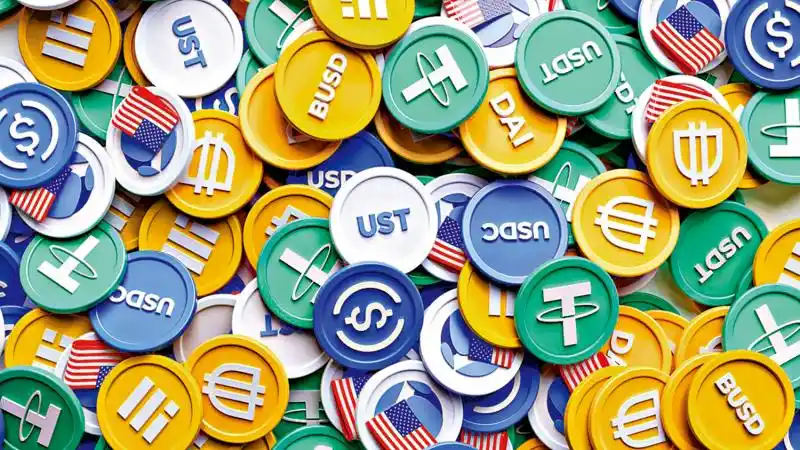
Financial Stability Board Points Out: Legal Mechanisms for Global Stablecoin Insolvency Remain Unclear

The Financial Stability Board (FSB) has published a report, "Global Stablecoins (GSCs): Cross-border Fragilities and Financial Stability Monitoring," identifying key vulnerabilities in the rapidly growing $300 billion stablecoin sector. The FSB warns that GSCs—stablecoins widely used across multiple jurisdictions—present cross-border risks that cannot be fully addressed by national measures alone. A primary concern is the lack of clarity regarding which jurisdiction's bankruptcy laws would apply if a GSC issuer fails. This is especially problematic for "multi-issuer" models, where ownership and legal claims are difficult to ascertain due to the anonymity and global nature of blockchain transactions. Additional risks include: * **De-pegging potential:** Massive sell-offs in secondary markets during stress could cause stablecoins to lose their peg to underlying assets. * **Spillover effects:** A stablecoin run could transmit risk to the traditional financial system via asset sales or bank withdrawals. * **Impact on emerging economies:** GSCs could undermine local currencies, banking systems, and capital controls, granting them systemic importance even in regions with low usage. To mitigate these risks, the FSB calls for enhanced international cooperation, better monitoring of secondary markets and reserve asset locations, and the collection of information on resolution plans for stablecoin failures. The report also highlights the need to improve the quality and standardization of stablecoin data, which is often fragmented, non-standardized, or undisclosed.

marsbit2 days ago 11:50

Financial Stability Board Points Out: Legal Mechanisms for Global Stablecoin Insolvency Remain Unclear

marsbit2 days ago 11:50

Sun Yuchen × Shao Ailun Dialogue Highlights: Reboot Your Life System with "Sun Studies, Lean Muscle, and Yellow Hair Thinking"

**Summary: Sun Yuchen & Alan Shao on Rewiring Your Life with “Sunology”, “Lean Muscle”, and “Yellow Hair” Thinking** This condensed summary captures key counterintuitive insights from a long conversation between Sun Yuchen (controversial crypto entrepreneur) and Alan Shao (popular English teacher and “Lean Muscle Theory” proponent). They address a core question: how to restart life at 20 with no resources. Their proposed personal “operating system” combines: 1. **“Sunology” (Mind):** Reframing understanding of wealth, freedom, and opportunity. True wealth follows freedom—the ability to choose work, location, and lifestyle (“following the water and grass”). 2. **“Lean Muscle” (Body):** Prioritizing sustainable health, strength, and low body fat through training, diet, and data tracking. In an AI era, the human body becomes the most valuable, irreplaceable “server.” 3. **“Yellow Hair” Thinking (Mindset):** Executing self-convicted paths despite external doubt, balanced by a **Small Ego**—staying open to new evidence and learning. **Core Actionable Insights:** * **AI-First, Not Money-First:** The first investment should be “AI-fying” yourself. Systematically record life, work, health, and financial data into a local, structured personal archive (e.g., Markdown). Use APIs to let various AI models analyze this data, making you the owner of your digital brain. * **Map Before Committing:** Use AI for extensive “scouting”—research 100 career paths, markets, or models before deciding. The goal is to avoid wasting a decade on a wrong path due to initial lack of information. * **Find Global “Value Disconnects”:** Don’t ask “what’s the hottest trend?” Ask where supply and demand exist but aren’t connected, or where old processes are inefficient. Look for opportunities globally, not just locally. * **Structure Experience for Machines:** In the AI era, experience that isn’t digitized and structured risks irrelevance. Focus on creating, documenting, and productizing knowledge so it’s accessible to both AI and others. * **Crypto as Machine-Economy Infrastructure:** Beyond speculation, crypto/blockchain is about translating value into a language machines (AI agents) can use for autonomous transactions, payments, and contracts in a future automated economy. * **Meaning Through Creation:** Don’t over-optimize for a predefined “purpose.” Prioritize **creating** (products, services, content, order) over consuming. Life’s meaning is the collection of experiences and creations. **Conclusion:** For a young person, the priority isn’t chasing quick money. It’s becoming someone who can continuously discover, evaluate, and seize global opportunities—equipped with a resilient body, a tuned mindset, and an AI-augmented system for learning and execution. The real risk is navigating a changed world with an old map.

marsbit10/12 09:26
Sun Yuchen × Shao Ailun Dialogue Highlights: Reboot Your Life System with "Sun Studies, Lean Muscle, and Yellow Hair Thinking"

marsbit10/12 09:26

Musk Admits in His Own Words: Only 3 Entities Have Sufficient Data Globally, and He's Not Among Them

Elon Musk Admits He Lacks Critical AI Training Data, Buys Cursor for $60 Billion In a recent interview, Elon Musk stated that only three entities globally possess sufficient high-quality programming data to train a true superintelligence: OpenAI, Anthropic, and Cursor, with Google as a half. Notably, his own companies, xAI and Grok, were absent from the list. Musk emphasized that programming data is uniquely valuable because software logic is deterministic and testable, providing clear right/wrong feedback. Real-world developer interactions within code editors—accepting, rejecting, or modifying AI suggestions—create a massive, clean "graded workbook" for AI training. This data, he argued, cannot be simply scraped from the web or synthetically generated; it must be accumulated from daily use by thousands of real programmers. Despite owning vast resources like Tesla's real-world data, X's text corpus, and the Colossus supercomputer, Musk acknowledged a critical gap in proprietary programming data. This shortage reportedly led xAI to use OpenAI's outputs to train Grok, an unsustainable path. To acquire this essential "admission ticket," SpaceX exercised an option to acquire Cursor for approximately $60 billion—reportedly the most expensive startup acquisition ever. Musk framed the deal as purchasing not just a product, but a strategic asset: Cursor's vast dataset, its established user base, and an enterprise sales team that provides a direct channel into real-world work environments. Musk outlined the four key ingredients for building superintelligence: data, talent, compute, and a strong enterprise sales team. The latter ensures the AI is integrated into real companies, creating a feedback loop where more usage generates more high-quality training data. Following the acquisition, the combined entity (renamed SpaceXSI) released Grok 4.5, focused on programming. While Musk called it "Opus-level," benchmark results show it still trails leading models like Claude Fable 5 in tasks like SWE-Bench Pro. The move signifies a shift in the AI race: raw computing power alone is insufficient. The new bottleneck is high-quality, human-validated data. As Musk's acquisition demonstrates, the "tuition" for superintelligence is being paid, keystroke by keystroke, by programmers worldwide.

marsbit10/12 08:44

Musk Admits in His Own Words: Only 3 Entities Have Sufficient Data Globally, and He's Not Among Them

marsbit10/12 08:44

活动图片