SWI Raises €800M to Repurpose Mining Infrastructure for AI

cryptonews.ruPublished on 2026-10-12Last updated on 2026-10-12

Abstract

SWI Group has secured €800 million from institutional investors to expand its AI infrastructure in Europe and the United States. This follows the company's acquisition of Bitcoin miner Genesis Digital Assets, which has been renamed SWI Digital. The Amsterdam-listed company plans to use the funds to develop data centers, energy infrastructure, and computational power, with the deal valuing SWI at €6.1 billion. A core part of its strategy involves repurposing Bitcoin mining sites for high-performance computing and AI workloads. SWI intends to offer its US-based sites with grid connections to major cloud providers. Three smaller Bitcoin farms in Kazakhstan have been put up for sale.

SWI Group has raised €800 million from institutional investors to expand its AI infrastructure in Europe and the United States following its acquisition of the Bitcoin miner Genesis Digital Assets.

The company, whose shares are traded on Euronext Amsterdam, will allocate the funds towards developing data centers, energy infrastructure, and computing power. According to TheEnergyMag, the deal implies a valuation of €6.1 billion for SWI. The total equity capital raised since March 2026 has surpassed €1 billion.

A key part of the strategy is repurposing Bitcoin mining facilities for high-performance computing and AI workloads. In August, SWI completed the acquisition of a controlling stake exceeding 70% in Genesis Digital Assets, which was renamed SWI Digital. The company possesses facilities and grid connections in the US that SWI plans to offer to large cloud providers. Three small Bitcoin mining farms in Kazakhstan have been put up for sale.

Related Questions

QWhat is the total amount of funding SWI Group raised and for what purpose?

ASWI Group raised €800 million from institutional investors. The purpose of the funding is to expand AI infrastructure in Europe and the United States.

QFollowing the acquisition of Genesis Digital Assets, what strategic shift is SWI focusing on?

AThe key part of SWI's strategy is repurposing Bitcoin mining sites for high-performance computing and AI tasks.

QWhat is the valuation of SWI Group implied by the recent deal, according to the article?

AAccording to the article, the recent deal implies a valuation of SWI at €6.1 billion.

QWhat did SWI Group acquire and what percentage stake did it gain in the company now called SWI Digital?

ASWI Group acquired a controlling stake of more than 70% in Genesis Digital Assets, which has been renamed SWI Digital.

QWhat are SWI's plans for the three small Bitcoin farms located in Kazakhstan?

ASWI has put the three small Bitcoin farms in Kazakhstan up for sale.

Related Reads

GRAM Defies Market Downturn, Durov Claims It's Undervalued—Can Ecosystem Fundamentals Keep Up?

Despite a broad crypto market downturn driven by hawkish macro expectations, tech stock selloffs, ETF outflows, and geopolitical risks, GRAM (TON) has bucked the trend, drawing attention as one of the top gainers among the top 100 tokens by market cap with a 5.3% rise. Telegram CEO Pavel Durov publicly argued that GRAM is severely undervalued, claiming it deserves a top-three spot among cryptocurrencies given its unique integration with a large social ecosystem, and he updated his X bio to include "TON blockchain founder (2019)." TON was originally launched by Telegram but was abandoned after U.S. regulatory action; Durov rejoined the project in May, rebranded the token back to GRAM, and introduced a seven-step "Make TON Great Again" strategy. However, GRAM has fallen about 55.1% since hitting $2.7 in May and is down 85.3% from its all-time high. Durov also highlighted ecosystem growth: Telegram's self-custodial Gram wallet, launched in July 2026 and fully opened to global users on October 9, surpassed 3.53 million wallets by November 12, adding nearly 650,000 in 48 hours, aided by an auto-activation mechanism triggered by receiving even 0.1 GRAM. Yet real adoption lags—daily active addresses are only about 53,000 (roughly 1.5% of wallets), and only about 188,000 addresses hold GRAM, totaling around 1.683 million tokens worth about $2.05 million. TON's ecosystem also faces challenges: TVL is just $45.74 million versus a historical peak of $780 million, concentrated in Tonstakers and Stakee, with limited application diversity and high development barriers. Tokenomics add inflation pressure, with annual inflation rising from about 0.6% to about 4% after an April block-speed upgrade. While Telegram provides unmatched traffic, converting users into genuine on-chain activity and sustainable value remains unproven.

marsbit18m ago

GRAM Defies Market Downturn, Durov Claims It's Undervalued—Can Ecosystem Fundamentals Keep Up?

marsbit18m ago

Bernstein: Why You Absolutely Should Not Buy the Dip on Nvidia Right Now

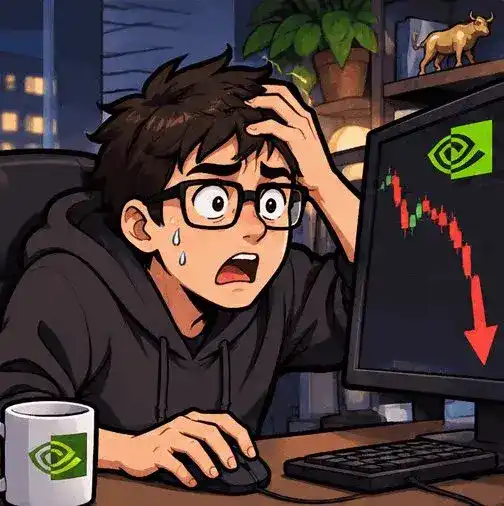
Bernstein downgraded Nvidia from "Outperform" to "Market Perform," cutting its price target from $400 to $200, not due to deteriorating fundamentals but because of an ongoing management scandal at the highest levels of the company. Reports of CEO Jensen Huang's inappropriate relationships—first with Alice Huang, which Huang publicly acknowledged, and subsequently with a direct subordinate, reportedly Kimberly Powell, VP of healthcare—have prompted the board to launch an independent investigation, and The Wall Street Journal reports the company is preparing to dismiss him. Bernstein analyst Stacy A. Rasgon argues the board will almost certainly not retain Huang given the new allegations, and even if he stays, the risk of continued negative exposure remains significant. Despite Nvidia's stock now trading at what Bernstein calls "almost absurdly undervalued" levels, the firm strongly advises investors to stay on the sidelines. Fundamentals remain intact—Bernstein projects data center revenue of about $378.3 billion in FY2026, rising to $657.8 billion in FY2027 and over $918.2 billion in FY2028, with total revenue growing nearly 70% annually and non-GAAP EPS averaging $19.04 for FY28/29, supporting the $200 target at roughly 11x forward P/E, down from 21x. However, the succession question—internal promotion or external hire, and who could replace Huang—remains unanswered, and any resolution will introduce new variables. Bernstein uses a "cockroaches in the kitchen" analogy: finding two implies there are likely more. The analyst suspects the current scandal is just the tip of the iceberg, with more internal allegations, potential government investigations, and uncertainty over strategic supply-chain investments and guarantees possibly to come, while some competitors' shares have already risen on the news. Though Rasgon admits to being torn and understands the buy-the-dip logic, his instinct says the well's depth hasn't been fully plumbed—so Bernstein chooses to step aside and watch from the sidelines.

marsbit24m ago

Bernstein: Why You Absolutely Should Not Buy the Dip on Nvidia Right Now

marsbit24m ago

QQQ Reclaims Its 200-Day Moving Average: Ahead of the December Rate Hike, Who Should You Watch in This AI Rally?

QQQ has reclaimed its 200-day moving average, but the real AI story is just entering a differentiation phase. The index has completed its repair; individual stocks now face their exam. Under the same AI theme, the market's answers have diverged sharply: some stocks are back above the annual line with cash flow, while others have rallied 25% yet remain 30% below it. The key question after the index-level repair is who can pass this exam—depending on whether earnings delivery can outrun valuation pressure. QQQ closed at $690.38 on Nov 11, 1.27% above its 200-day line, recovering most of its losses within days. Two hurdles remain: Nvidia, the largest weight, is still 15% below its annual line and reports earnings on Nov 17, with board governance concerns unresolved; and the 10-year Treasury yield closed at 4.998%, pressing the 5% threshold that anchors valuation for long-duration growth stocks. AI names now fall into three tiers relative to their 200-day lines: AMD is 31.6% above (high expectations priced in), Micron 6.5% above (fundamentals delivering, up 11.89% in a day), QQQ 1.27% above, while Nvidia is 15.0% below and CoreWeave 32.1% below despite a 24.71% single-day jump. The takeaway: the index returning to its annual line may not mean a broad AI rally—capital may be rotating from "buying AI" to "buying delivery." Nvidia's Nov 17 earnings must address both results and governance, with consensus Q3 revenue near $108.8 billion. Micron trades at roughly 10.8x earnings after 379% revenue growth; whether that's undervaluation or cycle-top pricing hinges on HBM pricing and HBM4 supply from Samsung and SK Hynix. CoreWeave's rally prices relief over near-term solvency fears, not financing risk. AMD's challenge is converting revenue into cash, with free cash flow falling to $554 million from $1.56 billion. A December rate hike is already priced in (about 87% odds per CME FedWatch), making the 10-year Treasury the real valuation switch. If yields fall and QQQ holds above its annual line, AI assets could re-rate; if the 10-year breaks 5%, pressure returns. Five signals will determine which AI names keep running. QQQ back at its annual line does not mean AI is back to a broad rally—the index has finished repairing, and the stocks have begun their exam.

marsbit29m ago

QQQ Reclaims Its 200-Day Moving Average: Ahead of the December Rate Hike, Who Should You Watch in This AI Rally?

marsbit29m ago

EU DeFi proposals could push users to riskier platforms, says Coinbase exec

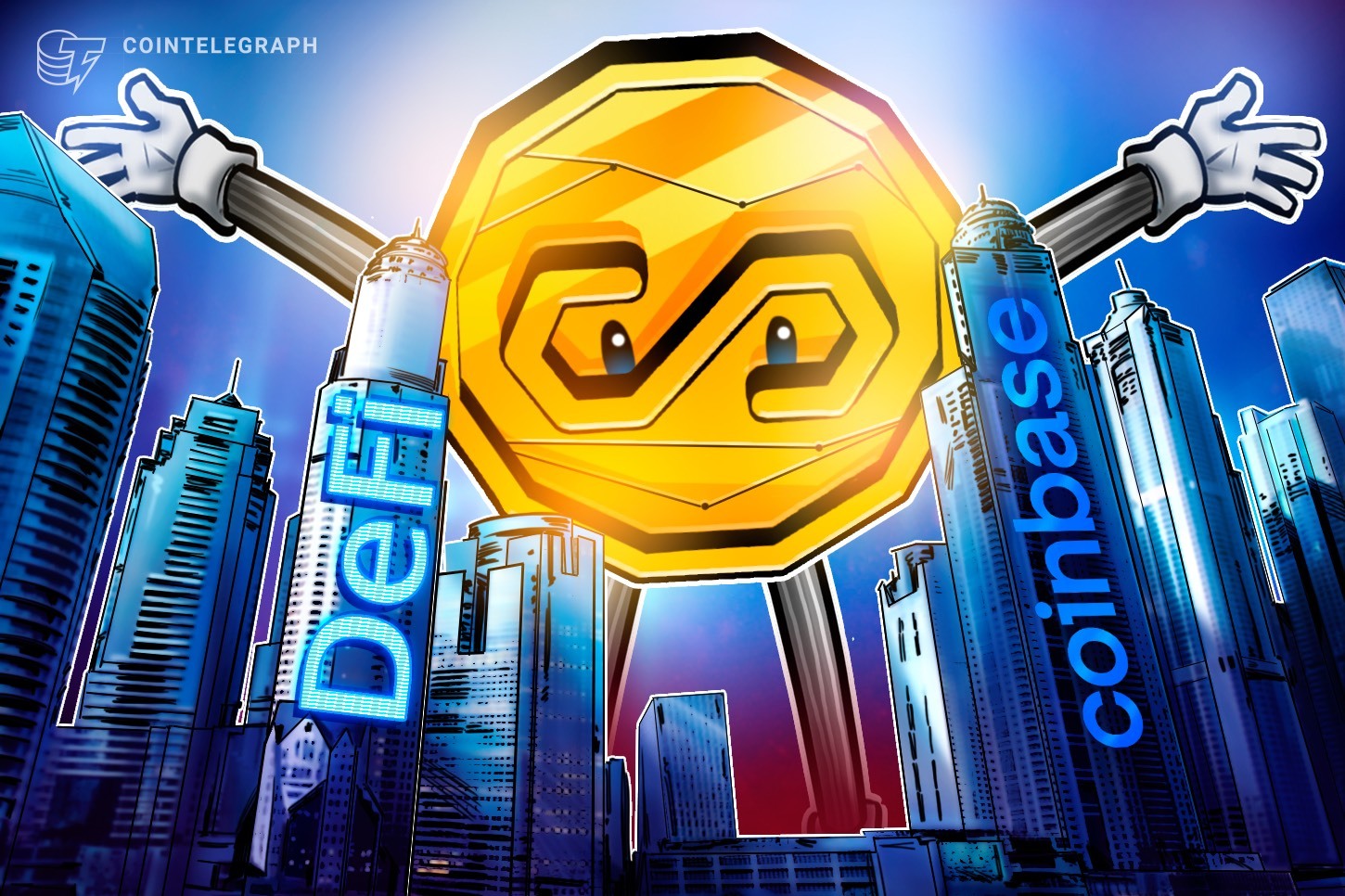
Coinbase's head of EU policy, Roeland Van der Stappen, warned that the EU's efforts to tighten DeFi oversight could push crypto users toward platforms with fewer investor protections. He told Cointelegraph that regulated platforms might respond by limiting or dropping access to DeFi services, arguing that "rules designed to protect investors would end up pushing activity towards the places with the least protection." In its September response to the European Commission's consultation on MiCA, the European Securities and Markets Authority recommended creating a new category of regulated crypto services for firms giving customers access to DeFi protocols. The European Banking Authority also urged the Commission to study new rules for crypto lending and borrowing, listing suitability tests as one option. Van der Stappen said extending such tests to other DeFi services could mean treating a simple stablecoin swap like leveraged lending despite different risks. Lending, liquidity provision and on-chain swaps would be most exposed, and some providers may narrow offerings or withdraw DeFi access entirely. He called for a proportionate approach allowing crypto-asset service providers to continue offering access with safeguards matched to the activity. He warned that restricting access through regulated platforms could fragment DeFi liquidity into smaller pools, worsen prices for EU users, encourage "walled gardens," and steer users toward providers outside the EU with fewer safeguards. A 2026 Adan-Ipsos survey found 49% of French crypto buyers preferred accessing DeFi through exchanges versus 14% favoring personal wallets. A Chainalysis report attributed a modest decline in German crypto activity largely to falling decentralized exchange activity, while EU-wide crypto activity grew 2.2% in the 12 months through June 2026.

cointelegraph39m ago

EU DeFi proposals could push users to riskier platforms, says Coinbase exec

cointelegraph39m ago

South Korea Moves to Let Crypto Exchanges Block Withdrawals Before Hacks Are Confirmed

South Korea’s Financial Services Commission (FSC) will allow crypto exchanges to suspend customer deposits and withdrawals when a hack is suspected, even before asset theft is confirmed. Announced on November 12 after a security meeting chaired by Vice Chairman Shin Jin-chang, the measure will be supported by a no-action letter letting exchanges take preventive action under specified conditions, addressing uncertainty in existing rules that generally bar blocking transactions without legitimate grounds. The FSC is also urging exchanges to maintain 24/7 security monitoring and incident-response systems, with responsible staff ready to act on unusually large or suspicious transactions. Platforms unable to run continuous monitoring must process deposits and withdrawals only during hours when security arrangements function normally, inform customers in advance, and keep enough staff to handle requests. The regulator wants a higher share of customer assets in cold wallets; current rules require at least 80%, while the industry-wide ratio already exceeds 95%. Exchanges are also asked to keep hot-wallet balances minimal and strengthen insurance coverage and financial reserves for compensating customers affected by security incidents. The FSC plans to expand security inspections through the Financial Security Institute, of which only five of South Korea’s 28 registered virtual asset businesses are currently members, with updated exchange-specific inspection standards due by the end of 2026. Separately, the upcoming Digital Asset Law is expected to introduce IT security obligations and compensation responsibilities for crypto businesses comparable to those imposed on traditional financial institutions.

TheNewsCrypto44m ago

South Korea Moves to Let Crypto Exchanges Block Withdrawals Before Hacks Are Confirmed

TheNewsCrypto44m ago

Trading

Spot
活动图片