Starknet has integrated AI agent transaction verification

cryptonews.ruPublished on 2026-08-10Last updated on 2026-08-10

Abstract

Starknet, an Ethereum scaling Layer 2 network, has integrated Chance, a verification system for AI agents that audits proposed trading transactions before execution. The system first simulates a potential trade and compares its outcome with the conditions pre-approved by the user. If the transaction doesn't comply with these user-set rules, Chance blocks the fund transfer. The solution operates using Starknet's programmable custodial wallets. While AI agents can suggest deals, the assets remain under the wallet's control until an operation aligns with the user-defined constraints. This creates an additional verification layer between the AI agent's decision and the actual movement of funds. Chance also utilizes Starknet's STRK20 privacy framework to protect authorization data for agents and transaction calculations. The system allows for selective disclosure of transaction information, enabling users to provide necessary data without revealing the entire context of the operation.

Starknet — an L2 network for scaling Ethereum — has integrated Chance, an AI agent verification system that reviews trade operations before their execution. The system first models the proposed transaction and compares its outcome with the conditions the user has authorized the agent to operate under. If the operation does not meet these conditions, Chance blocks the fund transfer.

The solution operates on Starknet's programmable custodial wallets. AI agents can propose deals, but the assets remain under the wallet's control until the operation complies with the user-defined constraints. This creates an additional verification layer between the AI agent's decision and the actual transfer of funds.

Chance also utilizes Starknet's STRK20 privacy framework to protect data on agent authorizations and transaction calculations. The system allows for selective disclosure of transaction information, enabling the user to provide necessary data without revealing the entire context of the operation.

Image: Magnific

end-content

Trending Cryptos

Related Questions

QWhat is the main function of the Chance system implemented by Starknet?

AThe main function of the Chance system is to verify AI-agent trading operations before their execution. It simulates the proposed transaction and compares the outcome against the user-approved conditions, blocking the fund transfer if they do not match.

QOn what Starknet infrastructure does the Chance verification system operate?

AThe Chance verification system operates on Starknet's programmable custodial wallets.

QHow does the Chance system add a security layer between AI-agent decisions and actual fund transfers?

AIt keeps the assets under the control of the wallet until a proposed operation aligns with the user-set constraints, creating a verification step before execution.

QWhich Starknet framework does Chance use to protect sensitive transaction data?

AChance uses the STRK20 privacy framework to protect data concerning agent authorization and transaction calculations.

QWhat capability does the Chance system provide regarding transaction information disclosure?

AIt allows for the selective disclosure of transaction information, enabling users to provide necessary data without revealing the full context of the operation.

Related Reads

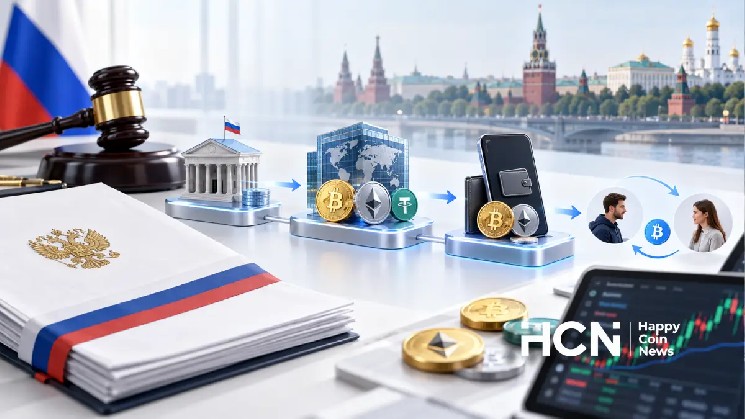
Cryptocurrency in Russia after September 1, 2026: How to Buy, Store, and Trade According to the New Rules

Russia's Federal Law No. 282-FZ "On Digital Currencies and Digital Rights" came into effect on September 1, 2026, establishing a regulated framework for cryptocurrencies rather than banning them. It legalizes ownership of assets like Bitcoin and Ethereum, but prohibits using them for payments for goods and services within Russia. The law introduces official statuses for regulated "cryptocurrency exchangers" (requiring Bank of Russia registry entry) and "digital depositaries" for custody. Citizens can still hold crypto in personal (self-custody) wallets like Ledger, but new reporting requirements for such wallets begin May 2, 2027. A key upcoming change is a rule effective July 1, 2027, requiring residents to conduct crypto transactions (e.g., buying crypto with rubles from another resident) through authorized, regulated participants. This will significantly impact current peer-to-peer (P2P) trading via bank transfers. Until then, casual P2P is not illegal, but systematic large-volume exchange activity already requires licensing. To buy crypto via a regulated Russian platform, users must pass a basic knowledge test. For non-qualified investors, an annual limit of 300,000 rubles is planned for certain approved assets (e.g., Bitcoin, Ethereum, USDT). Withdrawing crypto from a Russian digital depositary directly to a personal wallet is not typically allowed; a transfer must first go to a licensed foreign custodian (like an overseas exchange), then to the personal wallet. The article emphasizes that while cryptocurrency ownership remains legal, the methods for buying, selling, and transferring are becoming more formalized and integrated into the regulated financial system.

cryptonews.ru7m ago

Cryptocurrency in Russia after September 1, 2026: How to Buy, Store, and Trade According to the New Rules

cryptonews.ru7m ago

Trading

Spot

Hot Articles

Discussions

Welcome to the HTX Community. Here, you can stay informed about the latest platform developments and gain access to professional market insights. Users' opinions on the price of ETH (ETH) are presented below.

活动图片