Solana Foundation Head: Blockchain Opens Access to American Assets for the World

cryptonews.ruPublished on 2026-10-07Last updated on 2026-10-07

Abstract

Lily Liu, President of the Solana Foundation, highlighted that providing global access to U.S. financial assets is a core value proposition of blockchain technology. A market for tokenized stocks and ETFs is already developing to support this vision. However, Liu acknowledged that the technology cannot overcome fundamental legal barriers: an investor's rights and ability to purchase such assets still depend on the asset's legal structure and the regulations of their specific country. Previously, Liu described a future of "internet capital markets"—a 24/7 infrastructure accessible online from anywhere. While she noted that tokenized assets currently represent a small fraction of traditional markets, she views the migration of money, securities, and other property forms onto blockchain as a long-term, structural shift.

Solana Foundation President Lily Liu identified global access to American financial assets as one of the key values of blockchain. This thesis is already supported by a growing market of tokenized stocks and ETFs; however, the technology cannot eliminate the main limitation: an investor's rights and the ability to purchase such an asset still depend on its legal structure and the legislation of a specific country.

Previously, Liu described future "internet capital markets" as 24/7 infrastructure accessible to users via the internet regardless of their location. In September, the head of the Solana Foundation acknowledged that tokenized assets still occupy an insignificant share compared to traditional markets but believes the transition of money, securities, and other forms of property onto the blockchain is a long-term structural process.

Trending Cryptos

Related Questions

QAccording to the article, what is one of the key values of blockchain technology identified by Lily Liu?

AGlobal access to American financial assets.

QWhat major limitation does blockchain technology currently face regarding tokenized assets, as mentioned by Lily Liu?

AAn investor's rights and ability to purchase such an asset still depend on its legal structure and the specific country's legislation.

QHow did Lily Liu describe the future vision of 'internet capital markets'?

AAs a 24/7 infrastructure accessible to a user via the internet regardless of their location.

QWhat was Lily Liu's assessment of the current market size of tokenized assets compared to traditional markets?

AShe recognized that tokenized assets still occupy an insignificant share relative to traditional markets.

QHow does Lily Liu characterize the process of transferring money, securities, and other forms of property onto the blockchain?

AAs a long-term structural process.

Related Reads

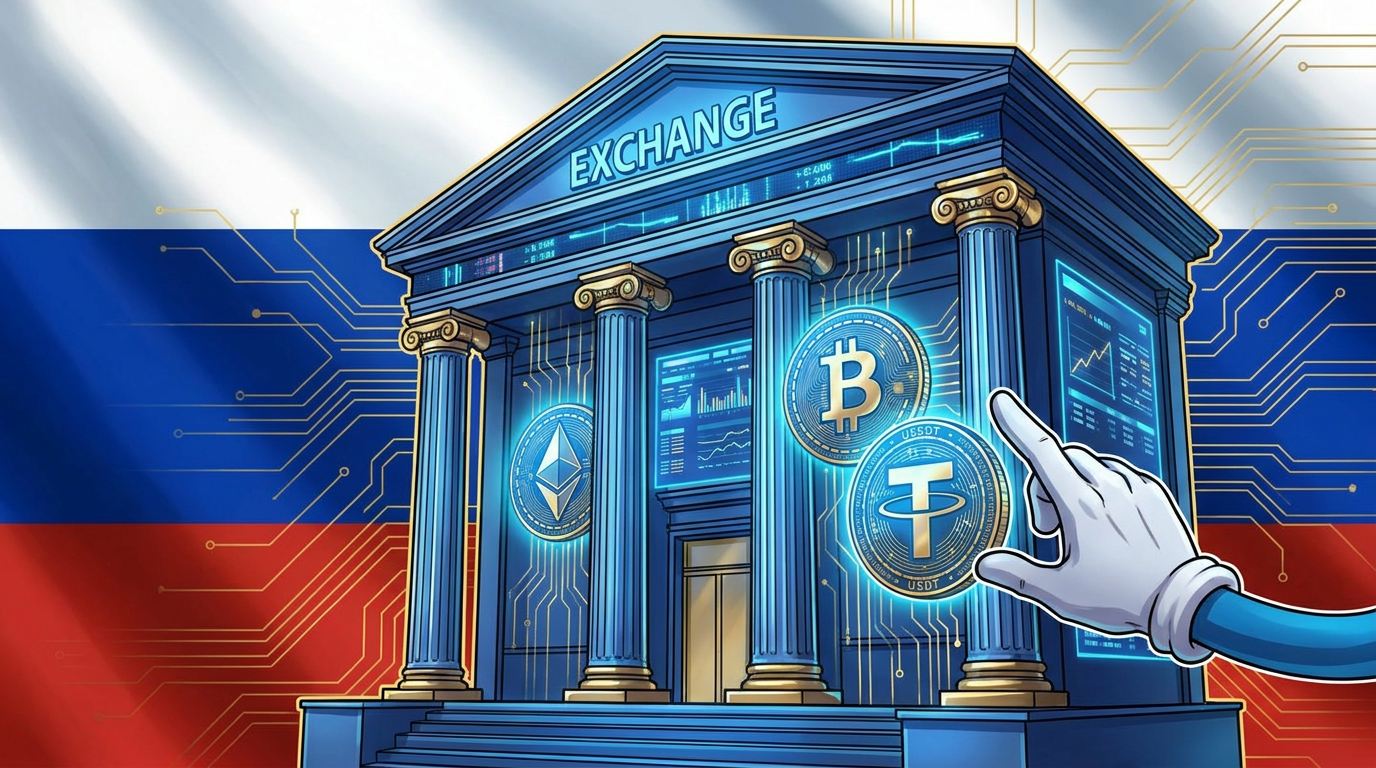
Russia finalizes crypto trading rules ahead of Nov. 17 rollout

Russia’s central bank has finalized rules allowing exchanges to offer Bitcoin, Ether and Tether USDt to retail investors starting Nov. 17. Non-qualified investors can buy up to 300,000 rubles (about $3,700) in crypto annually through each intermediary, including brokers, asset managers and crypto exchange providers. Qualified investors face no purchase limits, but all investors must pass a mandatory test before trading. The directive builds on legislation signed by President Vladimir Putin on Aug. 4 establishing a regulated crypto market under central bank oversight. On Aug. 11, the Bank of Russia published draft regulations identifying BTC, ETH and USDT as eligible for public trading based on market capitalization, average daily trading volume and at least five years of price history on foreign exchanges. The law took effect Sept. 1, and the Bank of Russia later authorized Sberbank, the country’s largest bank, to offer crypto exchange services in October. Moscow Exchange, Russia’s largest securities exchange and a publicly traded company, is preparing to launch crypto trading on Dec. 1, initially offering the three cryptocurrencies through pilot transactions. While expanding regulated access, Russia is also tightening restrictions outside those channels. Direct peer-to-peer crypto trading will be prohibited starting July 1, 2027, transfers from regulated digital accounts to self-custody wallets are already banned, and cryptocurrency cannot be used to pay for goods and services.

cointelegraph1h ago

Russia finalizes crypto trading rules ahead of Nov. 17 rollout

cointelegraph1h ago

Trading

Spot

Hot Articles

Discussions

Welcome to the HTX Community. Here, you can stay informed about the latest platform developments and gain access to professional market insights. Users' opinions on the price of SOL (SOL) are presented below.

活动图片