Nvidia's Jensen Huang Poised to Bet $10 Billion on Anthropic's Massive IPO!

marsbitPublished on 2026-09-12Last updated on 2026-09-12

Abstract

Nvidia is reportedly in talks to invest up to $10 billion as an anchor investor in Anthropic's upcoming IPO, which could be the largest in history. According to exclusive Reuters reporting, the IPO aims to raise $100 billion at a valuation nearing $2 trillion, dwarfing previous records. This potential investment follows a previous $10 billion deal where Nvidia funded Anthropic in exchange for a $30 billion cloud compute commitment on Microsoft Azure, powered by Nvidia chips. This pattern highlights a key dynamic in AI: major chipmakers and cloud providers invest in model companies to secure future customers for their hardware and services. Anthropic's revenue has skyrocketed, growing from an annualized $9 billion at the end of 2025 to over $65 billion by July 2026. To support this growth and reduce reliance on external suppliers, the company has begun developing its own custom chips. The anticipated IPO, expected before the November U.S. midterm elections, is seen as a pivotal moment in the race toward Artificial Superintelligence (ASI), with Nvidia's potential massive bet signaling a strategic move to secure its position in the coming AI era.

Just now, a huge bombshell has hit the AI world—

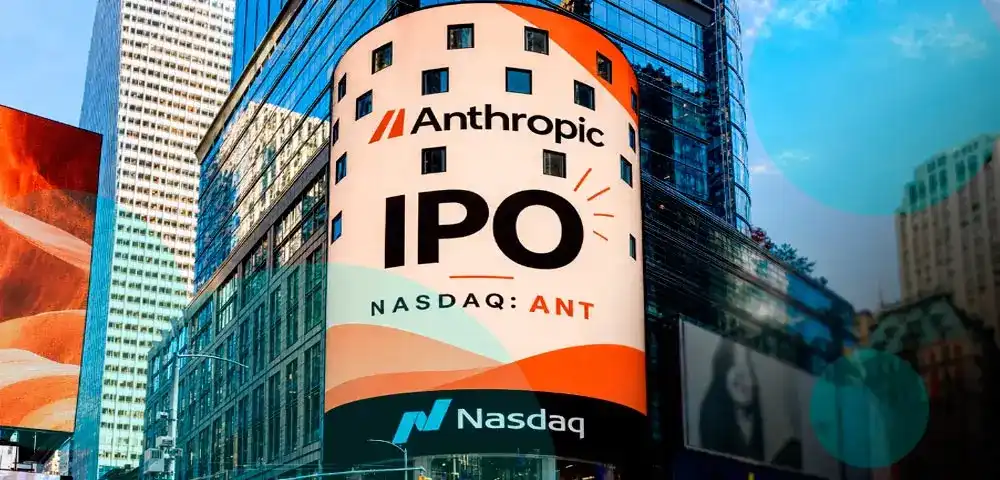
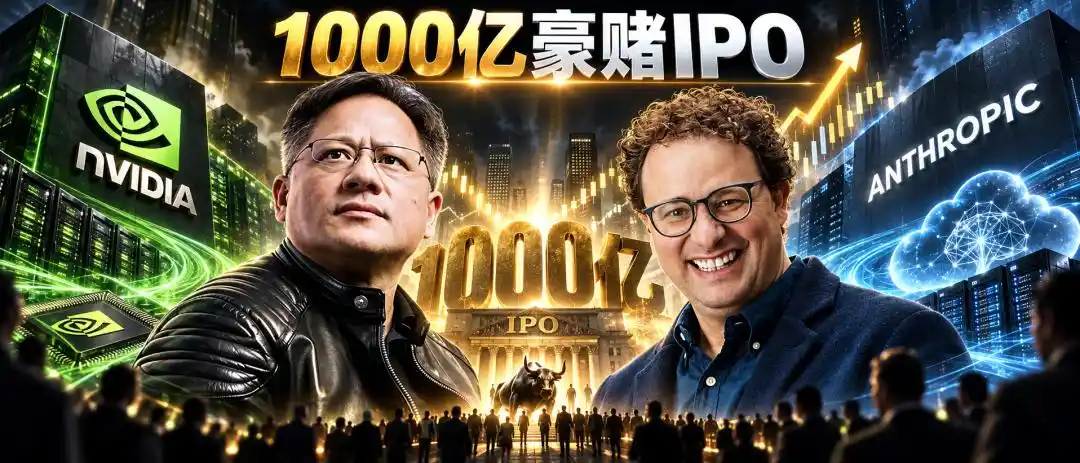
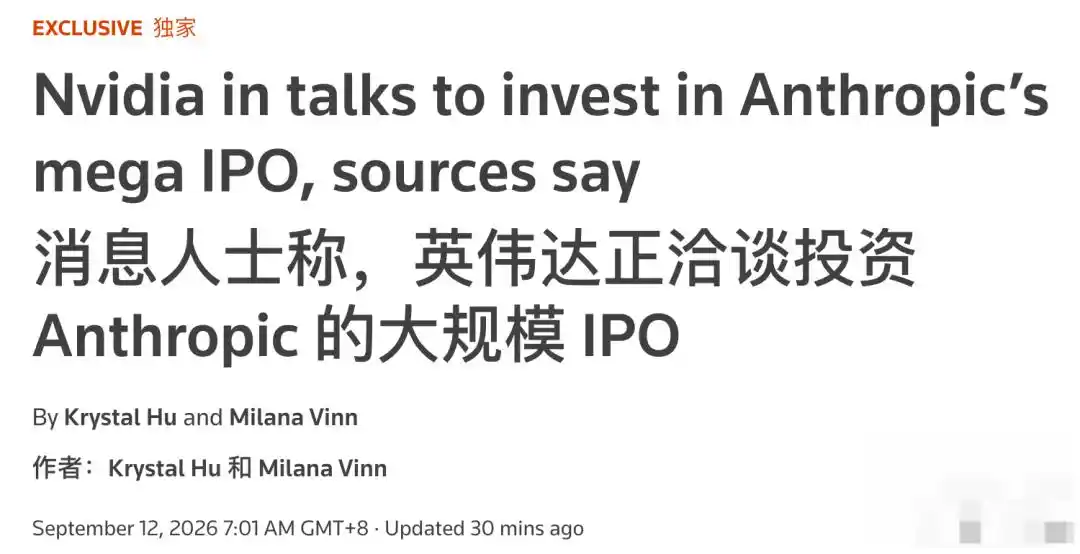
Reuters exclusively reported: Nvidia is in talks with Anthropic to invest up to $10 billion, diving into what could be the largest IPO in history!
That's right, you read that correctly.

The guy selling shovels, Jensen Huang, is about to put money directly into the hands of the gold diggers. And he's doing it as an "anchor investor."

$2 Trillion, The Largest IPO in Human History?

According to two sources familiar with the matter who spoke to Reuters, Anthropic's IPO plans to raise up to $100 billion, targeting a valuation nearing $2 trillion.
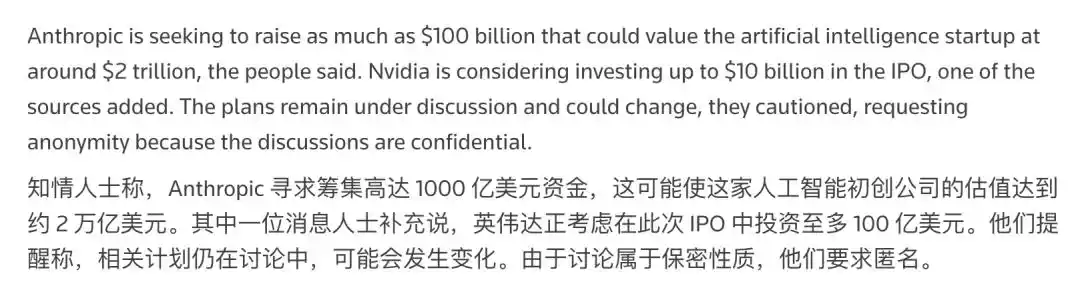
If successful, this would shatter the record set by SpaceX in June this year, which raised $75 billion, making it the largest IPO in the history of global capital markets.

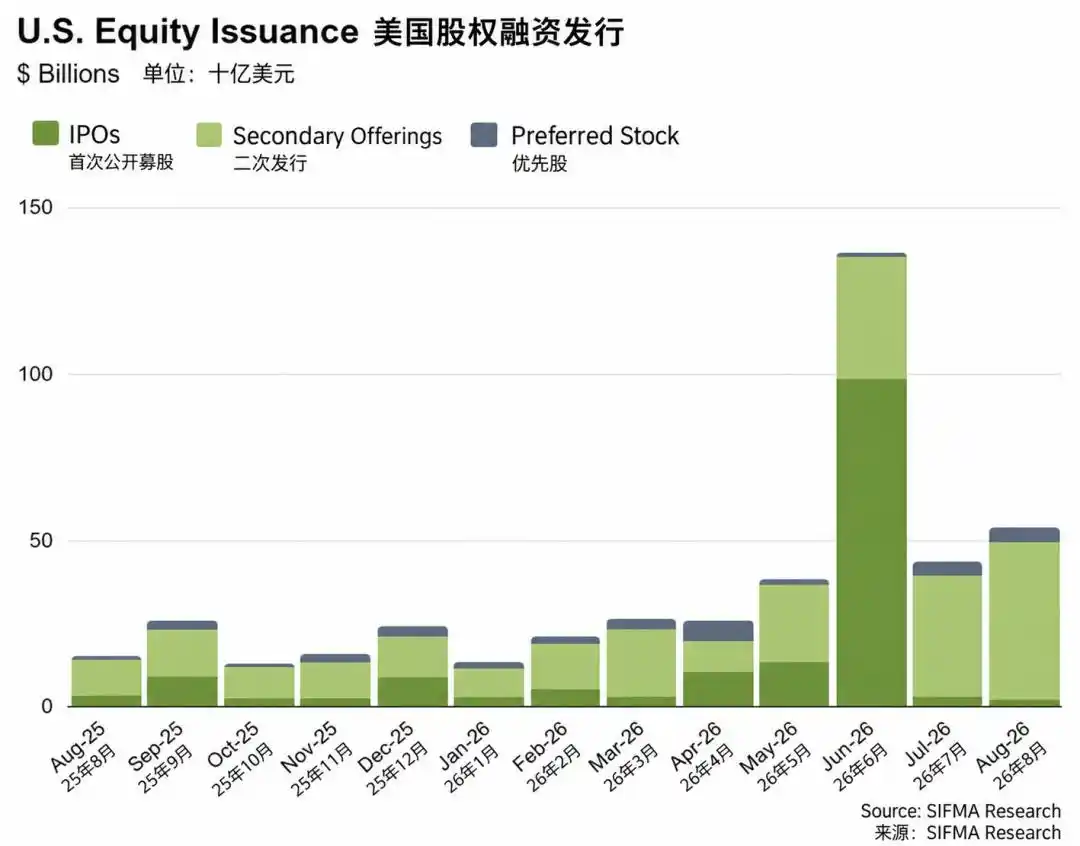
What does $100 billion mean? In the first eight months of this year, the entire US IPO market (excluding SPACs) raised only $137 billion.

In other words, Anthropic alone would account for 73% of the total market volume from the first eight months.
According to the report, Nvidia is considering investing up to $10 billion in the deal.

However, negotiations are still ongoing, and terms could change at any time. Anthropic declined to comment, and Nvidia has not yet responded.

The IPO is expected to be completed before the US midterm elections in November.

Jensen Huang's Calculus: More Than Just an Investment

An "anchor investor" is a major institutional buyer that commits to subscribing *before* the public roadshow, providing a vote of confidence to the market.

When Arm went public, Nvidia and Amazon were anchor investors; during SpaceX's IPO, Saudi Arabia's PIF played a similar role.

If Anthropic can secure a "headline buyer" of Nvidia's caliber, the signal to the entire capital market is unmistakable—even the GPU king is willing to put real money on the line, what are you waiting for?

But the story is far more nuanced than that.

There's a very delicate relationship here: Nvidia is both a "supplier" to Anthropic and its "investor."

Training and running the Claude models is inseparable from Nvidia's GPUs.

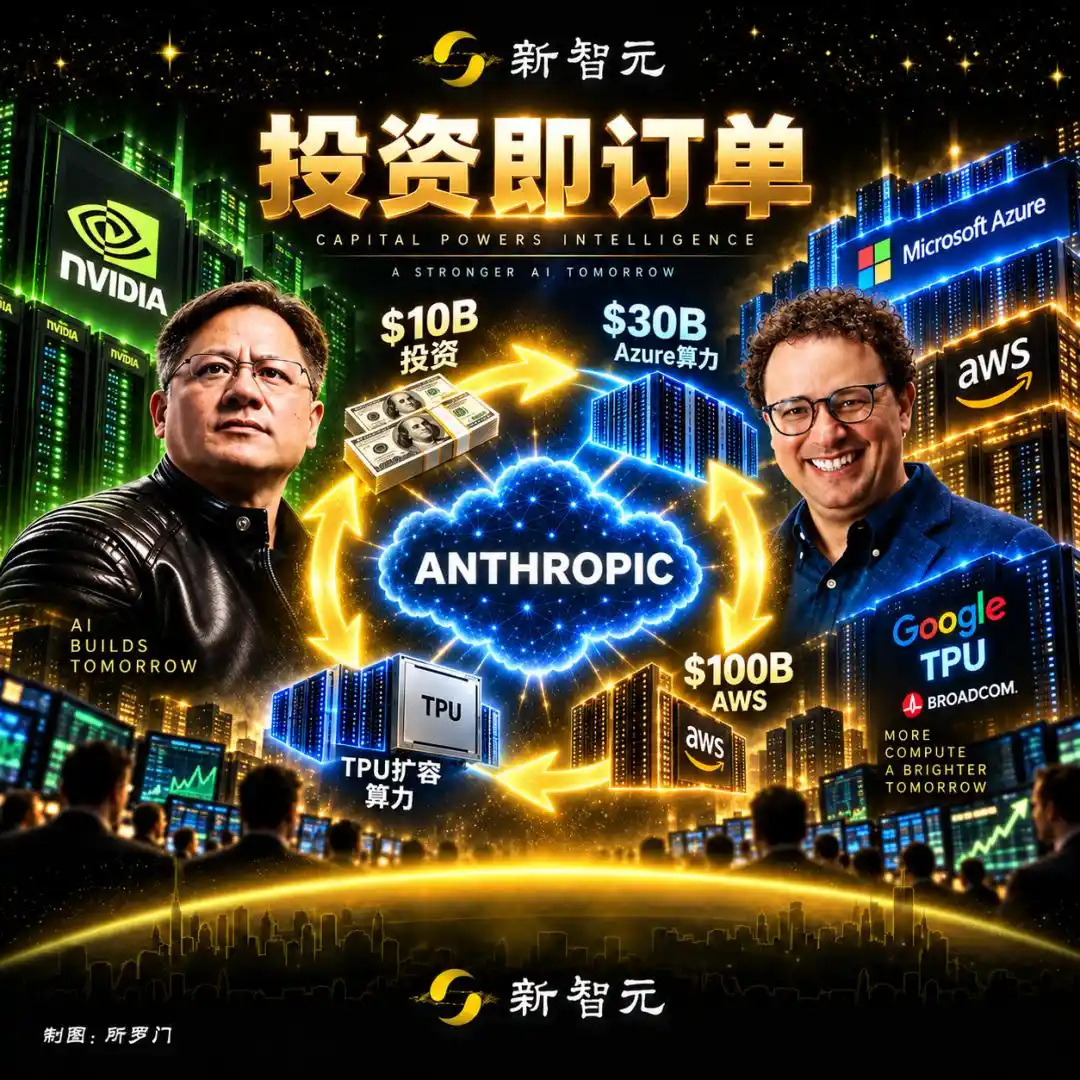
And just in November 2025, Nvidia invested $10 billion in Anthropic—in exchange, Anthropic committed to purchasing $30 billion worth of computing power on Microsoft Azure, which, incidentally, runs on Nvidia's chips.

Think about it: Nvidia invests $10 billion, Anthropic turns around and spends $30 billion on cloud services powered by Nvidia chips. The money goes full circle, right back into Jensen Huang's pocket.

Now, by adding another $10 billion during the IPO phase, this cycle extends from the private market to the public market.

And it's not just Nvidia.

On Anthropic's list of major backers, Amazon and Google also play the dual role of "investor + compute provider."

In April this year, Anthropic announced plans to invest over $100 billion in Amazon AWS over the next decade, using over 1 million Amazon Trainium2 chips; it also signed "multi-gigawatt" agreements to expand its use of Google and Broadcom's TPUs.

The capital logic of the AI industry couldn't be clearer: Money raised by model companies ultimately becomes purchase orders for computing power, flowing back into the hands of chip giants and cloud providers.

Investing in AI companies is essentially pre-booking customers for your own chips and cloud services.
Supporting this astronomical valuation is Anthropic's explosive growth trajectory.

At the end of 2025, Anthropic's annualized revenue was approximately $9 billion. By the end of July 2026, this number had skyrocketed to over $65 billion, a more than seven-fold increase in just seven months.

Reuters previously reported that Anthropic expects revenue to reach $190 to $200 billion by 2028.

In May this year, Anthropic just completed a $65 billion funding round, valuing the company at $965 billion. Now, the IPO is aiming to hit $2 trillion directly, effectively doubling the valuation in a matter of months.
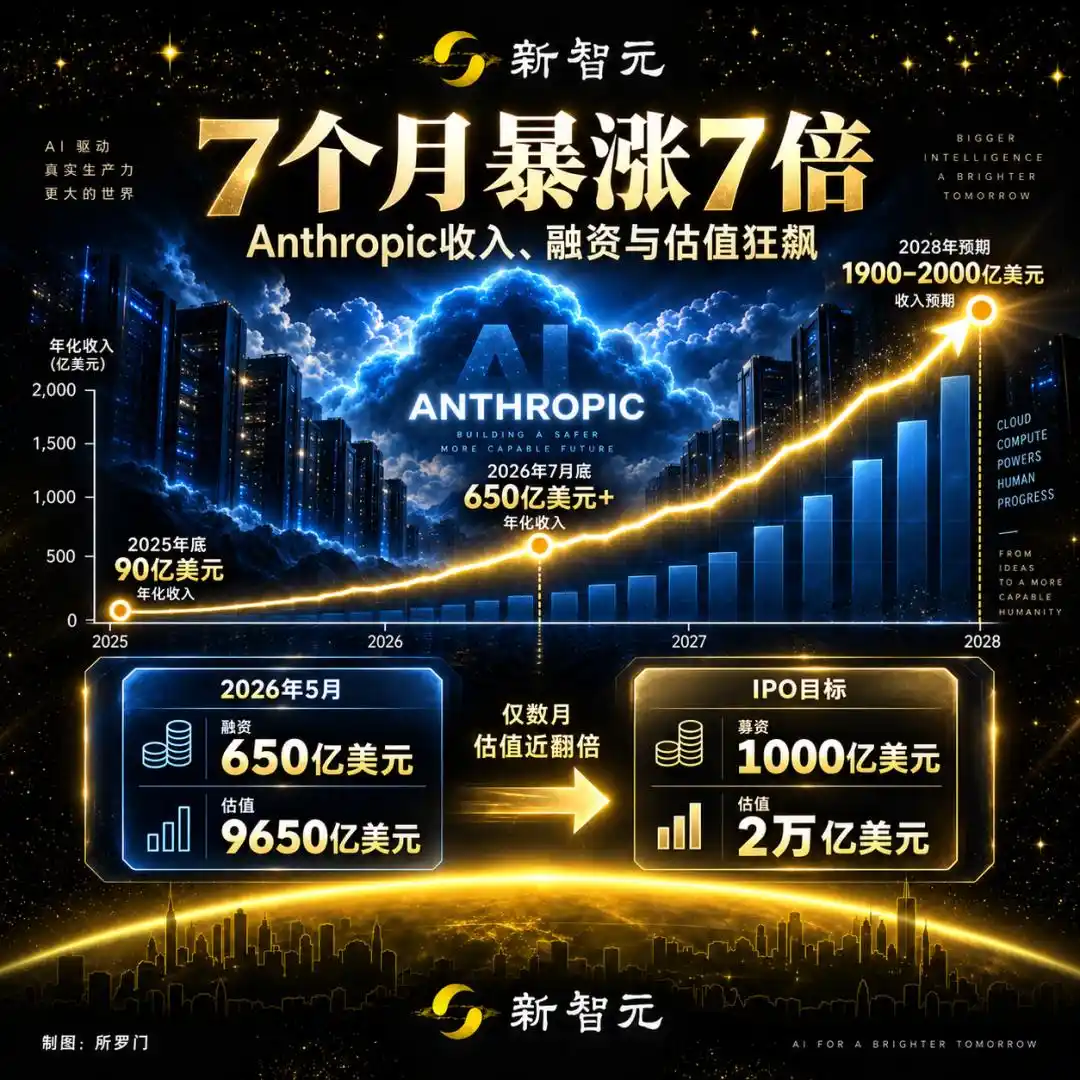
Meanwhile, Claude's user demand is growing so fast that it has stretched Anthropic's existing computing resources thin.

To reduce dependence on external chips, Anthropic has even formed an internal team to begin developing custom chips in-house.

This Is Just the Beginning

Zooming out, Nvidia's $10 billion bet on Anthropic's IPO is a microcosm of the AI industry entering its "decisive moment" in 2026.

As of the end of August, the US IPO market has raised $137 billion, setting a historical record, and the year is far from over.

This means that from late 2026 into 2027, humanity will, for the first time, price "tickets to AGI" on the public capital markets.

Anthropic and OpenAI, the two companies considered most likely to reach artificial general intelligence first, will successively stand on the Nasdaq, facing public judgment from global investors.

Behind this IPO feast lies an unprecedented infrastructure arms race in human history. Global spending on AI-related projects has already reached $2.6 trillion.

Most crucially: Everyone is betting on the same thing—ASI is approaching.

Real product progress continues to validate this prediction.

When AI starts improving itself, when models start improving models, once this flywheel starts spinning, everything accelerates.

This is the real reason Nvidia is desperately pouring money into Anthropic: They are not just investing in a company's IPO; they are investing in a ticket to the age of ASI (Artificial Superintelligence).

References:

https://www.reuters.com/legal/transactional/nvidia-talks-invest-anthropics-mega-ipo-sources-say-2026-09-11/

Editor: Solomon

This article is from the WeChat public account "Xinzhiyuan", author: Xinzhiyuan

Related Questions

QAccording to the article, what is NVIDIA reportedly considering investing in Anthropic's upcoming IPO, and what is the maximum amount mentioned?

ANVIDIA is reportedly considering investing up to $10 billion as an anchor investor in Anthropic's upcoming mega IPO.

QWhat record-breaking valuation is Anthropic's IPO reportedly targeting?

AAnthropic's IPO is reportedly targeting a valuation close to $2 trillion, which would make it the largest IPO in history.

QHow does the article describe the strategic relationship between NVIDIA and Anthropic beyond just investment?

AThe article describes a strategic cycle where NVIDIA is both a supplier and an investor. NVIDIA invests money into Anthropic, and Anthropic uses that capital to purchase massive amounts of compute power (cloud services powered by NVIDIA chips), effectively circulating funds back to NVIDIA.

QWhat was Anthropic's reported annualized revenue as of July 2026, and how does it compare to the figure from late 2025?

AAs of July 2026, Anthropic's annualized revenue was reported to be over $65 billion, a more than seven-fold increase from approximately $9 billion in late 2025.

QWhat broader industry trend or 'bet' does the article suggest NVIDIA's massive investment in Anthropic represents?

AThe article suggests the investment represents a bet on the imminent arrival of ASI (Artificial Superintelligence). NVIDIA is not just investing in a company's IPO but is buying a 'ticket to the ASI era'.

Related Reads

Tech Veteran: Anthropic IPO Will Be the Peak of the US AI Rally, Will "Go Big on China AI" If Conditions Allow

Veteran tech investor Jack Selby, head of Copper Sky and managing partner of Peter Thiel's family office, warns that Anthropic's planned IPO—aiming to raise up to $100 billion—could mark the peak of the AI market rally. He cautions that if the highly anticipated IPO prices well below expectations, the expiry of lock-up periods could trigger significant selling pressure and a large-scale AI market correction. Selby names SoftBank and Oracle as "canaries in the coal mine," flagging Oracle's higher debt ratio as a bigger risk, and suggests investors needing AI exposure consider Google instead. Selby also questions Anthropic's fundamentals: over 80% of its revenue is non-recurring and vulnerable to competitors closing the technology gap within six to nine months. He notes the business is extremely capital-intensive—requiring costly data, energy, data centers, and chips—and that with interest rates no longer near zero, calling it a trillion-dollar company seems far-fetched. He further highlights Chinese competition, saying DeepSeek and other Chinese AI models trail Anthropic by only about six months, posing a direct threat. Selby says he would "aggressively go long on Chinese AI" if conditions allow, arguing that Anthropic cannot claim all its business must rely on U.S. models, since most AI use cases resemble basic tool applications, leaving room for Chinese alternatives.

marsbit1h ago

Tech Veteran: Anthropic IPO Will Be the Peak of the US AI Rally, Will "Go Big on China AI" If Conditions Allow

marsbit1h ago

Grayscale's $1 Million Sponsorship Can't Save It: Why ZEC, Once Hyped as the Belle of the Ball, Crashed Again?

Grayscale announced a $1 million ecosystem sponsorship for Zcash on November 10, pledging to return all first-year management fees from its Zcash ETF (ZCSH) to network development and marketing, with the first $100,000 distributed to four nonprofit organizations. Yet the same day, ZEC plunged 11.3% to around $1,043, extending its 30-day decline to nearly 20%. After two months of hype from overseas KOLs and institutions touting ZEC as a "second spring for old coins," the token quickly turned into a slow bleed under the weight of $2.3 billion in open interest. The article argues that Wall Street's narrative halo and Grayscale's PR subsidy have been exhausted, and ZEC—lacking fundamental support—has once again become an ATM for highly leveraged speculators to cash out on good news. Grayscale's pledge, while seemingly generous, is voluntary and can be modified or terminated at any time; only $400,000 of the $1 million has actually been paid, making it more brand marketing for its own ETF than genuine ecosystem donation. The sum is negligible relative to Zcash's market cap, and the Zcash ETF has not attracted sustained institutional capital the way Bitcoin or Ethereum ETFs did. Without new external liquidity, the inflated narrative cannot hold. The core problem is market structure: ZEC perpetual futures open interest stands at roughly $2.3 billion, dominated by high-volatility leveraged gamblers. The article contends that the earlier social media hype was a precise harvest of derivatives liquidity—promoters used the "first privacy ETF" theme to lure retail into leveraged longs, then exited as open interest peaked and the sponsorship news landed. Compounding this, Zcash's privacy pool suffered a critical vulnerability about three months before the ETF listing, halving the price and shattering conservative investors' confidence despite a July fix. The piece concludes that "old coin re-hype" follows a familiar script: find a traditional-finance-approved angle, package a grand revaluation narrative, use KOLs to drive retail buying, then distribute chips at peak liquidity. Those who hyped ZEC have largely cashed out, leaving behind a broken price and $2.3 billion in unsettled leverage. Grayscale's advertising cannot save Zcash; a real revival requires far more than Wall Street's charity.

marsbit2h ago

Grayscale's $1 Million Sponsorship Can't Save It: Why ZEC, Once Hyped as the Belle of the Ball, Crashed Again?

marsbit2h ago

Trading

Spot
活动图片