House Finance panel chair says regulator actions on crypto ‘fall short’ of CLARITY bill

cointelegraphPublished on 2026-10-08Last updated on 2026-10-08

Abstract

House Financial Services Committee Chair French Hill stated that while U.S. financial regulators like the SEC and CFTC are advancing crypto rulemaking, their actions fall short of the long-term stability that congressional legislation like the failed CLARITY bill would provide. Hill expressed hope that the CLARITY Act could still pass in Congress's post-election lame-duck session to establish permanent law and ensure U.S. leadership in digital assets. His comments follow announcements by SEC and CFTC heads to proceed with crypto regulation. Both agencies currently face multiple leadership vacancies, complicating their regulatory capacity.

Representative French Hill, who chairs the House Financial Services Committee, said that though US financial regulators were moving forward with addressing digital assets, their actions lacked the long-term stability of legislation from Congress.

In a Wednesday Fox Business interview, the Arkansas lawmaker said the US Securities and Exchange Commission (SEC) and Commodity Futures Trading Commission (CFTC) had taken steps to address crypto regulations after the US Senate failed to pass the Digital Asset Market Clarity (CLARITY) Act last month. Both financial agencies have proposed rulemaking to handle different aspects of overseeing and enforcing crypto regulations, but Hill said their response following the failed CLARITY vote “[fell] short” of legislative solutions.

“I still have hope [...] that we can get [CLARITY] passed in the lame duck session of Congress,” said Hill. “We need that permanent law change to make sure America is number one in digital assets and blockchain technology.”

The Arkansas lawmaker’s comments came after the heads of the SEC and CFTC — Paul Atkins and Michael Selig, respectively — announced plans to move forward with crypto regulation at the direction of US President Donald Trump.

Related: Crypto PAC announces support for 32 House candidates in US midterms

As Hill noted, the Senate would have only 22 days in session between the US midterm elections in November and the next group of lawmakers entering Congress in 2027. During that lame duck session, the results of the elections could play a role in votes favoring or opposing CLARITY, as lawmakers will be aware of whether they will be returning to Congress or leaving in January.

Empty commissioner seats at both regulators

As of Wednesday, there are a total of seven empty vacancies at the leadership level for the SEC and CFTC. Commissioner Hester Peirce announced her resignation from the former last week, leaving only Chair Atkins and Mark Uyeda. Selig serves as chair and sole commissioner at the CFTC.

Magazine: Capital starting to rotate back to crypto from AI: Raoul Pal
Trending Cryptos

Related Questions

QWhat does Representative French Hill, chair of the House Financial Services Committee, believe is lacking in the recent actions of US financial regulators regarding crypto?

AHe believes that while US financial regulators (the SEC and CFTC) have taken steps to address crypto regulations, their actions lack the long-term stability and permanence that legislation from Congress, specifically the CLARITY bill, would provide.

QAccording to the article, what specific legislation did Representative Hill mention and when does he hope it might still pass?

AHe mentioned the Digital Asset Market Clarity (CLARITY) Act. He expressed hope that it could be passed during the lame duck session of Congress following the November midterm elections.

QWhy does Representative Hill argue that permanent legislation like the CLARITY Act is necessary?

AHe argues that permanent law change is needed 'to make sure America is number one in digital assets and blockchain technology.'

QWhat is the current state of commissioner vacancies at the SEC and CFTC as mentioned in the article?

AAs of the article's writing, there are a total of seven empty vacancies at the leadership level for the SEC and CFTC. The SEC has only two commissioners (Chair Paul Atkins and Mark Uyeda) following Hester Peirce's resignation, and the CFTC has only one (Chair Michael Selig).

QHow might the upcoming US midterm elections influence the potential passage of the CLARITY Act during the lame duck session?

ADuring the lame duck session, the results of the midterm elections could influence votes on the CLARITY Act, as lawmakers will know whether they will be returning to Congress or leaving in January, which may affect their voting positions.

Related Reads

Hackers inject credit card, crypto-stealing malware into 178 major websites

Cyber attackers planted cryptocurrency and credit card-stealing malware on websites associated with Ledger, Coinpass and scores of other major businesses in an attack exploiting website optimization platform Optimizely on Monday. Dubbed "Optimjack" by researcher Amirul Iman, the campaign delivered malicious code through scripts hosted by Optimizely. The malware could replace legitimate cryptocurrency wallet addresses with attacker-controlled alternatives when visitors copied addresses, and it also captured credit card details entered into website forms, according to a separate analysis by cybersecurity firm StepSecurity. The campaign affected website scripts belonging to 178 organizations, including hardware wallet Ledger, OANDA / Coinpass and trading platforms IG, Interactive Investor and TMS Brokers, according to Report URI's investigation. Other affected brands included IKEA, Salesforce, Zoom, the BBC and CNN, websites that collectively attract millions of visitors a day. BBC was among the first websites observed to serve the Optimizely injection at around 4:21 am UTC on Monday. By 9:52 pm UTC, most of the malicious code had been removed, with Ledger's snippet cleaned at about 8:41 pm UTC. Cointelegraph reached out to Ledger, Coinpass, and a number of other major businesses reported to be impacted by the malicious injection. This is a developing story, more information will be added as it becomes available.

cointelegraph2m ago

Hackers inject credit card, crypto-stealing malware into 178 major websites

cointelegraph2m ago

Just now, Chen Danqi officially announced joining Noeri part-time, a new company betting on AI self-evolution

Princeton computer science associate professor Danqi Chen has revealed she joined AI startup Noeri on a part-time basis two months ago, expressing enthusiasm for its focus on applying AI to scientific discovery so scientists can tackle their hardest research problems. Noeri was co-founded by Stanford computer science professors Yejin Choi and Carlos Guestrin, who serve as co-CEOs. The company focuses on developing AI systems that can continuously learn and self-improve, helping enterprises build customized AI from their own data and business experience. It has raised $110 million led by Menlo Ventures, with participation from Madrona Venture Group, Kindred Ventures, Wing Venture Capital and NEA, plus strategic investors including NVIDIA, Cisco Investments and Snowflake. Choi is a leading researcher in commonsense reasoning, NLP, LLMs and AI alignment, formerly at the University of Washington and Ai2 and a senior research director at NVIDIA. Guestrin is a veteran ML scholar and entrepreneur who co-created XGBoost and co-founded Turi (acquired by Apple in 2016), later serving as Apple's senior director of ML and AI. Chen, an associate professor at Princeton, co-leads its NLP group, serves as deputy director of the Princeton Language and Intelligence initiative, and is a co-author of RoBERTa. Noeri's core idea is "Plural Intelligence" — the belief that future AI should comprise many systems of different scales and specialties, each organization building and continuously improving its own AI, rather than depending on a single corporate superintelligence. Its product acts like a persistent AI engineer: it studies a company's data and workflows and optimizes instructions and skills, tool configuration and orchestration, model selection, and even underlying model parameters. Every change comes with an explanation and requires human review, akin to code review. The system supports both closed and open-weight models and learns from each task's interactions and corrections. Chen said she looks forward to working with Choi, a longtime role model and friend, and is especially excited about plural intelligence in scientific discovery, where specialized AI agents could continuously learn around a specific research question, remember past attempts, and collaborate on hypotheses and validation.

marsbit37m ago

Just now, Chen Danqi officially announced joining Noeri part-time, a new company betting on AI self-evolution

marsbit37m ago

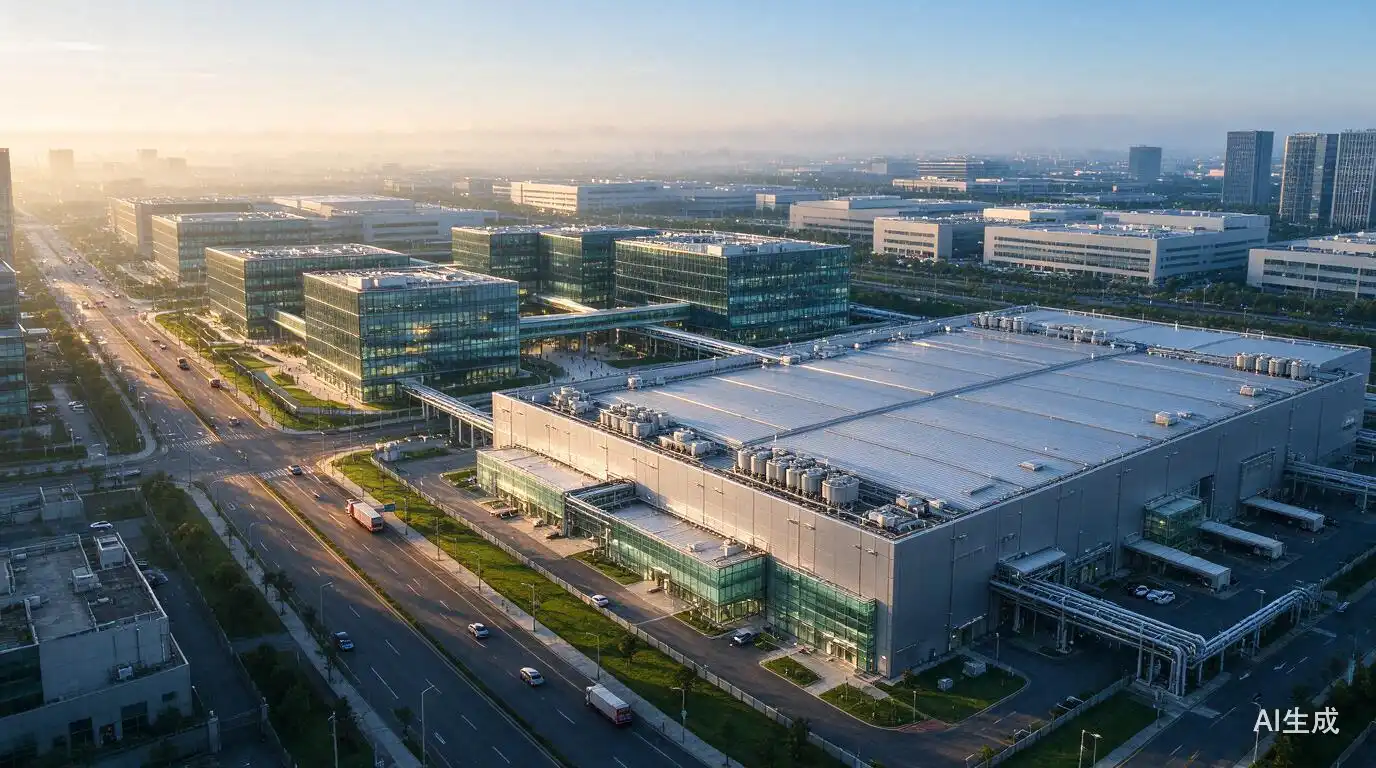
40 Kilometers: Shenzhen Fits an Entire Chip Supply Chain Into a One-Hour Drive

Shenzhen is compressing an entire chip supply chain into a one-hour drive, roughly 40 kilometers. Design firms cluster within 10 km of the Futian APEC venue, while fabs sit 20–40 km away in Pingshan, Pinghu, and Yanluo. The article argues this is not just local ambition but a response to a hard rule: the more mature a process, the easier design and manufacturing can be separated; the more immature, the closer they must be. TSMC's PDK model let California design and Taiwan manufacturing run for 30 years, but only because mature processes could be codified. Shenzhen's outer ring, however, hosts immature work—Huawei's "Tau Law" and stacked "logic folding" chips—where tacit knowledge lives in engineers' heads and demands face-to-face iteration. With回路B (design-process feedback) and回路C (fab-equipment feedback) cut by export controls after 2020, both loops had to return home. Shenzhen lacks an integrated giant like Samsung or Intel, so it uses city governance: a state platform invests across fabs and equipment makers, plus tape-out subsidies up to 10 million yuan. The geography forms a slope—Nanshan offices, Bantian R&D, Guanlan/Pinghu pilot lines, Pingshan fabs—connected by Metro Line 14 (40 minutes Futian to Pingshan). The lesson for planners: zone land by process maturity, not by industry category, and keep the most immature, iteration-hungry steps within an hour's drive rather than chasing a full chain.

marsbit37m ago

40 Kilometers: Shenzhen Fits an Entire Chip Supply Chain Into a One-Hour Drive

marsbit37m ago

Trading

Spot

Hot Articles

How to Buy BILL

Welcome to HTX.com! We've made purchasing Billions Network (BILL) simple and convenient. Follow our step-by-step guide to embark on your crypto journey.Step 1: Create Your HTX AccountUse your email or phone number to sign up for a free account on HTX. Experience a hassle-free registration journey and unlock all features.Get My AccountStep 2: Go to Buy Crypto and Choose Your Payment MethodCredit/Debit Card: Use your Visa or Mastercard to buy Billions Network (BILL) instantly.Balance: Use funds from your HTX account balance to trade seamlessly.Third Parties: We've added popular payment methods such as Google Pay and Apple Pay to enhance convenience.P2P: Trade directly with other users on HTX.Over-the-Counter (OTC): We offer tailor-made services and competitive exchange rates for traders.Step 3: Store Your Billions Network (BILL)After purchasing your Billions Network (BILL), store it in your HTX account. Alternatively, you can send it elsewhere via blockchain transfer or use it to trade other cryptocurrencies.Step 4: Trade Billions Network (BILL)Easily trade Billions Network (BILL) on HTX's spot market. Simply access your account, select your trading pair, execute your trades, and monitor in real-time. We offer a user-friendly experience for both beginners and seasoned traders.

6.7k Total ViewsPublished 2026.05.07Updated 2026.06.02

How to Buy BILL

Discussions

Welcome to the HTX Community. Here, you can stay informed about the latest platform developments and gain access to professional market insights. Users' opinions on the price of BILL (BILL) are presented below.

活动图片