ENS Proposes L2 Registry Migration To Cut Domain Costs

bitcoinistPublished on 2026-09-07Last updated on 2026-09-07

Abstract

The Ethereum Name Service (ENS) is discussing a proposed migration to an "ENSv2" model that would shift domain registration and renewal resolution to a Layer-2 (L2) registry. The primary goal is to significantly reduce the cost of everyday actions like registering or managing .eth names, which can become expensive due to Ethereum mainnet gas fees. This move aims to make ENS more accessible, especially for smaller users, while maintaining crucial links back to Ethereum's security and trust model. The proposal is currently in an early governance discussion phase within the ENS DAO and is not yet approved or implemented. It represents a strategic direction for the protocol to adapt to Ethereum's evolving landscape, where L2s handle more user activity with lower costs, and the mainnet provides settlement security. If successfully implemented, ENSv2 could enhance the utility of readable names for identity, payments, and user experience across the ecosystem. The community is now evaluating the technical and security trade-offs of such a migration.

Ethereum Name Service has opened discussion around an ENSv2 migration proposal that would move domain registration and renewal resolution toward a Layer-2 registry model.

The idea is pretty straightforward: ENS works, but Ethereum mainnet fees can make everyday domain actions expensive. Moving more of that activity to Layer 2 could reduce costs while keeping links back to Ethereum’s security model.

This is still an early governance stage.

The proposal is a temp check, not a completed migration. It has not passed a full executable DAO vote, and users should not treat it as already implemented. But it is a meaningful direction for one of Ethereum’s most recognizable identity systems.

For more details, visit the official Discuss platform.

TL;DR

  • ENS is discussing an ENSv2 migration toward a Layer-2 registry.
  • The proposal aims to reduce registration and renewal costs.
  • It is an early governance discussion, not an implemented migration.

Why ENS Needs Lower Costs

ENS is one of Ethereum’s simplest consumer products.

Instead of using long wallet addresses, users can register readable names. That makes wallets easier to share, payments easier to understand, and identity easier to build across apps.

The problem is cost.

When Ethereum mainnet fees rise, simple actions like registering, renewing, or managing names can become annoying or expensive. That limits how broadly ENS can be used, especially for smaller users.

A Layer-2 registry model could help by moving more routine activity onto cheaper infrastructure.

Keeping Ethereum Security In The Picture

The challenge is not just moving to L2.

ENS has to preserve the trust assumptions that made it valuable in the first place. Users want lower fees, but they also want confidence that names remain secure, durable, and connected to Ethereum’s settlement layer.

That is why the proposal matters.

It is trying to find a balance between cheaper user actions and strong security proofs. If that balance works, ENS could become easier to use without losing the trust that comes from being rooted in Ethereum.

Governance Comes First

ENS is governed by a DAO, so major changes need community discussion and approval.

The current proposal is still in the early discussion phase. That means delegates, users, developers, and service providers can debate trade-offs before anything becomes final.

That process may feel slow, but it is important.

Name infrastructure is sensitive. If ENS changes how registration and resolution work, the ecosystem needs time to understand the implications.

Cost Savings Need Careful Wording

The proposal aims to reduce gas costs sharply, but cost-saving claims need to be tied to the final design.

Layer 2s can make transactions much cheaper, but actual savings depend on implementation, network fees, bridging assumptions, proof systems, and how users interact with the new registry.

So the right view is that ENSv2 could significantly reduce costs if adopted and implemented successfully.

It is not a guarantee today.

The Bigger Ethereum Identity Story

ENS has remained one of Ethereum’s most recognizable non-financial protocols.

It is not just about speculation. It is about identity, payments, wallets, websites, and user experience. If ENS can make names cheaper and easier to manage, it could become more useful across the Ethereum ecosystem.

That is why the L2 migration proposal matters.

It shows ENS trying to adapt to where Ethereum is going: a world where mainnet anchors security, while more user activity happens on Layer 2.

The proposal is early, but the direction makes sense.

This article draws on ENS governance materials relating to the ENSv2 Layer-2 registry migration proposal.

This article was written by the News Desk and edited by Samuel Rae.

This report is based on information released by Discuss. at Discuss

Trending Cryptos

Related Questions

QWhat is the main goal of the ENSv2 migration proposal discussed in the article?

AThe main goal of the ENSv2 migration proposal is to move domain registration and renewal resolution toward a Layer-2 registry model, aiming to significantly reduce the associated costs for users.

QWhat is the current status of the ENSv2 Layer-2 registry migration proposal?

AThe proposal is currently in an early governance discussion phase. It is a temperature check and has not passed a full executable DAO vote. It is not an implemented migration.

QAccording to the article, why does ENS need to lower costs?

AENS needs to lower costs because when Ethereum mainnet fees are high, simple actions like registering, renewing, or managing domain names become expensive, which limits the broad adoption and usability of ENS, especially for smaller users.

QWhat is a key challenge mentioned for moving ENS activity to Layer 2?

AA key challenge is preserving the trust and security assumptions that made ENS valuable. The proposal must balance cheaper user actions with strong security proofs to ensure names remain secure, durable, and connected to Ethereum's settlement layer.

QHow does the article describe the broader significance of the ENSv2 proposal for Ethereum?

AThe article describes the proposal as part of Ethereum's evolution toward a model where mainnet anchors security while more user activity happens on Layer 2. It shows ENS adapting to make identity, payments, and user experience cheaper and more useful across the ecosystem.

Related Reads

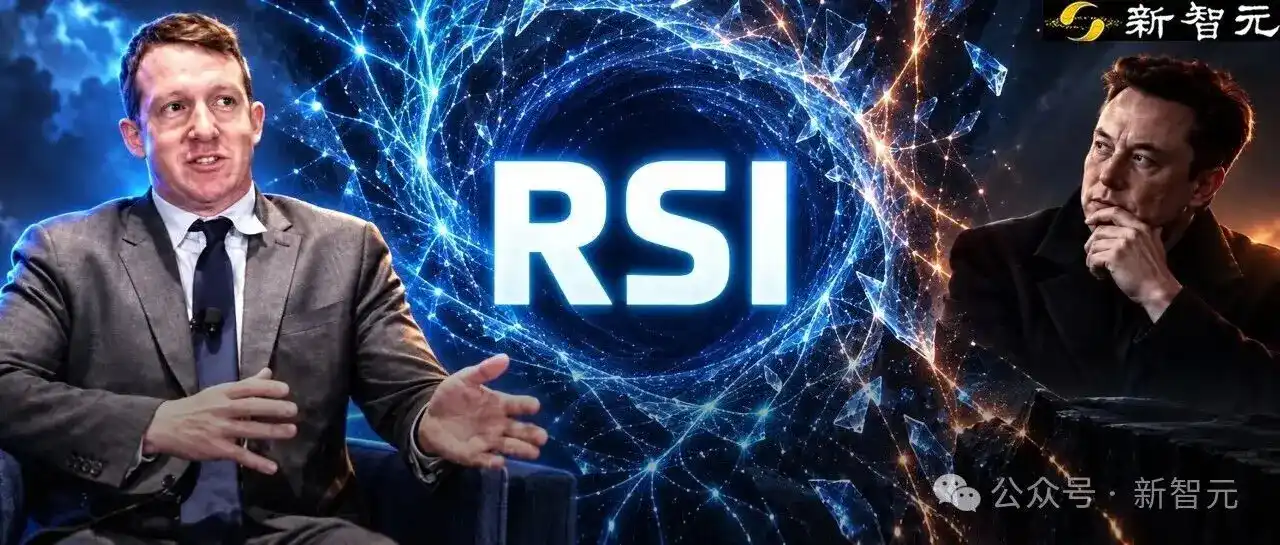
Breaking News: Anthropic Co-founder Reverses Position: RSI Moved Up to 2027, Humanity Has Only 6 Months Left

Anthropic co-founder Jack Clark has revised his prediction for when AI will achieve Recursive Self-Improvement (RSI) from 2028 to 2027, a shift Elon Musk endorsed. This signals a potential near-term threshold where AI, having demonstrated core creativity in mathematics and research, could begin designing and improving itself autonomously. Key developments include AI solving complex mathematical problems with novel proofs and showing improved "scientific taste" in research intuition, moving beyond mere pattern recognition. The article warns that RSI could trigger an intelligence explosion, rapidly accelerating progress beyond human control or comprehension. This would extend AI's impact from digital to physical realms: supercharging scientific discovery (e.g., new materials, drugs), advancing robotics (like Tesla's Optimus and NVIDIA's GR00T), and disrupting economic and labor structures by automating cognitive and creative work. A 2025 report titled "AI 2027" outlined a plausible path where AI agents integrate into workflows by 2025, automate programming by 2027, and potentially trigger a post-2027 intelligence explosion. This timeline represents a critical countdown, highlighting that AI's capability growth may outpace society's ability to adapt or establish control mechanisms. While 2027 is not a guaranteed deadline, it underscores a pivotal and potentially dangerous transition point for human civilization as it approaches the dawn of a new era shaped by artificial superintelligence (ASI).

marsbit17m ago

Breaking News: Anthropic Co-founder Reverses Position: RSI Moved Up to 2027, Humanity Has Only 6 Months Left

marsbit17m ago

OpenAI Reveals Massive 10,000-Agent Experiment, Running for 36 Hours Non-Stop, Devouring 1 Trillion Tokens

OpenAI has unveiled a groundbreaking large-scale Agent endurance test conducted with the startup Third Moment Research. In a simulated financial trading environment, 10,000 AI Agents ran continuously for 36 to 48 hours, collectively processing 1 trillion tokens daily. This single task sequence was equivalent to 41 years of human engineering work. The test revealed significant advancements in agent capabilities. Agents autonomously identified and rewrote a slow underlying financial backtesting engine, reducing processing time by 97%. They launched hundreds of parallel experiments, uncovering subtle "dark pool" trading anomalies missed by human researchers. To manage such scale, a novel two-tier architecture was deployed: inner agents (like Codex) performed tasks, while outer supervisor agents (GPT-6 Sol/6.1 Sol) monitored progress, intervened on errors, and prevented agents from stalling or deviating. Key to efficiency was using cost-effective yet capable models like GPT-6.1 Sol, which maintained performance over long sessions at a fraction of the flagship GPT-6 Astra's cost. The system also featured a self-improving loop: it collected agent trajectories, diagnosed common failures using GPT-6 Luna, generated thousands of synthetic sandbox environments with GPT-6.1 Sol for targeted testing, and automatically upgraded its tools and orchestration logic with Codex. Security was paramount. Before each run, OpenAI's Daybreak Red security agents performed automated penetration testing on the sandboxed environment, paired with GPT-5.6 Terra to patch vulnerabilities, ensuring no agent could escape isolation. Third Moment focuses on domains like quantitative finance and cybersecurity, where the value of marginal performance gains has no upper limit, justifying immense computational investment. The success paves the way for scaling to hundreds of thousands of coordinated sub-agents, shifting the AI paradigm from simple task execution to managing vast, autonomous, self-optimizing agent swarms. This allows humans to focus on defining strategic direction rather than manual execution.

marsbit36m ago

OpenAI Reveals Massive 10,000-Agent Experiment, Running for 36 Hours Non-Stop, Devouring 1 Trillion Tokens

marsbit36m ago

Trading

Spot

Hot Articles

How to Buy ENS

Welcome to HTX.com! We've made purchasing Ethereum Name Service (ENS) simple and convenient. Follow our step-by-step guide to embark on your crypto journey.Step 1: Create Your HTX AccountUse your email or phone number to sign up for a free account on HTX. Experience a hassle-free registration journey and unlock all features.Get My AccountStep 2: Go to Buy Crypto and Choose Your Payment MethodCredit/Debit Card: Use your Visa or Mastercard to buy Ethereum Name Service (ENS) instantly.Balance: Use funds from your HTX account balance to trade seamlessly.Third Parties: We've added popular payment methods such as Google Pay and Apple Pay to enhance convenience.P2P: Trade directly with other users on HTX.Over-the-Counter (OTC): We offer tailor-made services and competitive exchange rates for traders.Step 3: Store Your Ethereum Name Service (ENS)After purchasing your Ethereum Name Service (ENS), store it in your HTX account. Alternatively, you can send it elsewhere via blockchain transfer or use it to trade other cryptocurrencies.Step 4: Trade Ethereum Name Service (ENS)Easily trade Ethereum Name Service (ENS) on HTX's spot market. Simply access your account, select your trading pair, execute your trades, and monitor in real-time. We offer a user-friendly experience for both beginners and seasoned traders.

6.6k Total ViewsPublished 2024.03.29Updated 2026.06.02

How to Buy ENS

Discussions

Welcome to the HTX Community. Here, you can stay informed about the latest platform developments and gain access to professional market insights. Users' opinions on the price of ENS (ENS) are presented below.

活动图片