Digital Currency Seeks Officials

cryptonews.ruPublished on 2026-10-06Last updated on 2026-10-06

Abstract

Russia has begun registering the first official players in its cryptocurrency market, marking the next stage of regulatory implementation. As of October 5, all organizations seeking legal status as exchanges and depositories can apply to the Central Bank. Banks were the first to apply and are expected by analysts to become the main players in the official market. However, strict rules have been set for credit institutions: their investments in cryptocurrency are limited to 1% of their capital. How interested banks are in testing this new niche was discussed with Yuri Belikov, Managing Director of Validation at Expert RA.

Russia has begun registering the first official players in the crypto market. This is the next stage of regulation implementation. Starting October 5, all organizations aspiring to become legal exchanges and depositories can apply to the Central Bank. The first to approach the regulator were banks. According to analysts' expectations, they are set to become the main players in the official market.

However, strict standards have been set for credit institutions—their investments in cryptocurrency are limited to 1% of their capital. How interested banks are in trying out this new niche, “Kommersant FM” discussed these questions with Yury Belikov, Managing Director for Validation at Expert RA:

Related Questions

QWhat is the main subject of this news article?

AThe article is about Russia starting to register the first official players in the cryptocurrency market.

QStarting from what date can organizations apply to become legal crypto exchanges and depositories?

AOrganizations can apply to the Central Bank of Russia for the status of legal exchangers and depositories starting from October 5th.

QWhich type of institution is expected to become the main player on the official crypto market according to analysts?

AAnalysts expect banks to become the main players on the official cryptocurrency market.

QWhat strict restriction is placed on banks' investments in cryptocurrency?

ABanks' investments in cryptocurrency are limited to 1% of their capital.

QWho did "Kommersant FM" discuss the banks' interest in the new niche with?

A"Kommersant FM" discussed this topic with Yuri Belikov, the Managing Director of Validation at "Expert RA".

Related Reads

GRAM Defies Market Downturn, Durov Claims It's Undervalued—Can Ecosystem Fundamentals Keep Up?

Despite a broad crypto market downturn driven by hawkish macro expectations, tech stock selloffs, ETF outflows, and geopolitical risks, GRAM (TON) has bucked the trend, drawing attention as one of the top gainers among the top 100 tokens by market cap with a 5.3% rise. Telegram CEO Pavel Durov publicly argued that GRAM is severely undervalued, claiming it deserves a top-three spot among cryptocurrencies given its unique integration with a large social ecosystem, and he updated his X bio to include "TON blockchain founder (2019)." TON was originally launched by Telegram but was abandoned after U.S. regulatory action; Durov rejoined the project in May, rebranded the token back to GRAM, and introduced a seven-step "Make TON Great Again" strategy. However, GRAM has fallen about 55.1% since hitting $2.7 in May and is down 85.3% from its all-time high. Durov also highlighted ecosystem growth: Telegram's self-custodial Gram wallet, launched in July 2026 and fully opened to global users on October 9, surpassed 3.53 million wallets by November 12, adding nearly 650,000 in 48 hours, aided by an auto-activation mechanism triggered by receiving even 0.1 GRAM. Yet real adoption lags—daily active addresses are only about 53,000 (roughly 1.5% of wallets), and only about 188,000 addresses hold GRAM, totaling around 1.683 million tokens worth about $2.05 million. TON's ecosystem also faces challenges: TVL is just $45.74 million versus a historical peak of $780 million, concentrated in Tonstakers and Stakee, with limited application diversity and high development barriers. Tokenomics add inflation pressure, with annual inflation rising from about 0.6% to about 4% after an April block-speed upgrade. While Telegram provides unmatched traffic, converting users into genuine on-chain activity and sustainable value remains unproven.

marsbit40m ago

GRAM Defies Market Downturn, Durov Claims It's Undervalued—Can Ecosystem Fundamentals Keep Up?

marsbit40m ago

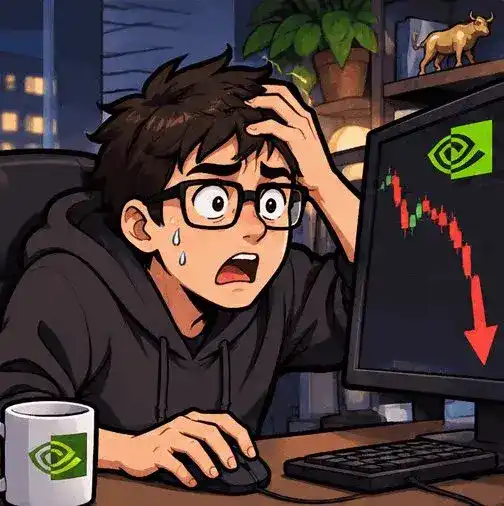
Bernstein: Why You Absolutely Should Not Buy the Dip on Nvidia Right Now

Bernstein downgraded Nvidia from "Outperform" to "Market Perform," cutting its price target from $400 to $200, not due to deteriorating fundamentals but because of an ongoing management scandal at the highest levels of the company. Reports of CEO Jensen Huang's inappropriate relationships—first with Alice Huang, which Huang publicly acknowledged, and subsequently with a direct subordinate, reportedly Kimberly Powell, VP of healthcare—have prompted the board to launch an independent investigation, and The Wall Street Journal reports the company is preparing to dismiss him. Bernstein analyst Stacy A. Rasgon argues the board will almost certainly not retain Huang given the new allegations, and even if he stays, the risk of continued negative exposure remains significant. Despite Nvidia's stock now trading at what Bernstein calls "almost absurdly undervalued" levels, the firm strongly advises investors to stay on the sidelines. Fundamentals remain intact—Bernstein projects data center revenue of about $378.3 billion in FY2026, rising to $657.8 billion in FY2027 and over $918.2 billion in FY2028, with total revenue growing nearly 70% annually and non-GAAP EPS averaging $19.04 for FY28/29, supporting the $200 target at roughly 11x forward P/E, down from 21x. However, the succession question—internal promotion or external hire, and who could replace Huang—remains unanswered, and any resolution will introduce new variables. Bernstein uses a "cockroaches in the kitchen" analogy: finding two implies there are likely more. The analyst suspects the current scandal is just the tip of the iceberg, with more internal allegations, potential government investigations, and uncertainty over strategic supply-chain investments and guarantees possibly to come, while some competitors' shares have already risen on the news. Though Rasgon admits to being torn and understands the buy-the-dip logic, his instinct says the well's depth hasn't been fully plumbed—so Bernstein chooses to step aside and watch from the sidelines.

marsbit45m ago

Bernstein: Why You Absolutely Should Not Buy the Dip on Nvidia Right Now

marsbit45m ago

QQQ Reclaims Its 200-Day Moving Average: Ahead of the December Rate Hike, Who Should You Watch in This AI Rally?

QQQ has reclaimed its 200-day moving average, but the real AI story is just entering a differentiation phase. The index has completed its repair; individual stocks now face their exam. Under the same AI theme, the market's answers have diverged sharply: some stocks are back above the annual line with cash flow, while others have rallied 25% yet remain 30% below it. The key question after the index-level repair is who can pass this exam—depending on whether earnings delivery can outrun valuation pressure. QQQ closed at $690.38 on Nov 11, 1.27% above its 200-day line, recovering most of its losses within days. Two hurdles remain: Nvidia, the largest weight, is still 15% below its annual line and reports earnings on Nov 17, with board governance concerns unresolved; and the 10-year Treasury yield closed at 4.998%, pressing the 5% threshold that anchors valuation for long-duration growth stocks. AI names now fall into three tiers relative to their 200-day lines: AMD is 31.6% above (high expectations priced in), Micron 6.5% above (fundamentals delivering, up 11.89% in a day), QQQ 1.27% above, while Nvidia is 15.0% below and CoreWeave 32.1% below despite a 24.71% single-day jump. The takeaway: the index returning to its annual line may not mean a broad AI rally—capital may be rotating from "buying AI" to "buying delivery." Nvidia's Nov 17 earnings must address both results and governance, with consensus Q3 revenue near $108.8 billion. Micron trades at roughly 10.8x earnings after 379% revenue growth; whether that's undervaluation or cycle-top pricing hinges on HBM pricing and HBM4 supply from Samsung and SK Hynix. CoreWeave's rally prices relief over near-term solvency fears, not financing risk. AMD's challenge is converting revenue into cash, with free cash flow falling to $554 million from $1.56 billion. A December rate hike is already priced in (about 87% odds per CME FedWatch), making the 10-year Treasury the real valuation switch. If yields fall and QQQ holds above its annual line, AI assets could re-rate; if the 10-year breaks 5%, pressure returns. Five signals will determine which AI names keep running. QQQ back at its annual line does not mean AI is back to a broad rally—the index has finished repairing, and the stocks have begun their exam.

marsbit51m ago

QQQ Reclaims Its 200-Day Moving Average: Ahead of the December Rate Hike, Who Should You Watch in This AI Rally?

marsbit51m ago

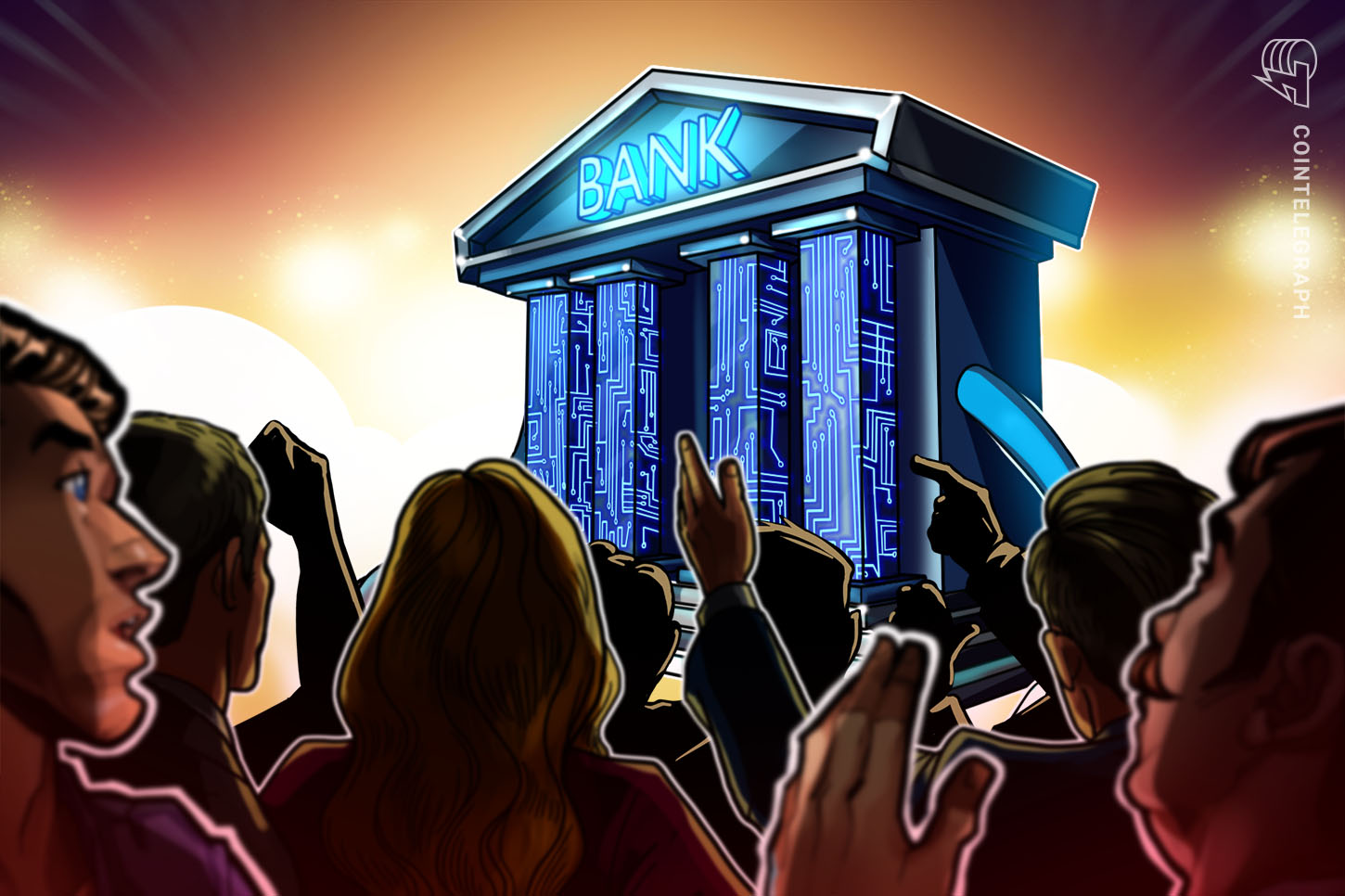
EU DeFi proposals could push users to riskier platforms, says Coinbase exec

Coinbase's head of EU policy, Roeland Van der Stappen, warned that the EU's efforts to tighten DeFi oversight could push crypto users toward platforms with fewer investor protections. He told Cointelegraph that regulated platforms might respond by limiting or dropping access to DeFi services, arguing that "rules designed to protect investors would end up pushing activity towards the places with the least protection." In its September response to the European Commission's consultation on MiCA, the European Securities and Markets Authority recommended creating a new category of regulated crypto services for firms giving customers access to DeFi protocols. The European Banking Authority also urged the Commission to study new rules for crypto lending and borrowing, listing suitability tests as one option. Van der Stappen said extending such tests to other DeFi services could mean treating a simple stablecoin swap like leveraged lending despite different risks. Lending, liquidity provision and on-chain swaps would be most exposed, and some providers may narrow offerings or withdraw DeFi access entirely. He called for a proportionate approach allowing crypto-asset service providers to continue offering access with safeguards matched to the activity. He warned that restricting access through regulated platforms could fragment DeFi liquidity into smaller pools, worsen prices for EU users, encourage "walled gardens," and steer users toward providers outside the EU with fewer safeguards. A 2026 Adan-Ipsos survey found 49% of French crypto buyers preferred accessing DeFi through exchanges versus 14% favoring personal wallets. A Chainalysis report attributed a modest decline in German crypto activity largely to falling decentralized exchange activity, while EU-wide crypto activity grew 2.2% in the 12 months through June 2026.

cointelegraph1h ago

EU DeFi proposals could push users to riskier platforms, says Coinbase exec

cointelegraph1h ago

Trading

Spot
活动图片