Did Bessent Boost the Yen but Fail to Guard U.S. Bonds, Becoming the 'Pig Teammate' of U.S. Stocks?

marsbitPublished on 2026-09-10Last updated on 2026-09-10

Abstract

U.S. Treasury Secretary Besant took two major actions this week: issuing a strong warning against shorting the Japanese Yen and significantly increasing the size of U.S. Treasury buybacks. While the Yen strengthened following his interventionist remarks, the Treasury's expanded buyback program—raising the single-operation cap to $6 billion—disappointed markets that had anticipated even larger measures. Consequently, long-end Treasury yields rose instead of falling, with the 10-year yield auction hitting a record high. These combined actions pose a dual threat to the U.S. stock market's multi-year bull run. A stronger Yen increases the cost of the popular Yen carry trade, where investors borrow low-interest Yen to buy higher-yielding assets like U.S. tech stocks, potentially forcing unwinds of these leveraged positions. Simultaneously, rising Treasury yields put pressure on stock valuations. Market analysts describe the Treasury's buyback effort as insufficient ("bringing a pea shooter to a tank fight") and note the inherent contradiction in Besant's strategy: while a stronger Yen may help prevent Japan from selling U.S. Treasuries, it also risks triggering carry-trade liquidations that could directly hit U.S. equities, particularly tech stocks. The situation leaves Besant facing a difficult balancing act with unintended consequences for financial markets.

Original Author: Long Yue

Original Source: Wall Street News

U.S. Treasury Secretary Bessent took action this week: first, he issued a high-profile warning to the market not to short the Japanese yen, which subsequently strengthened; then, he significantly expanded the scale of U.S. bond buybacks in an attempt to suppress long-term yields. The result: the yen rose, but U.S. bonds fell.

Individually, each action has its own logic. Combined, however, they pose a dual threat to the U.S. stock market's nearly four-year bull run—yen strength impacts carry trades, and rising Treasury yields pressure valuations.

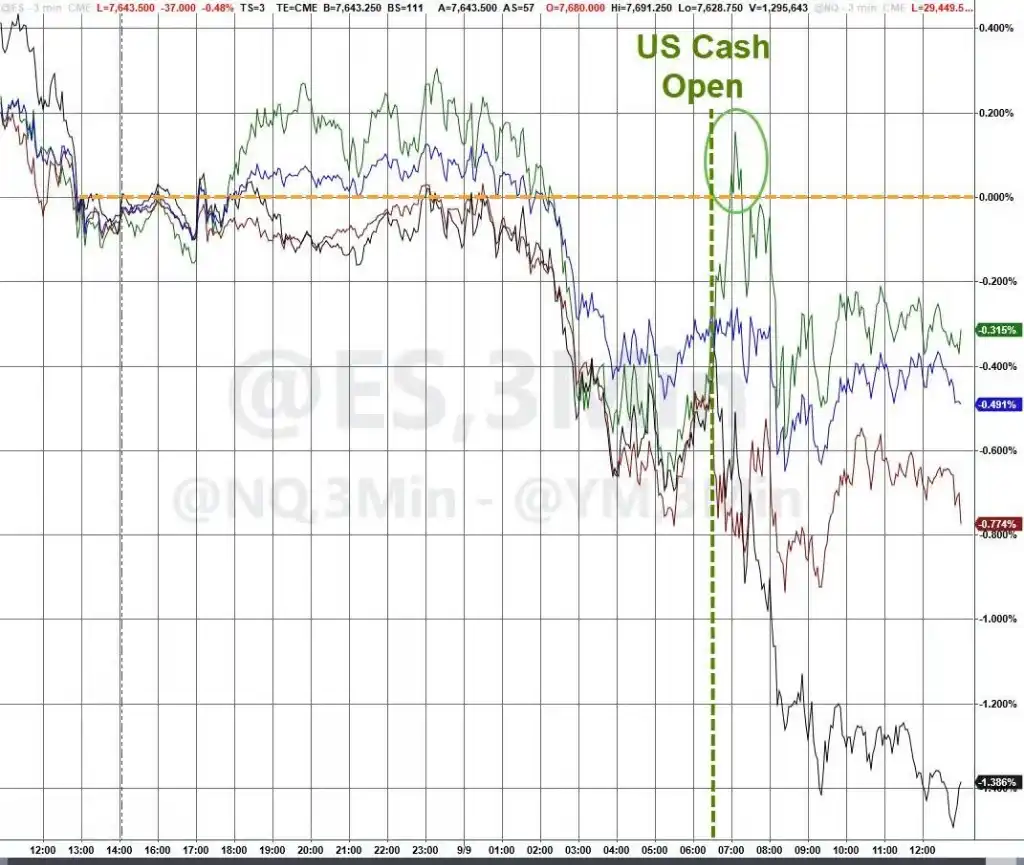
On Wednesday, September 9, U.S. stocks fell for the third consecutive day. The Dow Jones dropped over 400 points, down 0.8%; the S&P 500 fell 0.5%; and the Nasdaq declined 0.6%. AI and tech stocks were hit hardest.
U.S. Bond Buyback: A 'Pea Shooter' That Failed to Impress the Market

On Wednesday, the U.S. Treasury Department announced it would raise the single-operation ceiling for long-term Treasury buybacks to $6 billion, tripling the scale originally planned last month.

But the market's reaction? Disappointment.

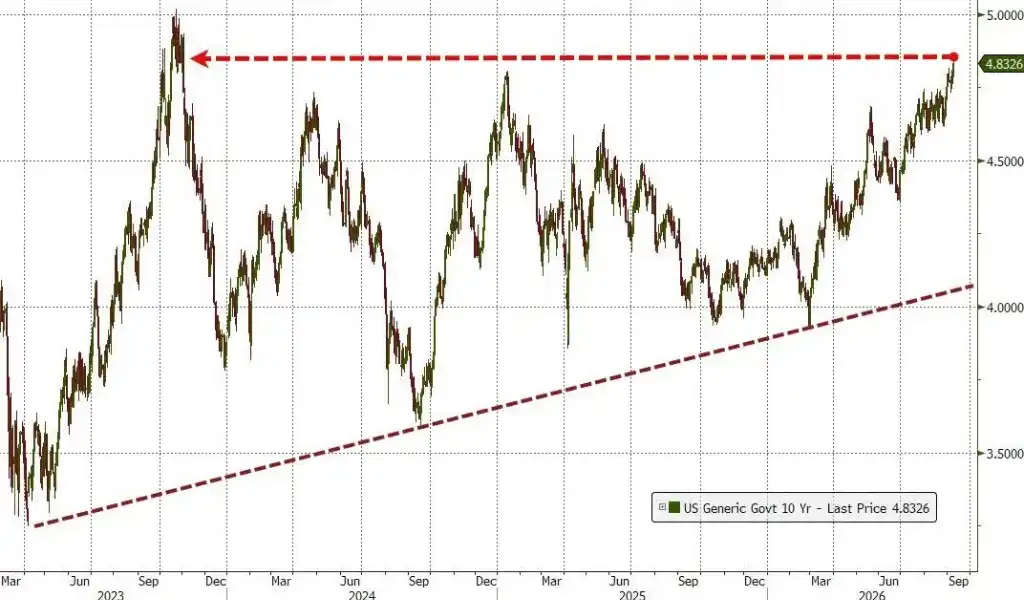
Bessent had previously hinted publicly that the buyback scale might exceed $4 billion, leading Wall Street to expect a single-operation ceiling of $8 billion to $10 billion. When the $6 billion figure was announced, Treasury yields rose instead of falling.

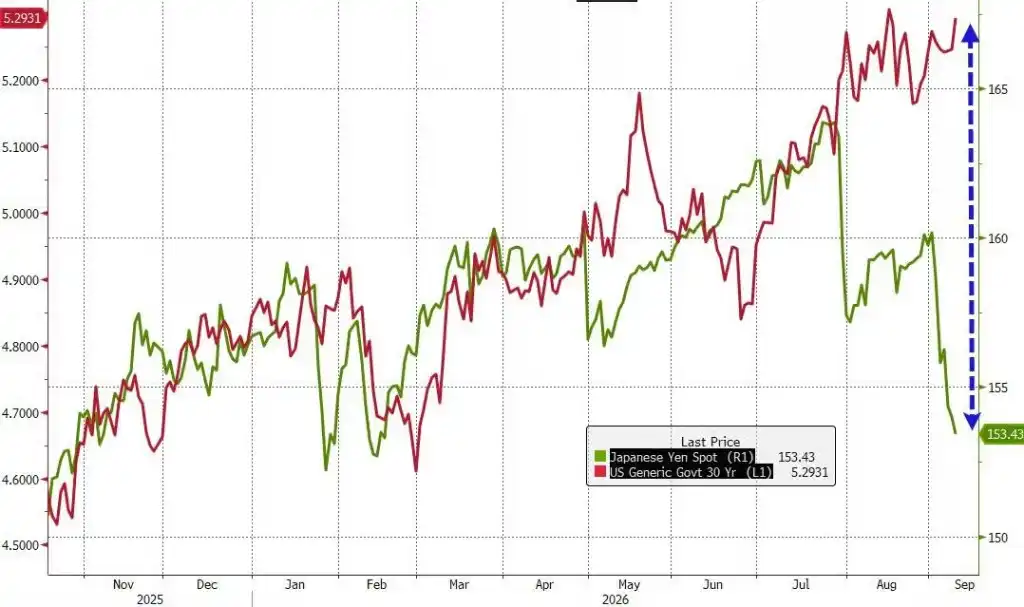
The yield on the 10-year Treasury note touched 4.836% intraday, the highest since October 2023. The 30-year yield reached 5.285%, approaching the two-decade peak of 5.30% hit last month.
Elias Haddad of Brown Brothers Harriman & Co. was direct: "For now, the Treasury is bringing a pea shooter to a tank fight."

Deutsche Bank strategist Steven Zeng also stated, "It's like the Treasury created a monster and now has to keep feeding it." He noted the $6 billion announcement failed to deliver the "shock and awe" effect investors anticipated.

Later on Wednesday, the Treasury auctioned $39 billion of 10-year notes at a yield of 4.834%, setting a record high yield for that maturity at auction.

"How they manage this situation is still in the early stages," said Dustin Reid, chief fixed-income strategist at Mackenzie Investments. "The Treasury certainly isn't too happy with today's market reaction."

Bessent Himself Admits: He Can't Control the 'Equilibrium' Price

Facing the market's strong reaction, Bessent admitted at an event in Texas on Tuesday that he cannot change the "equilibrium" price of Treasuries. His goal is merely to slow the pace of price volatility and prevent harmful narratives from taking hold and spreading.

He attributed the rapid rise in long-term rates to market panic over "U.S. insolvency," calling such concerns "absurd, but once a dominant narrative."

Wells Fargo macro strategists Angelo Manolatos and Francis Brown pointed out in a report, "Other catalysts are still needed to push long-term yields lower," including slower growth and inflation, falling energy prices, reduced uncertainty around Fed policy, fiscal consolidation, or a contraction in corporate bond issuance.

The current reality is: none of these conditions are present. High oil prices continue to boost inflation expectations, with the market currently pricing a 62% probability of a Fed rate hike at next week's FOMC meeting. Corporate bond issuance is also at a seasonal peak this week, with 18 borrowers issuing debt on Tuesday, making it the third busiest trading day this year.

"I'm the House"—He Talked Up the Yen, But at What Cost?

Just a day before the bond buyback setback, at the same Texas event, Bessent issued a stern warning to traders shorting the Japanese yen.

According to Bloomberg, he said: "I'm the house now, so when we intervene in the yen, I know exactly what the Japanese, the Bank of Japan, and Japanese policymakers are going to do. If you want to bet against me, go ahead."

The confidence stems from two aspects: first, Bessent claimed knowledge of Japanese policymakers' intentions; second, reports suggest the Bank of Japan is leaning toward raising its benchmark rate by 25 basis points this month.

The yen continued its rally on Wednesday, touching 153.49 per dollar intraday, having already hit its strongest level since February the previous day.
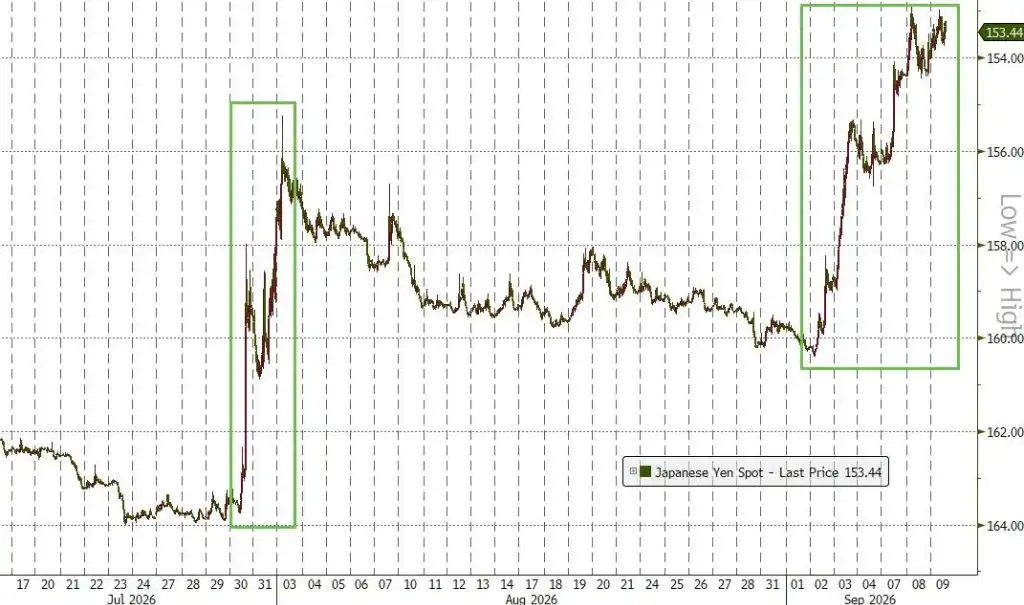
The problem is: A stronger yen is not good news for U.S. stocks.

The Yen Rises, and the 'Time Bomb' of Carry Trades Starts Ticking

The yen has long been the world's cheapest funding currency. The typical carry trade logic involves: borrowing low-interest yen, converting it to dollars, and buying high-yielding assets like U.S. tech stocks.

A stronger yen means the cost of this trade rises, putting pressure on holders to unwind their positions.

Steve Sosnick, chief strategist at Interactive Brokers, said the yen's current upward momentum is "enough to shake some people who borrowed yen to make leveraged bets on high-flying U.S. stocks."

Rich Privorotsky, head of Goldman Sachs' Delta-One business, also noted that regardless of how one views Bessent's remarks, "objectively, the yen is appreciating, and the market is betting on BOJ tightening and capital repatriation."

He raised a key question: "What happens when yen carry trades unwind and money flows back to Japanese bonds and stocks?"

His assessment: "The S&P and large-cap stocks overall feel inexplicably heavy, with no clear fundamental reason. It's worth noting that some leveraged and carry positions may be quietly bleeding out of the system."

Jordan Rizzuto, chief investment officer at GammaRoad Capital Partners, was more definitive: "This is the biggest risk to the bull market."

Bessent's Dilemma: The Yen Cannot Be Too Weak, Nor Too Strong

An inherent contradiction is troubling the logic behind Bessent's policies.

According to MarketWatch, Japan's holdings of foreign securities fell by nearly $88 billion at the end of August. Japan has long been a major holder of U.S. Treasuries.

GammaRoad's Rizzuto pointed out that if Japan has recently been selling U.S. bond assets, it is highly noteworthy—especially as this occurred after the U.S. just jointly intervened with Japan in the FX market to support the yen. "This gives you a sense of the weight of these two things," he said.

The Treasury wants the yen to be strong enough so Japan doesn't need to sell Treasuries to raise funds. But if the yen rises too sharply, triggering a large-scale unwinding of carry trades, the impact on U.S. tech stocks would be more direct.

Some traders are already privately discussing: Did Bessent get the causality backward? He hopes a stronger yen will ease pressure on long-term Treasuries, but traditionally, interest rate differentials drive currency flows, not the other way around.
Related Questions

QWhat were the two key actions taken by US Treasury Secretary Bessent this week and what were their immediate impacts on the markets?

AUS Treasury Secretary Bessent took two key actions this week. First, he issued a high-profile warning against shorting the Japanese Yen, which led to a strengthening of the yen. Second, he significantly expanded the scale of US Treasury buybacks. However, the market reacted negatively to the announced buyback size, viewing it as insufficient, and long-term US Treasury yields rose instead of falling.

QHow does a stronger Japanese Yen threaten the recent US stock market bull run, according to the article?

AA stronger Yen threatens the US stock market bull run by endangering the carry trade. In this strategy, investors borrow low-interest Yen to convert into dollars and buy high-yielding assets like US tech stocks. A rising Yen increases the cost of this trade, creating pressure for these leveraged positions to unwind. The resulting sell-off of US assets, particularly tech stocks, could weigh heavily on the market.

QWhy did the market react with disappointment to the Treasury's increased buyback cap of $6 billion?

AThe market was disappointed because the $6 billion cap, while triple the previous month's size, fell short of Wall Street expectations. Secretary Bessent had hinted at a potential cap exceeding $4 billion, leading analysts to anticipate limits of $8 billion to $10 billion. The announced $6 billion was seen as too small to create a significant 'shock-and-awe' effect needed to curb the surge in long-term bond yields.

QWhat dilemma does Secretary Bessent face regarding the strength of the Japanese Yen, as described in the article?

ASecretary Bessent faces a dilemma where the Yen cannot be too weak nor too strong. A weak Yen might force Japan to sell US Treasury holdings to raise funds for intervention, putting upward pressure on US yields. Conversely, a Yen that is too strong risks triggering a large-scale unwinding of the Yen carry trade, which could lead to a direct sell-off in US tech stocks and other assets, threatening the equity market.

QWhat did Secretary Bessent admit he could not control regarding US Treasury prices, and what was his stated goal instead?

ASecretary Bessent admitted that he cannot control the 'equilibrium' price of US Treasuries. His stated goal is not to set the price, but to slow down the pace of price movements and prevent harmful market narratives—such as fears about US debt unsustainability—from taking root and spreading.

Related Reads

When Will the Chip Stock 'Capitulation-Style Selling' End? BofA: Perhaps in Early 2027, Stock Price Pullbacks Typically Lead Fundamental Inflection Points by 6-9 Months

The SOX semiconductor index has fallen 38% (from 14,634 to 9,011) since its June 22, 2026 peak, over 136 days—exceeding the average historical peak-to-trough decline of 32% but less than half the average 253-day duration of past downturns (2011, 2015, 2018, 2022). BofA analyst Vivek Arya expects this "indiscriminate selling," driven by AI capex slowdown fears, to end around early 2027. Historically, SOX declines lead actual semiconductor sales declines by 6–9 months, implying real EPS cuts may emerge from Q1 2027, with capex reductions reflected in H2 2027—though stocks may already price in much of the bad news. SOX currently trades at 13.7x forward P/E versus 17.7x for the S&P 500 (a 22% discount, down from a 15% premium at the AI peak), leaving roughly 12% downside to the historical trough valuation of ~12x. US cloud capex runs at ~$300B/quarter (~$1.2T annualized) versus $1.555T consensus for 2027—about 23% below expectations if spending holds steady, equating to ~30 GW of compute deployment versus BofA's 40+ GW base case. A 20% capex cut would pressure AI semiconductor revenue by 20%+ and EPS by 35–40%. BofA outlines three scenarios: base case ( ~10% downside, bottoming Q1 2027, favor segment leaders), bear case (pressure into mid-2027, favor EDA, high-FCF analog, low-AI-exposure names), and bull case (favor memory, optics, quantum, CPUs). Potential stabilizers include policy clarity in Q1 2027, buybacks (Lam $25B, Nvidia, Micron starting Dec 9), and slower capex extending the upcycle.

marsbit12m ago

When Will the Chip Stock 'Capitulation-Style Selling' End? BofA: Perhaps in Early 2027, Stock Price Pullbacks Typically Lead Fundamental Inflection Points by 6-9 Months

marsbit12m ago

TSMC: October Revenue Up 60%, with Month-over-Month Growth Still Accelerating

TSMC reported October consolidated revenue of NT$586.89 billion, up 59.7% year-over-year and 14.7% month-over-month, signaling accelerating momentum. Converted to RMB, that is about RMB 119.4 billion, with cumulative revenue for the first ten months reaching NT$4.49 trillion, up 43.3% year-over-year. The near-60% growth came on top of an already high base, while the sequential acceleration confirms strengthening demand rather than a slowdown. The report arrived at a delicate moment. The Philadelphia Semiconductor Index had plunged 12.25% over two sessions, its worst single-day drop since March 2020, as political changes in the U.S. prompted new governors in Texas and Ohio to pause approvals for new data center projects. Markets pessimistically priced in a halt across the AI data center supply chain. Sentiment rebounded sharply on November 9, with the semiconductor index jumping 6.86%, and Taiwan's weighted index surging 1,960.06 points, its second-largest single-day gain on record, supported by government stabilization funds and short-selling restrictions. TSMC stands apart from other AI assets. As the only foundry capable of mass-producing 3nm and 2nm chips, it holds about 90% of the global AI chip foundry market, with advanced-node capacity booked through 2028. Its diversified revenue mix—68% high-performance computing, 21% smartphones, 4% automotive and 4% IoT—provides a buffer, allowing it to reallocate capacity to flagship phone chips, automotive computing, and edge AI if data center approvals slow. October's results validate management's guidance of roughly 44% full-year dollar revenue growth and capital spending of US$60-64 billion. Expansion continues, with 2nm ramping and Arizona's second fab moved up to Q3 2027; Goldman Sachs raised its 12-month target price to NT$3,300. Google's expanded eighth-generation TPU lineup adds further demand, with TSMC and other Taiwanese suppliers in the ecosystem. TSMC's ADR trades at about 24x trailing earnings, low relative to its growth. Risks include a prolonged U.S. data center approval freeze and geopolitical or oil-price shocks. In A-shares, domestic substitution names such as SMIC and NAURA remain driven by rising localization rather than Texas approvals.

marsbit13m ago

TSMC: October Revenue Up 60%, with Month-over-Month Growth Still Accelerating

marsbit13m ago

Trading

Spot
活动图片