Written by: David Segal, The New York Times
Compiled by: Luffy, Foresight News
For a populist leader often seen in pubs and smoking, Nigel Farage, the leader of the Reform Party, certainly has some wealthy friends. Two of them continue to funnel vast sums of money to him and his party.
The scale of these donations has become a political scandal of the year in the UK. British media have long focused intensely on Farage, and with ongoing revelations, the whole affair resembles a satirical drama fit for Netflix: starring two rarely-seen, low-profile billionaires and a verbose, pinstripe-suited populist politician.
That politician is the 62-year-old Farage. Outgoing and controversial, he rose to national fame by championing Brexit. He exhibits strong nativist tendencies, once claiming that arriving two hours late to a rally was due to traffic congestion caused by foreigners. His appetite for wealth seems almost as strong as his nativist zeal. In 2023, he participated in the reality show 'I'm a Celebrity...Get Me Out of Here!', earning $1.86 million and finishing third. He is also a well-paid brand ambassador for the London gold dealer Direct Bullion.
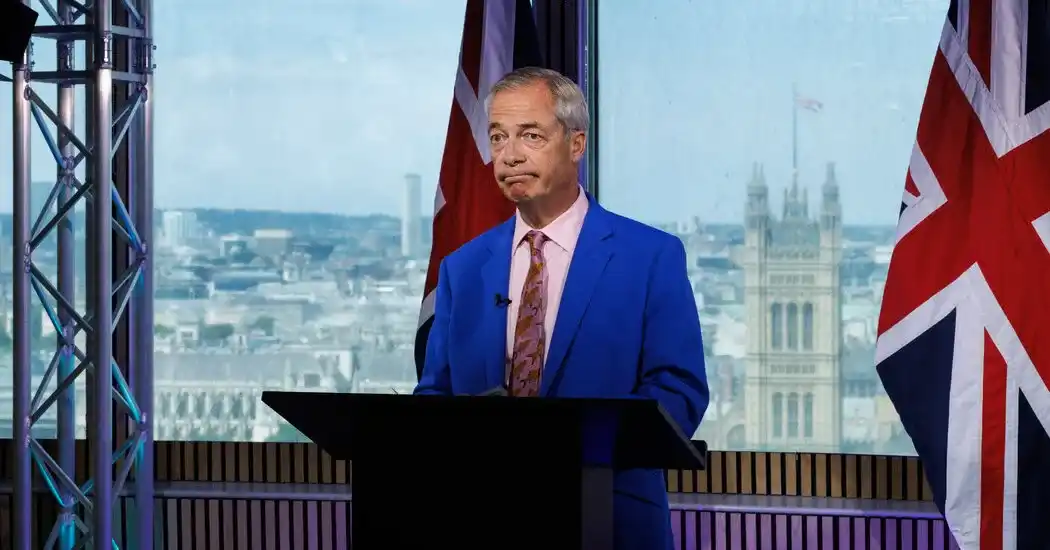
Nigel Farage, leader of the UK Reform Party
But that income pales in comparison to a windfall in April 2024. At the time, he received $6.3 million in his personal capacity for party campaigning. Farage later explained the money came from Christopher Harborne, a British-born crypto investor and Brexit supporter who resides long-term in Thailand under the name Chakrit Sakunkrit, as an 'unconditional gift'. Harborne told *The Daily Telegraph* in an April interview the donation expected 'nothing in return'.
This sparked widespread questions. *The Sunday Times* estimated Christopher Harborne's fortune at around $24 billion, largely stemming from a prescient investment in Tether, the issuer of the stablecoin USDT. In June of the same year, Harborne met with the Governor of the Bank of England, urging the central bank to shelve the digital pound Britcoin project.
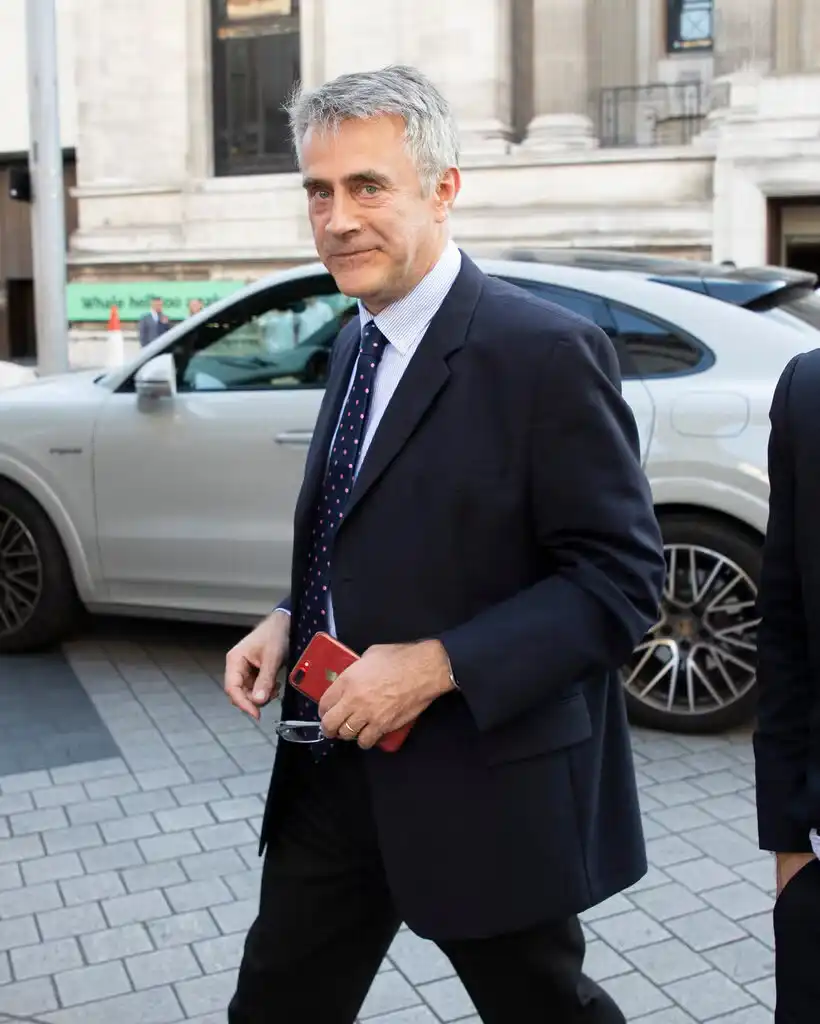
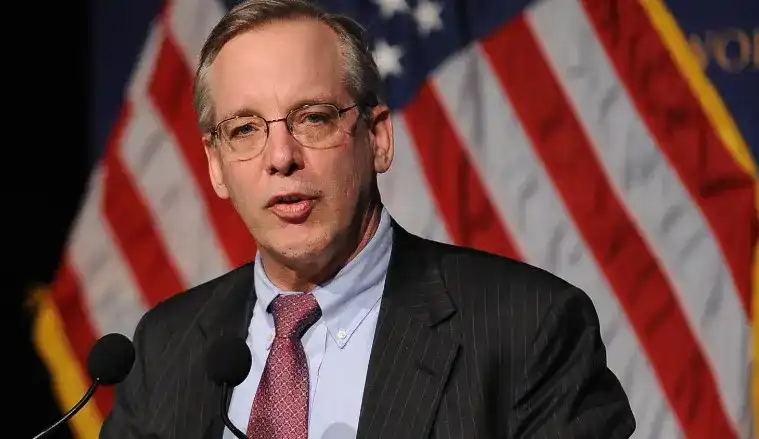
Christopher Harborne, billionaire, Tether shareholder
If Britcoin were officially launched, it would directly compete with Tether. Speculation is inevitable that this massive donation might involve a quid pro quo.
Currently, the Parliamentary Commissioner for Standards is investigating Farage for not declaring Harborne's £5 million gift. Farage insists he has done nothing wrong. However, this donation was just the beginning of his troubles.
In early September, Channel 4 aired secretly recorded footage showing Farage and several senior Reform Party figures apparently discussing how to circumvent UK laws banning overseas campaign donations. In one clip, Farage, while drinking wine and eating oysters, praised a poll reportedly funded by an American billionaire. Days later, the London Metropolitan Police launched an investigation into potential breaches of election law.
One Reform Party insider complained to the BBC that the party looked 'a bit like a pirate ship'. If that was the problem, a loyal supporter devised a particular solution: inject more money.
On September 11, it was revealed that another crypto billionaire, self-described 'maths geek' Ben Delo, donated the equivalent of $48.7 million to the Reform Party—the largest single political donation in UK history. In a *Daily Telegraph* article, he explained he wanted to help the Reform Party grow into a credible party capable of governing.
Christopher Harborne clearly didn't want to be outdone. The next day, he also donated $48.7 million to the Reform Party.
'My competitive nature prompted me to match that donation, and so I did,' Harborne wrote in *The Daily Telegraph*.
This series of donations caused an uproar in the UK. Britain lacks American-style super PACs. Parties receive only limited public funding for parliamentary work and policy research, not for election campaigning. Compared to the US, the entire UK political funding system has historically been modest. Sam Power, a lecturer at the University of Bristol specializing in political finance and corruption, noted: In the last UK general election, total campaign spending by all parties for all constituency candidates was just $125 million.
That amount is roughly equivalent to the cost of a single US Senate race in Montana in 2024.
'We are seeing the UK's political fundraising model become more Americanized, and the American system is seen by us as a cautionary tale,' Dr. Sam Power said. 'This isn't just a Reform Party problem; it's a systemic issue. It's making everyone reflect: Is this really the direction we want British democracy to go?'
In just two days, massive funds flooded into the Reform Party, fundamentally rewriting the financial landscape of British politics. This fortune comes almost entirely from secretive wealth accumulated overseas, with a donor pool small enough to fit in a phone booth.
'Extremely Cost-Effective'
It's not only the UK political landscape being reshaped by crypto capital. In the US, crypto firms and their billionaire backers have grown into a formidable new force, funding candidates from both parties who support industry-friendly regulations. Trump once criticized cryptocurrency as 'very volatile and based on thin air', but has now completely reversed his stance. In the first year of his second term, his family's crypto business earned over $1.4 billion, largely from his TRUMP meme coin.
Farage's representatives declined to be interviewed for this article, as did Ben Delo and Christopher Harborne. Farage has styled himself as the Trump of the Thames, a fighter against the traditional financial establishment, the old political guard, and mainstream media.
At first glance, he seems an unlikely champion for cryptocurrency. He places great emphasis on borders, but digital assets inherently ignore national boundaries. Another contradiction: he favors Tether, based in El Salvador, over the homegrown digital pound with 'Brit' in its name.
But cryptocurrency fits his persona: the fearless outsider, the scourge of the establishment. This image has been honed since his middle-class childhood in the Kent countryside. His father was a stockbroker who drank heavily and abandoned the family when Nigel Farage was five.
Michael Crick, author of *One Party After Another: The Disruptive Life of Nigel Farage*, writes that Farage didn't attend university, worked as a metals trader in the City of London with unremarkable results, and later served as an MEP for over 20 years—a well-paid job but far less lucrative than finance.
'He certainly desires all that affluence brings,' Michael Crick said, 'while harboring a deep sense of grievance—he has devoted his life to politics.'
A pattern has emerged in recent months: whenever Farage mixes politics and money, a PR crisis follows. After the Parliamentary Commissioner launched an investigation into the undeclared £5 million donation from Harborne, Farage quickly resigned as MP for Clacton-on-Sea, then announced he would run again for the same seat.
In a video statement, he said: 'The people of Clacton can choose to support me, or support the establishment.'
The establishment's response was muted. Major parties didn't field candidates. Farage's only real opponent was Count Binface, a comic character who wears a trash can on his head and claims to be from outer space.
Although Farage won easily, the summer's drama severely damaged the Reform Party's poll ratings. Then came Channel 4's undercover sting, orchestrated by the investigative firm Verbatim. In the footage, an actor posing as an American donor discussed with Farage a poll measuring support for UK political parties. Channel 4 stated the poll was commissioned by the Reform Party but funded by a US company. If this poll constituted an overseas-funded project received by the party, it could violate UK political funding laws.
Farage commented on the poll: 'Brilliant, extremely cost-effective.'
He later defended himself, saying he wasn't paying close attention during that part of the conversation. After the program aired, two senior aides resigned. The Reform Party denies any wrongdoing; an internal party investigation concluded the aides commissioned the poll personally, not on behalf of the party.
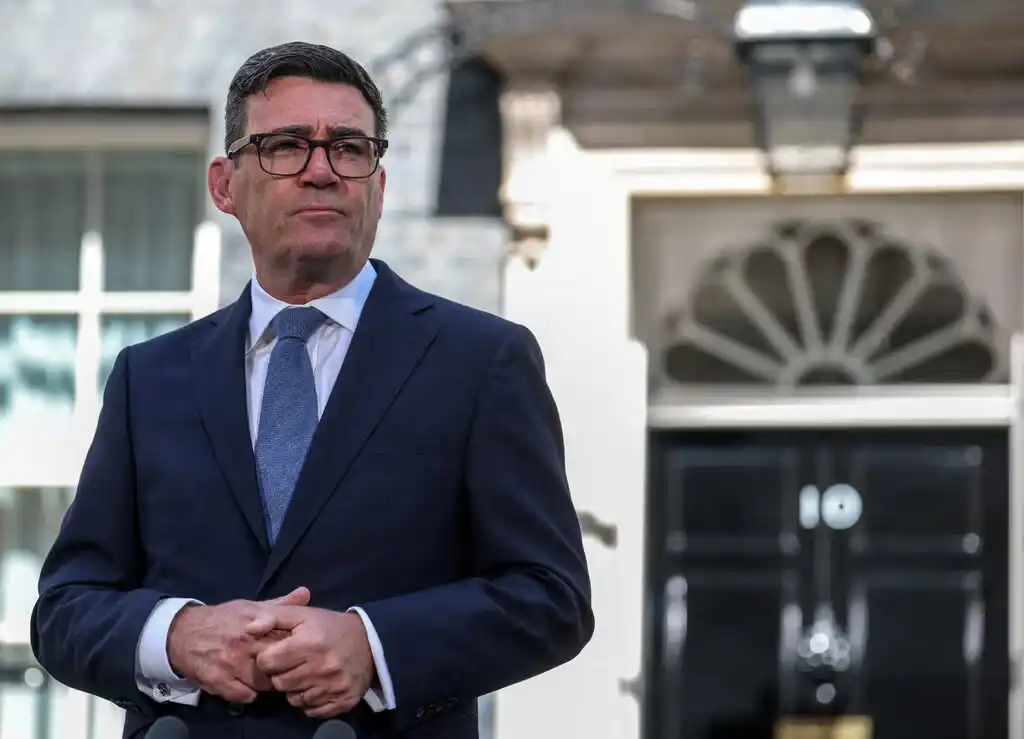
Andy Burnham
Following the by-election saga and the Channel 4 report, the Reform Party's support began to slide. Andy Burnham, former Mayor of Greater Manchester, became Prime Minister, and Labour's support rose.
So, the timing of this nearly $100 million windfall was perfect, shifting the narrative from 'Reform Party damaged' to 'Reform Party flush with cash'.
This sudden influx of cash also carries risks. Farage claims the party represents the voice of 'ordinary people', but the two billionaires funding the party have no connection to ordinary people.
Both have spent most of their careers overseas, though Delo says he specifically returned to the UK to donate to the Reform Party without restrictions. Ben Habib, former Reform Party deputy leader and now a critic of Farage, says courting overseas billionaires is no different from courting immigrants.
'Apart from crypto-related provisions, Farage's policies will hardly affect these two individuals at all,' Habib said. 'Yet they are influencing the direction of British politics and how the country is governed. I think that's very unhealthy.'
'I Could Use the Money to Buy a Ferrari'
Christopher Harborne and Ben Delo possess influence capable of shaking the political arena, yet they themselves rarely appear in the public eye.
Much of what is publicly known about Christopher Harborne comes from a defamation lawsuit he filed in 2024. He sued *The Wall Street Journal* over an article he claimed was false, suggesting he was involved in a crypto firm's efforts to mislead banks. He was once a McKinsey consultant, moved to Thailand in the 1990s, and founded an aviation fuel business.
The origin of most of his wealth began with a disaster, ultimately creating a colossal fortune. In 2016, the major global crypto exchange Bitfinex was hacked while Harborne was trading on the platform. The platform issued dollar-denominated BFX tokens to affected users. Most holders sold, but Harborne saw an opportunity and bought heavily. He later converted the tokens into equity, and through subsequent transactions, acquired roughly a 12% stake in Tether.
Tether is now valued at $183 billion, with Harborne holding about 12%. In his defamation court filings, Harborne states he has never held any managerial role at Tether.
'He was simply in the right place at the right time, at the center of a massive enterprise,' commented Carol Alexander, a finance professor at the University of Sussex. 'It was extremely high-risk; the outcome could have been completely different.'
Harborne barely uses social media, has never given a long-form interview, or appeared on a podcast. One of the few audio clips comes from a talk he gave at his Thai retreat, Kamalaya.
'At Kamalaya, we strive to help every guest, making a small change with each visit,' he said, sitting at a table, dressed in a shirt, speaking calmly. 'Just changing one small thing is enough.'
This composure came to Harborne later in life. *The Guardian* cited a video where, during a Kamalaya talk, he mentioned that in his 40s, he worked 18-hour days, surviving on chocolate milk and biscuits. Around the same time, a two-seater plane he was piloting crashed into a couple's garden in Hampshire, UK; thankfully, the homeowners were unhurt.
His political stance is hard to categorize. His opinion pieces barely mention borders or immigration. He says his main concerns are AI, nuclear war, and climate change. Regarding the £5 million donation, he said it stemmed from a 2019 campaign event in Newcastle where a protester threw a banana milkshake at Farage.
This attack solidified his resolve: 'To ensure Nigel's safety not just now, but for the rest of his life.' After the donation was revealed, Farage was asked on a radio show what he would use the money for. He retorted somewhat indignantly: 'What if I want to buy a Ferrari? Can't I?'
'I Am Delighted to Clear My Name'
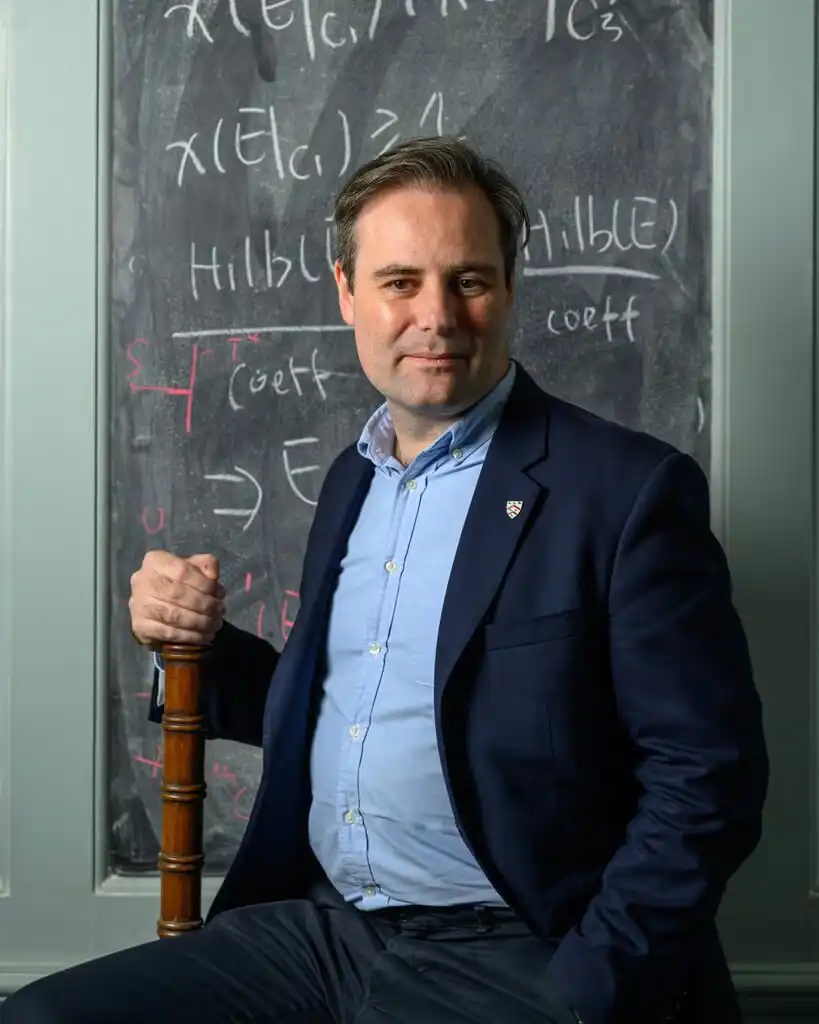
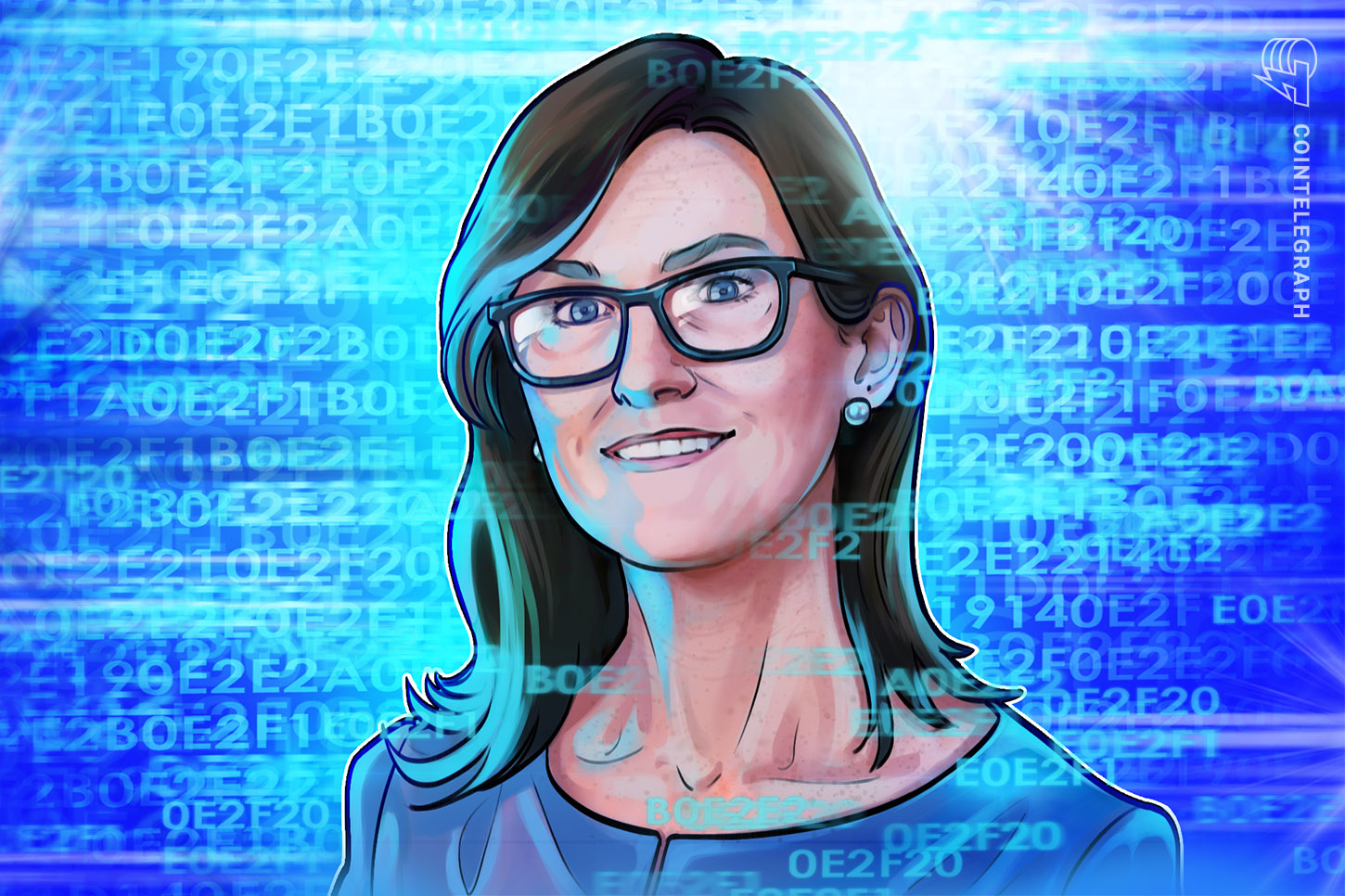
Ben Delo, crypto billionaire, co-founder of BitMEX
Ben Delo grew up in Oxford, expelled from three primary schools, one infraction involving vandalizing a staff toilet. At 11, he was diagnosed with Asperger's syndrome, which he says makes reading social cues difficult; others believe he just enjoys mischief. In 2005, he graduated from Oxford; at a formal dinner, he wore a wetsuit under his gown. The dress code specified formal attire, with no further details.
British media often call him the UK's youngest self-made billionaire. His true net worth is hard to pinpoint precisely, and his path to wealth included a major public setback.
After moving to Hong Kong to work for JPMorgan Chase, he co-founded the crypto derivatives exchange BitMEX in 2014. Six years later, US prosecutors charged BitMEX with intentionally failing to establish adequate anti-money laundering and know-your-customer systems. In February 2022, Delo pleaded guilty to one charge of violating the Bank Secrecy Act and agreed to pay a $10 million fine. Four months later, he was sentenced to 30 months of probation.
In March 2025, President Trump issued him a full pardon.
'Today, a legal injustice has been corrected,' Delo wrote in a statement. 'I am delighted to clear my name, lift the burden of an unjust conviction, and continue my life and philanthropic work.'
After the pardon, Delo began large-scale charitable giving. He is reported to have contributed over $100 million to various causes, including autism research and his Oxford alma mater. His most notable project is called The Sanctuary, a neo-Gothic building near Westminster Abbey, part co-working space, part private members' club. The door bears no sign, and members are asked not to photograph the interior.
Harry Shukman of the UK investigative group Hope Not Hate, who researched the venue, described the interior: 'Chesterfield leather sofas, ancient tapestries depicting medieval scenes, champagne, Fabergé eggs, and a penguin specimen. There's also a map of St. Helena, where Napoleon was exiled.'
The Sanctuary hosts regular events featuring right-wing academics, podcasters, and politicians opposed to 'woke culture'. Attendees have included Rupert Lowe, who founded the Reclaim Party, positioned as more extreme than the Reform Party.
Speaking about Delo, Lowe said in a phone interview: 'I think he is concerned about the direction Britain is heading and is using what he believes is the best way to exert his influence to change that. I think he's a very fine man.'
Delo wrote in his article that he 'has exited the crypto industry' and his donation isn't about making more money. What truly concerns him is destroying political correctness, which he has described as 'a totalitarian ideology strangling our society.'
And the Reform Party, in his view, is the only party capable of fighting this invisible enemy. Delo compares the Reform Party to a startup, facing centuries-old political parties of vastly different scales.
'One reason established parties have lasted so long is by raising the cost of challenging them,' he wrote. 'I want to see a fair fight, a level playing field.'
'The Market Has Largely Priced This In'
Now, the scales may have tipped the other way. The Reform Party plans to hire up to 400 campaign managers in target constituencies nationwide. Farage also said he wants to build 'the strongest research and policy team in the history of British politics.'
Provided the Reform Party can keep the donations.
In March, Labour introduced a bill aiming to cap political donations from UK citizens living overseas or recently returned, at £100,000 per year. The bill is set to take effect retroactively to March 25. If passed, it would trigger large-scale clawbacks. If Ben Delo and Christopher Harborne were resident overseas before that cutoff date, the Reform Party might have to refund almost the entire £72 million donation.
Therefore, the residency status of both men is now a matter of intense national interest.
Reform Party deputy leader Richard Tice said in a BBC interview: 'We are satisfied they are fully compliant with both current regulations and the proposed bill.'
The bill is expected to complete its passage through the House of Lords in the coming months, but the ultimate fate of this crypto capital donation will likely be decided in court. Win or lose, Farage will solidify his position as the UK's top populist leader, the British figurehead of the nationalist movement sweeping Europe.
And he may need to run for MP in Clacton-on-Sea again. Reports suggest the Parliamentary Commissioner's report will be published soon. If the findings are adverse, it could trigger a recall petition. Farage would then have to run for the same seat a third time. If he wins, a daunting task awaits: convincing the entire country that he and the Reform Party are ready to govern.
'There's no question these scandals have damaged his image,' said Alastair Campbell, podcaster and former press secretary to Prime Minister Tony Blair. 'But he hopes to be like Trump: people already assume this kind of thing exists. They think, 'Yeah, that's Nigel, but to be honest, all politicians are dirty.''