Beta Version of UMX Platform Launched for Trading Cryptocurrency and U.S. Stocks

cryptonews.ruPublished on 2026-08-10Last updated on 2026-08-10

Abstract

UMX has launched a beta platform that merges cryptocurrency trading with real US stocks, ETFs, and stock options. It facilitates capital movement between these markets rather than keeping them separate. According to UMX, eligible users can trade spot, margin, futures, and options for cryptocurrencies, alongside US securities. The company stressed that it provides actual US stock positions, not CFDs or price-tracking products, with trading available across pre-market, regular, after-hours, and overnight sessions. While targeting global professional investors, access depends on location, account status, and product eligibility. UMX's materials do not indicate service availability for US residents, noting that offering US-listed assets and serving US clients are separate matters pending further jurisdictional details. Key platform features include the 'Exchange Transfer,' converting stablecoins like USDT to USD for a securities account, and the 'Loan Transfer,' allowing non-stablecoin crypto assets to be used as collateral for buying US stocks, ETFs, and options. Additionally, the 'Stocks to Tokens' feature can convert securities into tokens. These tokens may count toward crypto account margin at applicable discount rates and can later be converted back into securities.

According to PANews, the newly established UMX platform has combined cryptocurrency trading with real U.S. stocks, ETFs, and U.S. stock options.

The beta version of the platform is built on the principle of moving capital between cryptocurrency and securities, rather than separating the two markets. UMX stated that eligible users can trade cryptocurrency on the spot market, with margin, via contracts and options, as well as operate with U.S. securities.

UMX emphasized that its service provides users with positions in real U.S. stocks, not in CFDs or products that only track stock prices. Trading takes place during pre-market, regular, after-hours, and overnight sessions.

The platform targets professional investors worldwide, but the scope of access depends on location, account status, and product eligibility. The company's materials do not indicate that the service is available to U.S. residents. The offering of assets listed on U.S. exchanges and serving clients located in the U.S. are separate matters, so the distinction should remain clear until UMX publishes more detailed information on specific jurisdictions.

The main feature of UMX is the bridge between cryptocurrencies and the securities sector. Using the "Transfer to Exchange" function, users can convert stablecoins, such as USDT, into U.S. dollars and transfer funds to a securities account. The "Transfer to Credit" function allows the use of non-stablecoin crypto assets as collateral for purchasing U.S. stocks, ETFs, and stock options.

Furthermore, securities can be converted using the "Stocks to Tokens" function. The resulting tokens can be accounted for in the crypto account margin at applicable discount rates and can subsequently be converted back into securities.


Related Questions

QWhat is the main purpose of the newly launched UMX platform?

AThe main purpose of the UMX platform is to integrate trading of cryptocurrencies with real U.S. stocks, ETFs, and stock options, allowing capital movement between these asset classes instead of keeping them separate.

QAccording to the article, what types of financial instruments can qualified users trade on UMX?

AQualified users on UMX can trade cryptocurrencies on the spot, margin, futures, and options markets, as well as operate with U.S. securities.

QHow does UMX's service differentiate itself from competitors regarding U.S. stock trading?

AUMX differentiates itself by providing users with positions in real U.S. stocks, not just CFDs or price-tracking products, and offers trading across pre-market, regular, post-market, and night sessions.

QWhat is the key feature of UMX that bridges cryptocurrency and securities?

AThe key bridging feature is the 'Exchange Transfer' function, which allows users to convert stablecoins like USDT into USD to fund a securities account, and the 'Collateral Transfer' function, which lets users use non-stablecoin crypto assets as collateral to buy stocks, ETFs, and options.

QIs the UMX platform currently available to residents of the United States?

AThe article does not state that the service is available for U.S. residents. It clarifies that offering assets listed on U.S. exchanges and serving U.S.-based clients are separate matters, and more details on specific jurisdictions are awaited.

Related Reads

Just Now, Meta's Flagship Model Crushes GPT-6 and Opus! Leaps Back into World's Top Three Overnight

Meta has launched its most powerful flagship AI models yet, Muse Wonder and Muse Wonder Full, positioning them as a historic leap toward "personal superintelligence." Benchmark results show these models are now competitive with leading counterparts from OpenAI and Anthropic. On the Artificial Analysis index, Muse Wonder Full scored 56, placing it in the global top tier alongside Claude Sonnet 5.5 and surpassing GPT-6 Astra. In long-context programming tasks like SWE-Marathon, both Wonder and Wonder Full outperformed Claude Opus 5.5 and GPT-6 Astra. Key new capabilities include "Active Memory" for retaining user information across conversations and "Active Focus" for autonomous problem-solving and plan adjustment. The models show significant gains over the previous Muse Spark 1.3, with the Full version improving by 8 points on the Artificial Analysis index in just six weeks. In professional tasks like legal and financial analysis, Wonder Full exceeded Opus 5.5 in 8 out of 14 tests. It also demonstrated improved efficiency, solving more math problems while reducing output tokens by 40%. Developed using Meta's gigawatt-scale "Prometheus" supercomputing infrastructure, the models feature a 1 million token context window and native multimodal support. Pricing starts at $4 per million tokens for input and $20 for output via API for the standard Wonder model, while Wonder Full is available through Muse Code subscriptions at $50 or $200 per month.

marsbit24m ago

Just Now, Meta's Flagship Model Crushes GPT-6 and Opus! Leaps Back into World's Top Three Overnight

marsbit24m ago

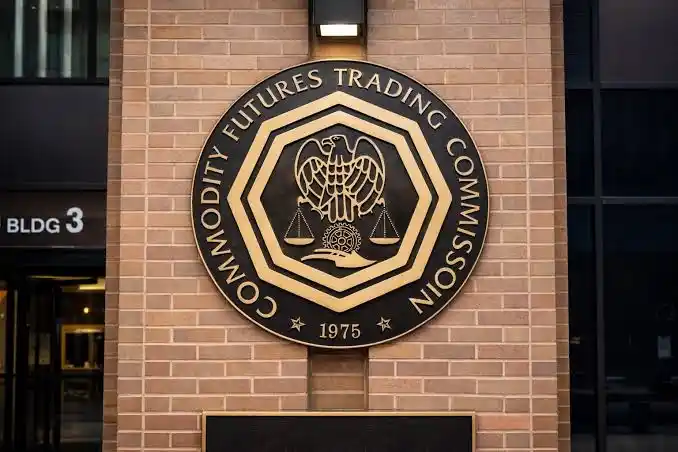
How to Understand the CFTC's Regulation of Prediction Markets?

On October 9, the U.S. Commodity Futures Trading Commission (CFTC) released two conflicting documents concerning event contracts in prediction markets. A proposal seeks to classify contracts on sports, politics, and other events as "swaps" under CFTC jurisdiction, while a separate interim rule explicitly excludes licensed sports betting and casino games from the swap definition. This creates a regulatory split where bets on the same NFL game could be regulated as state-level gambling if placed at a Las Vegas sportsbook, but as a federally regulated swap if traded on a CFTC-registered exchange like Kalshi. CFTC Chairman Michael Selig argues these event contracts are commodity derivatives for hedging, speculation, and price discovery. However, the move faces legal challenges. The NFL and 39 states oppose the CFTC's stance, arguing these contracts create new gambling risks rather than hedging existing ones. Federal appeals courts are divided: the Third Circuit ruled such contracts are swaps, while the Sixth and Ninth Circuits concluded they are not. This circuit split has prompted New Jersey to petition the Supreme Court for review. The proposed rules are not yet in effect, pending publication and a comment period. The ultimate outcome hinges on court decisions and the future composition of the CFTC commission. The core conflict remains whether event contracts on prediction markets fall under federal derivatives regulation or state gambling laws.

marsbit36m ago

How to Understand the CFTC's Regulation of Prediction Markets?

marsbit36m ago

BTC Daily Adjustment in Progress, HYPE Nears Short-term Directional Decision | Invited Analysis

This weekly analysis examines the recent price action of Bitcoin (BTC) and HYPE, focusing on key technical developments and outlining potential trading strategies. **Bitcoin (BTC) Analysis:** * **Market Trend Assessment:** The analysis applies a "52-week moving average confirmation method" to assess the broader trend. While BTC's weekly closing price has broken above this key average, the moving average itself remains in a downtrend, and a proper pullback confirmation is still lacking. The conclusion is that the rally from the July 1st low is still classified as a technical rebound, not yet confirming a new bull market. * **Daily Chart Structure:** The report argues that the five-wave rally (a-e) from the July low likely concluded at the September 21st high. The recent breakdown below the key support of $82,500, followed by a weak-volume rebound, supports this view. If the e-wave is complete, a larger corrective decline (potentially in three sub-waves) is anticipated. The first leg of this correction is underway, with an initial target around $78,000. * **Weekly Outlook & Strategy:** * **Outlook:** The focus is on the downside targets from the September 21st high. Key resistance is seen at $85,500 and the $87,500-$90,000 zone. Support levels are identified at $80,500-$82,500, $75,000-$78,000, and $69,100-$70,500. * **Strategy:** The medium-term posture is neutral/cautious, recommending watching for a potential pullback to a "channel" for confirmation. For short-term traders, two scenarios are outlined: (A) Selling into strength near the $85,500-$87,500 resistance if bearish signals appear, or (B) Selling a confirmed breakdown below the $80,500-$82,500 support zone. A 30% position size with strict stop-loss management is advised. **HYPE Analysis:** * **Daily Chart Structure:** HYPE broke below the lower boundary of its two-month ascending channel on October 8th. Price is currently in a "pullback confirmation" phase, testing this breached support-turned-resistance. A failure to reclaim this level would signal weakness and open the path towards the $75-$77 support area. The longer-term uptrend line, however, remains intact. * **Weekly Outlook & Strategy:** * **Outlook:** The critical watchpoint is the outcome of the current test of the former channel support. Resistance levels are noted at $88-$90, $94, and $102. Key support zones are $80-$82 and $75-$77. * **Strategy:** Two bullish scenarios are proposed for short-term trades: (1) A light long position if price convincingly reclaims and holds above the former channel support, or (2) A light long position if price falls to the $75-$77 support area and shows signs of stabilization. A 30% position size with strict stop-loss discipline is emphasized. **Risk Management Reminder:** The article includes a standard trailing stop-loss protocol (moving stop to breakeven at +1% profit, then locking in profits progressively). It strongly cautions that all analysis is for informational purposes only, not investment advice, and strategies must be adapted to changing market conditions.

marsbit1h ago

BTC Daily Adjustment in Progress, HYPE Nears Short-term Directional Decision | Invited Analysis

marsbit1h ago

Trading

Spot
活动图片