On September 8, 2026, OpenAI announced that its artificial intelligence-based system has solved the problem of the existence and smoothness of solutions to the Navier-Stokes equations. This is one of the seven "Millennium Problems" — a list of the most important unsolved problems in mathematics compiled in the year 2000 by the American Clay Mathematics Institute. A $1 million prize is offered for solving each of them, but this particular problem was considered one of the most stubborn: more than twenty years had passed since the question was posed, with no complete answer.
To understand what this is about, it's worth explaining what the Navier-Stokes equations are. This is a system of formulas that describes the motion of liquids and gases — from water flowing in a pipe to air currents around an airplane wing. The problem is that mathematicians have so far been unable to prove one seemingly simple thing: do solutions to these equations always remain "smooth," meaning predictable and without sharp jumps, or under certain conditions can a fluid accelerate to infinite speed in a finite time — the so-called singularity or "blowup" point of the solution.
OpenAI stated that its system proved that a smooth fluid, initially at rest, when subjected to a smooth external force, can indeed develop such a singularity in finite time — its velocity tends to infinity, while the total energy of the system remains finite. This corresponds to two of several possible answer options to the problem, labeled with the letters "C" and "D" in the official Clay Institute formulation.
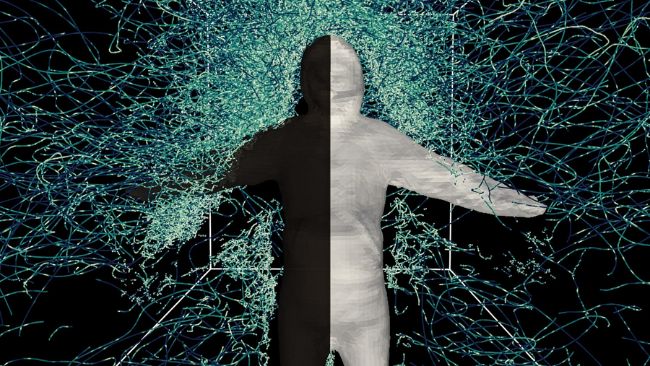
Visually, the process is described as follows: a vortex forms in the fluid, which twists inward on itself while simultaneously stretching into an increasingly thin thread — OpenAI compared this to stretching spaghetti. The central region of the vortex compresses to an infinitesimal point, and the rotational speed within it increases so rapidly that in the limit it becomes infinite. At the same time, the key mathematical subtlety of the proof is to show that the energy required for such a process does not escape to infinity along with the velocity but remains a finite number.
In addition to the proof itself, the company published its formalization in the Lean language. This is a specialized programming language and proof assistant system for verifying mathematical proofs: with it, one can verify step by step, line by line, that there are no missing assumptions or hidden errors in the proof's logic — meaning that verifying the proof can be partially performed by a computer, not just by a human.
How the system arrived at the solution
The work was performed by an internal, not-yet-released OpenAI model that, according to the company, significantly surpasses its current flagship model GPT-6 Astra in capabilities. Training of this new model began on August 28, 2026.
On September 1, 2026, after rumors emerged that the company was close to solving two Millennium Problems at once, OpenAI launched a system of coordinating AI agents — essentially many parallel working copies of the model that could exchange intermediate results, access a saved copy of the internet, and independently write and execute program code to verify their computations.
The group working specifically on the Navier-Stokes equations consisted of roughly 10,000 such agents working simultaneously. The solution was obtained on September 5, 2026 — after about 88 hours, or just over three and a half days of continuous work. An additional 17 hours were spent on further formalization and verification of the result using the GPT-6 Astra model.
The scale of the computations can be assessed by the number of "negotiations" between agents: during the work, they exchanged 2.7 million text messages and in total generated about 130 billion tokens — fragments of text from which language model responses are composed. For comparison, this is many orders of magnitude greater than the volume a human would require to write such a proof manually.
Even earlier, before the main work, about 100 agents managed in approximately 50 hours to solve a related, simpler problem — they proved the regularity (i.e., absence of singularities) of solutions to the Euler equations in the so-called unforced case, when no external force acts on the fluid. The Euler equations are a simplified version of the Navier-Stokes equations that does not account for the internal friction of the fluid (viscosity).
Although the Clay Institute prize can formally be awarded for solving this problem, OpenAI stated that it does not intend to claim the $1 million award and published the result primarily to show how rapidly the capabilities of its models in solving complex scientific problems are growing. An official post by the company on social network X on the same day confirmed these details.
Why scientists from another company got involved
On the same day, September 8, 2026, another interesting coincidence occurred: independently of OpenAI, Professor of Mathematics at New York University Tristan Buckmaster and researcher from the competing company Anthropic Levent Alpöge published their results. They also proved the existence of a finite-time singularity under a smooth external force, but for a different set of equations:
-
equations of incompressible porous media — they describe how fluid seeps through porous material, such as soil;
-
the Boussinesq system — a simplified model used to describe convection processes, i.e., the mixing of a fluid or gas when heated;
-
three-dimensional incompressible Euler equations — that same simplified, "inviscid" version of the fluid motion equations.
Buckmaster stated that in their work they relied on the Codex model (another OpenAI product designed for writing and analyzing code) and other models, and stored drafts in Codex working sessions. After this, the scientists contacted OpenAI with a question about whether the company had gained access to their developments through these sessions.
OpenAI responded that it had not seen Buckmaster and Alpöge's work before its public release and that specific user data was not used to obtain its own solution. At the same time, the company clarified: it cannot completely rule out that anonymized data collected during the use of its products somehow influenced the general training and improvement of the models. An additional argument in favor of the independence of the two works is that the proofs themselves differ: in particular, Buckmaster and Alpöge's version of the Euler equations is forced (i.e., accounts for external force), whereas OpenAI's is unforced.
What will happen with the verification of the result
Neither the mathematical community nor the Clay Institute itself had issued official recognition of OpenAI's result at the time of publication. Formalizing the proof in the Lean language simplifies verification but does not completely replace it: experts must ascertain that all steps of the proof indeed correspond to the conditions of the problem formulated by the institute more than twenty years ago. Estimates suggest such verification could take months.
If the result is ultimately confirmed by independent specialists, this will become one of the first cases where a problem of this level of complexity was solved not by a team of mathematicians, but by a system of thousands of AI agents working in parallel over several days. For now, both proofs — from OpenAI and from Buckmaster and Alpöge — remain subjects of study by the scientific community.
AI Opinion
From the perspective of machine data analysis, the situation looks like a continuation of a long-standing mathematical narrative, not its beginning. Already in 2014, Terence Tao constructed an "averaged" version of the Navier-Stokes equations, in which a smooth solution still accelerated to infinity in finite time — at the cost of abandoning part of the structure of the actual equations. That result served as a guide for a decade: it showed precisely where any proof attempt should aim and explained why the problem remained unsolved for so long. The current OpenAI announcement claims to go a step further — the singularity is derived for the full, un-truncated system. The technical aspect remains off-screen: formalization in Lean addresses logical gaps but does not address the question of the correctness of the physical model of the external force applied to the fluid. Will the singularity remain physically realizable, or is it a consequence of the chosen class of external influences?
end-content