Liquid Mercury Announces Initial Closing of ACQUA1 Offering

TheNewsCryptoPublished on 2026-09-04Last updated on 2026-09-04

Abstract

Liquid Mercury announced the initial closing of its ACQUA1 offering on September 1, 2026. ACQUA1 is a subsidiary that licenses Liquid Mercury's technology to companies tokenizing real-world assets, earning fees and equity stakes in return. Verified accredited investors subscribed by exchanging MERC tokens for non-voting units of ACQUA1 at a rate of 10 MERC per unit. As required, all 563,230,000 MERC received were burned on September 2. The offering resulted in 56,323,000 units issued, evidenced on-chain. Two additional closings are planned for late 2026, though terms may change. The announcement clarifies that the offering is for accredited investors only and constitutes a private securities placement.

Chicago, United States, September 4th, 2026, Chainwire

Liquid Mercury today announced that ACQUA1, LLC completed the initial closing of its MERC exchange offering on September 1, 2026.

ACQUA1 is a Liquid Mercury subsidiary that operates Liquid Mercury’s Lab Company program, licensing Liquid Mercury technology to companies primarily tokenizing real-world assets and receiving fees plus a minority equity stake in return. Liquid Mercury is the majority holder and Manager.

“Over the past 18 months, dozens of companies have approached Liquid Mercury seeking to tokenize their assets,” said Tony Saliba, CEO and founder of Liquid Mercury. “Many assumed they would need to raise capital and build this infrastructure from scratch. Licensing Mercury RWA lets them launch on systems that were already live and proven, at a fraction of the time and cost. ACQUA1 token holders now own a slice of the business that earns equity, plus fees from the companies in the Lab Company program.”

Verified accredited investors subscribed by exchanging MERC for non-voting Class B units of ACQUA1 at the initial conversion rate of 10 MERC per unit. Under its operating agreement, ACQUA1 must burn 100% of the MERC it receives at each closing within five business days and may not transfer, trade, lend, stake, pledge, or otherwise deploy it.

On September 2, all 563,230,000 MERC received at the initial closing were burned via a transfer to the dead address, as the offering documents require.

Initial Closing Highlights

  • Initial closing: September 1, 2026
  • MERC burned: 563,230,000
  • Transferred to the dead address September 2, 2026
  • Units issued: 56,323,000
  • Non-voting Class B units of ACQUA1, LLC under Rule 506(c) of Regulation D
  • 10 MERC per unit
  • Evidenced on-chain by ACQUA1-C tokens
  • ACQUA1-C tokens convert one-for-one into ACQUA1 tokens upon issuance
  • Remaining closings: On or about October 30 and December 31, 2026
  • ACQUA1 may skip or terminate at its discretion
  • The conversion rate at subsequent closings may differ

Verification Links

Burn transaction

ACQUA1-C contract

Verified accredited investors can request full terms at acqua1.liquidmercury.com/contact.

About Liquid Mercury

Liquid Mercury powers professional crypto trading and digital asset marketplaces. The company delivers institutional-grade infrastructure, access to deep liquidity, and best-in-class trading tools and workflow automation across its Pro, OTC, and RWA platforms. Through Mercury RWA, Liquid Mercury is extending that infrastructure into tokenized real-world assets, with $MERC serving as the access and platform layer token. For more information, visit www.liquidmercury.com.

Investor Notice

This press release does not constitute an offer to sell or the solicitation of an offer to buy any securities. Class B units of ACQUA1, LLC and the ACQUA1 tokens representing them are offered and sold in reliance on the exemption from registration provided by Rule 506(c) of Regulation D under the Securities Act of 1933, solely to verified accredited investors as defined in Rule 501(a) of Regulation D, and solely pursuant to ACQUA1’s confidential private placement memorandum, as supplemented, and definitive subscription documents, which contain important information, including risk factors. ACQUA1 tokens are restricted securities, are subject to transfer restrictions under ACQUA1’s operating agreement and may remain illiquid indefinitely; investors should not assume that Rule 144 will be available. Statements regarding future revenues, valuations, portfolio performance, and subsequent closings are forward-looking and subject to risks and uncertainties; actual results may differ materially. The MERC contract has no burn function; tokens are removed from circulation by transferring to the dead address. Supply outstanding excluding the dead address is 5,436,770,000 MERC, as of the date of publication.

Contacts

Director
Kent Egan
Liquid Mercury
ke@liquidmercury.com
Director
Ryan Hansen
Liquid Mercury
hansenr@liquidmercury.com

Related Questions

QWhat is ACQUA1, and what is its relationship with Liquid Mercury?

AACQUA1 is a subsidiary of Liquid Mercury. It operates Liquid Mercury's Lab Company program, which licenses Liquid Mercury's technology to companies primarily tokenizing real-world assets. In return, ACQUA1 receives fees and a minority equity stake in those companies. Liquid Mercury is the majority holder and Manager of ACQUA1.

QWhat happened to the MERC tokens received by ACQUA1 during the initial closing of the offering?

AAccording to ACQUA1's operating agreement, 100% of the MERC tokens received at each closing must be burned within five business days. ACQUA1 is prohibited from transferring, trading, lending, staking, pledging, or otherwise deploying them. On September 2, 2026, all 563,230,000 MERC received at the initial closing were burned by being transferred to a dead address.

QHow did accredited investors participate in the ACQUA1 offering, and what did they receive?

AVerified accredited investors subscribed by exchanging MERC tokens for non-voting Class B units of ACQUA1, LLC. The initial conversion rate was 10 MERC per unit. These units are evidenced on-chain by ACQUA1-C tokens, which will convert one-for-one into ACQUA1 tokens upon issuance. The offering is conducted under Rule 506(c) of Regulation D.

QWhat are the key details and figures from the initial closing announced on September 1, 2026?

AKey details from the initial closing include: Date: September 1, 2026. MERC burned: 563,230,000 (transferred to dead address on September 2, 2026). Units issued: 56,323,000 non-voting Class B units. Conversion rate: 10 MERC per unit. Two remaining closings are scheduled for on or about October 30 and December 31, 2026, though ACQUA1 may skip or terminate them, and the conversion rate may differ.

QWhat is Mercury RWA, and what role does the MERC token play according to the article?

AMercury RWA is Liquid Mercury's platform for extending its institutional-grade trading infrastructure into the tokenization of real-world assets. According to the article, the MERC token serves as the access and platform layer token for this ecosystem.

Related Reads

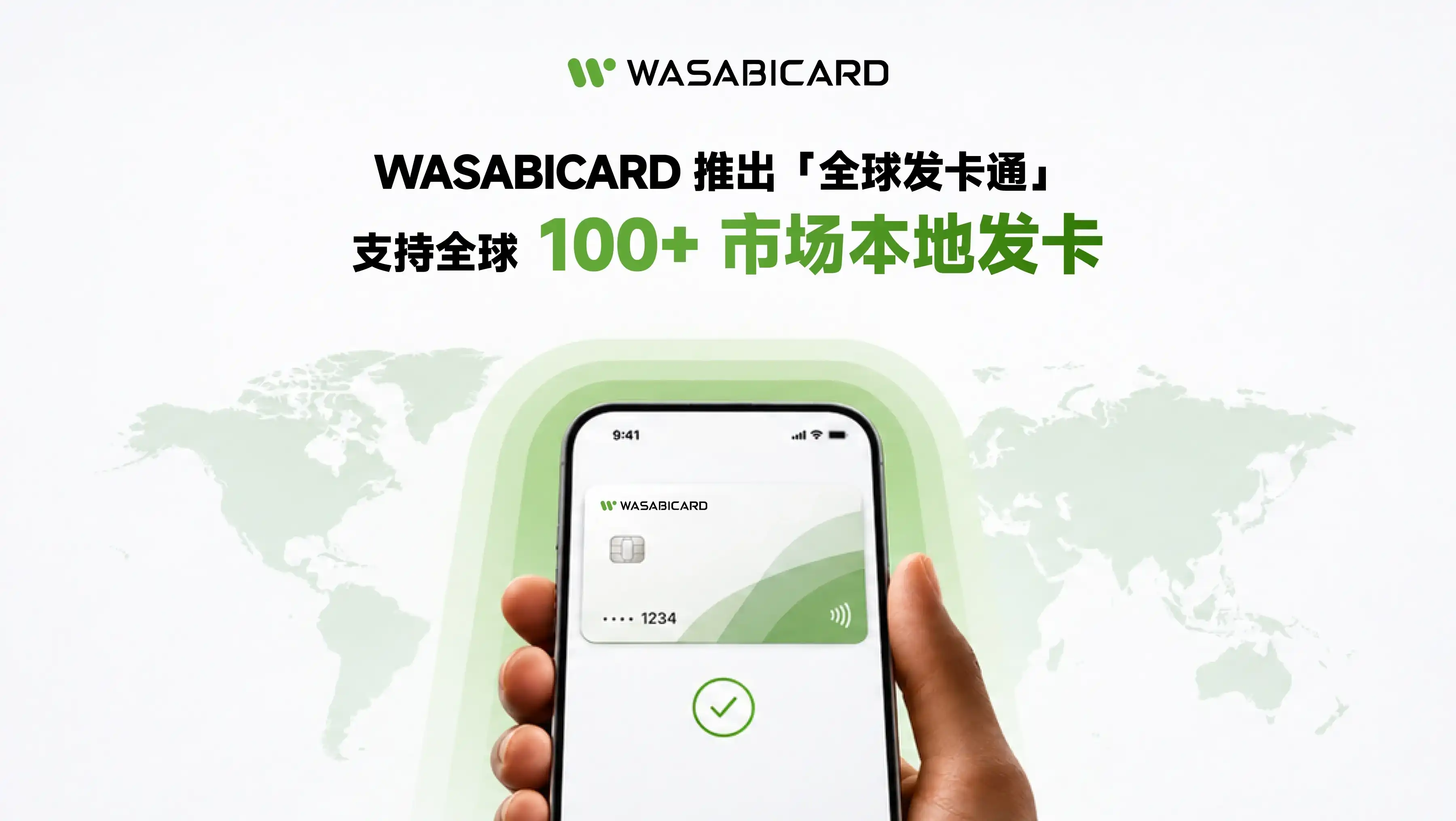
WasabiCard Launches "Global Card Issuance Solution" to Help Businesses Launch Local Card Programs in 100+ Markets

WasabiCard has launched its "WasabiCard Local Issuing Solution," enabling businesses to quickly establish and manage local card issuing programs in over 100 markets through a single API, while meeting regulatory compliance requirements, offering competitive rates, and supporting stablecoin settlement in USDT, USDC, and Open USD (OUSD). CEO Ray Yang noted that companies expanding globally previously had to issue cards from one market and hope the model worked elsewhere, which increased friction around compliance, payment acceptance, and fees. The new solution lets businesses use one API to build local card programs across 100+ markets while flexibly choosing stablecoin settlement, branded experiences, and familiar payment methods. Built on WasabiCard's underlying infrastructure and partnerships with local financial institutions, the solution lets businesses use regional BINs and build card programs around local issuing systems. Local issuing helps reduce cross-border and FX costs and improves the payment experience. After a single API integration, businesses can issue and manage cards across markets, control card lifecycles, and set program rules. Following KYB, compliance, and partner review, accounts can be opened in as little as 24 hours. Businesses can choose corporate or individual BINs, support virtual and physical cards via Apple Pay and Google Pay, and opt for white-label services. The solution combines stablecoin settlement with familiar card payment experiences, offering Visa and Mastercard commercial and individual card options. Compliance checks begin before deposited funds can be spent: on-chain data is cross-verified to understand funding sources and identify links to fraud or stolen assets. Directly high-risk funds are rejected, while indirect links trigger further review. Use cases span global payroll and payouts to Web3 teams, contractors, and partners; creator and commission payouts for content and livestream platforms; digital advertising and AI service subscriptions; and corporate procurement and employee expense management. WasabiCard serves over 700 enterprise clients, with more than 700,000 cards issued and over $1 billion in transaction volume, covering 200+ countries and regions and supporting 70+ card BINs. WasabiCard is a global payment infrastructure platform providing card issuing, global payouts, and cross-border payment capabilities through stablecoin-driven financial infrastructure, serving advertising, AI and SaaS subscriptions, global payroll, treasury management, and digital finance use cases.

marsbit31m ago

WasabiCard Launches "Global Card Issuance Solution" to Help Businesses Launch Local Card Programs in 100+ Markets

marsbit31m ago

Jensen Huang Caught in Another Affair with Subordinate, Probability of Departing NVIDIA by Month's End Nears 90%

NVIDIA CEO Jensen Huang is facing escalating scandal after reports of a second extramarital affair. Following earlier allegations involving Alice Huang, an executive at Singapore data center company Megaspeed, The New York Times reported that Huang also had an affair with Kimberly Powell, a married NVIDIA vice president of healthcare and one of roughly 60 executives reporting directly to him. Powell, 48, joined NVIDIA in 2008 and has led its healthcare business since 2017. NVIDIA's code of conduct prohibits private relationships that could create conflicts of interest. NVIDIA's earlier statement that the matter would not affect Huang's role as CEO has reportedly been withdrawn. The Wall Street Journal reported that the board is considering meeting to discuss Huang's future, potentially appointing an interim leader while searching for a new CEO with outside firms. Polymarket odds of Huang leaving before November 30, 2026 have risen to 88%, and to 93% before March 31, 2027. Elon Musk, responding to a suggestion that he hire Huang, said it "would be an honor." The news triggered sharp stock moves: NVIDIA closed up 2.87% but fell as much as 10% after hours, shedding over $300 billion in market value and dragging down other AI stocks including Intel and Dell. A key concern is succession: NVIDIA has no clear plan, and Huang's unusual management structure—with dozens of direct reports and few layers—makes him the central node of the company. While executives like CFO Colette Kress could handle operations, none can quickly replace Huang's industry influence and role as NVIDIA's public face. Neither Huang nor NVIDIA has confirmed or denied the second affair.

Odaily星球日报56m ago

Jensen Huang Caught in Another Affair with Subordinate, Probability of Departing NVIDIA by Month's End Nears 90%

Odaily星球日报56m ago

Ethereum Plans to Move Post-Quantum and Anti-AI Upgrades Forward to 2027: Ethlabs Proposes Restructuring the Hegotá Hard Fork Plan

Ethlabs, a non-profit Ethereum R&D lab, has submitted the pqai27 community proposal to the Ethereum community forum, calling for 2027 to be the target year for achieving quantum resistance and AI resistance on Ethereum. With Ethereum's on-chain TVL exceeding $41.16 billion as of November 12, the proposal argues that Ethereum should leverage its existing hash-based cryptography and formal verification foundations to reinforce its position as the global value settlement layer as AI evolves rapidly and quantum timelines accelerate. The direct motivation is the compression of external timelines: the U.S. government has moved its quantum-resistance target from 2035 to 2030, and Google plans to complete its full cryptographic migration by 2029. AI attack capabilities are also advancing—OpenAI has used frontier models to find and patch roughly 1,000 Linux vulnerabilities and solve hundreds of math problems. "AI resistance" means relying on minimal hash primitives, formal verification, and client diversity to harden the base layer. The roadmap splits 2027 into two stages. The baseline "pqai-ready" stage requires quantum resistance at the consensus layer and ensures users can migrate to quantum-resistant accounts via the Frames account abstraction proposal EIP-8141; if existing cryptography fails early, the network can degrade to calldata to keep running. The advanced "pqai-scaled" stage targets full-capacity operation, introducing EIP-8288 for quantum-resistant signature aggregation and EIP-8479 for quantum-resistant data availability, so quantum-resistant transactions and blobs can regain normal throughput after scaling. To this end, Ethlabs recommends restructuring the scope of the Hegotá hard fork, stripping out non-critical upgrades and reassessing the impact of the FOCIL anti-censorship proposal (EIP-7805) on progress and compatibility; if the execution layer is decoupled from the consensus layer, Frames could ship independently first. The consensus layer must choose between retrofitting the existing Gasper implementation for quantum resistance and moving to decoupled consensus. Ethlabs announced it is withdrawing its push for Quick Slots (EIP-8198) in Hegotá, deferring it to 2028, while Glamsterdam and its scaling plans proceed as normal. The roadmap remains an Ethlabs community initiative; any Hegotá fork restructuring or consensus-layer switch requires further discussion and agreement among Ethereum's All Core Devs. Ethlabs notes that AI is also accelerating formal verification and zero-knowledge proof benchmark optimization, and that advancing pqai27 aims to consolidate Ethereum and ETH's role as the trust root for global value settlement during extreme security cycles.

marsbit1h ago

Ethereum Plans to Move Post-Quantum and Anti-AI Upgrades Forward to 2027: Ethlabs Proposes Restructuring the Hegotá Hard Fork Plan

marsbit1h ago

Former OpenAI Researcher Changes His Tune: Super AI Researcher Could Arrive as Early as Next Year

Former OpenAI researcher Daniel Kokotajlo and the AI Futures Project have revised their timelines, now predicting superhuman AI researchers (SARs) could arrive as early as 2027 rather than 2029. The key driver is a METR assessment of Anthropic, which found that since October 2025, the benchmark score growth rate of Anthropic's internal models reached about 1.9x the previous pace (95% CI: 1.5–2.8x) — roughly two years' worth of progress in one year. METR estimates that by October 2026, about 80% of the extra acceleration may come from AI itself, though this is a subjective guess with high uncertainty. AI is already helping researchers write experiment code, run tests, and try out more ideas. Using METR's estimates, the team calculated that by early November 2026, AI-driven acceleration alone could push overall model progress to 1.7x the historical rate — a speed that, in the original AI 2027 scenario, wouldn't be reached until around April 2027, about five months later. Notably, METR says most of the evidence underpinning its core conclusions was redacted from the public report at Anthropic's request, to avoid helping competitors; only the benchmark curves are publicly verifiable. Depending on the method used, SAR arrival estimates range from February 2027 to mid-2028. If acceleration compounds across model generations, superintelligence could arrive sooner than expected.

marsbit1h ago

Former OpenAI Researcher Changes His Tune: Super AI Researcher Could Arrive as Early as Next Year

marsbit1h ago

Aave V3.8 Officially Launches: Covering 15 Public Chains, $15.2 Billion Liquidity Pool, Introducing Low-Gas-Cost Reentrancy Protection

Aave has launched V3.8 across 15 active V3 markets, following approval by the Aave DAO and development by Aave Labs. According to DeFiLlama, Aave's total value locked exceeds $16.4 billion, with active V3 markets holding over $15.23 billion. The upgrade was deployed via AIP #541, completing a 22-day governance process that began with a forum proposal on October 21 and a Snapshot vote on October 27. V3.8 covers active instances on Ethereum (Core and Lido), Plasma, Avalanche, BNB Chain, Monad, Base, and Arbitrum, along with Mantle, X Layer, Polygon, Linea, Optimism, Gnosis, MegaETH, and Celo. Legacy markets that were frozen with zero caps were deliberately skipped. The release introduces kernel-level reentrancy protection for external callback operations on liquidity pools. Traditionally, preventing cross-function reentrancy requires writing a lock flag before state changes, but after EIP-3529 capped SSTORE refunds at 20%, maintaining persistent locks in high-frequency lending pools became gas-intensive. V3.8 instead uses EIP-1153 transient storage, where TSTORE and TLOAD cost only 100 gas per read or write and automatically clear at transaction end, providing reentrancy hardening at minimal cost. Aave Labs addressed developer concerns that the lock might block liquidation composability within flash loan callbacks. The flashLoan and flashLoanSimple entry points only check the lock status without setting it, creating asymmetric isolation: users can still compose liquidations, deposits, or repayments inside a flash loan callback, but attempts to initiate a flash loan from within a regular pool operation callback are rejected and reverted. Security verification included Certora formal verification and independent external audits before the AIP vote. The new contract code is published in the official Aave V3 repository under the Business Source License. Developers also noted that downstream integrators reading view functions such as account health factors or reserve data during callbacks should account for intermediate ledger states and ensure peripheral risk controls remain compatible.

marsbit1h ago

Aave V3.8 Officially Launches: Covering 15 Public Chains, $15.2 Billion Liquidity Pool, Introducing Low-Gas-Cost Reentrancy Protection

marsbit1h ago

Trading

Spot
活动图片