Forget Ctrl+F, a New AI Paper Tool Helps You Search for Needles in the Haystack of Full-Text Literature

marsbitPublished on 2026-10-10Last updated on 2026-10-10

Abstract

This article introduces a new AI-powered academic paper writing tool called "Open Academic Paper Gen." Unlike typical AI writing assistants that generate content and citations, this tool features a unique multi-step workflow designed to ensure the validity of references. After generating an initial draft based on a user-provided research topic, the system performs a crucial verification step: it locates and analyzes the full text of cited papers to check if the referenced claims are genuinely supported by the source material. It can even pinpoint relevant paragraphs and PDF page numbers. The tool's workflow involves nine stages: defining the research scope, literature retrieval, filtering, trend analysis, identifying research gaps, outlining, writing, citation verification, and final export. It searches databases like OpenAlex and arXiv, builds an evidence table from gathered papers, and includes an "innovation diagnosis" to assess a proposed angle against existing work. A key focus is its three-layer citation verification process: 1) ensuring citations exist in the collected literature pool, 2) cross-referencing metadata like DOI and author details with official records, and 3) using AI to analyze the source's full text (or abstract if unavailable) to confirm it supports the claim made in the draft. Unverifiable citations are flagged rather than assumed correct. The tool offers both manual review checkpoints and a fully automatic mode, requiring OpenAI or GLM API keys. The...

I'm begging you, we already have more papers than we can read, why are tools for automatically writing papers still popping up everywhere!

Recently, GitHub has once again launched a new AI paper generation tool—

Open Academic Paper Gen.

Don't swipe away just yet!

Besides being able to automatically generate a first draft with references, Open Academic Paper Gen has another feature you must pay attention to—

When it can obtain the full text of a paper, it will search the full text(underline this) for evidence to verify the cited viewpoints within the paper.

To be honest, this is super useful.

Because writing a paper often starts with a research topic, followed by continuously organizing arguments, searching for evidence, and then adjusting one's own judgments based on the literature.

With AI, it can help you brainstorm arguments and also help you search for sources of evidence.

But the problem is, sometimes the arguments or papers are real, but once you put the (AI-given) "argument" back into the full text and read it in context, you might find that the author probably didn't mean that at all.

So, to solve this problem, after obtaining the full text of a paper, Open Academic Paper Gen further locates relevant paragraphs to judge whether that paper can actually support the corresponding argument.

If there's page number information, it will also mark the corresponding PDF page number in the notes, making it easier for people to look it up later.

In other words, it not only checks "if this paper exists," but also checks "if this paper actually said that."

A Multi-Agent Workflow for Generating First Drafts of Papers

Overall, Open Academic Paper Gen is a multi-agent workflow for generating first drafts of papers, breaking down the process from topic selection to export into nine stages:

Define research scope, search for literature, clean and filter, analyze trends, find entry points, outline, write, verify, and finally export.
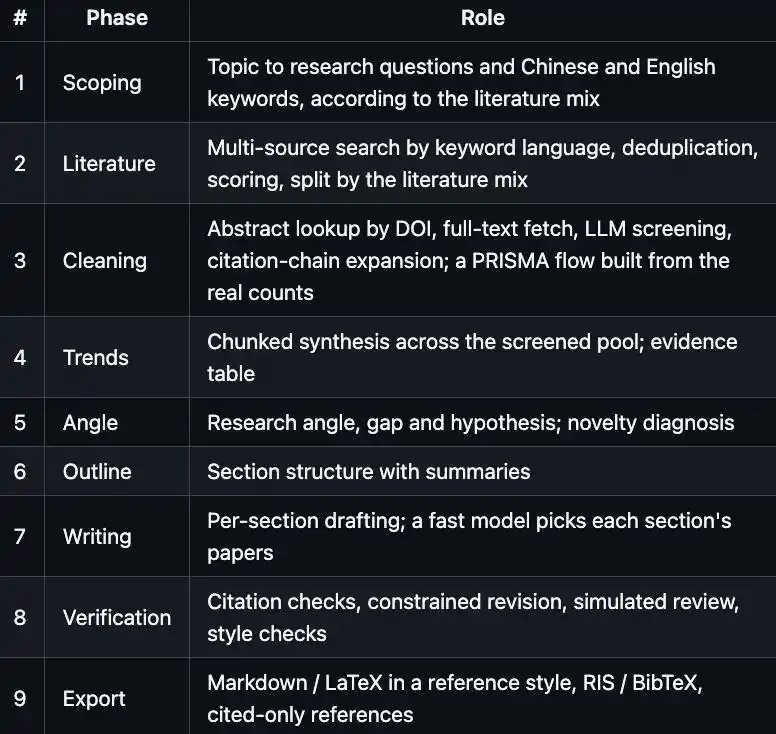
Similar to other AI paper writing tools, you give it a research topic, like "RSI in the Physical World."

It then breaks down this topic into specific research questions, generates corresponding Chinese and English keywords, and searches for papers in OpenAlex, Crossref, Semantic Scholar, and arXiv.

The retrieved literature is further deduplicated and scored, then filtered for relevance by the model. When encountering highly relevant papers, it continues searching by following their references and later studies that cite them.

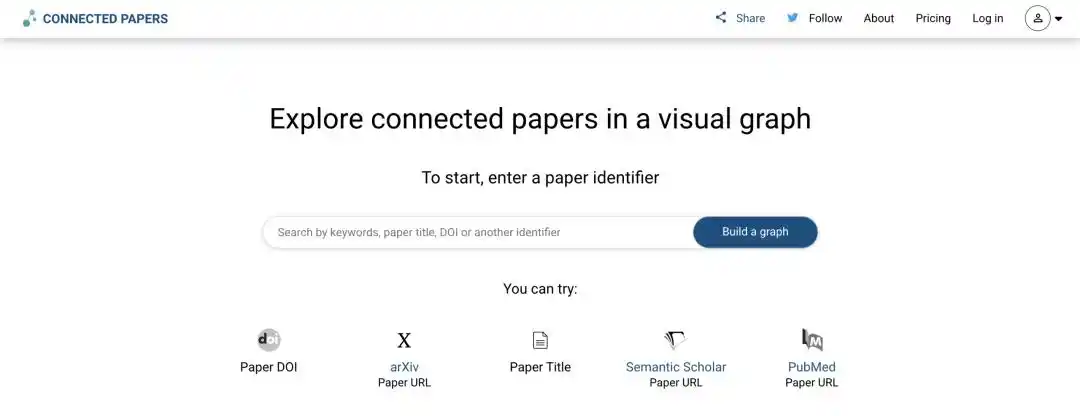
It's like grabbing one paper and then following the trail to supplement a batch. The idea is actually a bit like the old CONNECTED PAPERS.

(If you know, you know).
Next, the collected literature is organized into an evidence table, summarizing each paper's research question, method, data, conclusions, and limitations.

With these materials, the system analyzes research trends and proposes possible research angles, gaps, and hypotheses.

There's also a quite interesting step here called Innovativeness Diagnosis.

Open Academic Paper Gen evaluates the entry point from dimensions like problem, method, data, and perspective, points out the most similar existing work in the literature pool, and gives possible critiques reviewers might raise.

(This is like, when you think you've created ResNet, the AI first helps you check if someone else has already done it.)

Specifically, these judgments are based on the literature retrieved this time, but not finding it in the pool doesn't mean no one in the world has done it~

Finally, once the research angle is determined, the system continues to generate an outline and draft sections.

After the first draft is written, it enters the citation verification and simulated peer review stages, and can finally export to Markdown or LaTeX, as well as reference formats like RIS and BibTeX.

Regarding the specific operation mode, in the default mode, Open Academic Paper Gen will pause at major stages, waiting for you to review, edit, and confirm before proceeding.

If you want to test the AI's research capabilities, you can also let it run automatically by choosing the fully automatic mode.

Lastly, friends ready to give it a try should also pay attention to the model configuration:

The project currently supports OpenAI and Zhipu GLM, but for the steps of argument verification, citationless statement checking, and simulated peer review, an OpenAI API Key is still required.

How Does the Citation Check Get into the Sentence?

Honestly, automatically searching for literature, writing a first draft, and then having AI review it is already a common combination in many paper writing projects.

Some of them also incorporate citation verification and manual confirmation to minimize model hallucinations.

Within this workflow, Open Academic Paper Gen further refines the checking and modification of citations.

After all, attaching references to a first draft is one thing; proving that these references can actually support the main text is another.

Specifically, it breaks verification down into three checks.

First, check if the cited paper can be found in the literature pool.

During writing, each citation marker must correspond to a paper already collected.

If the model fabricates a non-existent citation identifier, the system will mark it for easy location and correction.

Second, verify the identity of the cited paper.

Papers with a DOI are first cross-checked with Crossref records; if not found, confirmation is sought at doi.org.

Mismatches in title, author, year, etc., will trigger corresponding warnings.

Third, check if the source text actually supports the statement.

Here, the check truly moves from "paper metadata" into "paper content."

After obtaining the full text, the system finds the paragraph(s) most relevant to the cited argument and feeds them, along with the paper's abstract, to the model to judge whether the source text can support the statement in the main text.

If the full text is unavailable, the abstract or excerpts are used. When page number data exists, warnings can also indicate the corresponding PDF page number, making it easier for people to look it up.

Of course, the model not finding sufficient evidence does not mean it has proven the statement is wrong.

According to Open Academic Paper Gen's handling, when evidence is insufficient, it can be marked as "Unable to judge."

Literature with too little text to verify at all is marked as "Not verified," rather than directly counted as passed.

So, looking at it overall, compared to "writing the paper with one click," the idea of linking literature organization, evidence location, and citation self-check is indeed clever.

Especially when facing arguments and evidence generated by AI, and feeling "it seems plausible, but I don't dare to just trust it," being able to find the corresponding original text at least provides another handle for verification.

By the way, this project is from an individual developer Cat Uncle. Besides Open Academic Paper Gen, he has previously released several projects including an AI scriptwriter and an AI researcher.
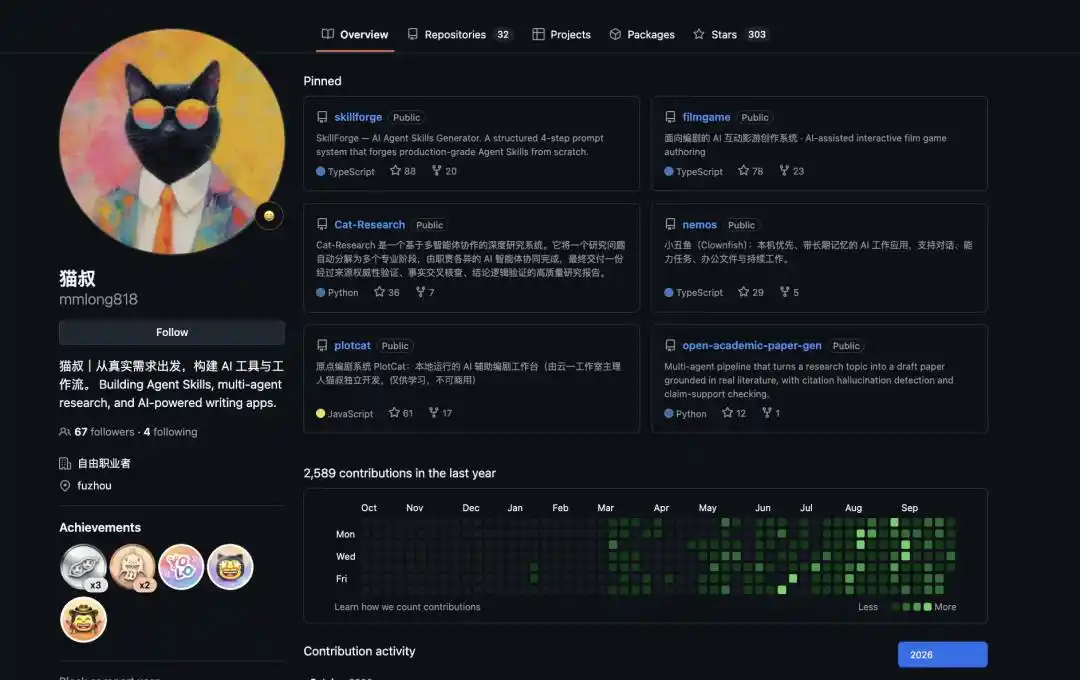
Reference Links

[1]https://github.com/mmlong818/open-academic-paper-gen

This article is from the WeChat public account "QbitAI", author: henry

Related Questions

QWhat is the name of the new AI paper writing tool introduced in the article?

AThe new AI paper writing tool is called Open Academic Paper Gen.

QWhat is the unique feature of Open Academic Paper Gen regarding literature verification?

AIn addition to generating a draft with references, Open Academic Paper Gen can verify citations by locating relevant paragraphs within the full text of a paper to check if the cited content genuinely supports the argument being made.

QHow many stages does the Open Academic Paper Gen workflow consist of?

AThe Open Academic Paper Gen workflow consists of nine stages: scoping the research, searching for literature, cleaning and filtering, analyzing trends, finding research angles, outlining, writing, verifying citations, and exporting.

QWhat databases does the tool use to search for academic papers?

AThe tool uses OpenAlex, Crossref, Semantic Scholar, and arXiv to search for academic papers based on generated keywords.

QWhat does the tool do when it cannot verify a citation due to insufficient evidence in the source?

AIf the tool finds insufficient evidence in the source material to verify a citation, it will mark the citation as 'unverifiable' or 'cannot be judged' rather than assuming it is correct.

Related Reads

"All the Bad News Hit at Once," Yet US Stocks Rebounded Against the Trend: Wall Street Stages a "Nothing Left to Sell" Short Squeeze

In a week packed with bad news—Nvidia founder Jensen Huang's scandal-driven resignation, a third straight CPI upside surprise, PPI at a four-year high, and Fed officials floating a 50bp December hike—US stocks defied gravity, with the S&P 500 up 2% and the Philadelphia Semiconductor Index posting its best week since April. The explanation: shorts had no cards left to play. A classic "no inventory to sell" squeeze unfolded as hedge funds cut leverage to five-year lows, leaving few sellers to absorb the bad news. Meanwhile, bonds bore the entire macro shock, with 2-year yields surging 35bp (the biggest weekly jump since October 2024) and 10-year yields breaking 5.15%. Nvidia fell about 11% for the week, but retail buying hit a record 41x normal levels, and capital rotated into AMD (+30%) and Broadcom (+24%) rather than leaving AI. By Friday, equities began "reading the bond market's mail," with the S&P 500 hitting resistance at its 100-day moving average. Goldman's Rich Privorotsky warned the market needs oil to stabilize and rates to fall—neither of which happened. The bond selloff was driven by real rates, not inflation expectations, with TIPS yields up 90bp year-to-date. Credit markets showed no panic at the index level, but cracks are widening: chip-sector CDS spreads exceeded hyperscaler spreads for the first time, and CCC spreads widened 270bp in three months. Geopolitically, hopes for Iran de-escalation died as Trump closed the diplomatic door, and oil rebounded after the Strait of Hormuz saw daily tanker mine strikes. Global equity funds drew $51 billion, the largest weekly inflow since late September, though US inflows slowed. Next week's tests include Nvidia earnings on November 17 (Colette Kress's first as interim CEO), Anthropic's IPO seeking up to a $1 trillion valuation, Treasury supply and foreign demand, and Fed speakers. As Privorotsky put it: "The AI trade survived Huang's departure, but Waller is a different kind of trouble—because he won't resign."

marsbit11m ago

"All the Bad News Hit at Once," Yet US Stocks Rebounded Against the Trend: Wall Street Stages a "Nothing Left to Sell" Short Squeeze

marsbit11m ago

OpenAI and Meta Join Forces, Bridging the "Last Mile" of Agent Commerce

On November 13, 2026, two major announcements landed the same day, together addressing the "last mile" of agent commerce: how AI assistants get through the door, and how they pay. Sierra and Meta released Poppy v1.0, a Personal Agent Protocol built on OAuth, HTTPS, OpenAPI, and the Model Context Protocol. Poppy lets businesses cryptographically verify three things: which assistant is making a request, which user it represents, and what permissions it holds. Companies publish a discovery file at /.well-known/poppy describing endpoints and allowed actions, while both user and business must consent to each interaction via two-way authorization. Shopify automatically enabled Poppy discovery files for merchants in 175+ countries, giving the protocol immediate scale, with over 100 design partners including Delta, 1Password, Okta, and Cloudflare. Separately, OpenAI launched ChatGPT Wallet for its personal assistant dots. The assistant can search, compare, and fill a cart, but must stop at checkout—users confirm via biometric authentication. Neither the assistant nor the merchant ever sees the real card number; card networks issue a one-time payment credential instead. Built with Amex, Mastercard, and Visa, the wallet runs entirely on traditional fiat rails—explicitly not crypto or stablecoins. It initially opens only to US Pro subscribers aged 18+. Notably, Visa and Mastercard span both initiatives, and OpenAI itself appears among Poppy's design partners—despite dots and Meta's Muse competing for the consumer entry point. The shared logic: consumer-facing competition, but shared infrastructure on the business side. The common bottom line is "human in the loop"—agent autonomy stops at the shopping cart. Open questions remain: liability when an assistant errs or is manipulated by malicious prompts, coverage beyond Shopify and US Pro users, and whether mandatory biometric confirmation for every small purchase will become friction that undermines the convenience promise.

marsbit9h ago

OpenAI and Meta Join Forces, Bridging the "Last Mile" of Agent Commerce

marsbit9h ago

Has the Time Come to Buy the Dip on Nvidia?

Nvidia announced on November 12 that Jensen Huang resigned as President, CEO, and Director, effective immediately. Shares fell as much as 14% intraday to $148.8, down nearly 40% from October highs, with over $600 billion in market value briefly erased. The founder's departure triggered the selloff, but the market is repricing the entire company rather than reacting to a single risk. Nvidia now trades at roughly 12x forward PE, its lowest in 15 years and below the S&P 500's ~18x, despite strong fundamentals: FY2026 revenue of $215.9 billion (+65%), data center revenue of $62.3 billion in a single quarter, ~75% gross margins, and Q2 FY2027 revenue of $96.2 billion with $21.3 billion free cash flow. Most investment banks cut targets but maintained Buy/Overweight ratings (Barclays $210, Goldman $220, Citi $225, RBC $230), implying ~20% upside, while Truist downgraded to Hold at $174. The consensus: the business is intact, but its valuation multiple needed resetting. Supporting demand, Huang forecast at GTC 2026 that Blackwell and Rubin AI chip demand would reach at least $1 trillion by 2027, double the prior 2026 estimate. However, risks remain beyond CEO succession. CUDA's lock-in effect is eroding on the inference side—Anthropic disclosed that its Claude Mythos Preview autonomously ported core GPU kernels to AMD flagship GPUs in three days with minimal human intervention, prompting investor Marcelo P. Lima's widely cited claim that "Nvidia's CUDA moat no longer exists." Supply bottlenecks lie in HBM and packaging, not wafers: TSMC can cut over 400 million GPU dies annually, but Nvidia ships only ~10 million GPUs yearly, constrained by HBM capacity (~3.75EB globally, ~70% allocated to Nvidia, ~260GB per GPU) and tight packaging, with HBM4 adjustments possibly delaying Rubin. Huang also leaves behind highly personalized assets—strategic technology judgment, supply chain negotiation with TSMC and SK Hynix, and direct channels to customers and governments—that interim CEO Colette Kress, the long-time CFO, may not fully replace. In short, the business remains, but the "faith premium" is being systematically stripped away. At 12x forward PE, much pessimism is priced in, offering a favorable risk-reward window if AI capex holds and demand materializes. Yet cheapness alone isn't sufficient: CUDA's erosion is slow but irreversible, HBM and packaging limit revenue upside, and succession uncertainty means the founder premium may not be fully removed. As Bernstein noted, "if you see two ants in the kitchen, there are more than two," warning that chains from scandal to governance vacuum to government probes could trigger further selloffs. Until the dust settles, what a Jensen-less Nvidia is worth remains an open question.

marsbit10h ago

Has the Time Come to Buy the Dip on Nvidia?

marsbit10h ago

AI Bull Market Trap? The Big Short Seller Strikes Again

Recent signals from Goldman Sachs, the Federal Reserve, and prominent short-seller Michael Burry are converging on concerns about the AI trade. Goldman warns that AI capital expenditure growth will likely peak in early 2027, with the boost to S&P 500 earnings falling from a 12-point peak in 2026 to a 5-point drag by 2028, shifting the market from a one-way rally to two-way volatility. The Fed has flagged AI as a potential threat to asset valuations and financial stability. Burry has doubled his Nasdaq 100 put options and rebuilt short positions in a semiconductor ETF, calling this a "bull market trap" analogous to the 2000 dot-com bubble, with Nvidia's influence a key worry. Four pressures weigh on the AI narrative: peaking capex growth, high interest rates that hit long-duration AI assets and leveraged GPU cloud providers like CoreWeave and Nebius, circular financing risks among interconnected tech firms, and tighter regulation under Democrats affecting data center energy, land, and permitting. Nvidia-related turmoil has shaken the pricing anchor for the entire supply chain. However, a valuation bubble bursting does not mean the AI industry is declining. Goldman notes US cloud giants trade at just 19.7x forward P/E, below their 20-year historical range and even below defensive staples, suggesting much pessimism is already priced in. Opportunities are shifting from upstream hardware "shovel sellers" toward fairly valued cloud giants with improving free cash flow, AI application companies delivering real ROI, and deeply discounted cyclical names like Korean memory. Conversely, GPU cloud providers dependent on Nvidia orders and cash-burning startups without products are most vulnerable. Investors should diversify, hedge, and focus on assets that convert spending into stable returns.

marsbit10h ago

AI Bull Market Trap? The Big Short Seller Strikes Again

marsbit10h ago

Just Offered 3.3 Million Yuan Salaries to Poach Talent, OpenAI Suddenly Dissolves Robotics Team—Is the Industry About to Change!

OpenAI has disbanded its standalone robotics research team, confirmed shortly after booking booth 208 at the CoRL robotics conference in Austin went empty on November 13. The move surprised many, given that just months earlier OpenAI was aggressively hiring robotics talent—some roles paying up to $500,000 base salary—and had expanded its San Francisco data-collection lab to about 100 workers across three shifts, with a second lab planned in Richmond, California. Researchers from the robotics team are now folded into Chief Research Officer Mark Chen's core research division, while robotics applications and hardware staff move to President Greg Brockman's Applied division. OpenAI says robotics remains part of its long-term vision and the reshuffle is meant to accelerate progress. This is not OpenAI's first robotics retreat: it ended its first independent robotics effort in 2020 to focus on large language models, which produced ChatGPT, and only rebuilt a team in 2024. OpenAI explains the latest pivot technically—researchers initially believed video-generation models like Sora could teach robots physics, but general models such as GPT-6 Astra proved capable of directly controlling robots, so robotics work is being merged into the general foundation-model team. The broader industry context supports this shift. Unitree's Wang Xingxing said his biggest mistake over the past decade was not trusting AI enough, noting GPT-6 integration exceeded expectations and that humanoid intelligence's tipping point may arrive within one to two years. Anthropic's Claude Fable 5.2 scored 64.9% on the RoboDojo Sim benchmark versus 29.8% for GPT-6 Astra, and Nvidia's Astranomy study showed GPT-6 Astra controlling simulated robots with 74.8% success using an agentic approach, beating the prior specialized-model best of 51.0%. Yet challenges remain: general models are costly and slow—GPT-6 Astra averaged 18.56 seconds per inference and about 30.9 million tokens (roughly $36.40 in API fees) per successful task—problematic for real factories where conveyor belts don't pause. Google DeepMind, Nvidia, Unitree and AgiBot continue training specialized robotics models; Google's Apollo 2 achieved 96% success sorting parts in Mercedes factories using paired reasoning and action models, while Nvidia's GR00T 2 reached 95% success after brief fine-tuning. Analysts suggest OpenAI now treats robotics as a downstream application of general intelligence, leveraging core model advances while using its data-collection and hardware capabilities to validate models on real robots.

marsbit10h ago

Just Offered 3.3 Million Yuan Salaries to Poach Talent, OpenAI Suddenly Dissolves Robotics Team—Is the Industry About to Change!

marsbit10h ago

Trading

Spot
活动图片