SpaceX's First Mars Pilot Selected is from China

marsbitPublished on 2026-06-09Last updated on 2026-06-09

Abstract

In a historic week marked by SpaceX's massive IPO, the focus shifts to Wang Chun, a Chinese Bitcoin billionaire selected as the commander for humanity's first crewed mission to Mars. Born in Tianjin in 1982, Wang's fascination with remote frontiers began in childhood with a world map. A programming prodigy, he later co-founded F2Pool, which grew into one of the world's largest Bitcoin mining pools, amassing his fortune. Wealth enabled Wang to pursue his exploratory passions. In April 2025, he funded and led the private Fram2 mission, a $200 million, three-and-a-half-day SpaceX Crew Dragon flight on a unique polar orbit to photograph Earth's poles from space. On May 21, 2026, SpaceX announced Wang as the commander for the inaugural crewed Mars flyby mission aboard a Starship—a two-year journey into deep space to gather critical data for establishing a sustainable human presence on Mars, aligning with Elon Musk's vision of a multiplanetary species. Unlike many in the crypto world, Wang views his wealth as a tool for exploration rather than an end goal. His story exemplifies using resources to push human boundaries and inspire curiosity, embodying what it means to discover one's life mission.

Author: Youth Wealth Development Association

No matter what, this week is destined to be recorded in history.

On June 12th, the largest company IPO in human history is about to debut. SpaceX is the behemoth created by Musk, embodying this world's richest man's ultimate fantasy of interstellar migration.

Over the past decade or so, SpaceX's Falcon rockets have launched a total of 656 times.

In 2025 alone, they launched 165 times—almost half of all global orbital launches.

The Dragon spacecraft has carried out more than twenty manned missions, sending over seventy people into orbit.
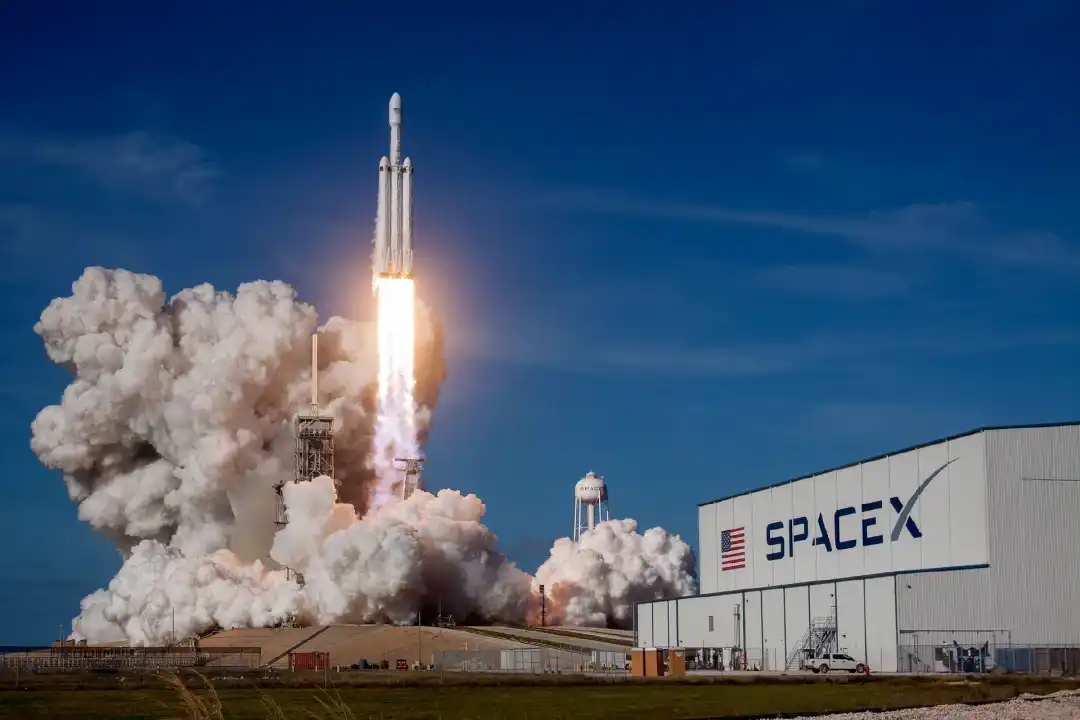
In SpaceX's prospectus, the word "Mars" appears 63 times. The "Mars Exploration Program" is also Musk's number one project, on which he has staked his entire future.

But today's article is not about SpaceX, nor is it about Musk. Instead, it's about the captain who will command humanity's first manned mission to Mars—a Bitcoin billionaire from Tianjin, Wang Chun.


Wang Chun spent his childhood with his grandparents.

In 1987, when Wang Chun was five years old, his grandfather picked up a world map while taking a walk. From then on, that map became his favorite toy.

What fascinated him wasn't the named places, but the blank spaces at the bottom of the map—the polar regions. At five years old, Wang Chun often stared at these most remote, most uninhabited corners of the Earth. He later said that from that moment on, he was captivated by those distant and unknown places.

Yet in reality, it wasn't until he was eighteen and went to university that he first traveled more than a hundred kilometers away from home.

At that time, Wang Chun didn't yet know just how vast a world he would explore in his lifetime.

At thirteen, Wang Chun got his first computer. Besides playing games, he used it to write many programs. One of the earliest was a gravity simulator that visualized the motion of planets in the solar system.
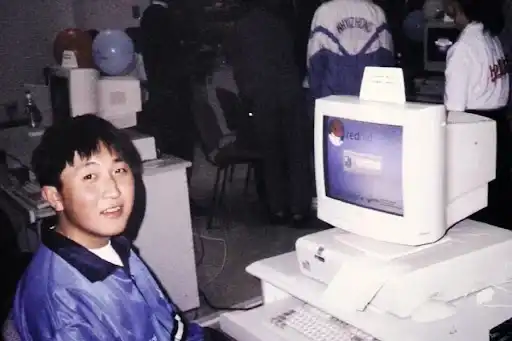
In school, Wang Chun participated in various programming competitions, including the International Olympiad in Informatics (IOI) and ACM-ICPC. Later, based on these competition achievements, he skipped the national college entrance exam (Gaokao) and was directly admitted to university.

After graduation, Wang Chun joined a software company in Beijing. From that time on, he became obsessed with riding trains.

In 2007, he used all his weekends to travel by train for 75,900 kilometers. He meticulously recorded every trip, down to the minute and second, posting them on forums.

That year, he spent a total of two months entirely on train carriages. Every Friday after work, he headed straight to the train station, not returning to work until the following Monday.

This earned him the online nickname "高铁千次男" (the Thousand-Trip High-Speed Rail Guy).

Over the years, he traveled by train to every province in China.

In 2010, Wang Chun went abroad for the first time, first to Nepal, then to India. There, he boarded what was then India's longest direct train—the 16317 Himalaya Express. He rode from Kanyakumari at the southernmost tip of the subcontinent all the way to Kashmir in the far north, traversing the entire length of India from south to north.

This journey cost about $1,000, which was all his savings at the time.

In 2013, Wang Chun applied his programming skills to something almost nobody understood at the time—Bitcoin.

He partnered with "Shenyu" to set up China's first Bitcoin mining pool, named F2Pool, specifically for mining Bitcoin.
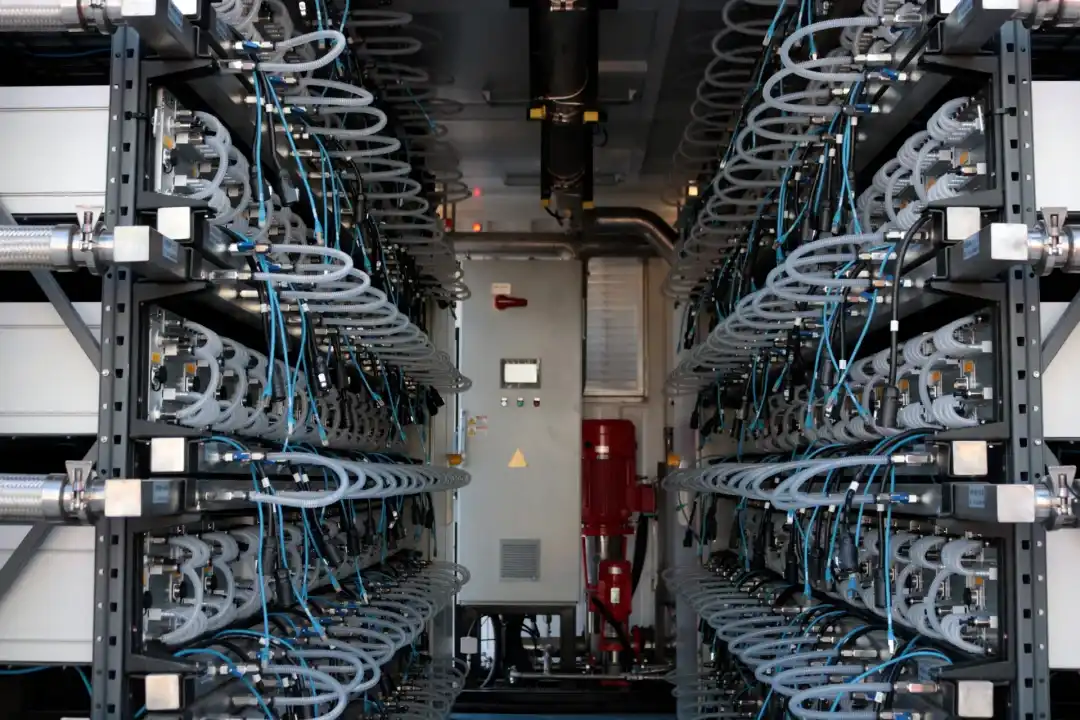
F2Pool grew astonishingly fast. Within a year of its founding, F2Pool became the world's largest Bitcoin mining pool. Over the next decade, more than 1.3 million Bitcoins were mined from this pool.

At its peak, F2Pool alone controlled over 30% of the global network's hash rate. In other words, back then, for every three Bitcoins mined worldwide, roughly one came from Wang Chun's pool.

By selling these "shovels," Wang Chun amassed enough wealth to become a dazzling Bitcoin billionaire.

After earning his fortune, Wang Chun finally had the chance to realize his childhood dreams of traveling the world and exploring the polar regions.

On April 1, 2025, Wang Chun embarked on the 1000th flight of his life. However, the destination of this flight wasn't any city, but a true frontier—space.
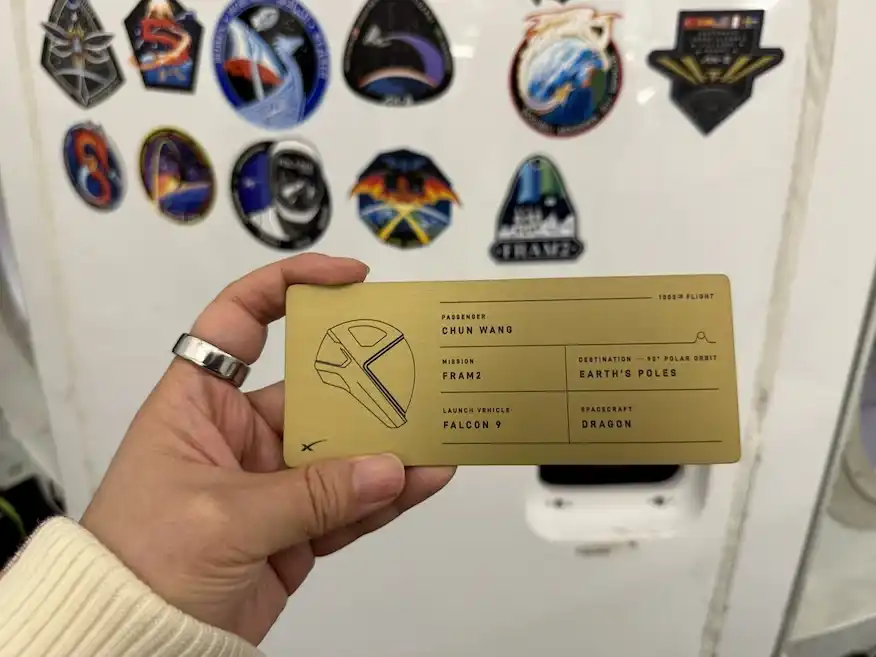
△This flight aboard SpaceX's Dragon spacecraft will be Wang Chun's 1000th flight to date

This mission, codenamed Fram2, was flown by SpaceX's most mature and most frequently used crewed spacecraft, the Dragon.

Its flight path was special: launching southward from Florida, entering a rare polar orbit, circling right over the North and South Poles, and "vertically" orbiting the entire Earth.

For this journey, Wang Chun paid out of his own pocket to charter all four seats on the Dragon spacecraft, costing approximately $200 million in total. He also personally selected his three crewmates: a film cinematographer, a robotics expert, and a polar explorer.

△The four astronauts of the Fram2 mission pose for a group photo in the suit-up room near Launch Pad 39A at NASA's Kennedy Space Center.

The mission plan and this unique orbital path were also designed by him personally. The purpose was to satisfy his childhood fascination with the polar regions.

Over the next three and a half days, they circled the Earth repeatedly, taking numerous photos of the polar regions and auroras from a space perspective, and incidentally capturing humanity's first X-ray image in space.

After returning from space, people marveled at Wang Chun's extreme challenge while also envying him for having finally achieved his life's ultimate goal.

But what nobody expected was that, for Wang Chun, all of this so far was just a warm-up.

On May 21, 2026, SpaceX unveiled its next-generation spacecraft, "Starship." During the live broadcast, SpaceX also announced that Wang Chun would serve as commander for humanity's first manned mission to Mars.
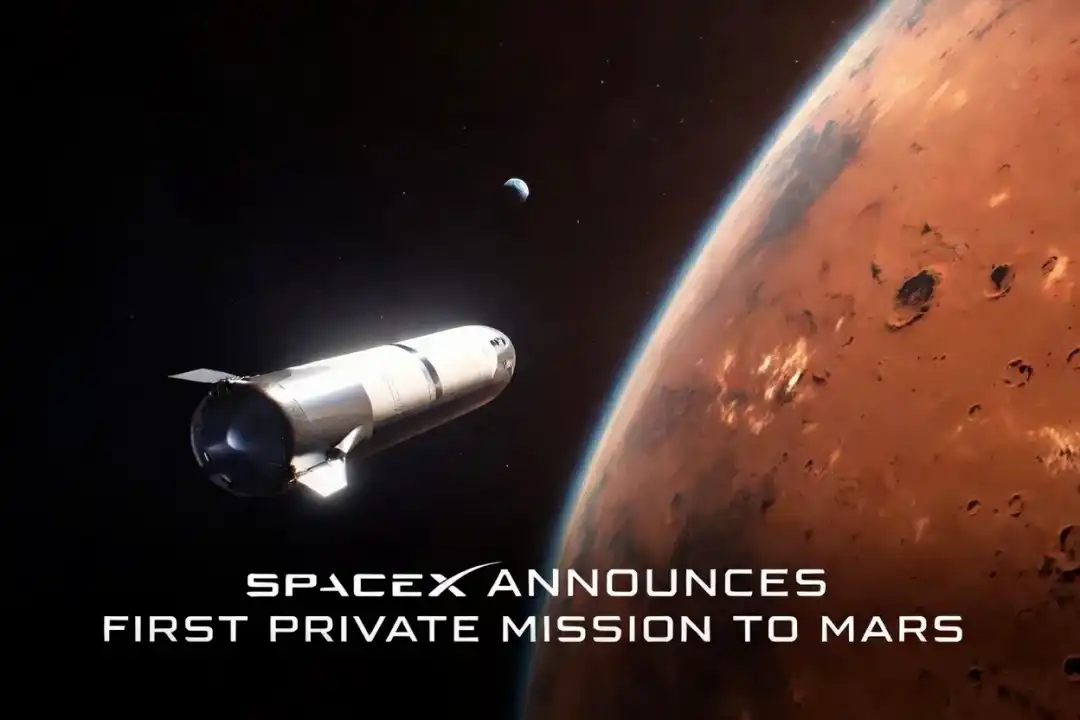
It's a journey of roughly two years.

The spacecraft will carry him out of the Earth-Moon system, toward Mars, then loop back to Earth, covering hundreds of millions of kilometers in total. For much of those two years, he will be confined to a small cabin, floating in the pitch-black deep space.

And before departing for Mars, Wang Chun will also embark on a week-long lunar flyby mission with humanity's first self-funded space tourist, Dennis Tito, and his wife, coming as close as about 200 kilometers from the lunar surface.

During the two years following the launch of the manned Mars mission, Wang Chun and his crew will conduct extensive data collection work in deep space. The aim is to obtain crucial operational data for humanity, to transform Mars exploration from a short-term novel attempt into a truly sustainable, self-sufficient habitat.
For Musk and SpaceX, a Mars flyby was never the goal.

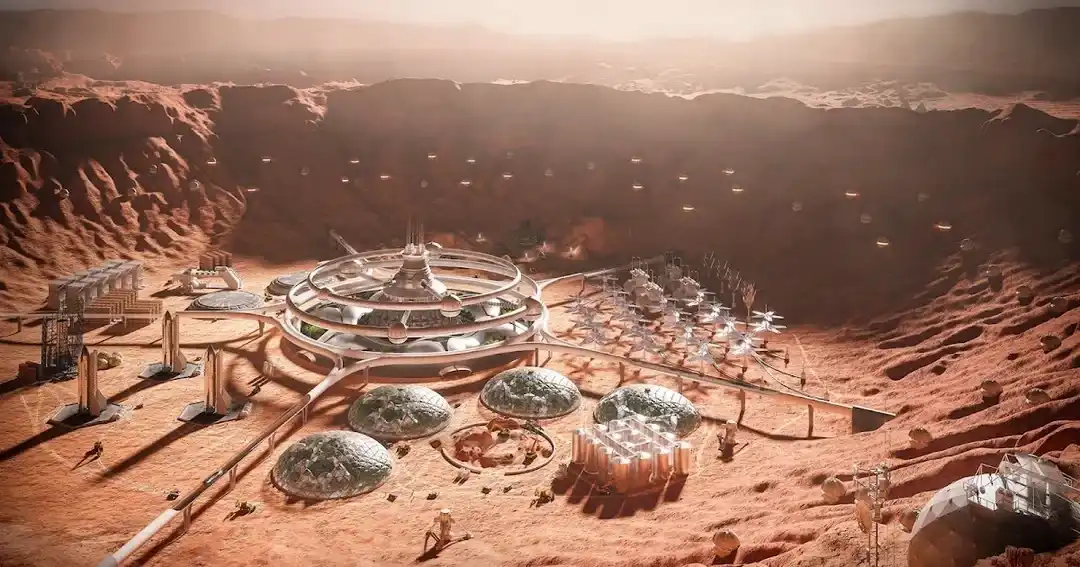
According to Musk's vision, the future involves building a real city on Mars. To that end, every twenty-six months or so, thousands of Starships would be launched, transporting equipment and people in trip after trip. The Martian city would begin with hundreds of millions of tons of prioritized equipment and supplies, ultimately leading to the arrival of one million people willing to live on Mars.

Humanity would thus become a true "multi-planetary species."

The Mars mission that Wang Chun is about to undertake in the next two years is the first step toward this audacious plan.
When most people talk about commercial space companies like SpaceX and Blue Origin, they are often amazed by the incredibly high costs or eagerly gossip about the super-rich who spend fortunes.

It seems that when discussing the door to space, the only topic left is "money."

But in terms of money, Wang Chun isn't even among the wealthiest. In this circle, giants like Changpeng Zhao (CZ) and Justin Sun have fortunes hundreds of times larger than his.

In the Bitcoin world, famous for creating overnight billionaires, he's at best upper-middle class.

But for Wang Chun, money has always been a tool, not a goal.

The extravagance and hedonism of the crypto world mostly stem from the greed stirred by rapidly accumulated wealth, which many cannot resist.

But Wang Chun hardly seems like someone from the crypto world.

When everyone else is looking down counting their money, only he looks up and counts the stars.

During the Fram2 mission, his total net worth was only a few hundred million dollars, yet without batting an eye, he spent a full $200 million to take his expedition team to space. That was essentially betting a large portion of his fortune on a three-and-a-half-day journey.

Compared to many of his peers who, upon making money, dive headfirst into a life of indulgence, Wang Chun's simplicity and purity are truly rare in today's era.

In an interview with CBS, he spoke about the significance of this mission: "This is not just about going to space; it's about pushing boundaries and sharing knowledge. We hope stories like these can inspire more people to follow their curiosity."
Stefan Zweig wrote in *Sternstunden der Menschheit* (Decisive Moments in History): "The greatest luck a person can have in life is to discover their mission in the middle of their life, in the prime of their years."

In this world, few are willing to venture into those desolate and harsh corners to explore our planet. Even fewer are willing to exhaust their wealth to actively seek out extreme environments.

Wang Chun is clearly one of those fortunate few.

Related Questions

QAccording to the article, what is Wang Chun's primary motivation for undertaking space missions?

AWang Chun's primary motivation stems from his childhood fascination with remote and unknown places, first inspired by a world map's polar regions. He views space exploration as a way to push boundaries and fulfill his lifelong curiosity.

QHow did Wang Chun accumulate the wealth that funded his space endeavors?

AWang Chun co-founded F2Pool, a major Bitcoin mining pool, in 2013. As it grew to become one of the world's largest, he amassed a fortune, becoming a Bitcoin billionaire, which provided the financial means for his space missions.

QWhat was significant about Wang Chun's Fram2 mission with SpaceX?

AThe Fram2 mission was significant because it was Wang Chun's 1000th flight. He chartered an entire SpaceX Dragon spacecraft for a 3.5-day journey on a unique polar orbit, allowing him and his crew to extensively photograph the Earth's poles and auroras from space.

QWhat historic role has SpaceX announced for Wang Chun in 2026?

AIn 2026, SpaceX announced that Wang Chun will serve as the commander for humanity's first crewed mission to fly to Mars. This approximately two-year journey is a critical first step in SpaceX's long-term plan to establish a city on Mars.

QHow does the article distinguish Wang Chun's attitude towards wealth from others in the cryptocurrency field?

AThe article states that unlike many in the crypto field who get caught up in wealth and indulgence, Wang Chun treats money as a tool, not a goal. He is distinguished by his willingness to invest a significant portion of his fortune into exploration and scientific missions to inspire curiosity in others.

Related Reads

Apple's Desired On-Device AI Sees a Dark Horse Emerge: The First Cognitive Model is Born, 4B Matches GPT-5.4

A Chinese company, Tomorrow's Journey (Nextie), has introduced what it is calling the industry's first "cognitive model" for edge devices. Named New Journey Alpha, this 4-billion-parameter model reportedly matches the performance of trillion-parameter giants like GPT-5.4 in group intelligence tasks such as debate and collective decision-making. The development follows Andrej Karpathy's vision of stripping vast factual knowledge from large language models to retain only a smaller "cognitive core" capable of reasoning, planning, and knowing its own limits. This approach directly addresses the soaring computational costs and token expenses hindering AI's widespread deployment, as highlighted by incidents like Amazon shutting down an internal AI tool due to prohibitive costs. Trained via reinforcement learning on a corpus of academic papers from 1800-2020 to enhance generalization, the model enables three key advancements: 1) Improved decision quality in multi-agent systems, 2) Drastically reduced compute costs, allowing for cost-effective cloud or on-device (e.g., MacBook) deployment, and 3) The feasibility of "proactive" AI agents that act autonomously without user prompts, unlocking new commercial possibilities beyond today's reactive models. Built by the former Microsoft Xiaoice team—known for creating a 3.6B model that outperformed a 65B Llama model—the company is now focusing on the multi-agent systems sector, a field gaining significant investor interest. The model's economic impact is profound; by achieving high-level performance with minimal parameters, it fundamentally alters the cost structure of AI services, challenging the prevailing model of ever-larger parameter counts.

marsbit1h ago

Apple's Desired On-Device AI Sees a Dark Horse Emerge: The First Cognitive Model is Born, 4B Matches GPT-5.4

marsbit1h ago

OpenAI's 'Blueprint for the Future': Making AI Beneficial for Every Person on the Planet

A new transformative technology emerges every few generations. OpenAI draws a parallel with the advent of electricity in the 1920s, which initially brought convenience but ultimately enabled unprecedented progress in medicine, engineering, and living standards by empowering people to create new possibilities. AI is poised to recreate this phenomenon. Its true significance lies not in the technology itself, but in what people can achieve with it—from understanding a medical bill or starting a business to aiding scientific discovery. OpenAI believes AI should be universally accessible, allowing everyone to use it according to their own needs. This future, however, is not guaranteed. While transformative tech can centralize power, OpenAI's philosophy is that AI must serve humanity, augmenting human capabilities and broadly distributing its benefits. The company's first commitment is to build AI for human service, aiming to empower the many rather than concentrate power in a few. Safety, alignment with human intent, and oversight are paramount. OpenAI is optimistic about AI's potential to expand human welfare but remains clear-eyed about risks. The goal is to help people achieve more, not to replace them. Full automation is not the desired future; human judgment, values, and direction will become even more critical. OpenAI outlines three core goals: 1. Build automated AI researchers to accelerate and increasingly automate the research process itself, maintaining close human collaboration. The internal projection is that by March 2028, a significant portion of their research will be conducted by AI systems working alongside human researchers. 2. Accelerate economic development by advancing science, boosting productivity, and fostering growth, while ensuring the fruits are widely shared. 3. Provide a personal AGI for everyone on Earth, allowing individuals to benefit from this transformative technology in their own way. The company is entering its third phase, moving from foundational AGI research (Phase 1) to product deployment and learning from real-world use (Phase 2). The current challenge is making advanced AI abundant, affordable, safe, practical, and usable for all individuals and organizations. OpenAI concludes that a widely distributed power structure leads to a more resilient, adaptable, and free society. A positive AI future should not be controlled by a handful of entities but built, benefited from, and owned by many. If realized correctly, AI can become a cornerstone for enhancing global productivity, creativity, scientific advancement, and economic opportunity, fulfilling the mission to ensure AGI benefits all of humanity.

marsbit2h ago

OpenAI's 'Blueprint for the Future': Making AI Beneficial for Every Person on the Planet

marsbit2h ago

Arthur Hayes' New Article: AI Bubble Nears Bursting, Crypto Market Faces Short-Term Pressure

In a new essay, Arthur Hayes argues that the AI market bubble is approaching a rupture, which will place significant short-term pressure on crypto assets. He identifies rising oil prices, a trio of massive tech IPOs (SpaceX, Anthropic, OpenAI), and potential anti-AI political rhetoric from Trump as the three key catalysts for a correction. Hayes posits that the prolonged blockage of the Strait of Hormuz will drive energy prices higher, increasing operational costs for data centers and squeezing AI company profits. Simultaneously, the market may struggle to absorb the upcoming wave of multi-trillion dollar tech IPOs. Furthermore, with high inflation hurting his election chances, Trump could pivot to attacking the AI sector with proposals for heavy taxation and regulation to win over voters, spooking the market. Hayes notes that nearly all new dollar liquidity since 2022 has flowed into the AI sector, leaving little for Bitcoin, explaining its recent underperformance. He believes an AI stock crash would trigger a broad risk-off sentiment and credit contraction, dragging down crypto in the near term. Consequently, his fund, Maelstrom, has sold all AI-related stocks and non-core cryptocurrencies, retaining only Bitcoin and Ethereum while building positions in traditional energy stocks. He anticipates Bitcoin will bottom and resume its bull run only after the AI bubble pops and a new monetary easing cycle begins.

marsbit2h ago

Arthur Hayes' New Article: AI Bubble Nears Bursting, Crypto Market Faces Short-Term Pressure

marsbit2h ago

Trading

Spot
Futures

Hot Articles

What is SONIC

Sonic: Pioneering the Future of Gaming in Web3 Introduction to Sonic In the ever-evolving landscape of Web3, the gaming industry stands out as one of the most dynamic and promising sectors. At the forefront of this revolution is Sonic, a project designed to amplify the gaming ecosystem on the Solana blockchain. Leveraging cutting-edge technology, Sonic aims to deliver an unparalleled gaming experience by efficiently processing millions of requests per second, ensuring that players enjoy seamless gameplay while maintaining low transaction costs. This article delves into the intricate details of Sonic, exploring its creators, funding sources, operational mechanics, and the timeline of significant events that have shaped its journey. What is Sonic? Sonic is an innovative layer-2 network that operates atop the Solana blockchain, specifically tailored to enhance the existing Solana gaming ecosystem. It accomplishes this through a customised, VM-agnostic game engine paired with a HyperGrid interpreter, facilitating sovereign game economies that roll up back to the Solana platform. The primary goals of Sonic include: Enhanced Gaming Experiences: Sonic is committed to offering lightning-fast on-chain gameplay, allowing players and developers to engage with games at previously unattainable speeds. Atomic Interoperability: This feature enables transactions to be executed within Sonic without the need to redeploy Solana programmes and accounts. This makes the process more efficient and directly benefits from Solana Layer1 services and liquidity. Seamless Deployment: Sonic allows developers to write for Ethereum Virtual Machine (EVM) based systems and execute them on Solana’s SVM infrastructure. This interoperability is crucial for attracting a broader range of dApps and decentralised applications to the platform. Support for Developers: By offering native composable gaming primitives and extensible data types - dining within the Entity-Component-System (ECS) framework - game creators can craft intricate business logic with ease. Overall, Sonic's unique approach not only caters to players but also provides an accessible and low-cost environment for developers to innovate and thrive. Creator of Sonic The information regarding the creator of Sonic is somewhat ambiguous. However, it is known that Sonic's SVM is owned by the company Mirror World. The absence of detailed information about the individuals behind Sonic reflects a common trend in several Web3 projects, where collective efforts and partnerships often overshadow individual contributions. Investors of Sonic Sonic has garnered considerable attention and support from various investors within the crypto and gaming sectors. Notably, the project raised an impressive $12 million during its Series A funding round. The round was led by BITKRAFT Ventures, with other notable investors including Galaxy, Okx Ventures, Interactive, Big Brain Holdings, and Mirana. This financial backing signifies the confidence that investment foundations have in Sonic’s potential to revolutionise the Web3 gaming landscape, further validating its innovative approaches and technologies. How Does Sonic Work? Sonic utilises the HyperGrid framework, a sophisticated parallel processing mechanism that enhances its scalability and customisability. Here are the core features that set Sonic apart: Lightning Speed at Low Costs: Sonic offers one of the fastest on-chain gaming experiences compared to other Layer-1 solutions, powered by the scalability of Solana’s virtual machine (SVM). Atomic Interoperability: Sonic enables transaction execution without redeployment of Solana programmes and accounts, effectively streamlining the interaction between users and the blockchain. EVM Compatibility: Developers can effortlessly migrate decentralised applications from EVM chains to the Solana environment using Sonic’s HyperGrid interpreter, increasing the accessibility and integration of various dApps. Ecosystem Support for Developers: By exposing native composable gaming primitives, Sonic facilitates a sandbox-like environment where developers can experiment and implement business logic, greatly enhancing the overall development experience. Monetisation Infrastructure: Sonic natively supports growth and monetisation efforts, providing frameworks for traffic generation, payments, and settlements, thereby ensuring that gaming projects are not only viable but also sustainable financially. Timeline of Sonic The evolution of Sonic has been marked by several key milestones. Below is a brief timeline highlighting critical events in the project's history: 2022: The Sonic cryptocurrency was officially launched, marking the beginning of its journey in the Web3 gaming arena. 2024: June: Sonic SVM successfully raised $12 million in a Series A funding round. This investment allowed Sonic to further develop its platform and expand its offerings. August: The launch of the Sonic Odyssey testnet provided users with the first opportunity to engage with the platform, offering interactive activities such as collecting rings—a nod to gaming nostalgia. October: SonicX, an innovative crypto game integrated with Solana, made its debut on TikTok, capturing the attention of over 120,000 users within a short span. This integration illustrated Sonic’s commitment to reaching a broader, global audience and showcased the potential of blockchain gaming. Key Points Sonic SVM is a revolutionary layer-2 network on Solana explicitly designed to enhance the GameFi landscape, demonstrating great potential for future development. HyperGrid Framework empowers Sonic by introducing horizontal scaling capabilities, ensuring that the network can handle the demands of Web3 gaming. Integration with Social Platforms: The successful launch of SonicX on TikTok displays Sonic’s strategy to leverage social media platforms to engage users, exponentially increasing the exposure and reach of its projects. Investment Confidence: The substantial funding from BITKRAFT Ventures, among others, emphasizes the robust backing Sonic has, paving the way for its ambitious future. In conclusion, Sonic encapsulates the essence of Web3 gaming innovation, striking a balance between cutting-edge technology, developer-centric tools, and community engagement. As the project continues to evolve, it is poised to redefine the gaming landscape, making it a notable entity for gamers and developers alike. As Sonic moves forward, it will undoubtedly attract greater interest and participation, solidifying its place within the broader narrative of blockchain gaming.

1.6k Total ViewsPublished 2024.04.04Updated 2024.12.03

What is SONIC

What is $S$

Understanding SPERO: A Comprehensive Overview Introduction to SPERO As the landscape of innovation continues to evolve, the emergence of web3 technologies and cryptocurrency projects plays a pivotal role in shaping the digital future. One project that has garnered attention in this dynamic field is SPERO, denoted as SPERO,$$s$. This article aims to gather and present detailed information about SPERO, to help enthusiasts and investors understand its foundations, objectives, and innovations within the web3 and crypto domains. What is SPERO,$$s$? SPERO,$$s$ is a unique project within the crypto space that seeks to leverage the principles of decentralisation and blockchain technology to create an ecosystem that promotes engagement, utility, and financial inclusion. The project is tailored to facilitate peer-to-peer interactions in new ways, providing users with innovative financial solutions and services. At its core, SPERO,$$s$ aims to empower individuals by providing tools and platforms that enhance user experience in the cryptocurrency space. This includes enabling more flexible transaction methods, fostering community-driven initiatives, and creating pathways for financial opportunities through decentralised applications (dApps). The underlying vision of SPERO,$$s$ revolves around inclusiveness, aiming to bridge gaps within traditional finance while harnessing the benefits of blockchain technology. Who is the Creator of SPERO,$$s$? The identity of the creator of SPERO,$$s$ remains somewhat obscure, as there are limited publicly available resources providing detailed background information on its founder(s). This lack of transparency can stem from the project's commitment to decentralisation—an ethos that many web3 projects share, prioritising collective contributions over individual recognition. By centring discussions around the community and its collective goals, SPERO,$$s$ embodies the essence of empowerment without singling out specific individuals. As such, understanding the ethos and mission of SPERO remains more important than identifying a singular creator. Who are the Investors of SPERO,$$s$? SPERO,$$s$ is supported by a diverse array of investors ranging from venture capitalists to angel investors dedicated to fostering innovation in the crypto sector. The focus of these investors generally aligns with SPERO's mission—prioritising projects that promise societal technological advancement, financial inclusivity, and decentralised governance. These investor foundations are typically interested in projects that not only offer innovative products but also contribute positively to the blockchain community and its ecosystems. The backing from these investors reinforces SPERO,$$s$ as a noteworthy contender in the rapidly evolving domain of crypto projects. How Does SPERO,$$s$ Work? SPERO,$$s$ employs a multi-faceted framework that distinguishes it from conventional cryptocurrency projects. Here are some of the key features that underline its uniqueness and innovation: Decentralised Governance: SPERO,$$s$ integrates decentralised governance models, empowering users to participate actively in decision-making processes regarding the project’s future. This approach fosters a sense of ownership and accountability among community members. Token Utility: SPERO,$$s$ utilises its own cryptocurrency token, designed to serve various functions within the ecosystem. These tokens enable transactions, rewards, and the facilitation of services offered on the platform, enhancing overall engagement and utility. Layered Architecture: The technical architecture of SPERO,$$s$ supports modularity and scalability, allowing for seamless integration of additional features and applications as the project evolves. This adaptability is paramount for sustaining relevance in the ever-changing crypto landscape. Community Engagement: The project emphasises community-driven initiatives, employing mechanisms that incentivise collaboration and feedback. By nurturing a strong community, SPERO,$$s$ can better address user needs and adapt to market trends. Focus on Inclusion: By offering low transaction fees and user-friendly interfaces, SPERO,$$s$ aims to attract a diverse user base, including individuals who may not previously have engaged in the crypto space. This commitment to inclusion aligns with its overarching mission of empowerment through accessibility. Timeline of SPERO,$$s$ Understanding a project's history provides crucial insights into its development trajectory and milestones. Below is a suggested timeline mapping significant events in the evolution of SPERO,$$s$: Conceptualisation and Ideation Phase: The initial ideas forming the basis of SPERO,$$s$ were conceived, aligning closely with the principles of decentralisation and community focus within the blockchain industry. Launch of Project Whitepaper: Following the conceptual phase, a comprehensive whitepaper detailing the vision, goals, and technological infrastructure of SPERO,$$s$ was released to garner community interest and feedback. Community Building and Early Engagements: Active outreach efforts were made to build a community of early adopters and potential investors, facilitating discussions around the project’s goals and garnering support. Token Generation Event: SPERO,$$s$ conducted a token generation event (TGE) to distribute its native tokens to early supporters and establish initial liquidity within the ecosystem. Launch of Initial dApp: The first decentralised application (dApp) associated with SPERO,$$s$ went live, allowing users to engage with the platform's core functionalities. Ongoing Development and Partnerships: Continuous updates and enhancements to the project's offerings, including strategic partnerships with other players in the blockchain space, have shaped SPERO,$$s$ into a competitive and evolving player in the crypto market. Conclusion SPERO,$$s$ stands as a testament to the potential of web3 and cryptocurrency to revolutionise financial systems and empower individuals. With a commitment to decentralised governance, community engagement, and innovatively designed functionalities, it paves the way toward a more inclusive financial landscape. As with any investment in the rapidly evolving crypto space, potential investors and users are encouraged to research thoroughly and engage thoughtfully with the ongoing developments within SPERO,$$s$. The project showcases the innovative spirit of the crypto industry, inviting further exploration into its myriad possibilities. While the journey of SPERO,$$s$ is still unfolding, its foundational principles may indeed influence the future of how we interact with technology, finance, and each other in interconnected digital ecosystems.

54 Total ViewsPublished 2024.12.17Updated 2024.12.17

What is $S$

What is AGENT S

Agent S: The Future of Autonomous Interaction in Web3 Introduction In the ever-evolving landscape of Web3 and cryptocurrency, innovations are constantly redefining how individuals interact with digital platforms. One such pioneering project, Agent S, promises to revolutionise human-computer interaction through its open agentic framework. By paving the way for autonomous interactions, Agent S aims to simplify complex tasks, offering transformative applications in artificial intelligence (AI). This detailed exploration will delve into the project's intricacies, its unique features, and the implications for the cryptocurrency domain. What is Agent S? Agent S stands as a groundbreaking open agentic framework, specifically designed to tackle three fundamental challenges in the automation of computer tasks: Acquiring Domain-Specific Knowledge: The framework intelligently learns from various external knowledge sources and internal experiences. This dual approach empowers it to build a rich repository of domain-specific knowledge, enhancing its performance in task execution. Planning Over Long Task Horizons: Agent S employs experience-augmented hierarchical planning, a strategic approach that facilitates efficient breakdown and execution of intricate tasks. This feature significantly enhances its ability to manage multiple subtasks efficiently and effectively. Handling Dynamic, Non-Uniform Interfaces: The project introduces the Agent-Computer Interface (ACI), an innovative solution that enhances the interaction between agents and users. Utilizing Multimodal Large Language Models (MLLMs), Agent S can navigate and manipulate diverse graphical user interfaces seamlessly. Through these pioneering features, Agent S provides a robust framework that addresses the complexities involved in automating human interaction with machines, setting the stage for myriad applications in AI and beyond. Who is the Creator of Agent S? While the concept of Agent S is fundamentally innovative, specific information about its creator remains elusive. The creator is currently unknown, which highlights either the nascent stage of the project or the strategic choice to keep founding members under wraps. Regardless of anonymity, the focus remains on the framework's capabilities and potential. Who are the Investors of Agent S? As Agent S is relatively new in the cryptographic ecosystem, detailed information regarding its investors and financial backers is not explicitly documented. The lack of publicly available insights into the investment foundations or organisations supporting the project raises questions about its funding structure and development roadmap. Understanding the backing is crucial for gauging the project's sustainability and potential market impact. How Does Agent S Work? At the core of Agent S lies cutting-edge technology that enables it to function effectively in diverse settings. Its operational model is built around several key features: Human-like Computer Interaction: The framework offers advanced AI planning, striving to make interactions with computers more intuitive. By mimicking human behaviour in tasks execution, it promises to elevate user experiences. Narrative Memory: Employed to leverage high-level experiences, Agent S utilises narrative memory to keep track of task histories, thereby enhancing its decision-making processes. Episodic Memory: This feature provides users with step-by-step guidance, allowing the framework to offer contextual support as tasks unfold. Support for OpenACI: With the ability to run locally, Agent S allows users to maintain control over their interactions and workflows, aligning with the decentralised ethos of Web3. Easy Integration with External APIs: Its versatility and compatibility with various AI platforms ensure that Agent S can fit seamlessly into existing technological ecosystems, making it an appealing choice for developers and organisations. These functionalities collectively contribute to Agent S's unique position within the crypto space, as it automates complex, multi-step tasks with minimal human intervention. As the project evolves, its potential applications in Web3 could redefine how digital interactions unfold. Timeline of Agent S The development and milestones of Agent S can be encapsulated in a timeline that highlights its significant events: September 27, 2024: The concept of Agent S was launched in a comprehensive research paper titled “An Open Agentic Framework that Uses Computers Like a Human,” showcasing the groundwork for the project. October 10, 2024: The research paper was made publicly available on arXiv, offering an in-depth exploration of the framework and its performance evaluation based on the OSWorld benchmark. October 12, 2024: A video presentation was released, providing a visual insight into the capabilities and features of Agent S, further engaging potential users and investors. These markers in the timeline not only illustrate the progress of Agent S but also indicate its commitment to transparency and community engagement. Key Points About Agent S As the Agent S framework continues to evolve, several key attributes stand out, underscoring its innovative nature and potential: Innovative Framework: Designed to provide an intuitive use of computers akin to human interaction, Agent S brings a novel approach to task automation. Autonomous Interaction: The ability to interact autonomously with computers through GUI signifies a leap towards more intelligent and efficient computing solutions. Complex Task Automation: With its robust methodology, it can automate complex, multi-step tasks, making processes faster and less error-prone. Continuous Improvement: The learning mechanisms enable Agent S to improve from past experiences, continually enhancing its performance and efficacy. Versatility: Its adaptability across different operating environments like OSWorld and WindowsAgentArena ensures that it can serve a broad range of applications. As Agent S positions itself in the Web3 and crypto landscape, its potential to enhance interaction capabilities and automate processes signifies a significant advancement in AI technologies. Through its innovative framework, Agent S exemplifies the future of digital interactions, promising a more seamless and efficient experience for users across various industries. Conclusion Agent S represents a bold leap forward in the marriage of AI and Web3, with the capacity to redefine how we interact with technology. While still in its early stages, the possibilities for its application are vast and compelling. Through its comprehensive framework addressing critical challenges, Agent S aims to bring autonomous interactions to the forefront of the digital experience. As we move deeper into the realms of cryptocurrency and decentralisation, projects like Agent S will undoubtedly play a crucial role in shaping the future of technology and human-computer collaboration.

717 Total ViewsPublished 2025.01.14Updated 2025.01.14

What is AGENT S

Discussions

Welcome to the HTX Community. Here, you can stay informed about the latest platform developments and gain access to professional market insights. Users' opinions on the price of S (S) are presented below.

活动图片