The live price of Billions Network (BILL) is $0.02 USD and its current market capitalization is $-- USD.
Get real-time BILL/USD updates on HTX. Stay informed with the latest data and market trends to make smart trading decisions. HTX, your trusted source for accurate cryptocurrency price information.
Billions Network Key Stats
24h Volume (USD)
$--
Price Change Today
+0.19%
Circulating Supply (BILL)
2.42B
Sign up and trade to win rewards worth up to 1,500 USDT.Join Now
BILL Price Performance
Track Billions Network price movements with chart views spanning 1 day, 30 days, 60 days, 90 days, 1 year, and the period since it was listed on HTX.View more data for the Billions Network prices
Time
Change
Change%
Highest Price
Lowest Price
No data
BILL Market Information
Get the latest Billions Network price details on HTX: 24-hour high and low, all-time high (ATH), and daily price change percentage.
24h Low
$0
24h High
$0
All-Time High
$0
Market Cap
$0.00
24h Volume (USD)
$--
Circulating Supply
--
What is BILL?
Billions Network is the universal Human and AI Network which lets anyone prove they are a real, unique person online in seconds, without revealing their underlying data. As AI-generated bots, fake accounts, and synthetic identities flood the internet, Billions gives humans a way to reclaim their credibility in every digital interaction and leverage AI agents securely.
It's super easy to buy BILL on HTX. Simply click here to view a complete guide to buying Billions Network with ease.
Real-Time BILL Markets
View real-time Billions Network prices on HTX's spot markets. Switch between spot and futures markets to instantly compare live prices and 24-hour price changes.
Based on the historical performance of Billions Network, our prediction tool estimates that the price of Billions Network (BILL) could reach -- by --.
Predicted BILL Price in --
Our most recent forecast indicates the price of Billions Network (BILL) will increase to -- by --, with a price change of --% and a cumulative ROI of approximately --%.
Buy your first BILL on HTXSign Up
BILL FAQs
QWhat is the Billions Network (BILL) price today?
AThe current price of Billions Network (BILL) is $0.02 USD.
QWhat is the Billions Network (BILL) market cap?
AThe current market capitalization of Billions Network (BILL) is $0.00 USD, calculated by multiplying its circulating supply by its current price.
QWhat is the Billions Network (BILL) circulating supply?
AThe current circulating supply of Billions Network (BILL) is -- BILL.
QWhat is the Billions Network (BILL) all-time high?
AAs of 2026-07-28, the all-time high of Billions Network (BILL) is $0 USD.
QWhat is the Billions Network (BILL) 24h trading volume?
AThe 24-hour trading volume of Billions Network (BILL) is -- USD on HTX.
QCan I buy Billions Network (BILL) on HTX?
AYes, HTX offers industry-leading trading fees and deep liquidity, ensuring a smooth and secure Billions Network (BILL) purchase experience.
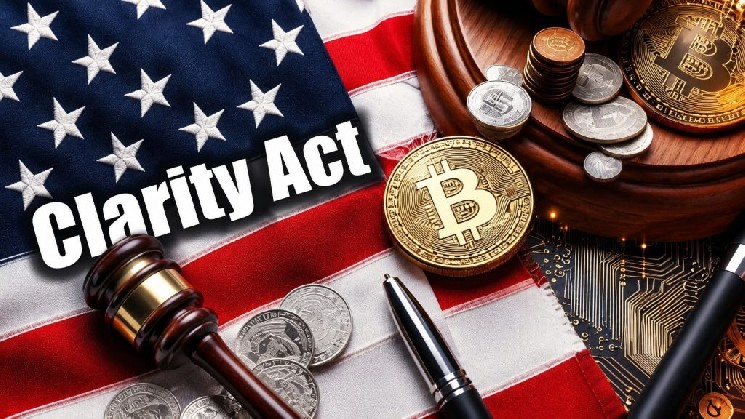
U.S. lawmakers are attempting to advance the Clarity Act, a significant crypto market structure bill, but its path is fraught with partisan hurdles. The process has been rocky since January, when a prior bipartisan deal in the Senate Banking Committee was upended.
A key compromise in May on "yield" issues allowed the bill to move forward in committee, but only with the conditional support of two Democratic senators, Angela Alsobrooks and Ruben Gallego. They emphasized that their final vote depends on reaching an agreement on ethics provisions for elected officials. Ultimately, the Senate Agriculture Committee passed its version along party lines without Democratic support.
As Republicans push for a full Senate vote in July, the demand for strong ethics language has expanded beyond Democrats. Additional controversies surround provisions related to yields (aligning some Republicans with large banks) and developer protections (opposed by enforcement agencies). Core concerns about illicit finance and consumer protection remain central to the debate.
Despite consensus on the need for legislation, achieving the necessary bipartisan compromise is proving difficult. While momentum exists—including recent meetings between senators and White House officials—a reconciled bill text faces skepticism. Senator Gallego has stated that without ethics terms acceptable to Democrats, they will not provide the needed votes.
The immediate goals for the crypto community in Congress are unclear: a symbolic Senate vote before the August recess, eventual passage into law by 2026, or forging a final compromise framework. The arduous, vote-by-vote effort to build bipartisan support continues, mirroring the traditional legislative grind the industry must now navigate.
In Brazil, a farm in Paraná secured a $100,000 loan using 10 tokenized cows as collateral, monitored via decentralized tech, allowing for higher valuations due to reduced lender risk. In El Salvador, crypto remittances accounted for only 0.7% ($35.4M) of the $5B+ received in H1 2026, though volume grew 39% year-over-year, with traditional channels dominating. Meanwhile, Argentina's new deregulation bill aims to integrate crypto and blockchain into capital markets by allowing investment funds to hold digital assets and permitting the tokenization of securities, potentially unlocking billions in demand.
"Revolving Door' Dealings Exposed: How Tether Shaped US Stablecoin Legislation
This investigation reveals how former Trump advisors Howard Lutnick and Bo Hines secured favorable terms for Tether, the world's largest stablecoin issuer, within the 'GENIUS Act'—a landmark US crypto regulation bill. Lutnick, then CEO of Cantor Fitzgerald (Tether's asset manager), lobbied against stricter bills before becoming Commerce Secretary. Bo Hines, a White House aide, later pressured lawmakers during final negotiations, framing Tether's demands as 'red lines' for the administration. Both men received substantial financial benefits from Tether: Lutnick's firm secured deeply discounted rights to Tether equity, while Hines was hired as a Tether executive weeks after the bill was signed. The final legislation includes provisions critics call 'loopholes,' allowing foreign issuers like Tether to potentially operate under 'equivalent' foreign oversight (e.g., from El Salvador) and granting a three-year compliance grace period. Despite Tether's USDT being widely used by sanctioned entities and criminals, the new rules may permanently shield its core product from direct US jurisdiction. Tether denies any improper lobbying, stating the law applies uniformly to all issuers."
A bipartisan group of lawmakers in Pennsylvania introduced House Bill 2711, which could prohibit gambling companies, including sportsbooks, from serving as liquidity providers or market makers on prediction market platforms. The bill aims to separate prediction market infrastructure from gambling entities. It would ban platforms from contracting or sharing revenue with companies engaged in gambling and imposes consumer protections, including age restrictions and bans on markets related to minors, health, and death. Unlike proposals in other states, it seeks to regulate rather than ban prediction markets, focusing on restricting liquidity sources. The bill contrasts with another Pennsylvania proposal (HB 2497) that would license and tax such platforms. This legislative push occurs amid a national debate over whether prediction contracts are gambling or financial derivatives, following a recent federal court ruling that federal commodity law preempts state gambling laws for CFTC-registered exchanges.
The U.S. Senate's vote on the CLARITY Act, which aims to establish a legal framework for the crypto market, faces a potential delay. Priority on the Senate agenda is being given to a Russia sanctions bill and confirmations of federal officials, making a vote on the crypto bill after next week increasingly likely. Senate tradition of handling only one contentious bill at a time further complicates early consideration of the CLARITY Act.
Key political disagreements persist, notably over provisions to restrict cryptocurrency trading by senior government officials and elected representatives, including potentially former President Donald Trump. A bipartisan consensus has not been reached.
This uncertainty raises doubts about whether a vote can occur before the Senate's August recess. If disputes intensify, the bill's passage could be jeopardized not only for this year but potentially until 2026. Even if the Senate approves the bill, it would still require a revote in the House of Representatives and the President's signature to become law, potentially prolonging the establishment of a comprehensive regulatory framework long awaited by the crypto industry.
The Clarity Act is considered crucial for clarifying which agencies will oversee digital assets, defining their legal status, and setting operational principles. Industry advocates argue its passage would boost institutional investor confidence and strengthen the U.S. position in the global digital asset market.
cryptonews.ru7小时前
Threads
Welcome to the HTX Community. Here, you can stay informed about the latest platform developments and gain access to professional market insights. Users' opinions on the price of Billions Network (BILL) are presented below.
Related Questions
Welcome to the Crypto FAQ. Users' questions and answers on Billions Network (BILL) are presented below.